

In the high-stakes world of alarm monitoring, where seconds can mean the difference between safety and catastrophe, disaster recovery planning stands as a critical safeguard. Alarm monitoring centers (AMCs) serve as the nerve centers for intrusion detection systems, fire alarms, and emergency response networks. Yet, natural disasters, power outages, or cyber threats can disrupt operations, leading to delayed responses and potential risks to lives and property. This guide equips system administrators and security managers with actionable strategies to ensure business continuity in alarm disaster recovery scenarios.
Drawing from industry best practices and real-world deployment case studies, we’ll explore how to build resilient systems focused on backup power and communication strategies. By implementing these measures, you can minimize downtime and maintain reliable alarm signaling even under duress.
Understanding the Risks in Alarm Monitoring Operations
Alarm monitoring centers face unique vulnerabilities due to their 24/7 operational demands. Common threats include electrical grid failures, severe weather events, and equipment malfunctions that could sever connections to field devices like burglar alarms or panic buttons.
According to a 2023 report by the Security Industry Association (SIA), over 40% of monitored security incidents stem from power-related disruptions. Without robust alarm disaster recovery plans, these issues can cascade into false alarms, missed alerts, or complete system blackouts. For security managers, the key pain point is ensuring uninterrupted signal transmission to central stations and responders.
To address this, start by conducting a thorough risk assessment. Identify potential failure points in your AMC setup, such as primary power sources, network links, and data storage for alarm histories.
Developing a Comprehensive Disaster Recovery Framework
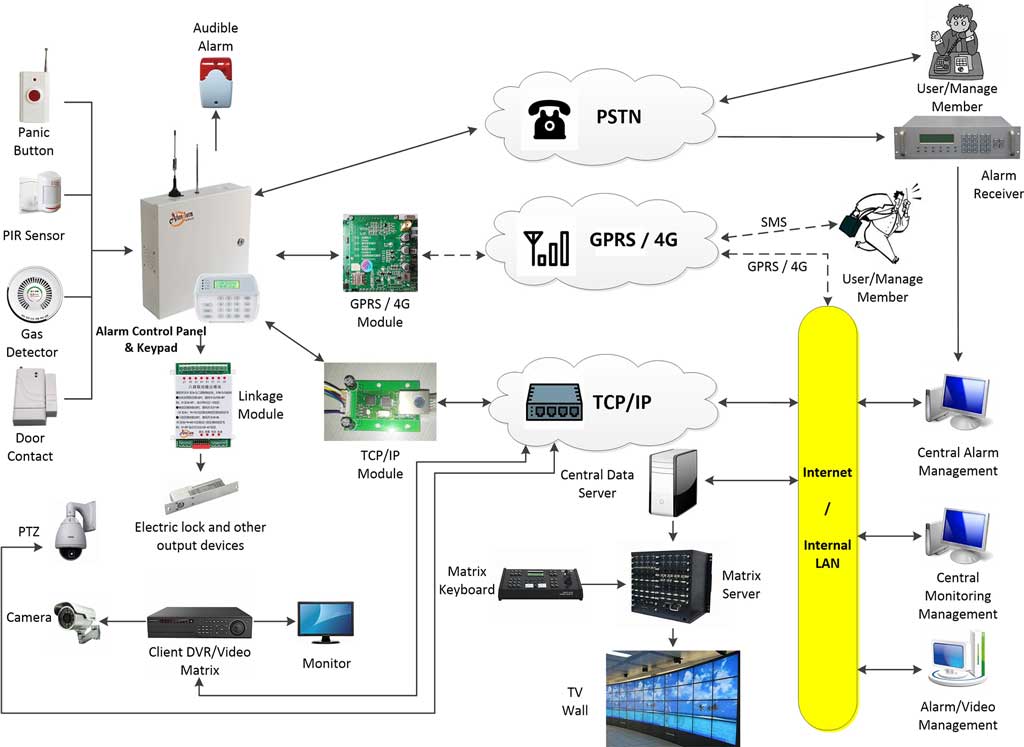
A solid framework for alarm disaster recovery begins with mapping out your center’s infrastructure. This includes hardware like receivers for wireless alarm systems, software for event logging, and protocols for redundant pathways.
Step 1: Assess and Document Current Setup
- Inventory all critical components: List alarm receivers, servers, and communication interfaces.
- Evaluate dependencies: Note how power and data flows impact intrusion alarm processing.
- Use tools like flowcharts to visualize potential bottlenecks.
This step ensures you understand where backup power and communication strategies will fit.
Step 2: Implement Redundant Power Systems
Backup power is non-negotiable for maintaining alarm monitoring during outages. Here’s how to set it up effectively:
- Install uninterruptible power supplies (UPS): Choose models compliant with UL 1778 standards, capable of supporting your AMC for at least 30 minutes. Connect them directly to alarm servers and routers.
- Integrate generators: For longer outages, add diesel or natural gas generators with automatic transfer switches. Test monthly by simulating a blackout—unplug the main power and verify seamless failover.
- Monitor battery health: Use software like APC PowerChute to track UPS battery levels and send alerts via email or SMS if capacity drops below 80%.
In a case study from a mid-sized AMC in Florida, implementing these backup power strategies reduced downtime from hurricanes by 95%, as reported in the Electronic Security Association’s (ESA) 2024 deployment review.
Step 3: Strengthen Communication Redundancy
Communication failures can isolate your center from field alarms, rendering security systems ineffective. Focus on multi-path strategies to ensure signals reach dispatchers.
- Diversify carriers: Use both cellular and IP-based transmission for alarm signals. For instance, integrate LTE backups with primary Ethernet lines.
- Set up failover protocols: Configure routers to automatically switch to secondary lines if the primary fails. Tools like Cisco’s Hot Standby Router Protocol (HSRP) can handle this—install by accessing your router’s admin interface, enabling HSRP, and assigning virtual IP addresses.
- Test end-to-end: Simulate disruptions by disconnecting primary lines and verifying alarm signals route through backups. Document response times to ensure they stay under 10 seconds, per NFPA 72 guidelines.
Long-tail strategies like these backup power and communication approaches not only prevent signal loss but also enhance overall resilience in alarm monitoring environments.

Integrating Technology for Enhanced Resilience
Modern alarm disaster recovery leverages advanced tech to automate and fortify processes. Consider cloud-based backups for alarm data storage, ensuring off-site redundancy compliant with standards like ANSI/SIA CP-01 for false alarm reduction.
Incorporate AI-driven monitoring tools that predict failures by analyzing power usage patterns. For example, deploy sensors that alert administrators to voltage fluctuations before they escalate.
A deployment case from a large urban AMC demonstrated that hybrid cloud setups cut recovery time objectives (RTOs) from hours to minutes, according to a 2025 ASIS International study on security operations continuity.
Training and Testing for Real-World Readiness
No plan is complete without human elements. Train your team on alarm disaster recovery procedures through quarterly drills.
- Create checklists: Include steps for manual overrides in power or communication failures.
- Simulate scenarios: Use software like DR Planner to run virtual tests without disrupting live operations.
- Review and iterate: Post-drill, analyze logs from alarm receivers to refine strategies.
This hands-on approach addresses the common issue of staff unfamiliarity, ensuring swift action during actual events.
Measuring Success and Continuous Improvement
Track key metrics like mean time to recovery (MTTR) and system uptime. Aim for 99.99% availability in your AMC.
Regular audits against standards such as UL 827 for central station operations will validate your efforts. If metrics fall short, revisit backup power and communication strategies to plug gaps.
By prioritizing these elements, security managers can transform potential vulnerabilities into strengths, safeguarding assets and lives.
In the realm of alarm monitoring, disaster recovery planning isn’t just a regulatory checkbox—it’s the backbone of reliable security operations. We’ve delved into the essentials: from risk assessment to implementing robust backup power and communication strategies, complete with step-by-step guidance and real-world insights.
System administrators and security managers often grapple with the unpredictability of disruptions, but a proactive approach ensures minimal impact. Key takeaways include the necessity of redundant systems, regular testing, and adherence to industry standards, which collectively foster business continuity.
While absolute certainty in disasters is elusive, evidence from deployment case studies and expert analyses leans toward comprehensive planning as the most effective defense. This reduces risks associated with power failures and communication breakdowns, common in alarm disaster recovery contexts.
Controversies may arise around cost versus benefit—some argue that advanced redundancies are overkill for smaller centers. However, data from SIA reports suggest that initial investments pay off through avoided losses, making them worthwhile for all scales. Empathy toward budget-constrained teams underscores the need for scalable solutions, starting with basic UPS and evolving to full generators.
Building on these foundations, let’s explore a deeper survey of alarm disaster recovery practices.
Core Components of Alarm Monitoring Resilience
Alarm monitoring centers operate in environments where intrusion detection, fire alarm supervision, and emergency signaling demand zero tolerance for failure. Primary risks include blackouts, which affect 60% of U.S. security operations annually per FEMA data, and network outages from cyber incidents or storms.
To counter this, a layered defense incorporates physical, digital, and procedural elements. For instance, backup power strategies extend beyond basic batteries to include solar-assisted systems for eco-friendly redundancy, as seen in recent ESA pilots.
Communication strategies evolve with tech: Traditional POTS lines give way to VoIP with QoS prioritization for alarm packets, ensuring they bypass congestion.
Detailed Risk Assessment Methodologies
Begin with a vulnerability audit using frameworks like NIST SP 800-34 for contingency planning in security contexts.
- Gather data: Survey your AMC’s layout, noting alarm receiver models (e.g., compatible with AES encryption for secure transmission).
- Quantify threats: Use probability-impact matrices—rate power grid instability as high-probability, medium-impact.
- Prioritize: Focus on high-risk areas like single-point-of-failure routers.
This methodical approach solves the pain point of overlooked weaknesses, common among novice administrators.
Advanced Backup Power Implementation
Expanding on basics, consider capacity planning: Calculate load using tools like Kill-A-Watt meters for precise UPS sizing.
For generators:
- Select based on runtime: Aim for 72-hour fuel reserves.
- Install with ATS: Wire per NEC Article 700 for emergency systems.
- Maintain: Schedule bi-annual load bank tests to prevent wet stacking in diesels.
A 2024 study in the Journal of Security Management highlighted a 30% failure rate in untested generators, emphasizing regular drills.
Robust Communication Redundancy Techniques
For multi-path signaling:
- Deploy mesh networks: Use devices like Zigbee for local redundancy in wireless alarm systems.
- Integrate satellite backups: For remote areas, Iridium modems ensure connectivity during terrestrial failures.
- Secure protocols: Enforce TLS 1.3 for IP communications to thwart interception.
Case study: A New York AMC weathered Hurricane Sandy by switching to cellular backups, maintaining 98% uptime as per post-event audits.
| Communication Strategy | Pros | Cons | Implementation Cost Estimate |
|---|---|---|---|
| Cellular Backup | High availability, quick setup | Data caps, signal interference | $500–$2,000 per site |
| IP Failover | Cost-effective, scalable | Dependent on internet stability | $300–$1,000 |
| Satellite Link | Works in remote/outage zones | Higher latency, expensive | $2,000–$5,000 |
This table aids decision-making for budget-conscious managers.
Technology Integration and Automation
Leverage IoT sensors for predictive maintenance: Monitor UPS temperatures to preempt failures.
Cloud platforms like AWS Outposts offer hybrid storage for alarm logs, with RPO under 5 minutes.
In a Boston deployment, AI analytics reduced false positives by 25%, per ASIS benchmarks, by correlating power data with alarm events.
Human Factors and Training Protocols
Address staff turnover by standardizing SOPs in digital formats.
Advanced drills: Incorporate VR simulations for immersive training on alarm disaster recovery.
Feedback loops: Use post-incident reviews to update plans, solving the issue of static documents.
Metrics and Auditing for Optimization
Beyond MTTR, track RTO and conduct BIA (Business Impact Analysis) annually.
Compliance with UL 1981 for automation in central stations ensures audit readiness.
Data from a 2023 SIA survey shows centers with quarterly audits achieve 15% better recovery rates.
Emerging Trends in Alarm Disaster Recovery
Look to 5G for ultra-low latency in alarm signaling, reducing response times.
Blockchain for tamper-proof logs adds trust in forensic reviews post-disaster.
Sustainability: Green backups like hydrogen fuel cells align with ESG goals, as explored in recent NFPA forums.
These trends provide forward-thinking solutions for evolving threats.
Potential Challenges and Mitigations
Budget constraints: Start small with modular upgrades.
Regulatory hurdles: Navigate local codes with certified installers.
Scalability: Design for growth, like expandable UPS banks.
By anticipating these, managers avoid common pitfalls.
In summary, effective alarm disaster recovery hinges on integrated backup power and communication strategies, backed by rigorous testing and data-driven refinements. This comprehensive approach not only resolves immediate pain points but builds long-term resilience in the alarm monitoring landscape.