
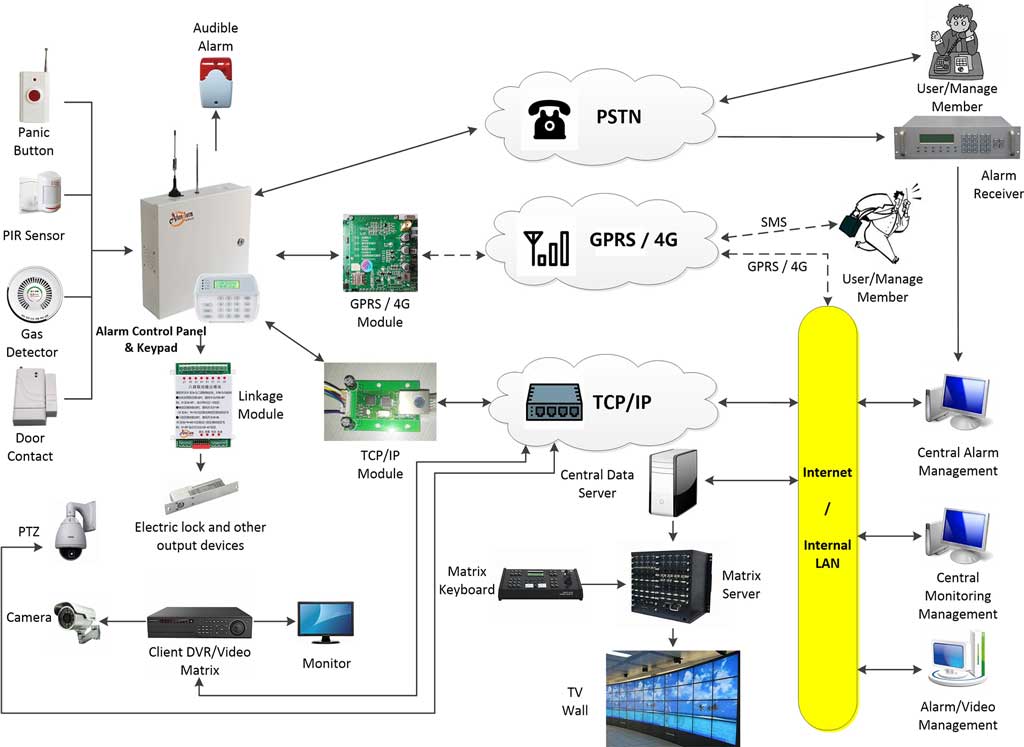
Enterprise Risk Management (ERM) has become the backbone of modern corporate security strategies, yet intrusion alarm systems are still often assessed in isolation. For many security managers and executives, overlooked alarm vulnerabilities—such as misconfigured sensors, unmonitored zones, or unsecured alarm networks—remain hidden risks that only surface after an incident. These gaps can trigger costly breaches, regulatory exposure, and operational downtime.
A structured alarm risk assessment offers a strategic way to uncover weaknesses across sensors, communication paths, monitoring processes, and cyber-physical interfaces. When integrated into the ERM framework, it strengthens decision-making, improves compliance, and turns alarm systems into a measurable, manageable pillar of enterprise protection.
Understanding Alarm Risks in the Enterprise Context
What Is an Alarm Risk Assessment?
An alarm risk assessment evaluates all intrusion detection components—including wired/wireless sensors, alarm panels, communication channels, and monitoring workflows—to identify potential failures. It examines:
- False alarm patterns
- Sensor reliability issues
- Cyber vulnerabilities in networked alarm systems
- Human errors in response protocols
This assessment ensures alarm systems perform as intended under real-world intrusion scenarios.
Major Intrusion Risk Categories
- Physical Intrusion Risks
Weak entry-point coverage, blind spots, degraded sensors, improper mounting, or outdated device firmware. - Cyber-Integrated Attack Risks
Alarm communicators or IP-based alarm panels face threats such as unauthorized access, device spoofing, or jamming of wireless signals. - Environmental & Operational Risks
Weather, dust, vibrations, electrical interference, or inconsistent maintenance can degrade detection accuracy.
Business Impact Supported by Real Data
According to the FBI Uniform Crime Reporting (UCR) program, U.S. businesses suffer billions in losses annually due to commercial burglaries. Industry analysis consistently shows that many successful intrusions exploited predictable alarm system gaps—poor detection coverage, disabled sensors, or outdated monitoring procedures.
Integrating alarm risk assessment into ERM not only reduces breach likelihood but also supports compliance with security frameworks and insurance requirements.

Steps to Integrate Intrusion Risks into ERM Frameworks
Step 1: Map Alarm System Components to ERM Domains
Create a detailed inventory that includes:
- All sensor types (PIR, magnetic contacts, glass-break, vibration sensors)
- Control panels and communication paths (IP, LTE, PSTN backups)
- Video verification modules
- Monitoring center procedures
- Third-party vendors and maintenance contracts
Add each component to ERM categories such as operational risks, technology risks, compliance risks, and vendor risks.
Step 2: Conduct a Vulnerability Scan (Beginner-Friendly Guide)
A. Audit Physical Components Using a Checklist
Below is a simple but effective checklist anyone can follow:
- ✔ Check for sensor blind spots by walking key areas and confirming detection coverage.
- ✔ Verify that door/window contacts are aligned and undamaged.
- ✔ Inspect for loose wiring, moisture exposure, corrosion, or physical tampering.
- ✔ Confirm motion detectors are mounted at correct heights and angles.
- ✔ Validate backup power (battery health, UPS status).
- ✔ Ensure alarm signage is visible where appropriate (deterrence factor).
B. Scan Networked Alarm Systems
For systems connected via IP:
- Log into the alarm admin interface.
- Review user accounts and disable unused logins.
- Change factory-default passwords to strong credentials.
- Check firmware versions and apply updates.
- Run a vulnerability scan using tools approved by IT (e.g., Nessus, OpenVAS).
- Confirm communication encryption is enabled (TLS or vendor-specific secure protocols).
C. Test Monitoring & Response Workflow
- Trigger test alarms.
- Confirm timestamps in logs.
- Validate monitoring center response times.
- Document discrepancies (e.g., slow dispatch or missed notifications).
Step 3: Quantify Alarm Risks Using Probability–Impact Matrices
Assign scores based on:
- Probability: Sensor failure rate, mean time between failures (MTBF), false alarm frequency.
- Impact: Value of assets protected, downtime, regulatory implications, insurance exposure.
- Detection Metrics: Mean Time to Detection (MTTD), mean time to response (MTTR).
Example:
| Risk Item | Probability | Impact | Risk Level |
|---|---|---|---|
| Failure of backdoor motion sensor | Medium | High | High |
| Weak password on IP alarm panel | High | High | Critical |
| High false alarm rate | High | Medium | High |
This data helps executives prioritize investments.
Step 4: Develop and Implement Mitigation Strategies
Common mitigation measures include:
- Upgrade to AI-enhanced or hybrid IoT alarm systems that differentiate human vs. non-human motion.
- Add video verification to reduce false dispatches.
- Deploy dual-path communication (IP + LTE backup).
- Use tamper-resistant mounting and secure enclosures.
- Integrate alarms into enterprise-wide SOC platforms for unified monitoring.
Calibrating Sensors to Reduce False Alarms (Beginner Instructions)
- Log into the alarm system or sensor configuration interface.
- Navigate to Device Settings → Sensitivity.
- Reduce sensitivity gradually (e.g., from “High” to “Medium”).
- Enable pet immunity if available.
- Save changes and perform walk-test verification.
- Repeat adjustments until false alarms drop without losing detection capability.
These steps significantly reduce unnecessary interruptions and dispatch costs.

Best Practices for Effective Alarm Risk Assessment
1. Align with Industry Standards
- ISO 31000:2018 for risk management methodology
- NFPA 72 for alarm performance, testing, and maintenance
- UL 681 / EN 50131 for intrusion alarm system classifications
Using these standards ensures assessments are defensible and compliant.
2. Adopt Hybrid Alarm Technologies
Modern enterprises benefit from:
- IoT-enabled sensors for tamper and health monitoring
- AI-driven analytics for anomaly detection
- Cloud-centralized dashboards for multi-site alarm management
These technologies reduce blind spots and provide higher fidelity data for ERM reporting.
3. Case Study (Anonymized)
A mid-sized logistics company integrated alarm assessments into its ERM program across 14 facilities. By mapping alarm-related risks, upgrading vulnerable communication paths, and deploying AI-assisted sensors, they achieved:
- 40% reduction in intrusion attempts
- 55% drop in false alarms
- Improved compliance alignment with insurance audits
This model is widely applicable to enterprises with distributed assets.
Challenges and Solutions in Implementation
Challenge 1: Budget Constraints
Solution:
Use ROI calculations to justify upgrades. For example:
- Calculate annual false alarm costs
- Compare with investment in optimized sensors or AI verification
- Present payback periods (typically 1–3 years)
Challenge 2: Staff Training Gaps
Step-by-Step Training Plan:
- Schedule quarterly alarm response drills.
- Simulate intrusion triggers at random intervals.
- Have staff practice escalation procedures.
- Review alarm logs after each session.
- Document lessons learned and update SOPs.
Challenge 3: Growing Enterprise Needs Scalability
Solution:
Adopt a phased rollout strategy:
- Phase 1: High-risk locations
- Phase 2: Medium-critical areas
- Phase 3: Enterprise-wide centralization
This ensures predictable budget allocation and smooth operational transitions.
Conclusion
A structured, repeatable alarm risk assessment brings intrusion detection into the strategic core of Enterprise Risk Management. By identifying vulnerabilities early, quantifying risks with data-driven models, and implementing mitigation strategies, organizations can significantly improve resilience, reduce financial losses, and maintain operational continuity.
Security managers and executives should begin with a basic audit, apply the steps outlined in this guide, and commit to periodic reassessments. Intrusion risks continue to evolve—your ERM framework must evolve with them.