
In the field of residential intrusion detection and home security, the home security alarm control panel is far more than a supporting component. It is the operational core of the entire system—the element that ultimately determines how reliably, intelligently, and securely the alarm performs throughout its service life. Frequently referred to as the “brain” of the system, the control panel governs every critical interaction between detection devices, end users, monitoring centers, and response mechanisms.
For professional buyers and bulk purchasers across the security industry—including distributors, licensed installers, system integrators, property developers, and security project managers—the selection of a home security alarm control panel is a strategic, long-term decision rather than a simple hardware choice. The panel directly influences installation efficiency, false alarm frequency, system scalability, maintenance workload, regulatory compliance, and, most importantly, end-user confidence in the system.
This comprehensive guide examines the home security alarm control panel from both technical and commercial perspectives. It addresses system architecture, operational logic, communication reliability, installation workflows, programming discipline, troubleshooting practices, compliance requirements, and emerging technology trends. The goal is clear: to help security professionals deploy intrusion alarm systems that perform consistently and predictably in real-world conditions—not just under ideal laboratory scenarios.
What Exactly Is a Home Security Alarm Control Panel?
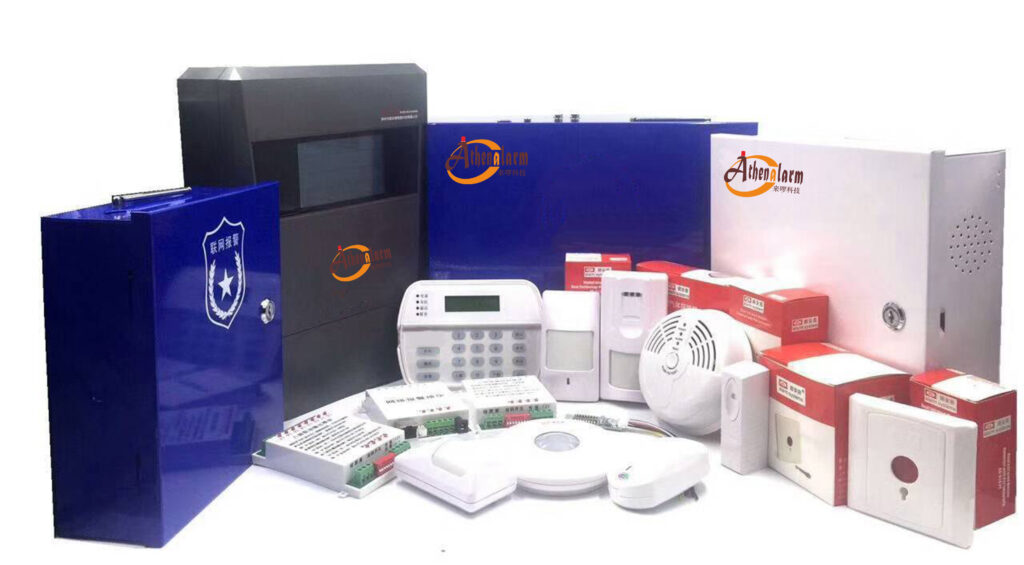
A home security alarm control panel is the centralized command unit responsible for monitoring, interpreting, and responding to signals generated by all connected intrusion and life-safety devices. These typically include:
- Door and window contact sensors
- Passive infrared (PIR) and dual-technology motion detectors
- Glass-break detectors
- Panic and duress buttons
- Smoke, heat, gas, flood, and other environmental sensors
- User interfaces such as keypads, key fobs, and mobile applications
When a connected device changes state—for example, when a door contact opens while the system is armed—the control panel evaluates the signal according to predefined zone parameters, current system status (armed, disarmed, stay, night mode, etc.), timing rules, and user authorization levels. Based on this logic, the panel initiates one or more responses: activating internal or external sirens, triggering programmable outputs, transmitting alarm events to a monitoring center, and issuing notifications to users via mobile apps, SMS, or voice calls.
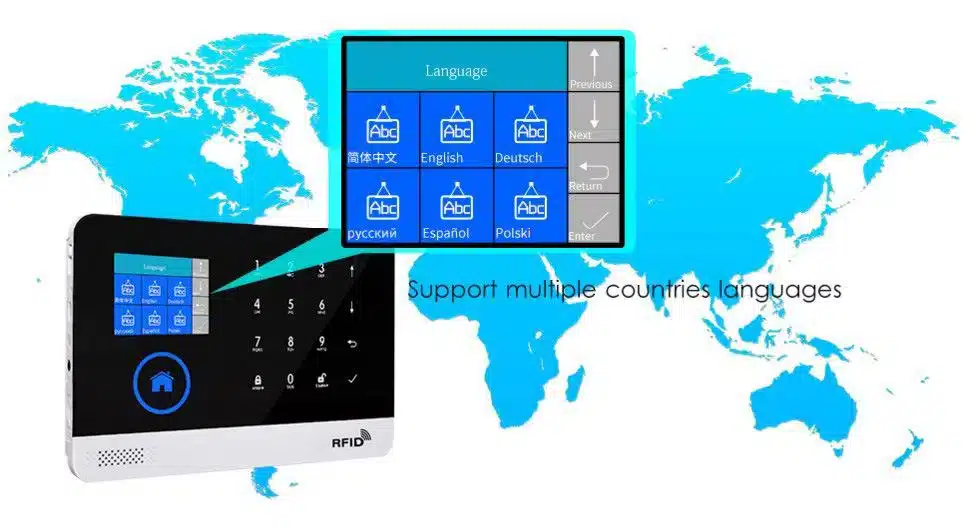
Modern home security alarm control panels are no longer passive signal receivers. They are embedded computing platforms running hardened, purpose-built firmware. These platforms support encrypted communications, multi-path signaling (IP, cellular, and PSTN), remote diagnostics, and secure over-the-air firmware updates. In practical terms, the control panel defines how “smart,” resilient, and future-ready a home security system truly is.
Why the Control Panel Matters More Than Any Other Component
From an industry standpoint, individual sensors are relatively easy to replace, upgrade, or reposition. The control panel, by contrast, defines the system’s fundamental capabilities and limitations. A poorly selected or inadequately designed panel often leads to:
- Elevated false alarm rates
- Unreliable communication with monitoring centers
- Complex, error-prone programming processes
- Limited expansion or integration options
- Increased service calls, warranty claims, and operational costs
By comparison, a well-engineered control panel simplifies installation, reduces technician time on site, improves alarm verification accuracy, and supports long-term system growth. For experienced security professionals, the control panel is treated as the foundation of the entire intrusion protection strategy—not merely another line item on a bill of materials.
Core Functions of a Home Security Alarm Control Panel
1. Zone Definition and Supervision
The control panel assigns logical meaning to each physical or wireless input, commonly referred to as a “zone.” Beyond basic open/close detection, zones can be configured with detailed parameters, including:
- Zone type (perimeter, interior, fire, 24-hour, silent panic, etc.)
- Response behavior (instant alarm, entry delay, exit delay, follower logic)
- Supervision method (normally closed, normally open, single or double end-of-line resistors, wireless supervision intervals)
Accurate zone definition is essential for balancing fast intrusion response with the reduction of nuisance alarms.
2. Arming and Disarming Logic
Professional-grade panels support multiple arming modes—Away, Stay, Night, Instant, and selective Bypass—to reflect how occupants realistically use the protected space. User access can be managed through PIN codes, proximity cards, key fobs, mobile credentials, and, in higher-end systems, biometric authentication. Properly implemented arming logic improves usability without compromising security.
3. Alarm Processing and Output Control
Once an alarm condition is confirmed, the control panel activates local alert devices such as sirens and strobes, energizes programmable outputs (PGMs), and can control external systems including gates, lighting, and electronic locks. At the same time, it transmits detailed event data to monitoring centers using standardized, industry-accepted protocols.
4. Event Memory and Audit Trail
Non-volatile memory within the panel stores comprehensive logs of alarms, troubles, arming events, user actions, and system tests. These records are critical for post-incident analysis, regulatory compliance, technical diagnostics, and resolving customer disputes.
5. Power Regulation and Backup Management
A professional home security alarm control panel continuously supervises AC power input, transformer integrity, backup battery charging, and low-voltage thresholds. Robust power management is a decisive factor in maintaining system reliability during outages and adverse conditions.
Panel Architectures and Deployment Models
While traditional classifications still apply, understanding why specific architectures dominate certain applications is essential.
Hardwired Panels
Best suited for permanent installations where maximum reliability is required. Hardwired zones offer consistent performance, immunity to RF interference, and are often favored by insurers and regulatory bodies.
Wireless Panels
Designed for rapid deployment and retrofit environments. Modern two-way, encrypted wireless protocols have significantly reduced historical concerns related to signal reliability and interference.
Hybrid Panels
The most widely adopted option in professional installations. Hybrid panels combine wired and wireless zones, allowing installers to optimize cost, reliability, and labor efficiency within a single system.
All-in-One Smart Panels
Focused on simplicity and visual appeal, these panels integrate the control unit, keypad, and communicator into a single enclosure. While convenient, professionals must carefully evaluate expansion capacity and long-term serviceability.

Installation Workflow: From Site Survey to Commissioning
A disciplined installation process is essential to minimize callbacks and system failures.
Step 1: Site Assessment
- Identify perimeter entry points and interior coverage needs
- Evaluate RF conditions and cellular signal strength
- Select a panel location that is secure, concealed, and adequately ventilated
Step 2: Physical Installation
- Securely mount the enclosure to structural framing
- Install cabinet and wall tamper protection
- Maintain proper separation between high-voltage and low-voltage wiring
Step 3: Wiring and Device Enrollment
- Use manufacturer-approved cable types and routing methods
- Clearly label all zones and circuits
- Enroll wireless devices systematically, verifying signal quality and supervision
Step 4: Programming and Verification
- Configure zone attributes, delays, user permissions, and reporting paths
- Test all alarm, tamper, and trouble conditions
- Confirm monitoring center receipt and acknowledgment of events
Step 5: Handover and Documentation
- Provide accurate zone lists, user instructions, and maintenance guidelines
- Record installer codes, firmware versions, and device serial numbers for future service
Programming Errors That Commonly Lead to System Failures
Even premium control panels can perform poorly if programmed incorrectly. Frequent causes of failure include:
- Incorrect end-of-line resistor values
- Overlapping or conflicting zone definitions
- Improper entry and exit delay settings
- Missing or disabled wireless supervision
- Incomplete or misconfigured communication paths
Experienced installers reduce these risks by relying on standardized programming templates, commissioning checklists, and documented best practices.
Security, Compliance, and Cyber Risk Considerations
As home security alarm control panels evolve into network-connected devices, cybersecurity has become a core evaluation criterion. Professional-grade panels should provide:
- Strong encryption for all data transmissions (AES-128 or higher)
- Secure, authenticated firmware update processes
- Role-based access control for installers, administrators, and end users
- Compliance with UL, EN, and applicable regional standards
Neglecting cybersecurity considerations can expose both homeowners and service providers to significant operational and legal risk.
Long-Term Value: Looking Beyond the Initial Purchase Price
The real cost of a home security alarm control panel is measured not at the point of sale, but over its entire operational lifespan. Panels that minimize false alarms, support remote diagnostics, and allow secure firmware upgrades consistently deliver lower total cost of ownership. For installers and service providers, this translates into fewer service calls, higher customer satisfaction, and stronger long-term profitability.
Conclusion: The Control Panel as a Strategic Asset
A home security alarm control panel is not simply a piece of hardware—it is a strategic asset that defines system reliability, operational efficiency, and user confidence. For professional buyers, selecting the right panel means fewer failures, improved brand reputation, and sustainable business growth.
By investing in control panels that are robust, scalable, secure, and installer-friendly, security professionals position themselves for success in an increasingly competitive and technology-driven home security market.