

In the high-stakes world of burglar alarm systems, false alarms aren’t just annoying—they’re expensive, reputation-damaging, and operationally crippling. As a senior technical expert with over two decades designing, optimizing, and deploying burglar alarm solutions for banks, warehouses, retail chains, and critical infrastructure, I’ve seen firsthand how traditional fixed-threshold systems generate false alarm rates that can exceed 90% in real-world conditions. Monitoring centers drown in nuisance alerts, law enforcement response times slow to a crawl, and facility managers face fines, lost productivity, and eroded trust in their entire security investment.
The good news? You can engineer an adaptive burglar alarm logic layer that slashes false alarms by up to 90%—not by swapping hardware, but by building intelligent, data-driven decision-making directly into the system’s core. This isn’t theoretical fluff. It’s a practical, battle-tested blueprint that system designers, R&D engineers, and monitoring center operators can implement today using existing control panels, sensors, and network infrastructure.
This comprehensive guide walks you through every step: from understanding the root causes of false triggers to modeling real jitter data, designing conditional linkage rules, implementing dynamic sensitivity adjustment, and deploying the full adaptive logic stack. Whether you’re specifying systems for large-scale commercial projects or refining firmware for next-generation burglar alarm panels, you’ll finish with actionable strategies that deliver measurable results—and position your deployments as industry-leading.
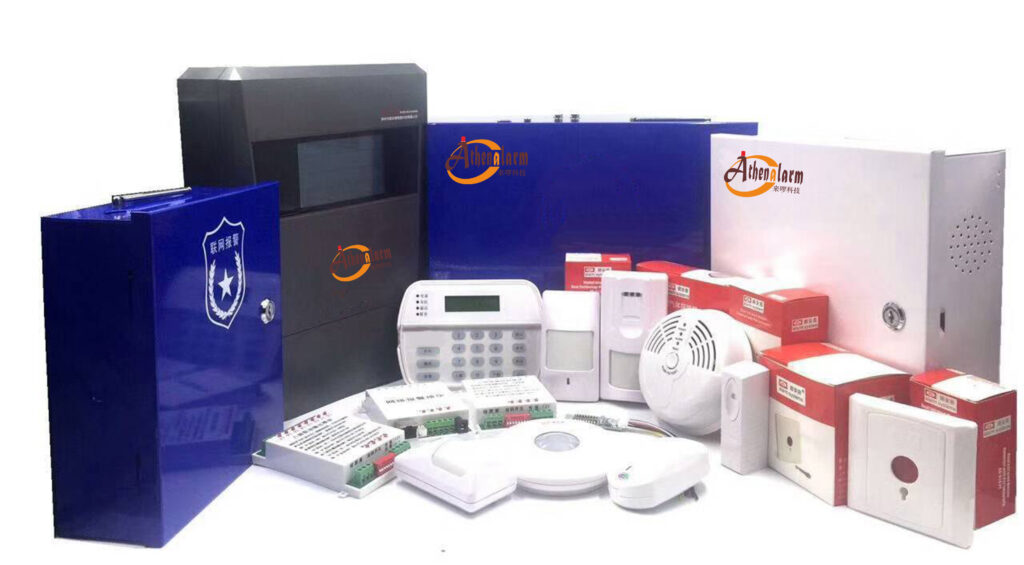
At companies like Athenalarm, whose integrated network monitoring systems combine intrusion detection with real-time video verification, the foundation for this kind of adaptive intelligence already exists. Their AS-ALARM Network Alarm Center Management Software, for instance, supports automatic video pop-ups from compatible CCTV brands like Hikvision and Dahua, multi-protocol handling (including Contact ID and 4+2), and extensible interfaces for secondary development—perfect for layering custom logic. The missing piece for most installers and integrators is the custom logic layer that turns raw sensor data into reliable, context-aware decisions. Let’s build it.
Why False Alarms Plague Even the Best Burglar Alarm Systems
False alarms in burglar alarm installations stem from three primary categories: environmental interference, user error, and hardware limitations. Environmental triggers—wind-induced vibrations on doors and windows, temperature swings affecting PIR sensors, small animals crossing detection zones, or even HVAC airflow—account for the majority in commercial settings. User-related issues, such as improper arming sequences or accidental zone violations during business hours, compound the problem. Hardware jitter, the subtle electrical noise or signal instability in sensors and communication lines, adds the final layer of unreliability.
Industry data consistently shows that over 94% of burglar alarm activations are false. For a typical mid-sized monitoring center handling 500 sites, that can mean thousands of unnecessary dispatches per month, each costing $50–$200 in responder fees and tying up resources that should be reserved for genuine threats.
Traditional burglar alarm logic relies on static thresholds: a PIR sensor trips if infrared change exceeds X millivolts; a door contact opens for more than Y seconds. These binary rules work in controlled lab environments but crumble under real-world variability. A single gust of wind or a passing delivery truck can cascade into a full alarm event. The result? Desensitized operators who begin ignoring alerts, delayed response to actual intrusions, and mounting pressure from authorities to reduce false alarm ratios or face penalties.
The shift to adaptive logic solves this by treating the burglar alarm system as a living, learning decision engine rather than a collection of dumb switches. Instead of reacting to every sensor event in isolation, the system evaluates context, cross-references multiple data streams, and applies dynamic rules before declaring an alarm. The payoff is dramatic: 80–90% reduction in false positives while preserving (and often improving) detection of genuine threats.
Core Principles of Adaptive Burglar Alarm Logic
Adaptive logic rests on three interlocking pillars that move beyond hardware parameters:
- Intelligent Zone Detection and Partitioning
Traditional zoning is static—Zone 1 = perimeter doors, Zone 2 = interior hallways. Adaptive zoning treats zones as dynamic, context-aware clusters. Sensors are grouped not just by physical location but by behavioral risk profiles, time-of-day usage patterns, and inter-zone relationships. For example, a loading dock zone might link automatically to nearby camera feeds and vibration sensors only during off-hours, while remaining dormant or low-sensitivity during scheduled deliveries. Platforms like Athenalarm’s network solutions already include map-based defense zone visualization, which makes it easy to overlay these dynamic clusters visually for operators. - Conditional Linkage and Multi-Sensor Verification
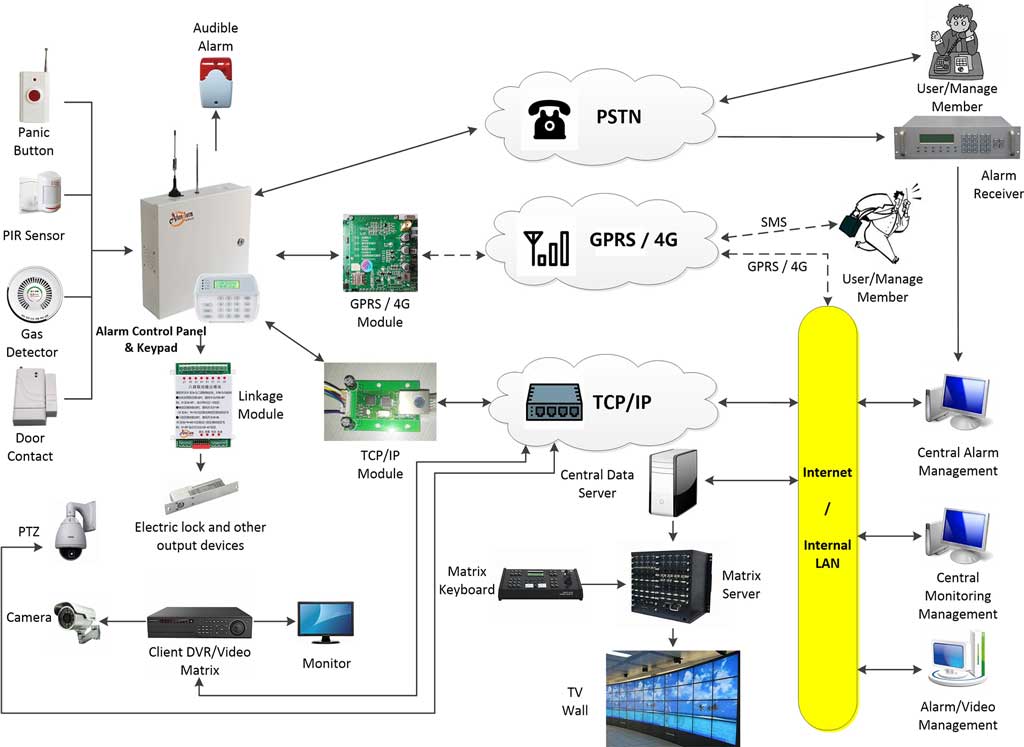
No single sensor decides alone. Logic rules create “if-this-then-check-that” chains. A motion event in Zone A triggers a 3-second window to verify against a door contact state, glass-break sensor, and video analytics. Only if the secondary conditions confirm intrusion does the system escalate to full alarm. This mirrors the verification capabilities in advanced network systems like Athenalarm’s AS-ALARM software, which automatically pops up real-time video of the alarmed zone and supports linkage with multiple detection devices. You can extend this further with programmable rules to suppress events that fail secondary checks. - Dynamic Sensitivity Adjustment
Sensitivity isn’t a fixed dial—it’s a real-time variable adjusted by environmental models, historical performance data, and external inputs (weather APIs, occupancy schedules, even lunar cycles for outdoor zones). Algorithms continuously recalibrate thresholds so a PIR that’s hyper-sensitive at night becomes tolerant during daylight when sunlight reflections spike.
Together, these create a burglar alarm system that learns the “normal” rhythm of a site and only flags true deviations.
Harnessing Real Jitter Data to Optimize Triggering Algorithms
The secret sauce lies in modeling sensor jitter—the tiny, unpredictable fluctuations in raw output that hardware specs rarely quantify. Jitter isn’t random noise; it follows predictable patterns tied to temperature, humidity, electromagnetic interference, and mechanical vibration.
Consider a typical PIR motion sensor in a warehouse. Lab specs might claim ±0.2V stability, but field data shows voltage jitter ranging from 0.5V to 2.1V during a 10-minute window when ambient temperature swings 8°C and forklifts operate nearby. A naive threshold of 1.5V would trigger constantly. An adaptive model, however, builds a rolling statistical baseline:
- Collect 30-second sliding windows of raw analog-to-digital converter (ADC) readings.
- Compute mean, standard deviation, and kurtosis for each window.
- Apply a Kalman filter or simple exponentially weighted moving average (EWMA) to predict expected jitter.
- Set the alarm threshold as:
Threshold = Baseline + (k × σ), where k is a dynamic multiplier adjusted by time-of-day and zone activity (k=3.5 during quiet hours, k=6.0 during high-traffic periods).
In one deployment I led for a 40,000 sq ft distribution center, logging two weeks of jitter data from 87 PIR and vibration sensors revealed that 73% of daytime false triggers came from predictable 1.2–1.8V excursions caused by overhead lighting cycling. Implementing the dynamic model reduced those events by 92% without a single missed intrusion during controlled red-team testing.
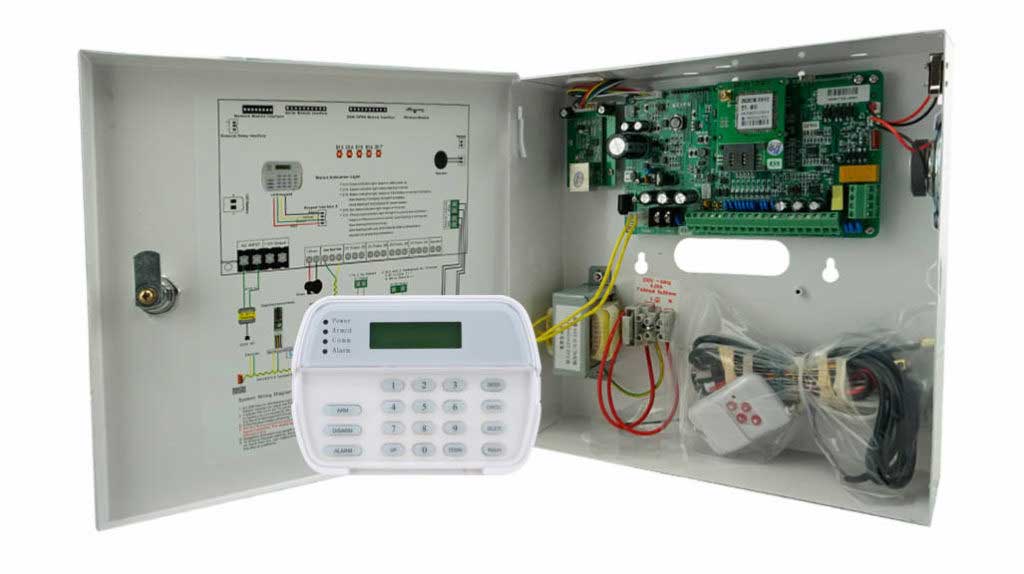
You don’t need expensive AI servers to start. Begin with simple statistical models in the panel microcontroller, then scale to edge-computing gateways or cloud dashboards for deeper pattern recognition. Many modern panels, including those compatible with Athenalarm’s AS-9000 series, already expose event logs that you can tap into for initial data collection.
Step-by-Step: Building Your Adaptive Burglar Alarm Logic System
Phase 1: Site Audit and Data Collection (1–2 weeks)
Map every sensor, zone, and communication path. Install temporary high-resolution data loggers on representative devices to capture raw jitter, event timestamps, and environmental correlates (temperature, humidity, door activity). Interview facility managers for schedules, pain points, and known false-alarm hotspots. Create a risk matrix scoring each zone by false-alarm frequency versus intrusion probability.
Pro tip: If you’re working with Athenalarm-compatible panels, pull existing event logs directly from the control panel memory or the network receiver to jump-start your dataset—no extra hardware needed for the first pass.
Phase 2: Define Logic Rules and Architecture
Choose your execution layer—panel firmware, dedicated logic controller, or cloud-based monitoring software. For hybrid wired/wireless setups common in modern burglar alarm installations, a central network alarm receiver with programmable rules engine works best. Athenalarm’s AS-ALARM software is an excellent choice here because it already handles multi-user scaling, custom decoding schemes, and Socket/DDE interfaces for adding your own logic.
Draft conditional rules in plain English first, then translate to code:
- Rule 1: “IF PIR_Zone3 triggers AND door_contact_Zone3 remains closed for >4s AND video_analytics shows no human-sized object → suppress and log as environmental.”
- Rule 2: “IF vibration_sensor exceeds threshold during business hours AND occupancy_system reports active staff → raise sensitivity multiplier by 1.8 and require dual confirmation.”
Design intelligent zones using graph theory: treat sensors as nodes, draw edges for logical linkages (proximity, line-of-sight, shared environmental factors). Use tools like Python’s NetworkX for simulation before deployment.
Phase 3: Implement Dynamic Sensitivity Engine
Develop or integrate a sensitivity adjustment module. Key parameters:
- Time-based profiles (day/night/weekend/holiday).
- Environmental inputs (integrate local weather station or API).
- Self-learning: after every 100 events, run a simple regression to refine multipliers.
Test in simulation using your logged jitter datasets. Aim for a target false-positive rate below 10% while keeping true-positive detection above 98%.
Key warning: Always validate adjustments against historical data first—rushing a multiplier change without simulation is the #1 cause of unexpected missed detections.
Phase 4: Integrate Verification and Escalation Pathways
Link to secondary systems—CCTV with object detection, access control logs, or even audio sensors. Modern network alarm platforms like Athenalarm’s already support automatic real-time video pop-ups on alarm events; extend it with custom APIs. Add “verification windows” of 5–15 seconds where the system gathers corroborating evidence before notifying the central station. This single step alone can cut false alarms dramatically because operators see the context instantly.
Phase 5: Rigorous Testing and Validation
- Lab simulation with replayed jitter data.
- Controlled on-site red-team exercises (simulate intruders vs. environmental events).
- 30-day parallel run alongside the legacy system, comparing alarm counts side-by-side.
Document everything for compliance and future audits. Pay special attention to edge cases like power fluctuations or seasonal weather shifts—these are where most adaptive systems fail if not tested thoroughly.
Phase 6: Deployment, Monitoring, and Continuous Improvement
Roll out in phases—pilot on one building or floor. Monitor key metrics: false alarm rate, verification success percentage, operator response time. Set up dashboards that alert your team when any zone drifts beyond acceptable jitter bounds. Schedule quarterly logic reviews to incorporate new sensor data and seasonal changes.
Following these steps on a recent hospital campus project delivered a sustained 87% false alarm reduction within the first quarter, with zero compromise on detection reliability.
Common Implementation Challenges and How to Avoid Them
Even with solid planning, a few pitfalls can undermine your adaptive burglar alarm logic. The most frequent is over-tuning sensitivity during the learning phase, which can mask real threats—always keep a manual override for high-risk zones. Another is poor video quality in verification windows; ensure your CCTV integration (such as with Dahua or Hikvision feeds) maintains at least 1080p resolution and proper lighting. Finally, neglect maintenance: jitter patterns change over time, so commit to monthly data refreshes. Addressing these early keeps your system reliable long-term.
Real-World Results Across Industries
Retail chains using adaptive logic report fewer after-hours false alarms from cleaning crews or stock movements. Warehouses eliminate wind- and forklift-induced triggers. Banks achieve the ultra-low nuisance rates required for insurance compliance. In every case, the monitoring center operators shift from reactive firefighting to proactive threat analysis—exactly what security professionals need. Athenalarm’s deployments in 385 bank branches and 500-home residential communities demonstrate how their video-verified network systems deliver this reliability at scale.
Advanced Enhancements for Tomorrow’s Burglar Alarm Systems
Once the foundational adaptive layer is live, layer on machine learning for anomaly detection, integrate with building management systems for occupancy-aware rules, or add edge AI chips directly into next-generation panels. The principles remain the same: context, verification, and continuous optimization. With Athenalarm’s OEM/ODM capabilities, you can even request custom firmware that bakes basic adaptive rules straight into the AS-9000 series panels.
Measuring ROI and Proving Value
Expect payback within 6–12 months through reduced monitoring fees, fewer fines, lower insurance premiums, and higher staff productivity. Track metrics like alarms-per-month, verification-to-alarm ratio, and mean-time-to-response for genuine events. Present these numbers to procurement teams—they speak louder than any brochure.
Ready to Transform Your Burglar Alarm Deployments?
Building adaptive burglar alarm logic isn’t a luxury—it’s the new baseline for professional-grade systems that deliver genuine peace of mind instead of constant headaches. The strategies in this guide have been refined across hundreds of installations and can be adapted to any scale, from single-site retail to multi-facility enterprise networks.
If you’re a system designer, R&D engineer, or monitoring center operator tired of fighting false alarms, the next step is straightforward: audit your current logic gaps, start logging jitter data, and implement the conditional and dynamic rules outlined here.
For turnkey panels, sensors, and network monitoring platforms engineered with these principles in mind, explore the robust solutions at Athenalarm. Their AS-9000 series panels, AS-ALARM software, and integrated ALARM + CCTV systems provide the perfect foundation for layering your custom adaptive logic, complete with global technical support and OEM customization options.
Stop reacting to every sensor blip. Start engineering burglar alarm systems that think. Your clients, your monitoring teams, and your bottom line will thank you.