
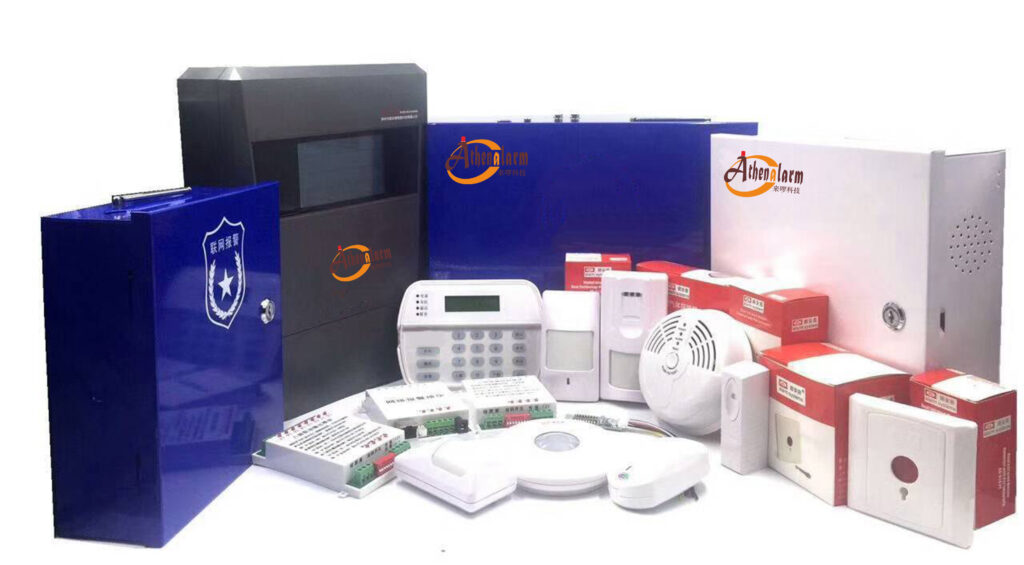
In the high-stakes world of commercial security, where a single breach can cost thousands—or even millions—in losses, downtime, regulatory exposure, and long-term reputational damage, relying on outdated or entry-level alarm systems is a risk no procurement manager, security director, or facility operator can afford. Today’s intruders no longer rely on brute force alone. They exploit weak perimeter logic, inconsistent user management, predictable alarm response patterns, and—most critically—the blind spots between physical and digital security systems.
This is precisely why mastering advanced intrusion control panel features has become a strategic necessity rather than a technical upgrade.
Modern intrusion control panels are no longer passive alarm brains. They are decision-making security platforms that detect, verify, correlate, and escalate threats in real time. When properly specified and configured, they become the command center that determines whether a potential intrusion is ignored, misclassified, or stopped decisively.
Drawing from decades of real-world deployments across retail chains, logistics hubs, industrial plants, office campuses, and mixed-use commercial properties, this guide delivers practical, experience-driven insight—not marketing fluff. I will show you how advanced intrusion control panel features directly address the problems that plague real deployments: false alarms draining budgets, fragmented systems that fail under pressure, scalability limits that kill ROI, and configuration mistakes that silently undermine protection.
Whether you are upgrading a legacy system, standardizing security across multiple sites, or procuring panels in volume for a new rollout, this guide equips you to select, configure, and operate intrusion control panels that stop threats cold—reliably, repeatedly, and defensibly.
Why Advanced Intrusion Control Panels Are Non-Negotiable for Commercial Security in 2026 and Beyond
Traditional intrusion panels were designed for a simpler threat model: fixed schedules, predictable occupancy, and limited integration. In contrast, modern commercial environments are dynamic, hybrid, and constantly changing. Warehouses operate 24/7, offices shift to flexible work hours, and retail sites face both organized theft and insider risks.
Advanced intrusion control panels respond to this reality by introducing intelligence, redundancy, and operational flexibility at the system core.
From a commercial buyer’s perspective, these panels deliver four non-negotiable advantages:
- Operational Accuracy at Scale Advanced processing, adaptive sensitivity, and logic-based zone behavior dramatically reduce nuisance alarms—often by 70–90%—which directly lowers monitoring fees, police dispatch penalties, and internal response fatigue.
- True Scalability Without System Replacement Hybrid architectures allow businesses to expand from dozens to hundreds of zones, across wired and wireless devices, without redesigning the core platform.
- Cyber-Physical Security Convergence Encryption, authentication, and IP-based communications ensure the alarm system is no longer isolated—but securely integrated into the broader IT and security ecosystem.
- Compliance, Auditability, and Insurance Alignment Event logs, tamper supervision, and certified encryption support standards such as UL 1076, EN Grade 3/4, and insurer requirements—often translating into reduced premiums and easier audits.
In short, advanced panels shift intrusion detection from reactive alerting to controlled, verifiable threat management.
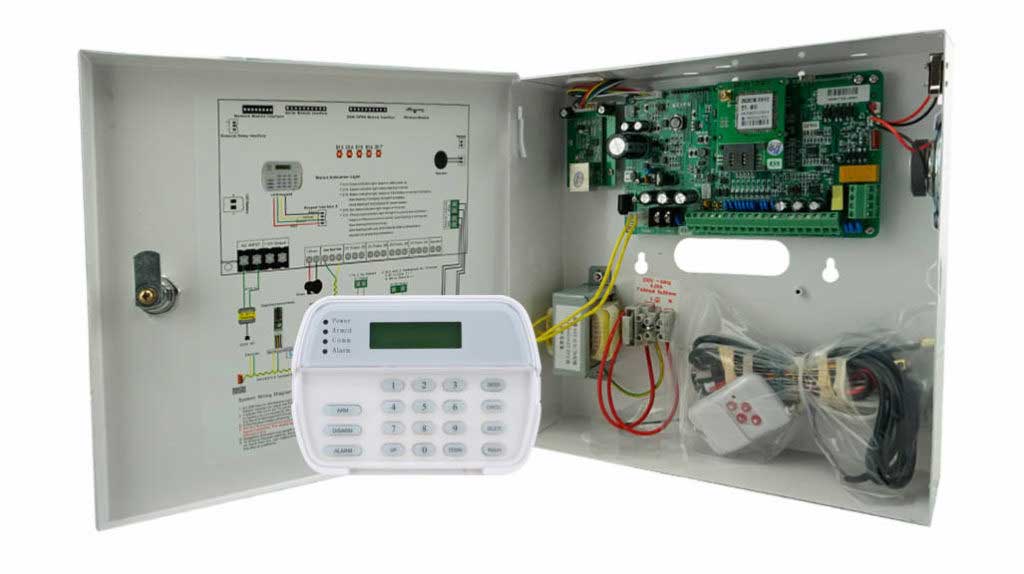
Core Advanced Intrusion Control Panel Features That Define Commercial-Grade Protection
Understanding advanced intrusion control panel features requires more than listing specifications. What matters is how each feature solves a real operational problem.
1. Hybrid Wired and Wireless Zone Architecture with Supervision
Advanced panels support mixed environments where high-risk zones rely on hardwired loops, while dynamic or hard-to-wire areas use encrypted wireless devices.
Key capabilities include:
- Two-way wireless communication for constant device supervision
- Real-time battery, signal strength, and tamper reporting
- Automatic fault escalation before protection is lost
Operational Value:
In large warehouses or multi-floor offices, this architecture enables rapid expansion without construction downtime while maintaining high-security reliability where it matters most.
2. Multi-Path, Redundant Alarm Communication
Modern intrusion panels no longer rely on a single reporting path. They support:
- IP/Ethernet as the primary channel
- Cellular (4G/5G) as automatic failover
- Optional PSTN or private radio as tertiary backup
Advanced supervision detects:
- Line cuts
- IP spoofing
- RF jamming attempts
Why this matters:
Professional intruders routinely target communication paths first. Redundant, supervised reporting ensures alarms are delivered even during deliberate sabotage.
3. Advanced Partitioning and Area Logic
Enterprise-grade panels support dozens of independent partitions, each with:
- Unique schedules
- Custom arming logic
- Independent user permissions
- Shared or “common” areas with conditional logic
Practical Example:
A logistics facility arms dock doors overnight while office staff continue working. The system enforces security without operational disruption.
4. Unified Intrusion and Access Control Management
Advanced panels increasingly integrate access control functions directly, eliminating the need for separate controllers.
Capabilities include:
- Credential-based disarming
- Anti-passback enforcement
- Duress credentials triggering silent alarms
- Event correlation between door activity and intrusion zones
Commercial Advantage:
Fewer systems mean fewer points of failure, lower maintenance costs, and cleaner audit trails.
5. Intelligent False Alarm Reduction and Verification
Advanced intrusion control panel features now incorporate:
- Dual-technology detector logic
- Adaptive sensitivity tuning
- Cross-zone confirmation
- Video or audio verification workflows
Measured Results:
Sites that deploy verification-based alarm logic routinely cut false dispatches by over 70%, while improving actual intrusion response times.
6. Cloud-Based Administration and Remote Diagnostics
Centralized platforms allow authorized users to:
- Arm/disarm sites remotely
- View real-time system health
- Push firmware updates
- Standardize configurations across hundreds of locations
This is essential for multi-site operators and franchise models.
7. Tamper Resistance, Power Resilience, and Environmental Protection
Advanced panels are designed for hostile environments:
- Supervised cabinet tamper switches
- Shock and vibration detection
- Predictive battery health monitoring
- Extended temperature tolerance
These features ensure the system remains operational during attacks, outages, or environmental stress.
8. Open Integration and Automation Capabilities
Modern panels support APIs and standardized protocols, enabling integration with:
- Video management systems
- PSIM platforms
- Lighting, HVAC, and lockdown controls
Result:
An intrusion event can automatically trigger visual deterrence, lockdown procedures, and prioritized alerts—without human delay.

How to Select the Right Advanced Intrusion Control Panel: A Commercial Buyer’s Framework
Rather than chasing features, I recommend a structured selection process.
Step 1: Risk and Workflow Assessment
Identify intrusion vectors, asset value, occupancy patterns, and operational constraints.
Step 2: Feature-to-Threat Mapping
Match panel capabilities directly to real risks—not hypothetical ones.
Step 3: Certification and Ecosystem Compatibility
Verify regulatory compliance and integration with existing systems.
Step 4: Total Cost of Ownership Analysis
Account for false alarm costs, expansion flexibility, and long-term support.
Step 5: Pilot Testing and Vendor Validation
Test systems in live environments before committing to large-scale procurement.
Practical Configuration: Turning Advanced Features into Real Protection
Advanced panels fail most often due to poor configuration, not poor hardware.
Example: Programming Hybrid Zones (Condensed Operational Workflow)
- Enter installer mode and secure credentials immediately
- Define wired zones with proper EOL supervision
- Enroll wireless devices and verify signal margins
- Assign zone logic (perimeter, follower, instant)
- Conduct full walk and communication tests
Example: Enabling Redundant Communication
- Configure IP as primary path
- Activate cellular backup and supervision
- Set polling intervals and encryption
- Verify alarm delivery under simulated failure conditions
Document every change. Standardization is protection.
Common Deployment Pitfalls—and How to Avoid Them
- Over-sensitivity leading to false alarms → Use layered detection and verification
- User confusion → Simplify permissions and interfaces
- Integration failures → Validate APIs early
- Cyber exposure → Enforce encryption and update policies
The Strategic Future of Intrusion Control Panels
The next evolution is predictive security: systems that identify abnormal patterns before alarms occur. Advanced panels deployed today form the foundation for this shift.
Final Takeaway: Control Panels Decide Outcomes
Advanced intrusion control panel features are not accessories—they determine whether your security system detects noise or delivers certainty.
When properly selected and expertly configured, these panels do more than alert. They control access, validate threats, coordinate responses, and protect operations at scale.
If your objective is to stop threats cold—not explain them after the fact—then the control panel deserves your highest level of attention.