

1. Introduction: The Most Important Alarm Vendor Selection Criteria for Multinational Deployments
Selecting an alarm vendor for a single facility is fundamentally different from selecting a vendor for a multinational deployment. In enterprise environments, procurement decisions affect not only hardware quality but also communication reliability, monitoring continuity, cybersecurity posture, integration flexibility, lifecycle costs, and long-term operational resilience.
For procurement managers responsible for commercial buildings, industrial facilities, logistics centers, retail chains, critical infrastructure sites, and multi-site enterprise operations, the most reliable alarm vendor is not necessarily the vendor with the lowest purchase price or the largest product catalog. The most suitable vendor is the one capable of maintaining consistent security operations across diverse network environments, multiple regulatory jurisdictions, and distributed monitoring architectures.
A practical global vendor evaluation framework should assess eight core dimensions:
- Product Quality and Reliability
- Protocol Compatibility
- Cloud and Network Architecture Capability
- Global Support Infrastructure
- Logistics and Supply Chain Resilience
- Cybersecurity and Compliance Readiness
- Scalability and Integration Capability
- Business Continuity and Lifecycle Support
Organizations that focus only on hardware specifications often encounter deployment challenges later in the project lifecycle. Common issues include incompatible communication protocols, limited cloud integration options, regional certification gaps, spare-part shortages, monitoring platform incompatibility, and vendor lock-in risks.
The objective of vendor selection should therefore be operational reliability rather than simple product acquisition. Procurement teams should evaluate how a vendor performs across the entire alarm ecosystem, including sensors, control panels, communication paths, monitoring infrastructure, cloud platforms, service operations, and long-term maintenance support.
2. Why Vendor Selection Impacts Global Reliability
2.1 Procurement Decisions Shape Operational Outcomes
Alarm systems are long-lifecycle infrastructure assets. Unlike consumer electronics, commercial intrusion alarm systems often remain in service for ten to fifteen years or longer. Vendor selection decisions made during procurement directly influence future deployment flexibility, maintenance costs, cybersecurity exposure, and business continuity.
A vendor capable of supporting a small standalone facility may not be capable of supporting a distributed enterprise environment spanning multiple countries. Global deployments introduce additional complexity:
- Multiple telecommunications providers
- Different regulatory requirements
- Diverse network infrastructures
- Varying power reliability conditions
- Regional monitoring center requirements
- Language and support challenges
Because of these variables, procurement managers should evaluate vendors from an infrastructure perspective rather than solely from a product perspective.
2.2 Procurement Risks Often Appear After Installation
Many deployment failures originate from procurement-stage assumptions.
Examples include:
2.2.1 Protocol Incompatibility
A control panel may support traditional Contact ID reporting but lack support for modern IP-based protocols required by centralized monitoring platforms.
2.2.2 Monitoring Integration Limitations
An alarm platform may function correctly locally but lack APIs required for enterprise-wide event aggregation.
2.2.3 Regional Certification Gaps
A device approved for one region may require additional certifications before deployment in another jurisdiction.
2.2.4 Supply Chain Vulnerabilities
A manufacturer may provide competitive pricing but maintain limited regional inventory, resulting in long replacement times during equipment failures.
For global deployments, procurement decisions should therefore be treated as risk management decisions rather than purchasing decisions.
3. Product Quality Assessment Beyond Hardware Specifications
3.1 Defining Product Quality in Enterprise Alarm Systems
Product quality extends beyond enclosure design, sensor sensitivity, or feature count. In commercial security deployments, quality is measured through operational performance over the entire system lifecycle.
Key evaluation categories include:
3.1.1 Hardware Reliability
Assessment criteria include:
- Mean Time Between Failures (MTBF)
- Environmental durability
- Surge protection capability
- Component quality
- Manufacturing consistency
Procurement teams should prioritize vendors capable of demonstrating long-term field performance rather than relying exclusively on laboratory specifications.
3.1.2 Firmware Stability
Firmware reliability often determines system availability.
Evaluation questions include:
- How frequently are firmware updates released?
- What is the vendor’s patch management process?
- Are rollback mechanisms available?
- Can updates be deployed remotely?
Poor firmware governance frequently becomes a significant operational burden in large-scale deployments.
3.1.3 Communication Reliability
Alarm systems depend on reliable event transmission.
Evaluation should include:
- Message delivery confirmation
- Network failover support
- Cellular backup integration
- Event queue management
- Communication supervision mechanisms
Reliable alarm communication is often more important than sensor sophistication.

4. Technical Definition: What Makes an Enterprise-Grade Alarm Vendor?
An enterprise-grade alarm vendor provides more than security devices. It delivers a complete operational ecosystem that supports:
- Intrusion detection
- Event transport
- Monitoring integration
- Remote management
- Cybersecurity management
- Lifecycle support
The vendor must support both physical infrastructure and digital infrastructure.
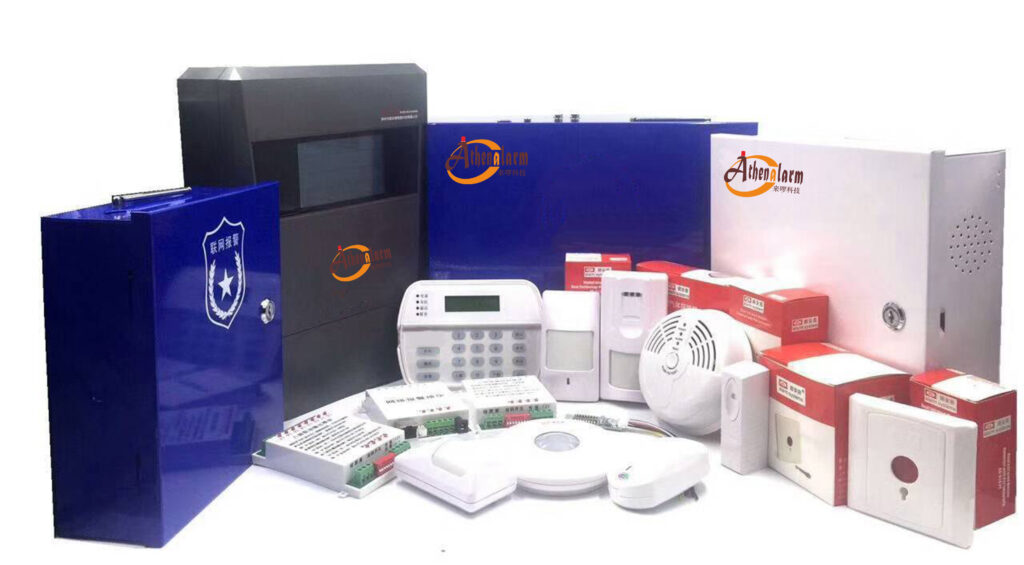
A complete enterprise alarm ecosystem typically includes:
- Sensors
- Alarm control panels
- Communication modules
- Monitoring software
- Cloud services
- APIs
- Mobile applications
- Technical support services
- Training resources
- Logistics networks
Procurement teams should evaluate the maturity of the ecosystem rather than evaluating individual products in isolation.
5. Protocol Compatibility Analysis
5.1 Why Protocol Support Matters More Than Feature Lists
Protocol compatibility determines whether alarm devices can communicate effectively with monitoring centers, cloud platforms, and third-party security systems.
Many procurement projects focus heavily on hardware capabilities while overlooking protocol architecture. This often creates integration challenges later.
Protocol support directly influences:
- Monitoring interoperability
- Cloud integration capability
- Future migration flexibility
- Vendor lock-in exposure
- Multi-site deployment scalability
Organizations should therefore treat protocol evaluation as a primary procurement criterion.
5.2 Contact ID: Legacy but Still Widely Deployed
Contact ID remains one of the most common alarm reporting formats in commercial security environments.
Advantages include:
- Broad compatibility
- Established monitoring support
- Proven operational history
Limitations include:
- Limited data richness
- Analog heritage
- Reduced support for modern cloud architectures
While Contact ID remains viable in many environments, it may not provide sufficient flexibility for advanced enterprise deployments.
5.3 SIA DC-09 for Modern IP Reporting
SIA DC-09 extends alarm reporting into IP networks and supports encrypted communication.
Benefits include:
- Improved security
- Richer event reporting
- Better support for centralized monitoring
- Enterprise network compatibility
For organizations planning long-term modernization, support for SIA DC-09 should be considered a significant advantage.
5.4 MQTT in Cloud Alarm Architectures
MQTT is increasingly appearing within cloud-native alarm ecosystems.
MQTT enables:
- Lightweight messaging
- Efficient bandwidth utilization
- Scalable event routing
- Cloud integration
- Distributed deployment models
In modern architectures, alarm events may travel through MQTT brokers before reaching cloud monitoring systems.
This architecture is particularly beneficial for:
- Retail chains
- Logistics networks
- Smart commercial facilities
- Multi-site enterprises
However, procurement teams should evaluate implementation maturity rather than assuming MQTT support automatically guarantees scalability.
5.5 TCP/IP Alarm Communication
TCP/IP remains the foundational transport layer for most enterprise alarm systems.
Evaluation considerations include:
5.5.1 Network Resilience
Can the system tolerate:
- Packet loss
- High latency
- Temporary outages
5.5.2 Network Security
Does the platform support:
- TLS encryption
- Certificate management
- Secure authentication
5.5.3 Network Management
Can administrators monitor:
- Device status
- Communication quality
- Event transmission health
A vendor’s TCP/IP implementation often reveals the maturity of its engineering practices.
6. Compatibility Analysis: Protocol Selection and Deployment Environment
| Deployment Environment | Preferred Protocol Strategy |
|---|---|
| Small Commercial Site | Contact ID + IP Backup |
| Retail Chain | SIA DC-09 + Cloud Integration |
| Enterprise Campus | TCP/IP + API Integration |
| Distributed Enterprise | MQTT + Cloud Platform |
| Hybrid Monitoring Environment | Multi-Protocol Support |
The most reliable vendors typically support multiple protocols simultaneously, reducing migration risk and improving deployment flexibility.
7. Cloud Platform Capability Assessment
7.1 Cloud Infrastructure as a Procurement Criterion
Historically, alarm procurement focused on devices. Today, platform capability has become equally important.
A modern alarm vendor should provide a cloud infrastructure capable of supporting:
- Event collection
- Device management
- Firmware updates
- User administration
- Reporting
- Monitoring integration
Cloud capability increasingly influences total operational efficiency.
7.2 Evaluating Cloud Architecture
Procurement teams should assess:
7.2.1 Multi-Tenant Design
Can the platform support:
- Multiple regions
- Multiple customers
- Multiple business units
7.2.2 Event Routing Capability
Can events be routed based on:
- Location
- Priority
- Alarm type
- Monitoring center assignment
7.2.3 API Availability
Open APIs improve integration with:
- PSIM platforms
- Access control systems
- Video management systems
- Enterprise security dashboards
API maturity is often a stronger indicator of platform value than user-interface design.
7.3 Cloud Versus Traditional Monitoring Architectures
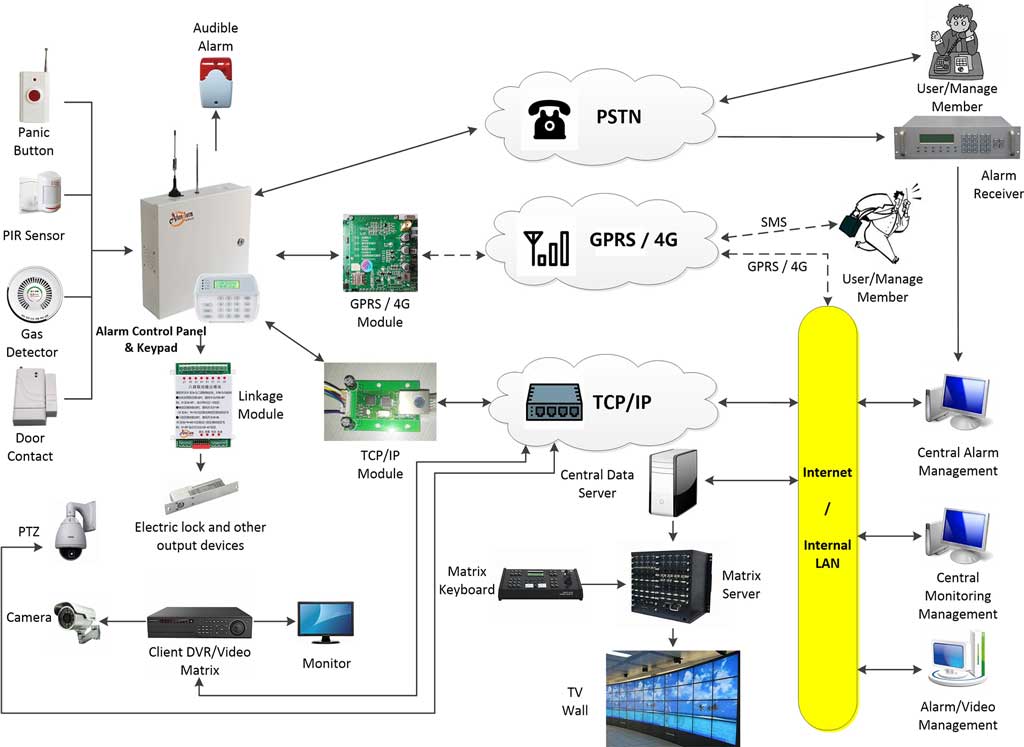
Traditional architectures centralize event processing within monitoring centers.
Cloud architectures distribute processing across:
- Edge devices
- Regional gateways
- Cloud infrastructure
- Monitoring platforms
The tradeoff involves balancing operational flexibility against architecture complexity.
Organizations seeking multinational scalability increasingly favor hybrid models that combine cloud management with traditional monitoring operations.
8. Global Support Network Evaluation
8.1 Why Global Support Capability Matters More Than Product Availability
Many procurement teams evaluate whether a vendor can deliver products to a country. Fewer evaluate whether the vendor can support those products for the next ten years.
For multinational alarm deployments, support infrastructure often becomes a greater operational risk than hardware quality. A technically excellent intrusion alarm platform can become a liability if firmware issues cannot be resolved quickly, replacement devices are unavailable, or local technical expertise is lacking.
A comprehensive support evaluation should examine four layers:
- Technical Support
- Field Service Capability
- Spare Parts Availability
- Training and Certification Programs
The maturity of these support layers directly affects system uptime and operational continuity.
8.2 Technical Support Structure
Procurement teams should investigate how support services are organized.
Key questions include:
8.2.1 Regional Coverage
Can support be provided across:
- North America
- Europe
- Asia-Pacific
- Middle East
- Latin America
A globally deployed alarm system often generates incidents outside the headquarters’ business hours.
8.2.2 Escalation Path
When a communication failure occurs between a control panel and a cloud monitoring platform, how quickly can the issue be escalated from first-level support to engineering teams?
A mature support organization provides:
- Defined escalation procedures
- Service-level commitments
- Engineering access
- Incident tracking systems
8.2.3 Remote Diagnostics
Modern alarm platforms should support:
- Remote troubleshooting
- Communication diagnostics
- Firmware verification
- Device health monitoring
Remote diagnostics significantly reduce operational costs in geographically distributed deployments.
8.3 Spare Parts and Lifecycle Support
Alarm systems often remain operational for more than a decade.
Procurement teams should assess:
- Product lifecycle commitments
- End-of-life policies
- Spare-part availability periods
- Regional inventory distribution
An alarm control panel may remain technically functional, yet become operationally risky if replacement communication modules are no longer available.
Lifecycle support is therefore a procurement issue rather than a maintenance issue.
9. Logistics and Supply Chain Resilience
9.1 The Hidden Risk of Alarm Procurement
Many procurement evaluations emphasize:
- Product features
- Pricing
- Warranty terms
However, large-scale deployments frequently encounter supply-chain challenges long after procurement decisions have been finalized.
Examples include:
- Component shortages
- Shipping delays
- Customs disruptions
- Regional inventory shortages
- Certification-related import restrictions
The most resilient alarm vendors maintain diversified manufacturing and distribution strategies.
9.2 Supply Chain Assessment Framework
9.2.1 Manufacturing Diversity
Questions include:
- Is manufacturing concentrated in one region?
- Are multiple production facilities available?
- Can production continue during regional disruptions?
Overreliance on a single manufacturing location increases operational risk.
9.2.2 Distribution Network
A robust logistics network should support:
- Regional warehouses
- Local distributors
- Fast replacement delivery
- Emergency inventory allocation
Organizations operating critical facilities should evaluate whether replacement hardware can be delivered within operationally acceptable timeframes.
9.2.3 Inventory Transparency
Mature vendors often provide:
- Inventory visibility
- Lead-time forecasting
- Product availability reporting
Visibility improves procurement planning and reduces deployment uncertainty.

10. Cybersecurity and Compliance Evaluation
10.1 Cybersecurity Has Become a Procurement Requirement
Modern alarm systems are network-connected systems.
Every control panel, communicator, mobile application, cloud platform, and API endpoint expands the organization’s attack surface.
Cybersecurity should therefore be evaluated at the same level as hardware reliability.
10.2 Security Architecture Assessment
Procurement teams should assess:
10.2.1 Encryption
Can alarm events be protected through:
- TLS encryption
- Secure key management
- Certificate validation
10.2.2 Authentication
Does the platform support:
- Multi-factor authentication
- Role-based access control
- Privileged account management
10.2.3 Update Management
Can security patches be deployed efficiently?
Questions include:
- Update frequency
- Vulnerability response process
- Firmware signing mechanisms
A vendor’s patch-management maturity often indicates its overall cybersecurity maturity.
10.3 Regulatory and Compliance Considerations
Multinational deployments frequently encounter regulatory variation.
Evaluation should include:
- Data protection requirements
- Alarm transmission regulations
- Local certification requirements
- Regional cybersecurity obligations
A vendor capable of supporting multiple compliance environments reduces deployment complexity.
11. Architecture Tradeoffs: Traditional, Cloud-Native, and Hybrid Vendors
11.1 Traditional Alarm Vendors
Traditional alarm vendors typically offer:
- Mature hardware
- Established monitoring compatibility
- Proven field performance
Advantages:
- Operational familiarity
- Extensive installer ecosystem
- Stable deployment models
Limitations:
- Limited cloud innovation
- Slower software evolution
- Restricted API ecosystems
11.2 Cloud-Native Alarm Vendors
Cloud-native providers emphasize:
- SaaS platforms
- Remote management
- API-first architecture
- Data-driven operations
Advantages:
- Faster scalability
- Improved analytics
- Centralized administration
Limitations:
- Internet dependency
- Greater cloud reliance
- Potential regional data concerns
11.3 Hybrid Alarm Vendors
Hybrid architectures combine:
- Local alarm processing
- Cloud management
- Centralized monitoring
Advantages:
- Improved resilience
- Flexible deployment models
- Reduced operational risk
For multinational enterprise deployments, hybrid architectures frequently provide the most balanced solution.
12. Procurement Scoring Framework
12.1 Weighted Vendor Evaluation Matrix
A structured scoring methodology improves procurement consistency.
| Evaluation Area | Weight |
|---|---|
| Product Reliability | 20% |
| Protocol Compatibility | 15% |
| Cloud Platform Capability | 15% |
| Global Support Network | 15% |
| Logistics and Supply Chain | 10% |
| Cybersecurity | 10% |
| Compliance Readiness | 5% |
| Scalability and Integration | 10% |
This framework prioritizes long-term operational reliability over short-term purchasing costs.
11.2 Scoring Logic
Each category can be evaluated on a scale of:
- 1 = Poor
- 2 = Below Average
- 3 = Acceptable
- 4 = Good
- 5 = Excellent
Weighted scoring allows procurement teams to compare vendors using measurable criteria rather than subjective impressions.
12. Deployment Case Study: Multi-Country Retail Alarm Deployment
12.1 Project Background
A multinational retailer planned to deploy intrusion alarm systems across:
- North America
- Europe
- Southeast Asia
The deployment involved:
- Hundreds of stores
- Centralized monitoring
- Cloud-based reporting
- Regional service providers
12.2 Initial Procurement Assumption
The organization initially prioritized:
- Hardware cost
- Device features
- Warranty coverage
Technical architecture received limited attention.
12.3 Problems Identified During Pilot Deployment
Several challenges emerged:
12.3.1 Monitoring Interoperability Issues
Certain alarm communicators supported only limited reporting formats, creating integration challenges with centralized monitoring systems.
12.3.2 Network Constraints
Some regions experienced:
- Higher WAN latency
- Cellular instability
- Firewall restrictions
Communication performance varied significantly.
12.3.3 Support Gaps
Regional technical expertise was inconsistent, increasing troubleshooting times.
12.4 Revised Vendor Evaluation Strategy
The procurement team expanded evaluation criteria to include:
- Protocol flexibility
- API availability
- Cloud architecture maturity
- Regional support capability
- Inventory resilience
The final vendor selection emphasized operational reliability rather than initial hardware cost.
12.5 Key Lessons Learned
12.5.1 Lesson 1
Protocol compatibility should be evaluated before procurement approval.
12.5.2 Lesson 2
Cloud integration capability affects long-term scalability.
12.5.3 Lesson 3
Support infrastructure often determines operational success.
12.5.4 Lesson 4
Supply-chain resilience influences business continuity.
12.5.5 Lesson 5
Hybrid architectures frequently provide the best balance between flexibility and reliability.
13. Deployment Checklist for Global Alarm Vendor Selection
Before approving a vendor, procurement teams should verify:
13.1 Product Evaluation
- Hardware reliability demonstrated
- Lifecycle support documented
- Firmware management process reviewed
13.2 Protocol Evaluation
- Contact ID supported
- SIA DC-09 supported
- TCP/IP support verified
- MQTT capabilities evaluated
- API documentation reviewed
13.3 Cloud Assessment
- Multi-tenant capability confirmed
- Event routing flexibility verified
- Integration ecosystem reviewed
13.4 Support Assessment
- Global support coverage documented
- Escalation procedures validated
- Training resources available
13.5 Logistics Assessment
- Regional inventory confirmed
- Lead times documented
- Replacement strategy established
13.6 Cybersecurity Assessment
- Encryption mechanisms reviewed
- Authentication controls verified
- Vulnerability management process assessed
13.7 Business Continuity Assessment
- Communication redundancy available
- Monitoring failover supported
- Disaster recovery procedures documented
14. Conclusion
Global alarm vendor selection should be approached as an infrastructure decision rather than a product purchase. The most successful procurement programs evaluate vendors across technical architecture, communication protocols, cloud readiness, support maturity, cybersecurity posture, logistics resilience, and long-term operational sustainability.
While product quality remains essential, long-term reliability is increasingly determined by how effectively devices, protocols, networks, cloud platforms, monitoring operations, and support organizations function together.
Organizations that prioritize operational resilience, interoperability, and lifecycle support during procurement are significantly more likely to achieve reliable security operations across multinational deployments, complex network environments, and evolving business requirements.
15. FAQ
1. What is a global alarm vendor?
A global alarm vendor is a security technology provider capable of supporting alarm deployments across multiple countries through a combination of intrusion detection hardware, alarm communication infrastructure, cloud services, monitoring integration, technical support networks, logistics operations, and lifecycle management programs. A global vendor must be able to maintain operational consistency despite regional differences in telecommunications, regulations, certifications, and service requirements.
2. How do procurement teams evaluate an alarm vendor?
Alarm vendors should be evaluated using a multidimensional framework covering:
- Product reliability
- Communication protocol support
- Cloud platform capability
- Monitoring interoperability
- Cybersecurity maturity
- Global support coverage
- Logistics resilience
- Compliance readiness
- Scalability
- Lifecycle support
The most effective procurement processes evaluate operational performance over the system lifecycle rather than focusing exclusively on acquisition cost.
3. Why is protocol compatibility important during alarm procurement?
Protocol compatibility determines whether alarm devices can communicate with monitoring centers, cloud platforms, enterprise security systems, and third-party applications.
Protocols influence:
- Monitoring integration
- Event transport
- Future migration flexibility
- Vendor lock-in exposure
- Enterprise scalability
Organizations that neglect protocol evaluation frequently encounter integration challenges after deployment.
4. Which alarm communication protocols are most relevant for enterprise deployments?
The most commonly encountered protocols include:
- Contact ID
- SIA DC-09
- TCP/IP transport
- MQTT messaging
- REST APIs
- Webhook integrations
The optimal protocol strategy depends on architecture requirements, monitoring workflows, and scalability objectives.
5. Should procurement teams prioritize cloud-enabled alarm systems?
Cloud-enabled systems provide advantages including:
- Centralized administration
- Remote diagnostics
- Automated updates
- Enterprise-wide visibility
- Multi-site management
However, cloud dependence introduces considerations related to internet connectivity, cybersecurity, data governance, and disaster recovery.
Hybrid architectures often provide the most balanced approach.
6. How important is cybersecurity when selecting an alarm vendor?
Cybersecurity should be considered a primary procurement criterion.
Evaluation areas include:
- Encryption
- Authentication
- Vulnerability management
- Secure firmware updates
- API security
- Cloud security controls
Modern alarm systems are connected infrastructure assets and should be evaluated using similar security principles applied to enterprise IT systems.
7. What support capabilities should a global alarm vendor provide?
Critical support capabilities include:
- Regional technical support
- Escalation management
- Remote diagnostics
- Training programs
- Spare-part availability
- Lifecycle support
Support maturity often has a greater impact on long-term reliability than hardware specifications.
8. Why is spare-part availability important?
Security operations depend on rapid restoration following failures.
Limited spare-part availability can increase:
- Downtime
- Maintenance costs
- Operational risk
Procurement teams should assess inventory strategy and regional logistics coverage before selecting a vendor.
9. What are the risks of vendor lock-in?
Vendor lock-in occurs when migration to alternative platforms becomes difficult due to:
- Proprietary protocols
- Closed APIs
- Limited interoperability
- Restricted data access
Organizations should favor vendors that support standards-based communication and integration methods.
10. What deployment model is most suitable for multinational alarm systems?
For many enterprise environments, hybrid architectures provide the best balance between:
- Reliability
- Scalability
- Cloud functionality
- Monitoring continuity
- Operational flexibility
Hybrid models combine local alarm processing with centralized cloud management and monitoring integration.