
1. Introduction
In 2024, businesses worldwide lost an estimated $50+ billion to theft, burglary, and internal shrinkage—yet security analysts report that over 70% of these incidents could have been prevented with properly designed intrusion alarm systems. For modern enterprises, choosing the right anti-theft security system is no longer optional; it is a mission-critical component of operational continuity, asset protection, and risk management.
This Security System Selection Guide provides a practical, expert-driven framework for business owners, facility managers, and security professionals seeking to deploy effective enterprise-grade alarm systems. It explains how to evaluate risks, compare system types, avoid common selection mistakes, and choose scalable, future-ready solutions that support business growth.
By following this guide, readers will be able to:
- Reduce exposure to physical security threats
- Avoid costly under- or over-investment
- Meet regulatory and insurance compliance requirements (e.g., ISO 27001 physical controls)
- Select technologies aligned with their industry risks and operational needs
2. Understanding Your Business’s Security Needs
Conduct a Structured Risk Assessment
Every successful security deployment begins with a clear understanding of risks. Businesses should evaluate:
- Entry points: doors, windows, loading bays, roof access, elevators
- High-value assets: inventory rooms, server racks, cash handling areas
- Operating hours: 24/7 operations vs. off-hours risks
- Location risk profile: rural vs. urban, crime rate, neighboring businesses
- Existing controls: CCTV, access control, manned security
A recommended approach is to use a structured worksheet such as “10 Questions to Evaluate Your Theft Risks,” including:
- Are all perimeter and interior access points monitored?
- What areas would cause major operational impact if compromised?
- How quickly can security teams respond to an alarm?
- Does the business need remote or multi-site monitoring?
Industry-Specific Considerations
- Retail: high shoplifting and after-hours burglary risk
- Manufacturing: large perimeters, multiple zones, heavy equipment
- Data centers: regulatory compliance (ISO 27001/PCI-DSS), strict access control
- Warehouses/logistics: high-value goods, open spaces, perimeter intrusion
Example
A warehouse once overlooked the vulnerability of its perimeter fence line. The intrusion occurred long before the burglars reached the building—an error that could have been prevented with simple outdoor beam detectors.
3. Types of Anti-Theft Alarm Systems for Enterprises
1. Wired Systems
Pros: Very stable, no wireless interference, ideal for new construction
Cons: Higher installation cost, limited flexibility
2. Wireless Systems
Pros: Flexible, quick installation, ideal for leased properties
Cons: Possible RF interference, dependent on battery maintenance
3. Hybrid Systems
Pros: Best of both worlds—wired for critical areas, wireless for expansion
Cons: Slightly higher complexity
4. Smart/IoT-Integrated Alarm Systems
These include AI analytics, cloud monitoring dashboards, and mobile app management.
Pros: Higher situational awareness, advanced reporting, remote diagnostics
Cons: Dependent on strong network security and stable connectivity
Selection Advice
- Large campuses → choose hybrid for scalability
- Retail chains → choose wireless for fast deployment
- Data centers → choose wired + smart AI verification to reduce false alarms

4. Key Features to Look for in a Security System
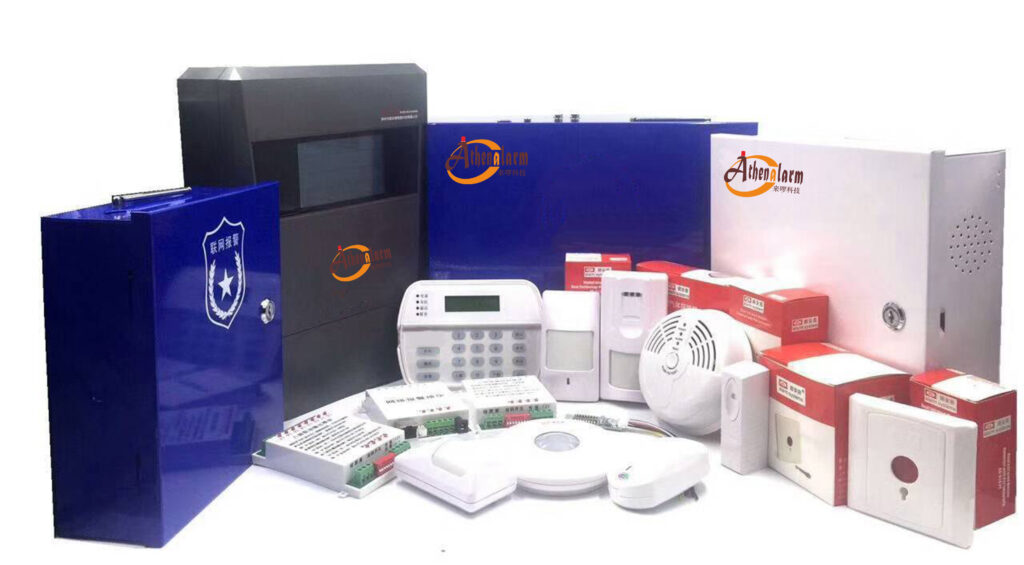
Essential Components
- Motion detectors (PIR, dual-tech)
- Door/window contacts
- Glass-break sensors
- Control panels & keypads
- Sirens and strobe lights
- CCTV + access control integration
Must-Have Functionalities
- Real-time push notifications and SMS alerts
- 24/7 remote monitoring or connection to central monitoring station
- AI-based false alarm filtering
- Multiple communication paths (Ethernet, 4G/5G, RF)
- Backup power for at least 8–24 hours
Scalability & Future-Proofing
Look for systems that support:
- Modular zone expansion
- Integration with IoT sensors
- API compatibility with building management systems
- 5G-ready communication modules
- Potential upgrades such as biometric access or cloud dashboards
Cost Breakdown
- Initial cost: hardware, installation, cabling
- Ongoing cost: monitoring fees, software licenses, battery replacement
- Hidden costs: false alarm penalties, non-compatible upgrades
ROI example:
ROI = (Prevented Losses – Total System Cost) / Total System Cost
5. Evaluating Vendors and Providers
What to Look For
- Industry certifications (UL, CE, FCC, SIA compliance)
- Proven portfolio in your industry sector
- Transparent pricing and service-level agreements (SLA)
- Local technical support and emergency response capability
Red Flags
- No physical office or cannot provide licensing information
- Overpromising features without references
- Low upfront price with excessive hidden fees
Key Questions to Ask Providers
- What is your average alarm response time?
- Are your systems compatible with our existing security infrastructure?
- How often do you release firmware updates?
- Do you provide on-site training for employees?
- What warranties and service packages do you offer?
- Can you provide at least three case studies or references?
Vendor Evaluation Scorecard
Businesses can rate vendors across factors such as price transparency, technical capability, integration readiness, and support quality.
6. Installation, Maintenance, and Best Practices
Installation
For enterprise systems, professional installation is strongly recommended. Consider:
- Cabling design
- Zone planning
- Avoiding downtime during installation
- Testing procedures before system acceptance
Maintenance Requirements
- Monthly sensor and siren tests
- Quarterly communication path testing
- Annual battery replacement schedule
- Firmware and software updates
Compliance & Training
- Ensure the system meets insurance and regulatory standards
- Run periodic intrusion response drills
- Maintain an up-to-date configuration log
Troubleshooting Common Issues
- Frequent false alarms: check sensor placement, pets, HVAC airflow
- Communication failure: verify network redundancy, SIM card status
- Low battery alerts: implement scheduled preventive maintenance
7. Case Studies and Real-World Examples
Case Study 1: Logistics Company Reduced Theft by 80%
A medium-sized logistics firm deployed AI-enabled outdoor beams + wireless interior sensors. False alarms reduced by 65%, and intrusion attempts dropped drastically.
Case Study 2: Retail Chain Improved Scalability
A retail group switched from wired to wireless systems, enabling new store deployment in under 3 days with centralized cloud monitoring.
Case Study 3: Data Center Compliance Success
A data storage company upgraded to hybrid intrusion systems integrated with access control, meeting ISO 27001 physical security controls.
8. Conclusion
Choosing the right enterprise alarm system requires a structured, evidence-based approach. This Security System Selection Guide helps businesses:
- Understand risks
- Compare technologies
- Evaluate vendors
- Plan installation and long-term maintenance
Proactive investment in security not only protects assets but also strengthens business resilience against evolving threats.