
1. Introduction
Warehouse environments remain one of the most frequently targeted locations for theft, internal shrinkage, and unauthorized access. According to the FBI Cargo Theft Report, U.S. companies lose hundreds of millions annually due to warehouse-related incidents—losses that could often be prevented through structured warehouse security practices. For modern warehouses handling high-value goods, sensitive materials, or time-critical logistics, robust security is no longer optional—it is foundational to operational continuity, compliance, and risk management.
This guide provides a technical, actionable framework for improving warehouse security practices, designed specifically for intrusion alarm professionals, product managers, procurement teams, and bulk-purchase decision-makers. From vulnerability assessments to advanced alarm deployments, this article outlines best practices based on international standards and real-world experience across multiple industries.
2. Assessing Warehouse Vulnerabilities
A strong security strategy begins with a complete evaluation of existing risks. Conducting a structured risk assessment allows teams to identify perimeter gaps, unprotected entry points, poor lighting areas, and blind spots in surveillance coverage. Most warehouse breaches originate from predictable weaknesses—loading docks, rear service doors, and unmonitored storage aisles.
Key Practices
- Perform site surveys to document security weaknesses and access patterns.
- Use vulnerability mapping to connect intrusion risks with alarm system design requirements.
- Incorporate employee insight to uncover overlooked internal threats.
- Assess emergency exits, ventilation openings, wall structures, and roof access.
- Integrate assessment results into alarm system planning—especially for large-scale deployments.
3. Implementing Perimeter Security Measures
A secure warehouse begins at the perimeter. Physical barriers remain one of the most cost-effective ways to deter intrusions before they reach indoor assets. Effective perimeter security combines structural barriers with real-time intrusion detection and controlled access.
Best Practices for Perimeter Protection
- High-security fencing using anti-climb or welded mesh materials.
- Integrated perimeter alarm sensors including vibration sensors, buried cable detection, or IR beam fences.
- Reinforced gates with access control and automatic locking.
- Strategic lighting placement to eliminate hiding spots and improve CCTV visibility.
- Securing warehouse entrances with alarms, especially loading docks and side doors.
Procurement Recommendations
- Balance cost and durability when selecting fencing materials for large perimeter zones.
- Evaluate warranties, environmental resistance, and sensor integration compatibility.
- Prioritize modular systems for warehouses planning future expansions.

4. Integrating Advanced Alarm and Surveillance Technologies
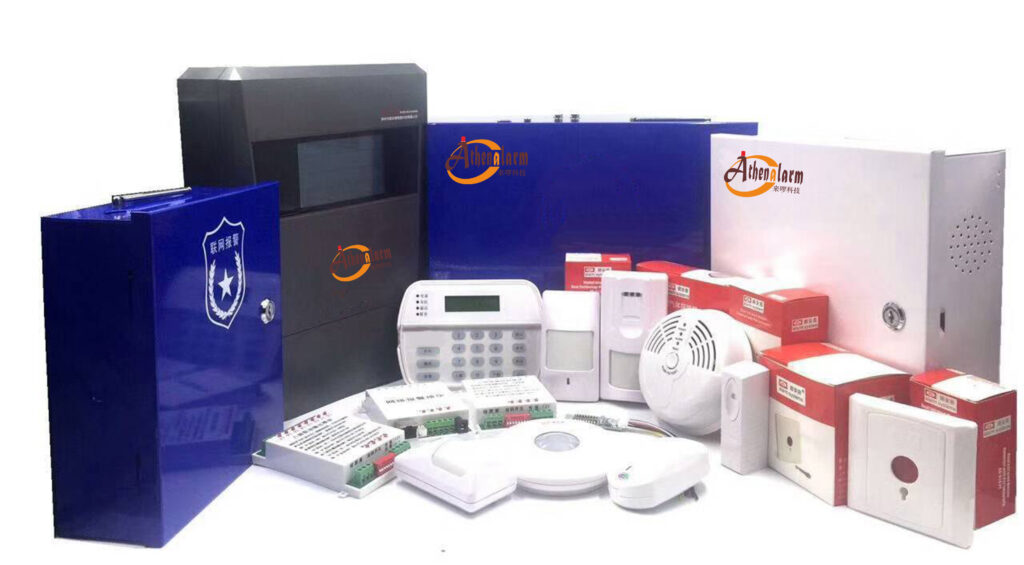
Modern warehouses require layered electronic security. Alarm technologies serve as the core of reliable protection and can be integrated with surveillance, analytics, and central monitoring platforms.
Recommended Alarm Technologies
- Motion detectors (PIR, dual-tech), suitable for aisles and open spaces.
- Magnetic door contacts for all doors, emergency exits, and roller shutters.
- Glass-break sensors for offices or high-value storage rooms.
- Wireless vs. wired systems: Wired is preferred for new construction; wireless for complex retrofits.
Technology Integration Practices
- Combine alarms with CCTV and AI-based analytics to reduce false alarms and identify suspicious movement patterns.
- Use cloud-based monitoring for multi-warehouse management.
- Implement redundant networking (cellular + ethernet) to prevent communication failure.
Procurement & Scalability Guidance
- Choose alarm systems with scalable zone capacity for large warehouses.
- For bulk procurement, prioritize vendors offering long-term support, open-protocol compatibility, and third-party certification.
- Favor intrusion panels supporting IP reporting, automation integration, and cybersecurity hardening.
5. Employee Training and Access Management
Human factors account for a significant portion of warehouse security failures. Even the best alarm systems rely on trained staff who understand procedures, respond appropriately to alerts, and maintain disciplined access control.
Training Best Practices
- Conduct routine training on identifying suspicious activity.
- Implement incident-reporting workflows and escalation protocols.
- Simulate alarm events to improve response time.
Access Control Strategies
- Implement biometric or RFID access control for sensitive zones.
- Conduct periodic audits of keycards and user privileges.
- Apply role-based permissions aligned with operational responsibilities.
Practical Tools for Teams
- Provide training checklists aligned with ASIS security recommendations.
- Choose access-control systems with intuitive interfaces to reduce user error.
6. Maintenance and Compliance Strategies
Long-term warehouse security relies on routine maintenance, regulatory compliance, and proactive system testing. Alarm systems that are not regularly inspected may fail during critical events.
Maintenance Essentials
- Weekly or monthly alarm testing, depending on risk tier.
- Firmware updates for alarm panels, sensors, and access control systems.
- Battery replacement schedules and redundant power supplies.
- Environmental checks: Humidity, dust, heat, and vibration can degrade devices.
Compliance Guidance
- Align warehouse security practices with ISO 27001, UL 634, and local fire codes.
- Document all testing logs for audits and insurance validation.
7. Case Studies: Real-World Warehouse Security Deployments
Case Study 1: Global Electronics Distribution Center
A multinational electronics distributor faced repeated nighttime perimeter breaches. After conducting a vulnerability assessment, the team implemented dual-layer fencing, IR beam perimeter alarms, and AI-enhanced CCTV analytics. Within three months, intrusion attempts dropped by 82%, and operational downtime caused by false alarms fell by 40%.
Case Study 2: FMCG Cold Storage Facility
A temperature-controlled warehouse struggled with internal shrinkage and unmonitored access to restricted areas. The facility deployed biometric access control, door-contact alarms for all cold rooms, and automated reporting dashboards. Loss incidents decreased significantly, and accountability improved across all shifts.
Case Study 3: Automotive Parts Warehouse
A regional automotive supplier integrated cloud-connected alarm systems and centralized monitoring across five warehouses. The unified system improved alarm response time by 30%, reduced maintenance costs through predictive diagnostics, and streamlined procurement by standardizing components.
8. Conclusion
Implementing strong warehouse security practices is one of the most effective ways to protect assets, reduce operational risks, and improve overall efficiency. From perimeter protection to advanced alarm technologies and staff training, each element contributes to a layered defense strategy that aligns with modern threats and compliance requirements.
Security teams, product managers, and procurement leaders should regularly evaluate their current systems, identify gaps, and adopt scalable, standards-driven solutions. As threats evolve and warehouse operations become more automated, maintaining a proactive and adaptable security strategy will be essential.
References
- OSHA – Workplace Safety & Health Guidelines
- ASIS International – Physical Security Principles & Assessment Standards
- Electronic Security Association (ESA) – Alarm System Effectiveness Reports
- NIST – SP 800-53: Security and Privacy Controls for Information Systems
- FBI – Cargo Theft Annual Statistical Reports
- UL Standards – UL 634 & Related Alarm System Certifications
- Security Management Magazine – Industry Case Studies and Best Practice Reports
- Cargo Security Alliance – Research on warehouse and logistics security