
Introduction: The Uncomfortable Truth About ATM Alarm Systems
Across the global banking industry, automated teller machines (ATMs) remain one of the most frequently targeted assets for organized criminal attacks. Every year, criminal groups attack ATMs using methods such as gas explosions, ram-raids, drilling attacks, card skimming operations, and internal tampering. In response, banks and ATM operators invest heavily in alarm systems intended to detect and report these incidents.
Yet a troubling reality persists: many ATM alarm systems fail when they are needed most.
When investigators review ATM theft incidents, a recurring pattern appears. The alarm system was installed — but it did not work when it mattered most. In many cases, the alarm never triggered during the attack, the signal never reached the monitoring center, the system lost power before sending the alert, or the alarm triggered too late to prevent the theft.
This means the failure was not the absence of an ATM alarm system — it was the failure of the alarm system architecture itself.
For banks, ATM deployers, and security integrators, this raises a critical engineering question: Why do so many ATM alarm systems fail during real attacks, and how can we design a fail-safe ATM security system that continues working even when criminals deliberately try to disable it?
This article provides a comprehensive, field-tested analysis of ATM alarm system failure mechanisms and presents a practical fail-safe architecture used by high-reliability banking security deployments. You will learn:
- The real reasons ATM alarm systems fail during attacks
- How criminals disable ATM alarm infrastructure
- How to design fail-safe ATM alarm architecture
- Why dual communication paths (IP + GSM) are essential
- How to protect alarms against power sabotage and communication cuts
- A step-by-step engineering guide to building a resilient ATM security system
- Integration with complementary security measures for enhanced protection
- Maintenance and testing protocols to ensure long-term reliability
- Regulatory considerations and compliance best practices

Understanding the Real Threat Landscape for ATMs
ATM Crime Is Engineering-Driven
Modern ATM theft is rarely random. Organized criminal groups often include individuals with technical knowledge of ATM cabinet construction, alarm wiring layouts, power routing, communication infrastructure, and security response times. They understand that disabling the alarm system is the first step toward a successful attack.
These groups may conduct reconnaissance days or weeks in advance, scouting for vulnerabilities like exposed wiring or predictable patrol routes. Therefore, criminals often target three specific components: alarm detection sensors, communication channels, and the power supply. If any one of these fails, the alarm system becomes ineffective.
Common Types of ATM Physical Attacks
1. Gas Explosion Attacks Criminals inject gas into the ATM safe and ignite it. The result is instant cabinet destruction, severed electrical systems, and cut alarm wiring. If the alarm system relies on internal sensors only, it may be destroyed before sending an alert — the blast can vaporize sensor connections in milliseconds, leaving no time for signal transmission. Recent trends show attackers also using solid explosives, causing even more rapid breaches.
2. Ram-Raid Attacks A vehicle is used to smash or pull the ATM from its mounting. These attacks often last less than 90 seconds, causing immediate structural damage, ripped communication lines, and power loss. Criminals may use heavy machinery like forklifts in remote areas, amplifying the need for standalone alarm resilience.
3. Cutting Tool Attacks Criminals use angle grinders, thermal lances, or hydraulic spreaders. These attacks may last 10–30 minutes, giving the alarm system time to trigger — if designed properly. However, sparks and heat from tools can interfere with sensors if not calibrated correctly.
4. Cabinet Removal Attacks Entire ATMs are removed and transported to another location. If the alarm system depends on local infrastructure, it loses communication instantly. The system must have geolocation tracking or persistent signaling to alert authorities during transit.
5. Internal Service Compromise Attackers impersonate maintenance staff or exploit weak service access procedures, often bypassing alarm systems entirely. Insiders or compromised vendors might disable alarms during “routine” checks, highlighting the need for strict access logs and verification protocols.
6. Network Tampering Sophisticated attackers disable communication lines before launching the physical attack. This includes jamming signals or exploiting unencrypted network connections, leading to silent alarm failures.
7. Logical and Malware Attacks Beyond physical methods, cybercriminals deploy malware or black box devices connected via USB ports to dispense cash illegally. These attacks exploit software vulnerabilities such as outdated operating systems, and can bypass alarms if the system lacks endpoint detection.
8. Skimming and Overlay Devices Skimmers attached to card readers steal data for later fraud. Advanced overlays can include hidden cameras for PIN capture, emphasizing the importance of tamper-evident ATM designs.
Industry data from Europol reports indicates a 269% rise in ATM-related fraud attacks between 2019 and 2021, with global losses exceeding $150 million annually.
Why Most ATM Alarm Systems Fail During Real Attacks
Through field investigations, security audits, and post-incident analysis, several recurring failure patterns emerge.
Failure #1: Alarm Sensors Are Installed in the Wrong Locations
Many ATM alarm systems rely only on door contacts and internal motion detectors — sensors that detect intrusion after the safe door is opened. But criminals rarely open ATM safes normally. Instead they explode them, cut through metal, or pull them out entirely.
Common poor installations include a single vibration sensor inside the safe, no tilt detection, no external shock sensors, and no mounting base detection. Attackers often work outside the cabinet — cutting through ATM walls, drilling the safe side panel, or removing the ATM from its mounting base — actions that internal-only sensors simply cannot detect.
Engineering Lesson: ATM alarms must detect attack activity, not just door opening. Essential sensors include seismic vibration sensors for drilling or impacts, tilt sensors for ram-raids, shock sensors for explosions, and thermal sensors to identify heat from cutting tools.
Failure #2: Communication Is Too Easy to Disable
Many ATM alarm systems rely on a single communication path — a wired internet connection or local telephone line. Criminals often cut these connections before the attack begins. Once communication is lost, the monitoring center receives no signal and no response occurs.
Criminals also jam cellular signals using readily available devices or exploit unencrypted network connections, leading to completely silent failures.
Engineering Lesson: ATM alarm systems must detect and report communication loss and network tampering. More importantly, they must maintain backup communication channels. Implement heartbeat signals — periodic checks every 30–60 seconds — to immediately flag disruptions.
Failure #3: Power Loss Disables the Alarm System
Many ATMs share the same power source for ATM electronics, lighting, and alarm systems. If criminals cut the power, both the ATM and the alarm system shut down simultaneously. Without a backup battery, the system cannot report the event.
Engineering Lesson: ATM alarm systems must include an internal battery backup with at least 24–72 hours of capacity, power failure detection, and low-power communication capability. Monitor battery health remotely to prevent failures from gradual degradation — a common oversight that renders systems useless over time.
Failure #4: Alarm Trigger Delay Is Too Long
Some alarm systems rely on event verification or delay logic to reduce false alarms. But during ATM attacks, criminals act extremely fast. A delay of 30–60 seconds can make the system useless, especially for explosive attacks that may be over in 2–5 minutes.
Engineering Lesson: High-risk environments require instant alarm transmission, priority signal routing, and direct monitoring center alerts. Configure systems with adjustable thresholds but default to zero delay for ATMs, and use AI filters to minimize false positives without compromising speed.
Failure #5: Alarm Systems Are Not Tamper-Resistant
Professional criminals often locate alarm control panels, sensor wiring, and communication modules and disable the system before starting the attack. If the system does not detect tampering, it becomes completely blind.
Engineering Lesson: ATM alarm systems must include enclosure tamper switches, cable cut detection, sensor supervision loops, and communication monitoring. Use armored cabling and concealed wiring routes to add physical barriers. Use end-of-line resistors in wiring to detect cuts — a simple yet effective technique often overlooked.
Failure #6: Monitoring Response Delays
Even if an alarm triggers successfully, response time determines the final outcome. The process of signal transmission, alarm verification, operator confirmation, and police dispatch can take several minutes. However, many ATM attacks last less than 3 minutes. By the time response teams arrive, the criminals are gone.
Engineering Lesson: Alarm systems should not rely solely on remote monitoring. Local deterrence mechanisms — sirens, fog security systems, locking mechanisms — are increasingly important. Integrate with local law enforcement protocols for faster dispatch.
Failure #7: Alarm Fatigue and False Alarms
If monitoring centers receive frequent false alarms caused by maintenance work, cleaning staff activity, or environmental vibration, operators become desensitized. When a real attack occurs, they may delay response assuming it is another false alarm. Linking alarms to cameras for visual confirmation can reduce false positives by up to 90%.
Engineering Lesson: Effective ATM alarm systems must balance sensitivity and accuracy. Use AI to filter nuisances and log false positives for ongoing system tuning.
Failure #8: Lack of System Integration
Many ATM deployments use fragmented security systems — alarm systems, CCTV, access control, and monitoring platforms that operate independently. When systems are siloed, critical information is lost and incident detection accuracy suffers.
Engineering Lesson: A well-designed ATM protection system should integrate intrusion detection, video verification, remote monitoring, and event analytics into a unified defense platform.
Failure #9: Installation Errors and Outdated Systems
Even the best alarm system fails if installed incorrectly. Common mistakes include loose sensors leading to unreliable detection, improper wiring, poor cable protection, and incorrect sensitivity configuration. A growing problem is reliance on legacy systems — many ATMs run unsupported operating systems like Windows XP or Windows 7, vulnerable to malware that can silently disable alarms.
Engineering Lesson: Always verify installer certifications and conduct post-install audits. Apply regular firmware updates and endpoint protection.
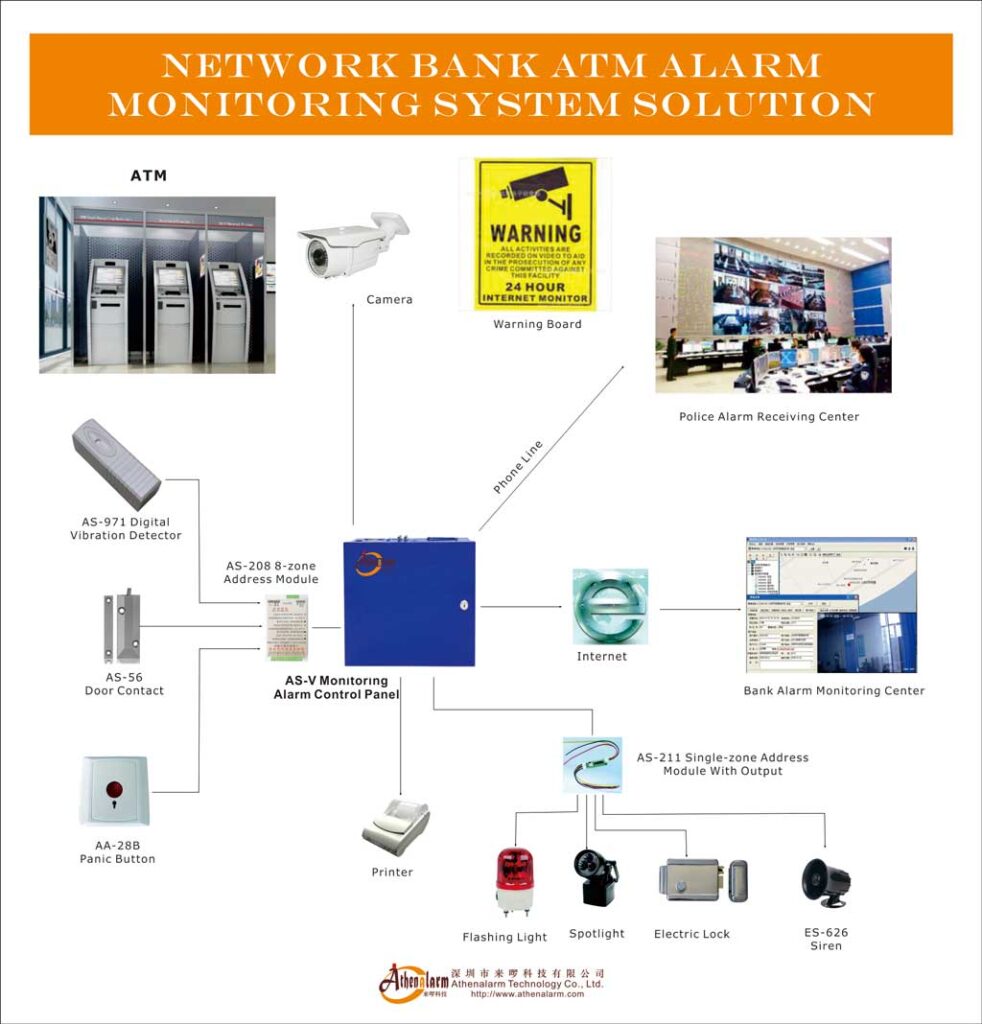
Engineering Principles of a Fail-Safe ATM Alarm System
A fail-safe ATM security system is designed under one principle: if any component fails, the system must still trigger an alarm. Instead of assuming the system will work normally, engineers assume criminals will attempt to disable it. The system must remain operational despite sabotage.
Fail-Safe Principle #1: Redundant Detection Layers
A reliable ATM alarm system must detect multiple attack behaviors. Recommended sensors include seismic sensors, vibration detectors, tilt sensors, door contacts, cabinet tamper sensors, safe temperature sensors, and movement sensors. Layer them hierarchically — primary sensors for immediate threats, secondary sensors for confirmation — ensuring attacks are detected even if one sensor fails.
Fail-Safe Principle #2: Dual Communication Paths
One of the most important upgrades to ATM alarm reliability is dual communication paths. The typical architecture uses IP/Ethernet as the primary communication channel and GSM/LTE cellular as the backup. If the network cable is cut, the system automatically switches to GSM. Select modules with auto-failover logic and test switchover times to ensure transitions happen in under 5 seconds.
Fail-Safe Principle #3: Independent Power Supply
Every ATM alarm system must operate independently from the ATM itself. Essential components include an internal battery backup, battery monitoring, and power failure alerts. The minimum design goal is 24–72 hours of alarm operation without external power. Opt for lithium-ion batteries for longevity and include surge protection to guard against electrical sabotage.
Fail-Safe Principle #4: Anti-Tamper Protection
A fail-safe ATM alarm system must detect attempts to disable it. Essential protections include enclosure tamper switches, cable cut detection, sensor supervision loops, and communication monitoring. Any abnormal condition should generate an immediate alert.
Fail-Safe Principle #5: Immediate Alarm Transmission
In high-risk environments like ATMs, speed matters. Alarm signals must reach the monitoring center within seconds. Design requirements include priority transmission protocol, AES-256 encrypted communication, and real-time monitoring. Encrypt signals to prevent interception and prioritize alerts over routine data.
Fail-Safe Principle #6: Regular Auditing and Compliance Checks
Systems degrade without oversight. Incorporate logging for all events, schedule regular audits, and ensure alignment with standards like PCI DSS, EN 50131, and local banking regulations. Non-compliance can void insurance and invite regulatory fines.
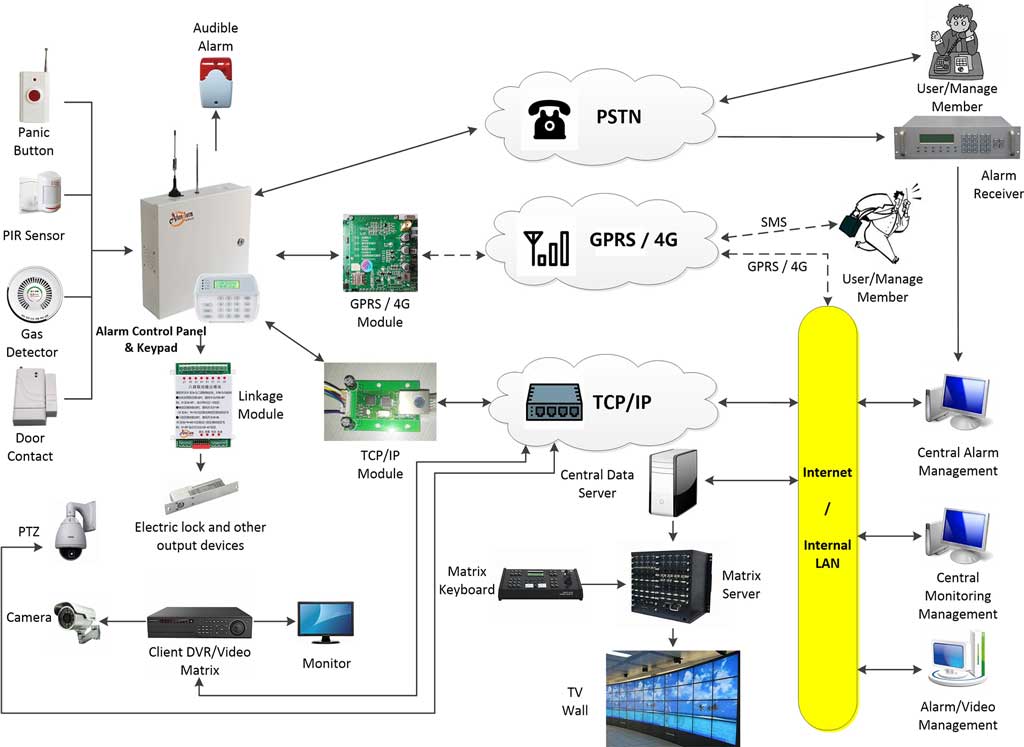
Designing a Fail-Safe ATM Alarm System: Step-by-Step Engineering Guide
Step 1: Conduct a Comprehensive Threat Assessment
Analyze the ATM location risk level (urban vs. rural), previous ATM attack incidents in the area, physical protection level, and environmental conditions. Gather data from local crime reports and bank records, visit the site to map vulnerabilities, score risks on a 1–10 scale, and document findings for stakeholder review. High-risk ATMs include outdoor machines, remote locations, and gas explosion hotspots.
Step 2: Define Alarm Detection Strategy
Choose sensors capable of detecting attack behaviors. The recommended configuration includes primary sensors (seismic sensor, vibration detector), secondary sensors (tilt detector, cabinet tamper switch), and additional sensors (door contact, temperature sensor). Create a sensor matrix table to ensure full redundancy across all attack types.
Step 3: Install Sensors at Strategic Locations
Correct placement dramatically improves detection reliability. Recommended placements: seismic sensor on the ATM safe body, tilt sensor at the ATM base, door contact on the safe door, tamper sensor on the alarm enclosure. Mount sensors using manufacturer-approved methods with shielded cables to reduce interference. Calibrate each sensor using test tools and test for false positives by mimicking normal activities. A common mistake is placing sensors in exposed positions — always use weatherproof enclosures.
Step 4: Implement Dual Communication Channels
Install a communication module supporting Ethernet/IP as the primary path and GSM/LTE cellular as the backup. Connect primary to the ATM’s network port, insert a SIM card for GSM and configure APN settings, program failover logic in the panel’s software, and verify the switchover by disconnecting the primary and confirming alert delivery.
Step 5: Install Independent Power Backup
Install a rechargeable battery with a power monitoring circuit. Choose a battery rated for the system’s draw (e.g., 12V 7Ah for 24+ hours), mount it in a secure ventilated enclosure, wire it to the panel with fuses for safety, and set alerts for low voltage (below 11V). Simulate a power cut during testing to verify runtime.
Step 6: Implement Anti-Tamper Monitoring
Configure alarm logic to detect sensor removal, cable disconnection, and enclosure opening. Enable tamper zones in panel programming, install switches on all enclosures, use supervised loops with end-of-line resistors, and test by opening enclosures to confirm alerts are generated.
Step 7: Add Local Deterrence Mechanisms
Modern ATM security strategies increasingly incorporate active deterrence. High-power sirens (110+ dB output) disrupt attackers and attract attention. Security fog generators rapidly fill the ATM space — preventing criminals from seeing — and can halt up to 80% of breaches when activated within 10 seconds. Some ATMs also use cash protection devices like dye packs or ink staining systems.
Step 8: Integrate Video Verification
When an alarm triggers, nearby cameras should activate and transmit video clips to the monitoring center for visual verification. This reduces false alarms and accelerates response. Use AI-powered anomaly detection for loitering or unusual behavior patterns.
Step 9: Implement Remote Health Monitoring
Monitor sensor status, battery condition, communication signal strength, and tamper alerts continuously. Use IoT platforms for real-time dashboards. Early detection of system faults prevents the silent failures that leave ATMs unprotected.
Step 10: Connect to a Professional Monitoring Center
Route alarm signals to the bank security center or a certified third-party monitoring center. Monitoring staff should receive real-time alerts, location information, and event type. Configure signal formats (e.g., Contact ID), integrate with response protocols including police dispatch, and train staff on alert handling to avoid delays.
Step 11: Perform Real Attack Simulation Tests
Testing is essential. Recommended tests include communication cut tests, power failure simulations, vibration attack simulations, and cabinet tilt tests. Schedule tests during off-hours with security present, record response times, and adjust configurations as needed. Repeat quarterly to catch issues before they become vulnerabilities.
Step 12: Establish a Strict Maintenance Program
Alarm systems require regular maintenance to remain reliable. Monthly checks should cover communication status and battery health. Quarterly checks should include sensor testing and alarm trigger tests. Annual checks should encompass full system inspection, firmware updates, and independent audit reviews. Document all maintenance activities for compliance records.

Common Mistakes Organizations Make When Deploying ATM Alarm Systems
Treating ATMs Like Standard Buildings. ATM environments require specialized alarm design. Standard intrusion systems are often inadequate given the intensity and speed of ATM attacks.
Relying on Single Communication Paths. Dual communication should be mandatory. Skipping it saves short-term costs but dramatically increases exposure to loss.
Ignoring Power Failure Scenarios. Without battery backup, the system cannot survive sabotage. Always factor in regional power outage frequencies and battery degradation rates.
Poor Sensor Placement. Improper placement creates blind spots that criminals exploit. Consult ATM blueprints and test iteratively.
Lack of Regular Testing. Alarm systems should be tested at least quarterly. Neglect leads to silent failures that are only discovered during actual attacks.
Overlooking Regulatory Compliance. Failing to align with standards like EN 50131, PCI DSS, or local banking regulations can void insurance policies and invite regulatory penalties.
Overlooking Software Vulnerabilities. Legacy operating systems and unpatched firmware are increasingly exploited entry points for disabling alarm systems electronically.
The Business Impact of Reliable ATM Alarm Systems
For banks and ATM operators, a reliable ATM security system provides more than theft prevention. Benefits include reduced financial losses (average theft costs $30,000 or more per incident), improved insurance compliance and lower premiums, enhanced regulatory compliance, and stronger customer trust. A cost-benefit analysis often shows return on investment within 1–2 years through loss prevention alone.

The Future of ATM Alarm Security
ATM protection will increasingly rely on integrated security platforms combining alarms, video, and analytics; predictive attack detection using machine learning on historical patterns; IoT-based sensor networks for real-time health checks; and 5G communication for faster and more reliable backup transmission.
AI-assisted attack detection reduces false alarms by learning to distinguish real attacks from environmental noise. Biometric and contactless verification technologies help prevent insider threats. Blockchain-based logging offers tamper-proof audit trails for compliance.
However, the core engineering principles remain unchanged: redundancy, fail-safe design, independent communication, and resilient power systems.
Conclusion: Building ATM Alarm Systems That Work When It Matters Most
ATM attacks are fast, aggressive, and increasingly sophisticated. The uncomfortable truth is that many ATM alarm systems fail not because they are absent, but because they are poorly designed for hostile conditions.
A truly reliable ATM alarm system must be built around fail-safe engineering principles: multi-layer attack detection, dual communication paths (IP + GSM), independent power backup, tamper-resistant hardware, immediate alarm transmission, ongoing maintenance, and full integration with video and response systems.
When these elements are combined, the ATM security system becomes far more resilient — capable of continuing to operate even when criminals actively attempt to disable it.
For banks, ATM operators, and security procurement professionals, investing in a fail-safe ATM alarm architecture is no longer optional. It is a critical requirement for protecting one of the most exposed assets in modern banking infrastructure.
And in the world of ATM security, the alarm that works during the attack is the only one that truly matters.