

In 2024, a U.S. logistics center experienced a coordinated cyber-physical attack where intruders exploited an unpatched network video recorder to push malicious traffic into the building’s alarm network. The result: intrusion zones were force-disabled for six minutes—long enough for a physical breach. Incidents like this illustrate a critical shift: intrusion alarm systems are no longer isolated hardware; they now run on the same IP networks as IT infrastructure.
This convergence—where physical sensors, alarm panels, controllers, and monitoring software integrate tightly with IT protocols, cloud services, and cybersecurity tools—has created new hybrid risks, but also unprecedented opportunities.
This article provides IT and security managers with actionable, non-theoretical guidance on how to foster effective, operational collaboration to strengthen their overall cyber-physical security posture. Benefits include faster incident response, fewer false alarms, reduced system downtime, and more accurate threat detection across both digital and physical domains.
The Challenges of Siloed Systems in Alarm Security
In many organizations, IT and physical security teams operate separately. This siloed environment frequently leads to integration gaps, especially when intrusion alarms rely on both cyber and physical components.
Common Pain Points
- Delayed cross-domain alerts
Example: A malware event that disrupts alarm communication paths but does not trigger immediate notification to the physical security team. - False alarms caused by cyber disruptions
Network congestion or spoofed packets can cause IP alarm sensors to misreport zone events. - Weak IoT hygiene in alarm devices
Many legacy intrusion sensors and gateways run outdated firmware and lack encryption, making them easy targets.
Industry Data
- According to NIST Cyber-Physical Systems Framework (SP 1500-201), over 37% of surveyed CPS devices in security environments exhibited exploitable network vulnerabilities due to poor patching practices.
- Gartner’s recent IoT Security Report notes that up to 20% of IP-based alarm components still transmit data without modern encryption—making cyber-physical interference easier.
These realities make it essential for IT and physical security teams to collaborate proactively rather than reactively.

Understanding Cyber-Physical Alarm Integration
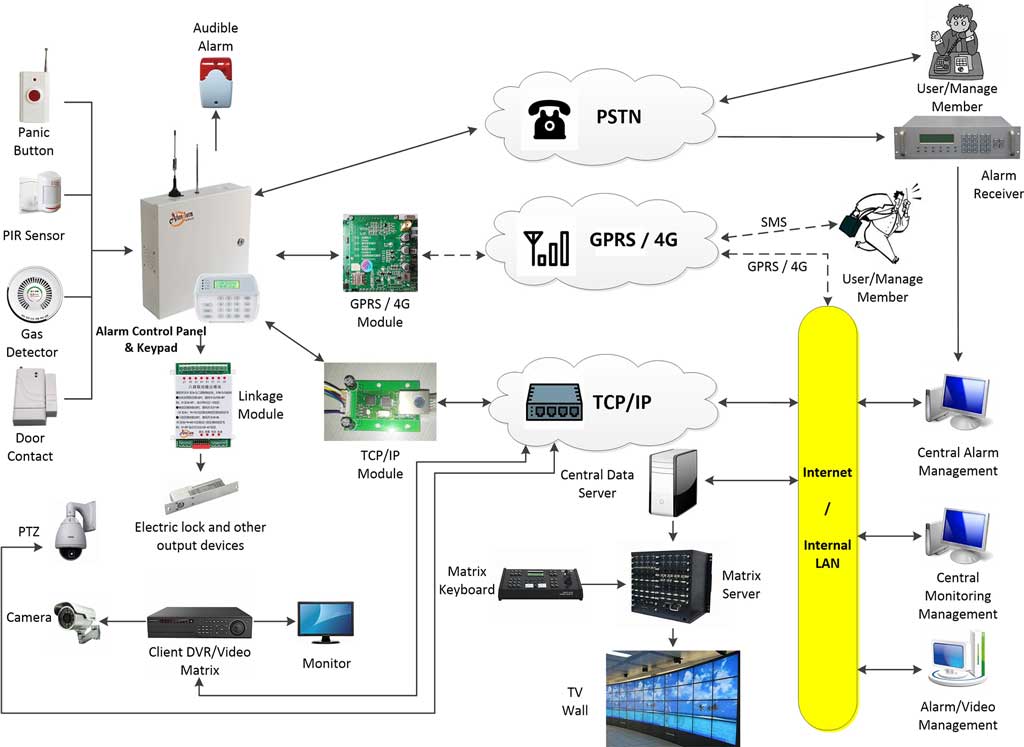
Modern intrusion alarm systems now operate as hybrid ecosystems combining physical detection hardware with cyber infrastructure.
Core Components
Physical layer:
- Motion detectors
- Door/window magnetic contacts
- Glass-break sensors
- Control panels and wired/wireless zone expanders
Cyber/IT layer:
- IP-based alarm communicators
- Encrypted data transmission protocols (TLS, AES-encrypted channels)
- Cloud monitoring dashboards
- AI-driven analytics for anomaly detection
- Network ports, VLAN segmentation, API endpoints
Key Integration Benefits
- Unified real-time dashboards showing both network events and sensor alarms
- Correlated threat intelligence (e.g., a login anomaly tied to a simultaneous forced-door alert)
- Reduced operational blind spots when alarms share the same telemetry pipeline as IT logs
- Improved forensic accuracy through integrated audit trails
Collaboration Strategies for IT and Security Teams
Below are practical, step-by-step collaboration strategies designed for real deployment—not theory.
Strategy 1: Establish Cross-Functional Cyber-Physical Teams
How It Works
Combine IT cybersecurity staff with physical security/alarm specialists to create a single, coordinated response structure.
Step-by-Step Implementation
- Identify key personnel
Include network engineers, SOC analysts, alarm technicians, and monitoring operators. - Set a bi-weekly meeting schedule
Meetings should cover patch status, alarm incidents, and network performance affecting alarm traffic. - Create shared documentation
Use a joint wiki or ticketing system for alarm configuration changes and network adjustments. - Run simulated breach exercises
Example scenario: test how both teams handle a cyber-triggered alarm outage. - Cross-train team members
- IT learns how intrusion zones, panels, and sensors work
- Security teams learn basic network topology, VLANs, encryption, and log analysis
Strategy 2: Implement Integrated Cyber-Physical Technologies
Tools such as SIEM platforms with physical-event ingestion, unified monitoring dashboards, API-based alarm integration, and ONVIF/REST-compliant alarm controllers enable tight collaboration.
Operational Setup Steps
- Assess current infrastructure
Create an inventory of alarm sensors, IT network architecture, firmware versions, and protocols used. - Select compatible software/hardware
Ensure support for standards such as ONVIF, SIA DC-09, TLS encryption, and MQTT/REST APIs. - Configure network and API connections
- Assign alarms to dedicated VLANs
- Enable encrypted communication channels
- Connect alarm events into the SIEM/SOC environment
- Test integration with real scenarios
Example: simulate a DDoS attack on an alarm gateway to confirm failover behavior. - Monitor and fine-tune
Adjust rules to reduce noise, correlate physical and cyber indicators, and eliminate false positives.
Strategy 3: Develop Joint Policies and Incident Response Protocols
Hybrid threats require hybrid response plans.
Create a Cyber-Physical Alarm Response Workflow
- Define triggers
- Cyber event that impacts alarm communication
- Physical alarm anomalies correlating with IT irregularities
- Assign responsibilities
- IT handles network stability, firewall rules, and log analysis
- Physical security handles sensor verification and on-site response
- Set escalation paths
Example: If a panel loses network heartbeat, IT is alerted first; if sensors misfire, physical security leads. - Establish communication channels
Shared chat groups, joint dashboards, and real-time alert feeds. - Review weekly
Update response protocols after significant incidents.
Case Studies and Real-World Applications
Case Study 1: Commercial Building Prevents Alarm Shutdown During Ransomware Attack
A large commercial property experienced a ransomware event that targeted its building automation network. Because IT and security teams had a shared monitoring platform and cross-trained response plan, the alarm panel network was isolated within three minutes, preventing system deactivation.
Result: Zero downtime for intrusion alarms.
Case Study 2: Manufacturing Facility Reduces Incident Response Time by 30%
According to ISC2-reported data, a manufacturing site that integrated its alarm system with IT SIEM tools achieved a 30% faster response time to physical incidents due to automated correlation between cyber logs and sensor alerts.
Result: Earlier detection of hybrid physical intrusion attempts and reduced false alarms.
Best Practices for Sustained Collaboration
1. Continuous Education and Certification
- IT teams: CompTIA Security+, ISC2 CC
- Physical security teams: ASIS PSP/PCI certifications
- Joint courses: Cyber-Physical Systems Training (NIST-aligned)
2. Regular Audits of Integrated Alarm Systems
Audit actions:
- Vulnerability scanning of alarm network interfaces
- Penetration testing against IP alarm communicators
- Firmware version checks and patch management
- Log correlation review between SIEM and alarm software
3. Prepare for Future Trends
- AI-enabled predictive maintenance for alarm reliability
- Zero-trust networks for alarm communications
- Cloud-based intrusion management platforms with automated threat correlation
These trends will further deepen the need for cross-functional cooperation.
Conclusion
Cyber-physical convergence has fundamentally reshaped intrusion alarm security. The organizations that succeed are those where IT and physical security managers collaborate instead of operating in silos. By forming cross-functional teams, adopting integrated technologies, and establishing unified response protocols, businesses can dramatically strengthen their overall security posture against hybrid threats.
Start today: audit your alarm systems, map dependencies with your IT infrastructure, and initiate collaborative workflows. Proactive integration will deliver more resilient, intelligent, and future-ready intrusion alarm protection.
References
- NIST Special Publication 1500-201, Framework for Cyber-Physical Systems
- ISC2 Cybersecurity Workforce Study, latest edition
- ASIS International, Physical Security Guidelines for Security Professionals
- Gartner IoT Security Report, intrusion and IoT device vulnerability analysis