
Introduction
In an age where property crimes evolve as quickly as technology, many homeowners and business operators share the same concern: “Is my security system truly protecting me?” With reports showing that a burglary occurs every few seconds in many countries, choosing the right protection model is no longer optional—it is essential.
This post explores Smart vs Traditional Security System solutions and compares their core capabilities, limitations, and long-term value. Whether you’re upgrading an outdated alarm or choosing your first system, this guide explains how smart security delivers more efficient, responsive, and intelligent protection.
By the end, you’ll understand the key differences, see real-world applications, and know exactly which system aligns with your needs.
Understanding Traditional Security Systems
Definition and Components
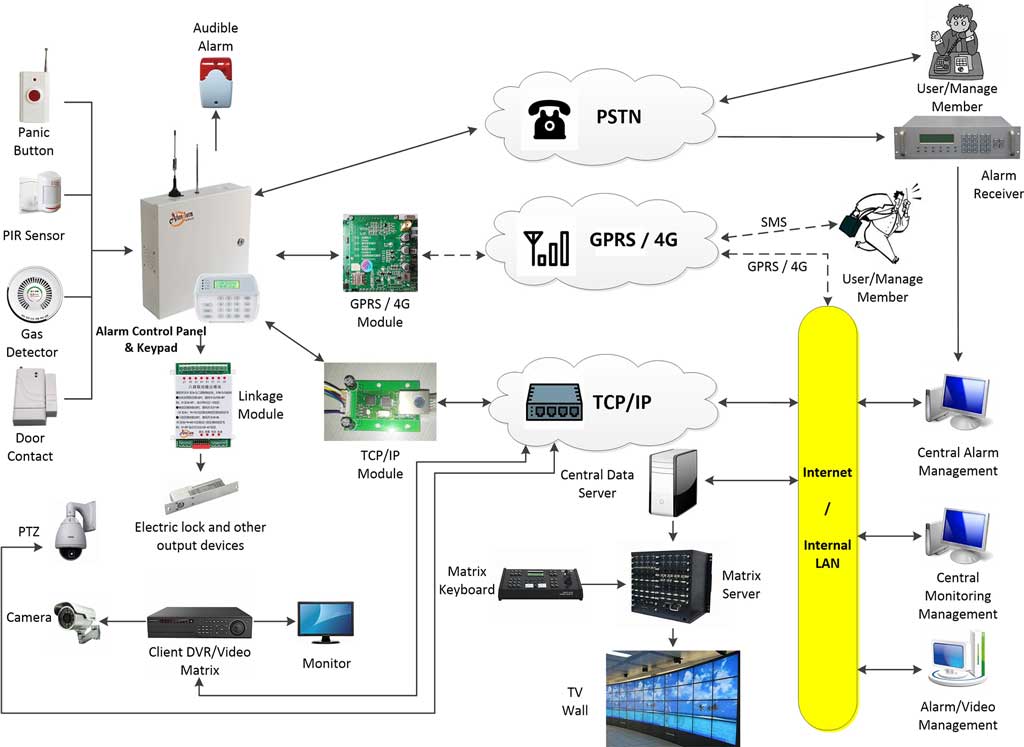
Traditional security systems are built around wired infrastructure with basic intrusion-detection components, including:
- Door/window magnetic contacts
- PIR motion detectors
- Wired control panels
- Local sirens
- Landline or GSM-based alarm transmission
- Manual keypad arming/disarming
These systems rely on physical connections and on-site response or third-party monitoring centers.
Strengths of Traditional Systems
To provide a balanced evaluation, traditional systems do offer several clear benefits:
- High reliability in stable environments
- Resistant to wireless interference
- Lower initial hardware cost
- Operates even during network outages if battery backup exists
- Well-established technology used for decades
These strengths make traditional solutions suitable for small retail shops or older buildings with existing wiring.
Limitations and Real-World Impacts
However, modern security threats often expose the weaknesses of traditional systems:
- No remote access: Users cannot check status, arm/disarm, or verify alerts when away.
- High false-alarm rate: Sirens trigger without verification, leading to unnecessary police dispatches.
- Manual monitoring: Requires physical presence or a monitoring service.
- Difficult installation: Requires drilling, conduit routing, and professional technicians.
- Limited scalability: Expanding the system involves rewiring and higher installation costs.
- Easier to tamper with: Intruders can cut phone or power lines.
Use Case Example:
A small retail store using a wired alarm may face repeated nighttime false alarms. Without video verification, police response slows, and the store owner must physically visit the site—an inconvenience and potential safety risk.
Exploring Smart Security Systems
Definition and Components
Smart security systems integrate IoT, AI, and cloud technology to deliver automation and intelligent monitoring. Their components include:
- AI video cameras
- Smart door/window sensors
- Cloud-connected mobile apps
- Smart locks and access controls
- Environmental sensors (smoke, leak, temperature)
- Home automation integrations
- Optional cloud storage and remote playback
These interconnected devices communicate wirelessly and are controlled via smartphones or web dashboards.
Key Intelligent Features
Smart systems excel in advanced capabilities traditional systems cannot match:
- Real-time mobile notifications
- AI-powered threat detection (human vs pet, package detection, tamper alerts)
- Video verification to reduce false alarms
- Remote monitoring from anywhere
- Automation routines (geofencing, scheduling, auto-locking)
- Two-way audio communication
- Cloud or hybrid storage options
How Smart Systems Solve Real Pain Points
Smart security systems directly address modern user problems:
- Fewer false alarms: AI and video confirmation verify real threats.
- Proactive protection: Systems can alert users before an incident escalates.
- Convenience and efficiency: Arm/disarm, view cameras, or grant access with a tap.
- Energy savings: Integrations with lighting and HVAC systems reduce costs.
- Peace of mind: Continuous remote access ensures full visibility of the property.
Use Case Example:
A smart-enabled residence receives an AI alert indicating a person lingering near the back door. The owner checks the live video, triggers a warning siren, and prevents a break-in—without being physically present.
Head-to-Head Comparison: Smart vs Traditional Security Systems
1. Cost Analysis
| Aspect | Traditional System | Smart System |
|---|---|---|
| Initial Cost | Generally lower | Moderate |
| Monitoring Fees | Often required | Optional or lower |
| Long-Term Cost | Higher maintenance | Reduced false alarm costs |
| ROI | Slower | Higher due to automation & accuracy |
Smart systems often save more long-term through decreased false alarms, lower monitoring fees, and better loss prevention.
2. Installation & Maintenance
- Traditional: Requires wiring, drilling, and professional installers.
- Smart: Mostly DIY-friendly, wireless, and app-driven.
This accessibility benefits homeowners and small businesses lacking technical expertise.
3. Effectiveness & Reliability
Smart systems outperform traditional ones in:
- Response speed (instant notifications)
- False alarm reduction (AI recognition)
- Adaptive threat detection
- Situational awareness through live video
Many studies—including reports from the Electronic Security Association—show that video verification can cut false-dispatch rates by over 90%, significantly improving law-enforcement response accuracy.
4. Scalability & Customization
Smart systems allow easy expansion:
- Add cameras or sensors in minutes
- Customize alerts for specific zones
- Automate lighting, locks, routines
Traditional systems struggle to scale due to wiring limitations and cost.
5. Privacy & Data Security
- Traditional: No cloud storage, minimal privacy risk
- Smart: Requires robust encryption and secure cloud practices
Reputable brands now provide:
- AES-256 encryption
- Multi-factor authentication
- GDPR-compliant data handling
- Local storage options
Users gain better control and transparency over their data.
Advantages of Switching to Smart Security Systems
Enhanced Protection with AI
Smart systems detect suspicious behavior early and can prevent incidents entirely. Benefits include:
- Proactive alerts
- Smart video analytics
- Faster response times
- Potential insurance premium discounts
Convenience Through Integration
Smart apps resolve common issues like forgetting to arm the system or losing keys:
- Voice control (Alexa, Google Assistant)
- Remote lock/unlock
- Real-time visitor management
Future-Proof Technology
Smart security is continuously evolving:
- Facial recognition
- License plate detection
- Smart fences
- Autonomous patrol drones (emerging)
These advancements ensure long-term value and adaptability.
Real-World Benefits from Consulting Experience
From professional security evaluations, businesses that switched to smart systems saw:
- Up to 30% faster incident response time
- Significant reduction in false alarms
- Improved employee and customer safety
Addressing Common Objections
Smart systems are not “easily hackable” if best practices are followed:
- Two-factor authentication
- Regular firmware updates
- Secure Wi-Fi network setup
- Reputable brand hardware
Choosing the Right System for Your Needs
1. Assessment Checklist
Evaluate based on:
- Property size
- Number of access points
- Wi-Fi reliability
- Budget
- Cloud vs local storage preference
- Professional vs DIY installation
- Desired automation features
2. Expert Recommendations
Popular smart system brands worth considering:
- Ring – Affordable, user-friendly
- Arlo – High-quality AI video
- Google Nest – Strong integration ecosystem
- Eufy – Local storage privacy focus
- Ajax / Hikvision / Dahua (professional-grade options)
3. Implementation Tips
- Consider hybrid upgrades (keep wired sensors, add smart AI cameras).
- Budget for cloud storage if needed.
- Use professional installers for large properties.
4. Addressing Potential Challenges
Issue: Wi-Fi outages
→ Solution: 4G/5G backup modules
Issue: Privacy concerns
→ Solution: Choose systems with end-to-end encryption
Issue: Too many notifications
→ Solution: Enable smart filtering & AI detection
Conclusion
Choosing between a Smart vs Traditional Security System comes down to one question: Do you want reactive protection or intelligent, proactive security?
Smart systems deliver superior accuracy, convenience, and future-proof capabilities—making them the preferred choice for modern homes and businesses. As technology evolves, smart security will continue redefining how we protect our environments.
If you’re considering an upgrade, start with a professional security assessment to evaluate your current setup and uncover opportunities for improvement.