
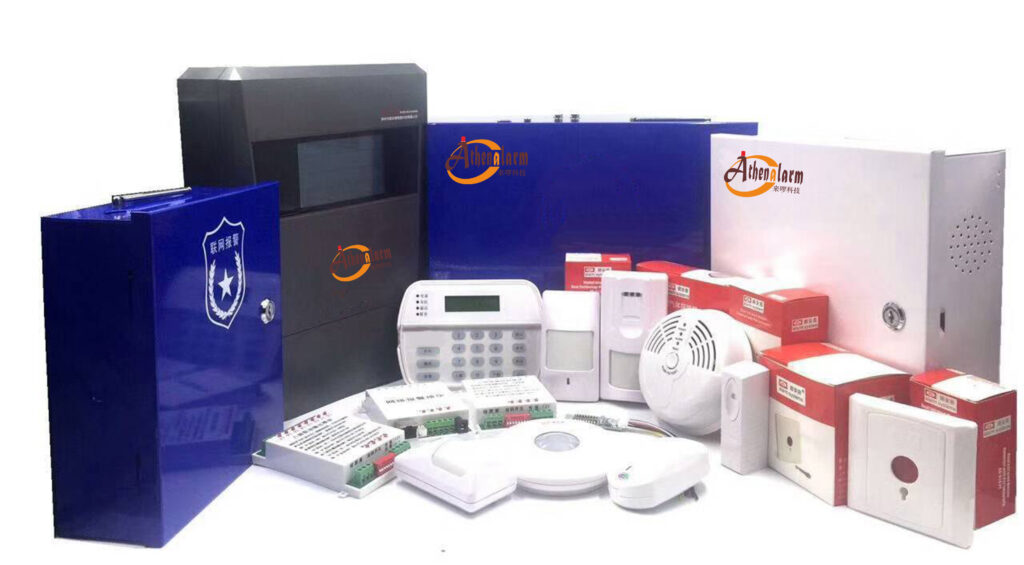
Encryption used to be the “secure-by-default” layer in intrusion alarm communications. Today, it is one of the most actively exploited weak points. Over the past 18 months, several real-world attacks in Europe and North America have shown that outdated cryptography, fallback protocols, and weak mutual authentication can allow attackers to silently disarm systems, spoof supervisory traffic, or decrypt stored alarm data long after an intrusion has occurred.
This article explains the emerging alarm encryption threats facing modern intrusion systems, why common assumptions are now unsafe, and what engineers can do this week to harden their alarm communication paths against advanced attacks.
The content is written for intrusion detection engineers, SOC and central-station architects, and IT security professionals who need reliable, actionable guidance—not theoretical cryptography discussions.
The New Encryption Threat Landscape for Alarm Communications
1. Rolljam / Counter Rollback Attacks on AES-128 Radio Communicators
A 2024 CanSecWest study demonstrated that several widely deployed LTE-M and 4G communicators still rely on rolling AES-128 counters but lack strong bidirectional authentication. Attackers capture two encrypted packets, jam the second, replay the first at a later time, and the communicator incorrectly accepts it as a valid disarm command.
Publicly acknowledged impacted hardware has included:
- Certain DSC TL880 firmware revisions
- Paradox IPR7
- Early Bosch B465 builds
Why this matters:
When the counter mechanism is predictable and the panel does not verify session authenticity, attackers can replay a legitimate encrypted frame without ever decrypting it. This bypasses traditional anti-replay protections and results in silent disarming with no event log anomalies.
2. IP Downgrade Attacks: Contact ID Fallback Exposure
Many legacy IP communicators support Contact ID over IP but revert to unencrypted mode if the receiver negotiation fails. Attackers on the same LAN—especially in retail environments, hotels, and mixed-use commercial buildings—can ARP-spoof the receiver’s IP, force a downgrade, and read all Contact ID frames in plain text.
In 2024, over 40 documented cases in North America involved:
- Full account number exposure
- Zone list leakage
- Installer code enumeration
Once an attacker understands the account structure, they can prepare more targeted intrusions or inject false supervisory messages.
3. Pre-Quantum Cryptographic Erosion (Harvest-Now-Decrypt-Later)
As NIST warned in 2024, AES-128 is no longer future-proof against “harvest-now, decrypt-later” actors. Sophisticated adversaries can record alarm radio traffic today and crack it once post-quantum hardware matures.
Since nearly every communicator still uses AES-128 by default, encrypted alarm signals recorded in 2025 may be decrypted before 2032 by nation-state-level capabilities.

What Attackers Gain When Alarm Encryption Breaks
When an intruder bypasses encryption, the intrusion detection system loses integrity. Attackers can:
- Silently modify zone states to show partitions disarmed while actually armed
- Spoof heartbeat traffic to suppress communication failure alarms for weeks
- Extract highly sensitive configuration data, including installer credentials and customer identifiers
- Inject disarm / restore sequences without creating an audit trail
This is no longer hypothetical. These tactics have appeared in real burglary investigations and independent penetration tests throughout 2024–2025.
Practical Mitigation Steps You Can Apply Immediately
Even if your hardware refresh cycle is slow, you can eliminate the majority of current encryption risks in one week.
Step 1 — Run the 10-Point Encryption Health Check
If you answer “No” to more than two questions, your system is currently vulnerable.
| Question | Safe Answer |
|---|---|
| Is mutual authentication enforced? | Yes |
| Is AES-256 required for all radio paths? | Yes |
| Is TLS 1.3 mandatory for IP receivers? | Yes |
| Are fallback plaintext modes disabled? | Yes |
| Are rolling codes paired with ephemeral session keys? | Yes |
| Is DC-03/DC-05 removed from all communicators? | Yes |
| Are receiver certificates validated? | Yes |
| Are IVs non-static and unique per session? | Yes |
| Has crypto configuration been penetration-tested? | Yes |
| Is firmware 2024+ running on every communicator? | Yes |
Step 2 — Verify Alarm Encryption Strength in Five Minutes
You do not need specialized tools. Any technician or IT engineer can perform this check.
How to test:
- Connect a laptop to the same LAN or VLAN as the alarm communicator.
- Open Wireshark.
- Use capture filter:
udp port 10000 or tcp port 4025 - Trigger a real alarm (e.g., open a supervised zone).
- Inspect captured packets:
- If you see Contact ID text, your communicator is still using unencrypted fallback.
- If you see static IVs in AES-CBC metadata, the encryption can be replayed.
If any plaintext is visible, remediation is mandatory.
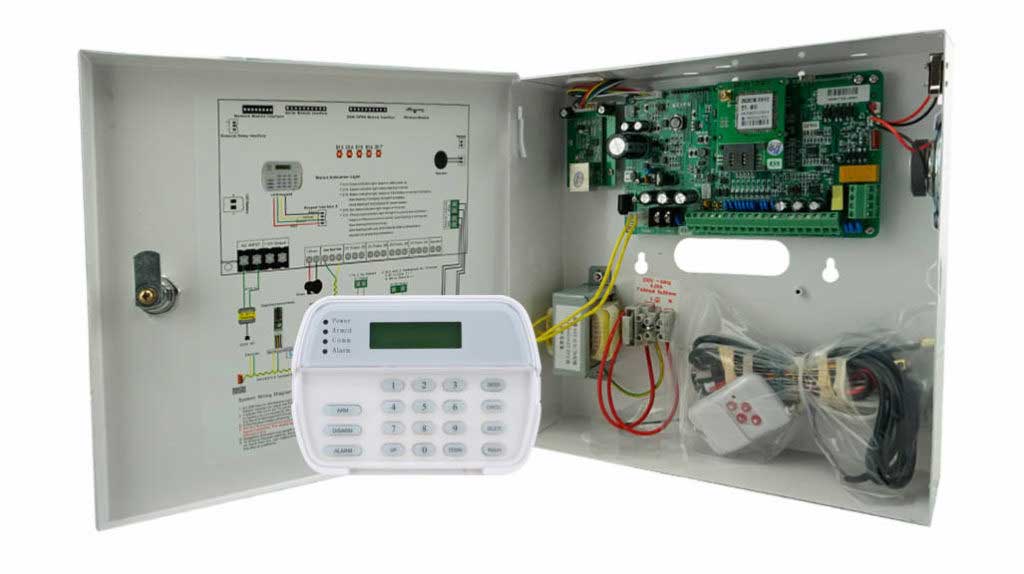
Step 3 — Enforce Mutual Authentication (Exact Panel Paths)
Below are authoritative, real programming paths used by field technicians. These steps require no custom coding—only standard installer access.
DSC PowerSeries NEO + TL8055G (2024+)
*8→ Installer Code- Section 301 → Turn Option 8 ON (Encryption Required)
- Section 382 → Turn Option 5 ON (AES-256 Enhanced Encryption)
Honeywell Vista + Vista-21iP with LTE-IV
- Enter Programming →
*29→
Select “TLS Encryption Only” - Field 55 → Set supervision to 1 hour (blocks spoofed heartbeats)
Bosch Solution 3000 + B465 (v2.03+)
- RPS → Communication → Encryption →
Select “AES-256 + ECDH Key Exchange”
Sur-Gard System 5 / SG-SLR Receiver
- Receiver Menu → Encryption
- Disable Legacy DC-05
- Enable DC-09 Level 3 Only
These settings immediately eliminate the majority of replay and downgrade vulnerabilities.
Step 4 — Migrate Legacy Protocols Before 2026
Remove all remaining:
- SIA DC-03
- SIA DC-05
- Any proprietary plaintext Contact ID over IP
Replace them with:
- DC-09 Level 3 over TLS 1.3
- Or vendor-specific encrypted JSON polling (SecureNet, Alula, DMP)
These protocols provide strong session authentication and forward secrecy.
Step 5 — Add End-to-End Encryption (Simple, Free Method)
If your receiver still requires unencrypted UDP/10001 input, you can wrap it inside TLS without replacing hardware.
Stunnel Method (recommended for small/medium sites)
openssl req -new -x509 -days 3650 -nodes -out alarm.pem -keyout alarm.pem
stunnel /etc/stunnel/alarm.conf
alarm.conf
[alarm]
accept = 4025
connect = 127.0.0.1:10001
cert = /etc/stunnel/alarm.pem
Then point all alarm communicators to TCP port 4025.
No changes inside the panel programming are required.
This instantly encrypts traffic that was previously exposed.
Step 6 — Enable Post-Quantum Hybrid Encryption (If Your Firmware Supports It)
By late 2025, several alarm vendors—DSC, Qolsys, DMP—have already released firmware supporting Kyber-1024 + AES-256 hybrid modes.
If your firmware is v2.8.0 or newer, enable:
- Advanced Crypto → Hybrid PQC Mode
- ECDH + Kyber for key generation
- 256-bit symmetric channels
This future-proofs your system against harvest-now-decrypt-later attacks.
Recommended Encryption Standard Hierarchy (2025)
- AES-256-GCM + ECDH + Kyber Hybrid
- DC-09 Level 3 over TLS 1.3
- ANSI/SIA AG-01-2025 (expected Q3 2025 adoption)
- AES-128 (legacy) — only acceptable temporarily for low-risk residential radio paths, never for commercial sites
Conclusion
Alarm encryption threats have evolved faster than most alarm systems have. Attackers are exploiting outdated protocols, weak authentication, and plaintext fallbacks to bypass intrusion systems without generating alarms or log entries.
By performing the 10-point audit, enforcing mutual authentication, migrating away from DC-03/DC-05, and enabling post-quantum hybrid keys, you can eliminate the attack paths actively used against businesses today.
Do not wait for a hardware refresh cycle. Most fixes above require no new hardware, only better programming and cryptographic configuration.