

I. Introduction
In an era where security threats evolve faster than ever, businesses are spending an average of $1.2 million annually on fragmented monitoring systems — yet many don’t realize that a centralized approach can reduce those costs by up to 40%.
A centralized monitoring system unifies all your security elements — from alarms and CCTV to access control and environmental sensors — into a single, integrated dashboard. Instead of managing multiple vendors, contracts, and monitoring centers, centralization enables streamlined operations, faster decision-making, and measurable cost reduction.
As a seasoned security technology expert with over 15 years of experience in alarm systems and enterprise theft prevention, I’ve witnessed firsthand how businesses across retail, corporate, and industrial sectors achieved substantial cost savings through centralized monitoring.
This article explores three real-world case studies that illustrate how centralization transforms efficiency, scalability, and financial performance — providing a clear roadmap for any organization looking to optimize its security budget.
II. Understanding Centralized Monitoring Systems
A centralized monitoring system consolidates multiple security and facility management components — video surveillance, intrusion alarms, fire detection, and access control — under a unified platform. Typically cloud-based, these systems allow remote supervision, data analytics, and integration with third-party applications like HR databases or facility management software.
Key Components
- Unified Dashboard: Real-time visibility of all sites and sensors.
- AI-Driven Alerts: Intelligent filtering reduces false alarms and operator fatigue.
- Cloud & IoT Integration: Enables remote diagnostics, software updates, and scalability.
- Data Analytics: Generates reports for incident trends, ROI tracking, and compliance.
Cost-Saving Advantages of Centralized Monitoring
- Reduced Hardware Duplication: No need for separate servers or control rooms at every site.
- Lower Maintenance & Labor Costs: Remote management minimizes onsite visits.
- Optimized Staffing: One centralized command center replaces multiple local guards.
- Scalability: Adding new sites doesn’t require new infrastructure — just configuration.
If your business manages multiple branches or facilities with separate monitoring vendors or control systems, you are likely overspending. Centralization could immediately reduce operational redundancy and simplify resource management.
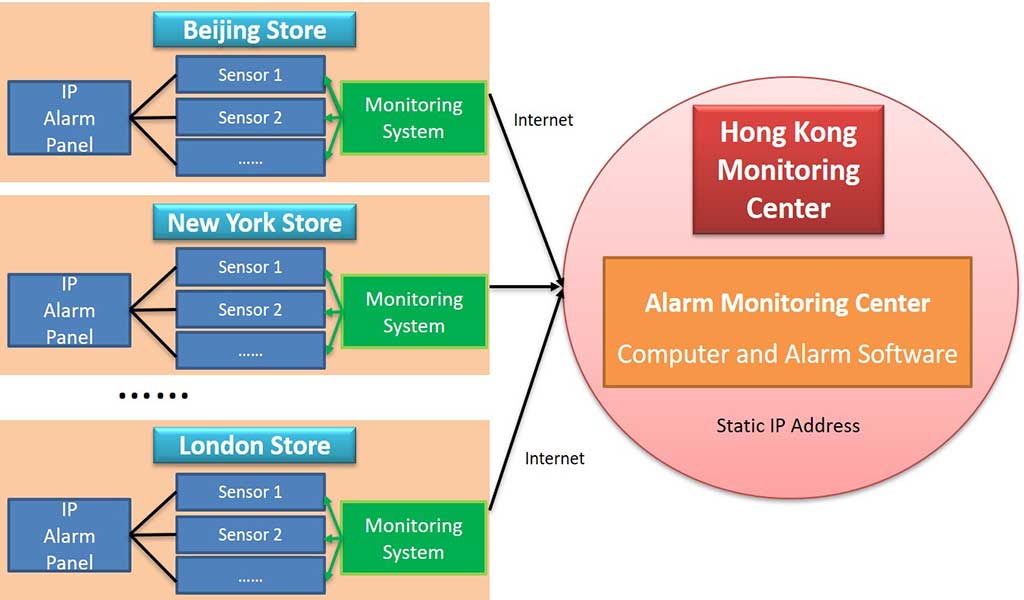
III. Case Study 1: Retail Chain Optimization
Background
A mid-sized retail chain with 25 stores across three cities faced high operational costs and theft incidents. Each store had independent alarm systems, local monitoring contracts, and separate CCTV servers. Inconsistent configurations led to missed alerts and expensive maintenance calls.
Implementation
The retailer adopted a cloud-based centralized monitoring solution that integrated:
- IP cameras, intrusion alarms, and motion sensors
- POS (Point-of-Sale) alert linkage for transaction-based event verification
- A single remote control room operating 24/7
Cost Savings Achieved
| Cost Component | Before | After | Savings |
|---|---|---|---|
| Manpower (local guards & operators) | $420,000 | $270,000 | 35% |
| Maintenance & Service Calls | $120,000 | $90,000 | 25% |
| Total Annual Cost | $540,000 | $360,000 | $180,000 saved/year |
Additional benefits included a 30% drop in theft-related losses and 15% faster alarm response time.
Challenges and Solutions
- Integration Downtime: Managed with a phased rollout during low-traffic hours.
- Staff Training: Conducted centralized training sessions to standardize alarm handling procedures.
Key Takeaways
- Start with a pilot project before full rollout.
- Choose vendors offering modular integration to minimize compatibility issues.
- Use a ROI calculator to measure savings quarterly.
Expert Insight: According to ASIS International, retailers that centralized monitoring reduced their incident management costs by an average of 28%.
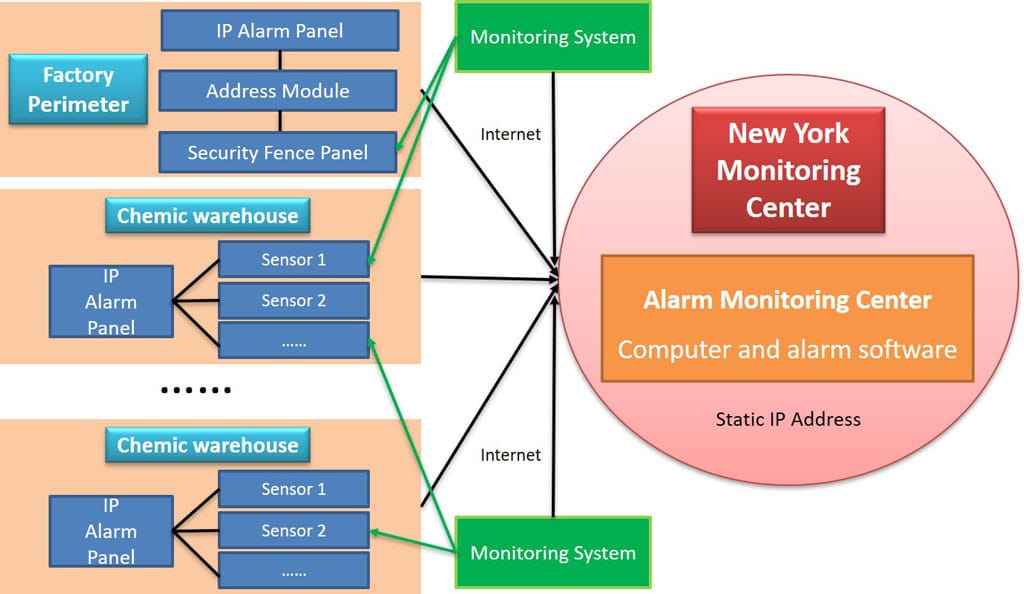
IV. Case Study 2: Corporate Office Building Efficiency
Background
A multinational corporate headquarters with over 2,000 employees was operating siloed systems — separate access control, CCTV, and HVAC monitoring — resulting in duplicated staff roles and frequent false alarms disrupting productivity.
Implementation
The company implemented a centralized AI-driven monitoring platform with:
- Unified video and access control management
- Predictive maintenance alerts for equipment
- Automated incident reporting and compliance auditing
Cost Savings Achieved
- 50% reduction in on-site security personnel (via remote oversight)
- 40% energy cost reduction through integrated HVAC control
- $200,000 total savings in the first operational year
Challenges and Solutions
- Data Privacy: Addressed with GDPR-compliant encryption and access control layers.
- Change Resistance: Mitigated through employee engagement sessions and transparent reporting dashboards.
Key Takeaways
- Automation and integration directly reduce labor and energy costs.
- Establish data governance policies early to maintain compliance.
- Consider a hybrid monitoring model (central + local) during transition phases.
V. Case Study 3: Industrial Facility Scalability
Background
A large manufacturing plant was expanding its operations across multiple zones but faced escalating monitoring expenses due to separate control units and incompatible legacy systems.
Implementation
The company deployed an IoT-enabled centralized monitoring network:
- Integrated sensors for temperature, vibration, and unauthorized access
- Unified dashboard for all plant areas and remote facilities
- Automated anomaly detection with predictive maintenance alerts
Cost Savings Achieved
- 30% savings on new expansion costs by avoiding duplicate hardware purchases
- $100,000 annual reduction in downtime losses due to faster incident response
- Improved scalability, adding new production zones without additional local systems
Challenges and Solutions
- Legacy System Integration: Resolved using middleware APIs.
- Operator Training: Implemented online certification modules for staff adaptation.
Key Takeaways
- Use modular platforms compatible with both old and new equipment.
- Prioritize solutions aligned with ISO 27001 for long-term security management.
- Conduct a quarterly performance audit to track efficiency gains.
VI. Common Pitfalls and Best Practices
Common Pitfalls
- Underestimating Integration Complexity – Many overlook data migration and interoperability costs.
- Choosing Non-Scalable Vendors – Leads to costly reinstallation during expansion.
- Ignoring Staff Training – Without proper adoption, ROI drops significantly.
Best Practices
- Conduct a cost audit before implementation to define baselines.
- Select platforms with open APIs for flexibility.
- Monitor ROI quarterly and document performance improvements.
Recommended Tools & Resources
- Open-Source Dashboards: Grafana, Zabbix
- Compliance Frameworks: ISO 27001, SOC 2
- Further Reading: ASIS International Security Management Standards
VII. Conclusion
Centralized monitoring systems are no longer a luxury — they are a strategic necessity for organizations aiming to control security expenses and enhance efficiency. The real-world examples above show consistent savings between 30–50%, improved visibility, and greater scalability across sectors.
If your business still operates separate alarm, CCTV, and control systems, it’s time to evaluate the true cost of decentralization.
Next Step: Use our free cost-saving calculator or consult a certified security expert to assess your centralization potential.
Final Thought: As AI and cloud integration continue to advance, the next evolution of centralized monitoring will deliver not just savings — but predictive intelligence and smarter, safer operations.