
Key Points
- Off-site ATMs in retail locations like gas stations and convenience stores are highly vulnerable to attacks, with jackpotting comprising up to 72% of U.S. incidents in 2025 according to ATMIA data, but advanced ATM alarm systems provide robust remote monitoring and protection without requiring on-site guards.
- Integrated solutions using sensors, AI-driven false alarm reduction, video verification, and remote centers can reduce incidents by 30-70%, aligning with PCI guidelines for tamper detection and encryption to enhance compliance and minimize losses.
- Evidence from real-world deployments shows significant ROI, with systems like those from Athenalarm and Diebold Nixdorf achieving up to 95% non-threat alert confirmation and preventing multimillion-dollar thefts.
- Implementation is scalable and practical, addressing key pain points for banks and operators through step-by-step risk assessments, hardware setup, and ongoing optimization.
Why Specialized Protection Matters
Unattended off-site ATMs face elevated risks due to limited oversight, but modern ATM security systems create a virtual shield through real-time alerts and verified responses, potentially cutting response times by 30% and boosting customer confidence.
Core Advantages
These systems deliver 24/7 vigilance, cost-effective alternatives to guards, and features like multi-path communication for reliability in remote areas, with proven reductions in downtime and compliance violations.
Essential Implementation Steps
Begin with a thorough site evaluation, select compliant components, integrate with CCTV, and conduct rigorous testing—detailed procedures ensure seamless deployment and long-term effectiveness.
In the fast-evolving world of self-service banking, off-site automated teller machines (ATMs) deployed at malls, gas stations, convenience stores, and other retail locations represent both opportunity and vulnerability. These unmanned environments—far removed from the controlled security of bank branches—account for a disproportionate share of ATM-related incidents, according to global crime databases maintained by the ATM Industry Association (ATMIA). With over 53,000 reported ATM crime incidents documented as of late 2025, including a surge in jackpotting attacks that cost more than $20 million in the United States alone that year, operators and financial institutions face urgent pressure to fortify remote sites without the expense of permanent on-site personnel.
This comprehensive guide centers on ATM alarm systems as the cornerstone of protection. Drawing from PCI Security Standards Council guidelines, real-world deployments by specialists like Athenalarm and Diebold Nixdorf, and proven industry best practices, it provides an in-depth, actionable blueprint for designing, deploying, and optimizing ATM security systems tailored to unmanned scenarios. Whether you are a security procurement manager evaluating bulk solutions, a technical engineer specifying integrations, or an operations leader seeking to minimize losses, this resource delivers the strategies, step-by-step procedures, and supporting data needed to implement effective remote protection.
The focus remains laser-sharp on alarm systems: how they detect intrusion, connect to remote monitoring centers, reduce nuisance alerts that erode response effectiveness, and synchronize with video verification for verified, actionable intelligence. By the end, you will have a complete operational roadmap that not only addresses immediate threats but also positions your organization for long-term resilience in an environment where fraud has overtaken physical attacks as the dominant risk in many regions. Additionally, we’ll explore emerging trends like AI integration and regulatory updates to ensure your setup is future-proof.
Understanding the Heightened Risks of Off-Site ATMs
Off-site ATMs operate in environments with minimal natural surveillance. A typical setup at a gas station or convenience store might see low foot traffic during off-hours, poor lighting in peripheral areas, and easy vehicle access for smash-and-grab or sophisticated jackpotting crews. Industry analyses reveal that standalone machines in retail locations experience tampering rates significantly higher than branch-based units—often because criminals can work undisturbed for minutes before detection.
Physical attacks such as safe drilling, explosive breaches, or “hook-and-chain” removals remain concerns, but 2025 data from ATMIA’s CCMIS database shows jackpotting (malware-driven cash-outs) comprising up to 72% of U.S. incidents, with skimming and card-data compromise at 20%. These attacks thrive in remote spots where response times stretch beyond the critical 5-10 minute window needed to interrupt criminals. Without on-site guards, traditional CCTV alone falls short: recordings provide after-the-fact evidence but rarely enable real-time intervention.
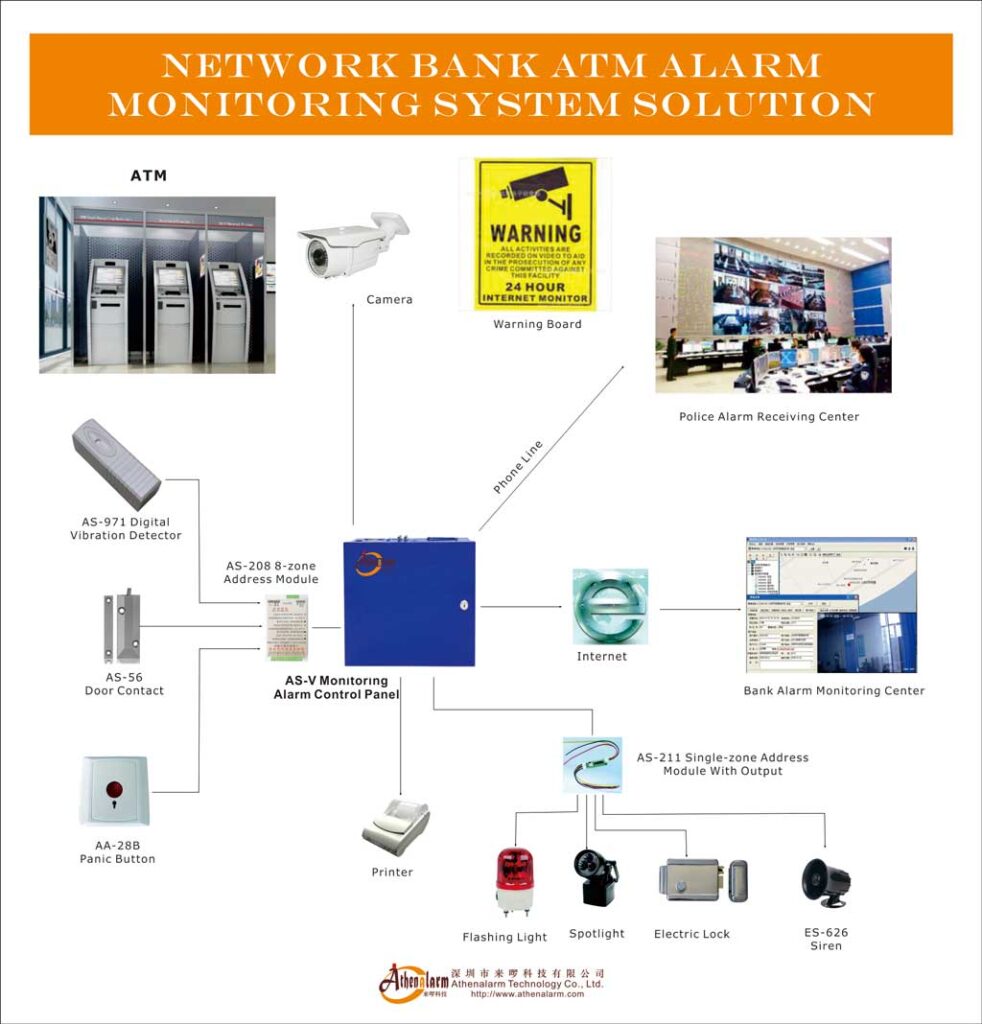
Here lies the power of dedicated ATM alarm systems. They transform passive observation into active defense by layering detection, notification, and verification. PCI guidelines emphasize that effective systems must trigger on EPP (encrypting PIN pad) removal, cabinet tampering, or camera blocking, with minimum attack-potential thresholds (e.g., 16-18 points) to resist bypass. For off-site deployments, this translates to seismic/vibration sensors on the safe, door contacts on enclosures, and panic buttons for rare staffed interactions—all feeding into a central panel that communicates via IP, 4G, or PSTN to a monitoring station. To further mitigate risks, systems should incorporate anti-skimming measures like jitter technology to disrupt card readers and behavioral analytics to flag unusual patterns.
Table 1: Common Threats to Off-Site ATMs vs. Mitigation via Alarm Systems
| Threat Type | Prevalence (2025 Trends) | Typical Off-Site Vulnerability | ATM Alarm System Mitigation | Expected Impact Reduction |
|---|---|---|---|---|
| Jackpotting (Malware) | 72% of U.S. incidents | Easy physical access for drive-by malware install | Vibration + software anomaly detection triggers immediate shutdown and alert | 60-80% faster response |
| Skimming/Card Trap | 20% | Low visibility for device attachment | Camera-tamper alarms + anti-skim sensors + jitter technology | 40-50% via early detection |
| Physical Breach (Drill/Explosive) | Remaining share | Isolated location delays police | Seismic detectors + audible/silent dual alarms + gas detection | Up to 70% loss prevention |
| Vandalism/Theft of Whole Unit | High at retail sites | Vehicle access, no barriers | Door contacts + GPS-enabled tracking integration | 50%+ with quick dispatch |
| False-Alarm Fatigue | Operational burden | Weather, animals, maintenance | AI verification + dual-sensor logic + deduplication | 90-99% nuisance reduction |
| Cyber Attacks (e.g., Network Intrusion) | Emerging threat | Weak encryption in remote comms | Encrypted data exchange + Zero Trust principles | 80%+ risk mitigation |
Data synthesized from ATMIA CCMIS, FBI alerts, and PCI supplements. Reductions are conservative estimates based on documented case deployments.
Core Components of a Robust ATM Alarm System for Remote Locations
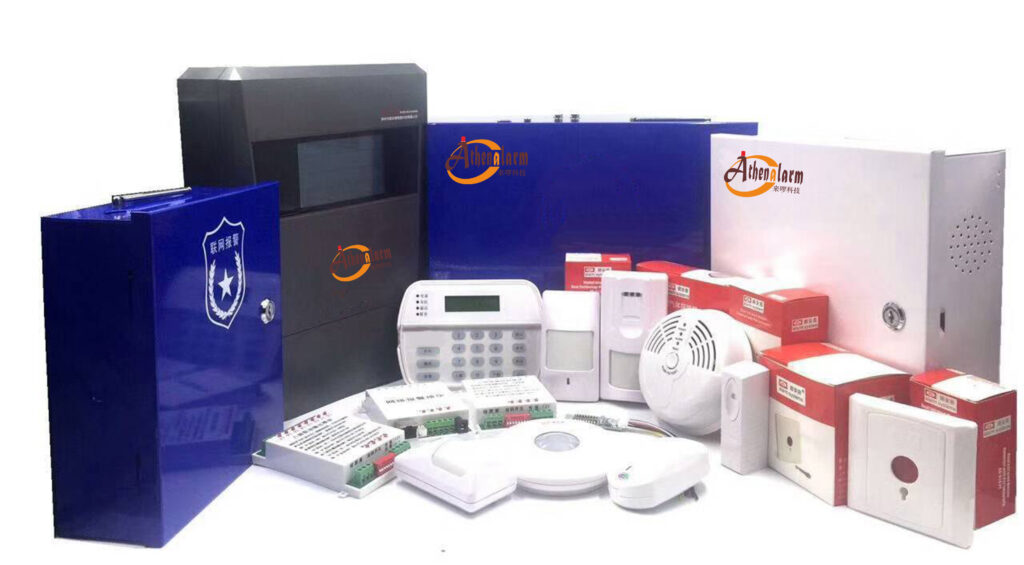
A professional ATM security system for off-site use is modular, scalable, and built around a central alarm control panel (e.g., Athenalarm AS-V series integrating alarm + NVR functions). Key elements include:
1. Detection Sensors:
- Seismic/vibration detectors (4 per ATM recommended—piezoelectric, placed on safe sides) for drilling or movement.
- Magnetic door contacts for enclosure or wall displacement.
- Dual-tech PIR/microwave motion sensors for perimeter.
- Panic buttons (manual or foot-operated) for any on-site staff.
- Anti-tamper switches on panels and cameras.
- Gas detectors to sense explosive attempts.
2. Alarm Output Devices:
- Audible sirens (108 dB+) for deterrence.
- Strobe/rotating warning lights.
- Silent signaling to central station via Contact ID protocol.
3. Communication Backbone:
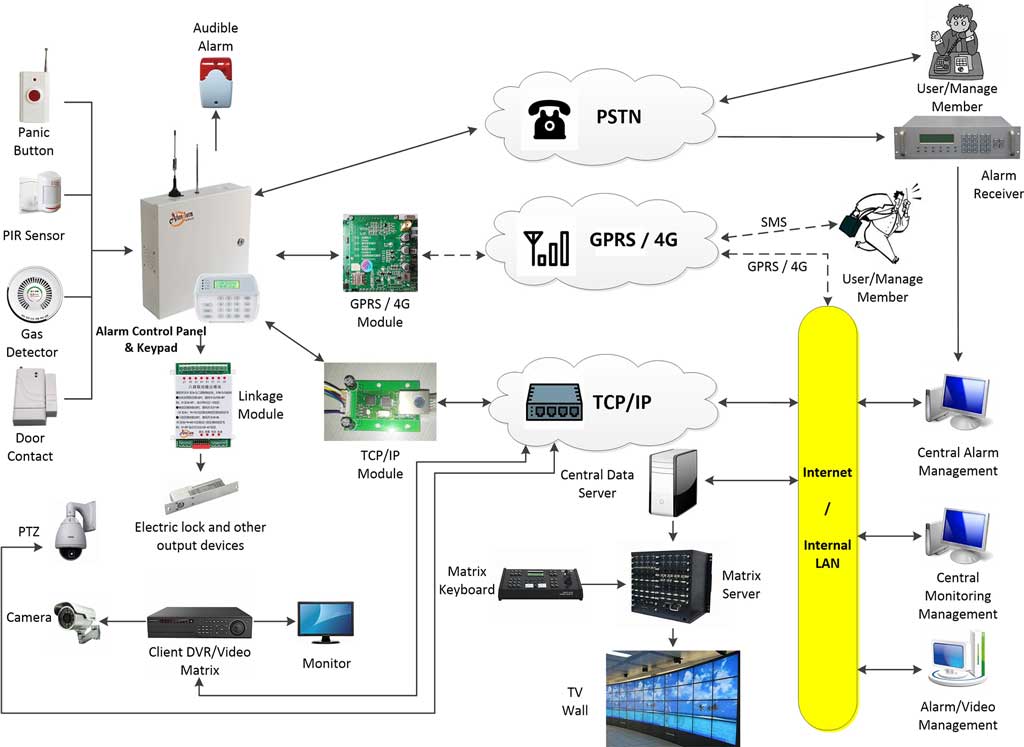
- Multi-path: TCP/IP primary with 4G/GPRS and PSTN backup.
- Response time under 5 seconds to monitoring center.
- Remote arm/disarm via SMS, app, or software.
- Encrypted channels to comply with PCI DSS requirements for data protection.
4. Video Integration Module:
- Built-in NVR supporting IP/analog cameras with motion detection, blind-spot alerts, and pre/post-event recording.
- Automatic pop-up live feed on alarm at central station.
5. Power and Redundancy:
- 24-hour backup battery with low-voltage alerts.
- Self-diagnostic routines and anti-sabotage (wire-cut/short detection).
6. Advanced Add-Ons:
- Biometric authentication for service access.
- AI analytics for threat classification.
Table 2: Recommended Sensor Specifications for Off-Site ATM Deployments
| Sensor Type | Power/Operating Range | Key Features | Typical Placement | False Alarm Resistance Method |
|---|---|---|---|---|
| Seismic/Vibration | DC 9-16V, -10°C to 55°C | Piezoelectric, acoustic induction | 4 per safe (sides/top/bottom) | AND logic with door contact |
| Door Magnetic | Normally closed, zinc alloy | 30-40mm gap detection | ATM enclosure to wall | Tamper-evident wiring |
| Dual-Tech PIR | 12V, indoor/outdoor variants | Microwave + passive IR | Perimeter 5-10m radius | AI classification |
| Camera Tamper | IP/analog integrated | Blind/loss/motion detection | Front/sides of ATM fascia | Video verification |
| Panic Button | 12/24V, >40,000 cycles | Weatherproof, wireless option | Inside enclosure or staff area | Manual override with log |
| Gas Detector | 12V, explosion-proof | Multi-gas sensing (e.g., methane) | Inside safe enclosure | Threshold-based triggering |
These components align with UL-listed standards for central-station monitoring (Extent 2 or Complete Protection) and PCI recommendations for tamper detection.
Design Strategies for Unmanned ATM Alarm Systems
Effective design begins with a site-specific risk assessment: evaluate lighting, traffic patterns, nearby vegetation, and historical crime data. For gas stations, prioritize vehicle-approach sensors; for mall exteriors, focus on nighttime loitering detection.
Layered defense is essential—perimeter, point-of-protection, and response layers. Use zoning: assign high-priority zones (safe interior) for immediate police dispatch and lower zones (approach) for verification first.
Communication reliability is non-negotiable in remote areas. Dual-path signaling (IP + cellular) ensures delivery even during outages. Advanced panels support up to 1,656 zones for multi-ATM sites, with electronic maps for operators to pinpoint exact locations. Incorporate Zero Trust principles to eliminate implicit trust in network communications.
To address common pitfalls, ensure systems are compatible with evolving threats like deep-insert skimmers by using PCI-aligned anti-skimming hardware.

Connecting ATM Alarms to Remote Monitoring Centers
Integration transforms local detection into coordinated response. The alarm panel sends signals using Contact ID or SIA formats to a UL-certified central station staffed 24/7. Upon receipt:
- Operator views pop-up video feed.
- Verifies threat (e.g., person tampering vs. wind-blown debris).
- Dispatches police or on-call technician with live evidence.
- Logs event for compliance and insurance.
Outsourced solutions from providers like Everon or Brink’s offer dedicated SOCs with mapping hierarchies and automated ticketing. For in-house centers, software like AS-ALARM allows monitoring of 5,000+ panels with duplex testing of detectors. Easy-to-follow steps for setup include configuring API integrations for seamless data flow.
Reducing False Alarms: Techniques That Actually Work
False alarms undermine credibility and waste resources—studies show they can delay genuine responses by creating operator fatigue. Modern ATM alarm systems achieve 90-99% reduction through:
- Dual-Sensor Logic: Require AND confirmation (e.g., vibration + door open).
- AI/Video Verification: Analytics classify objects (human vs. animal/vehicle) before escalating.
- Environmental Filtering: Adjustable sensitivity for weather; scheduled bypass during maintenance.
- Self-Testing: Daily automated checks with remote confirmation.
- Black-Box Logging: 1,500+ event records per panel for post-analysis.
- Deduplication: Consolidate duplicate alerts from noisy sensors.
Detailed steps to implement false-alarm reduction:
- Audit current system for nuisance sources (review 30-day logs).
- Install dual-tech sensors and enable AND gating in panel software.
- Integrate AI analytics on NVR (set thresholds for size/speed/duration).
- Configure verification workflow: alarm → 10-second video review → escalate only if confirmed.
- Train operators on exception handling; schedule quarterly sensitivity reviews.
- Monitor key performance indicator: aim for <1 false alarm per 100 valid events.
- Address environmental triggers like tree branches or power fluctuations by adjusting placements or adding surge protection.
Key error-prone areas: Improper sensor calibration can spike false positives—always test in real conditions, and avoid over-reliance on single-path comms, which can fail during outages.
Seamless Linkage with Video Verification Systems
Video is the “truth layer.” When an alarm triggers, the system automatically:
- Starts pre-alarm recording (10-30 seconds).
- Pops live multi-camera view at the monitoring station.
- Sends encrypted clips to responders via secure portal.
- Correlates with transaction data for fraud investigations.
Solutions like ATMeye.iQ or Hikvision deep-learning cameras detect blocking or skimming overlays and generate secondary alarms. Integration via ONVIF or proprietary APIs ensures sub-second synchronization. Benefits include faster police response (verified video increases priority) and stronger evidence for prosecutions. One deployment reported 40% robbery reduction within the first year. For users, this means reliable, actionable insights without manual intervention.
Step-by-Step Implementation Guide for Off-Site ATM Alarm Systems
Follow this operational blueprint for reliable rollout:
Phase 1: Planning (Weeks 1-2)
- Conduct risk assessment per PCI and ATMIA guidelines, including site surveys for vulnerabilities like poor lighting.
- Map all ATMs; group by vulnerability tier (e.g., high-risk gas stations).
- Select certified vendor (UL, PCI PTS compliant).
- Budget: hardware $800-2,500 per ATM + installation + monthly monitoring (~$50-150/site).
Phase 2: Hardware Installation (Weeks 3-6)
- Mount vibration sensors (4 per safe) using tamper screws; test for sensitivity.
- Install door contacts, panic buttons, and gas detectors.
- Position cameras for full fascia coverage + approach; ensure anti-tamper wiring.
- Place control panel in secure enclosure with 24h UPS.
- Wire or wirelessly connect modules; test each zone individually for signal strength.
- Add anti-skimming devices like jitter mechanisms.
Phase 3: Configuration and Integration (Week 7)
- Program zones, phone numbers (up to 4), and contact IDs; enable encryption.
- Set arm/disarm schedules and user codes (12+ levels, with biometric options).
- Link NVR to cameras; enable motion-blind alerts and AI filters.
- Connect to central station; perform end-to-end test calls, verifying <5s response.
- Configure video pop-up and notification rules (email/SMS/app alerts).
Phase 4: Testing and Go-Live (Week 8)
- Simulate intrusions (vibration, door open, camera block, gas release).
- Verify response time <5s and video delivery; check deduplication.
- Train staff on remote arming, log review, and emergency protocols.
- Run 7-day parallel monitoring to baseline false alarms.
- Obtain UL certificate and update insurance.
Phase 5: Ongoing Optimization
- Monthly remote self-tests and battery checks.
- Quarterly sensitivity audits and software updates.
- Annual full-system certification and threat reassessment.
- Post-incident review within 48 hours, incorporating lessons like adjusting AI thresholds.
Table 3: Implementation Timeline and Responsibilities
| Phase | Duration | Key Tasks | Responsible Party | Deliverables |
|---|---|---|---|---|
| Planning | 2 weeks | Risk assessment, vendor selection | Security Manager/Procurement | Approved BOM, budget |
| Installation | 4 weeks | Sensor & panel mounting | Certified Technician | Installed & labeled hardware |
| Configuration | 1 week | Programming & integration | Systems Engineer | Config file + test logs |
| Testing | 1 week | Simulations & verification | Operations + Monitoring | Go-live certificate |
| Maintenance | Ongoing | Audits & updates | All + Vendor | KPI dashboard (false alarms <5%) |
Real-World Case Studies and ROI Evidence
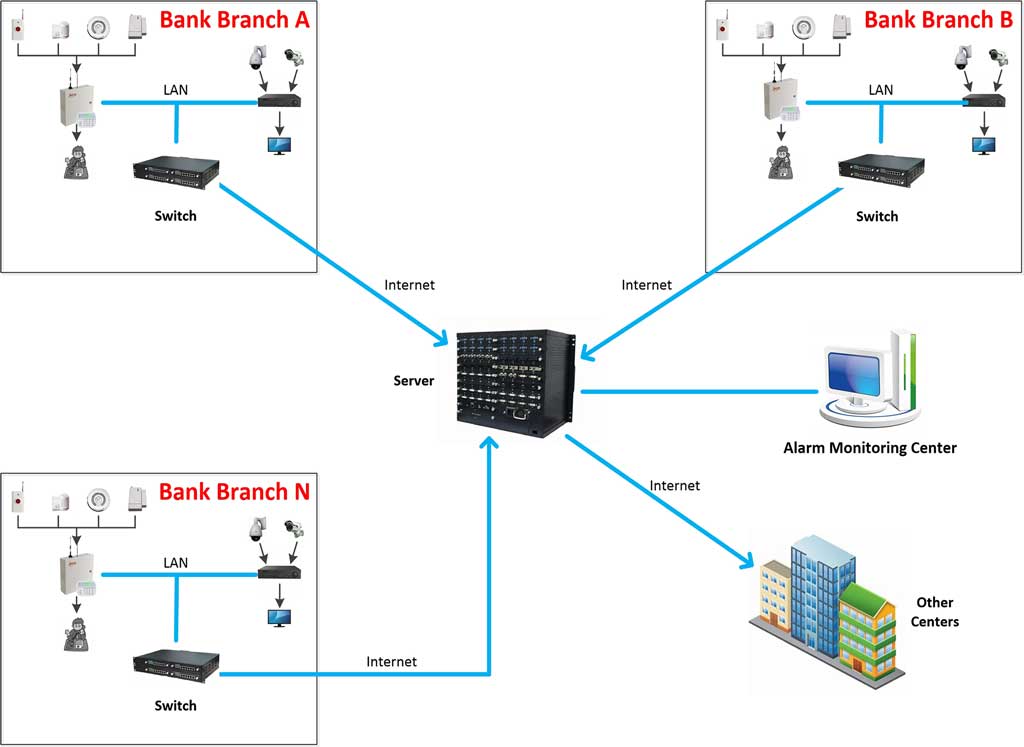
- Athenalarm Multi-ATM Deployment: A bank network protecting 4 off-site units per site reported zero successful breaches after integration, with video review confirming 95% of alerts as non-threats—drastically cutting unnecessary dispatches. In a 385-branch upgrade, outdated systems were replaced with IP/wired panels, reducing communication failures and enabling real-time video verification.
- Convenience Store Chain (Sheetz-like): Centralized monitoring of 700+ sites reduced response times by 30% and vandalism losses through alarm-video linkage.
- Jackpotting Prevention: Operators using anomaly-triggered alarms + remote shutdown prevented multiple $100k+ losses in 2025 incidents.
- Diebold Nixdorf Implementation: A regional bank saw 40% incident drops after deploying integrated security with AI analytics, aligning with PCI standards for tamper resistance.
- Valiant Bank ATMaaS Success: Leveraging outsourced monitoring, they achieved 5% transaction growth and high availability, preventing downtime from threats.
ROI typically materializes within 6-12 months via reduced losses (average $10k-50k per incident avoided), lower insurance premiums, and eliminated guard costs ($50k+/year per site). Users report enhanced compliance and fewer operational headaches.
Future Trends Shaping ATM Alarm Systems
AI-driven predictive analytics will anticipate attacks by correlating patterns, potentially preventing 80% of threats proactively. 5G will enable ultra-low-latency video for instant verification. Cloud-hybrid panels will simplify multi-vendor fleets, with modular designs for easy upgrades. Regulatory pressure (PCI updates, Europol physical-attack guidelines) will mandate verified response. Forward-thinking operators are already piloting LiDAR perimeter sensors for 99% false-alarm-free zones, alongside agentic AI for automated risk management. In 2026, expect ATM evolution into multifunction kiosks with enhanced cybersecurity like Windows 11 migrations.
Conclusion: Take Action to Secure Your Remote Fleet Today
Protecting off-site ATMs no longer requires on-site guards when you leverage sophisticated ATM alarm systems and ATM security systems engineered for remote environments. The strategies outlined—multi-sensor detection, central-station integration, false-alarm intelligence, and video verification—provide a proven, practical path to dramatically lower risk while controlling costs.
For banks and ATM operators managing retail locations, the message is clear: invest in these systems now to stop threats before they escalate. Review your current setup against the checklists above, and consider partnering with specialists for a no-obligation audit.
Ready to strengthen your off-site ATM protection? Explore additional resources on our site covering complementary solutions like intelligent cash neutralization or advanced analytics. Contact our team of security experts today to discuss tailored deployments—we’re here to help translate these strategies into measurable results for your organization.
Key Citations:
- ATM global crime database houses over 53,000 reported incidents
- U.S. ATM Crime Sees Major Spike in Jackpotting
- Information Supplement: ATM Security Guidelines
- PCI Security Standards Overview
- Athenalarm Home Page
- How to Reduce False Alarms at a Central Station or SOC
- How to Reduce Physical Security False Alarms by 90%
- Top 2026 ATM trends for customer-focused banking
- What’s the future hold for ATMs in 2026?
- Banking Trends 2026: Convergence of Digital, Cash and Security