
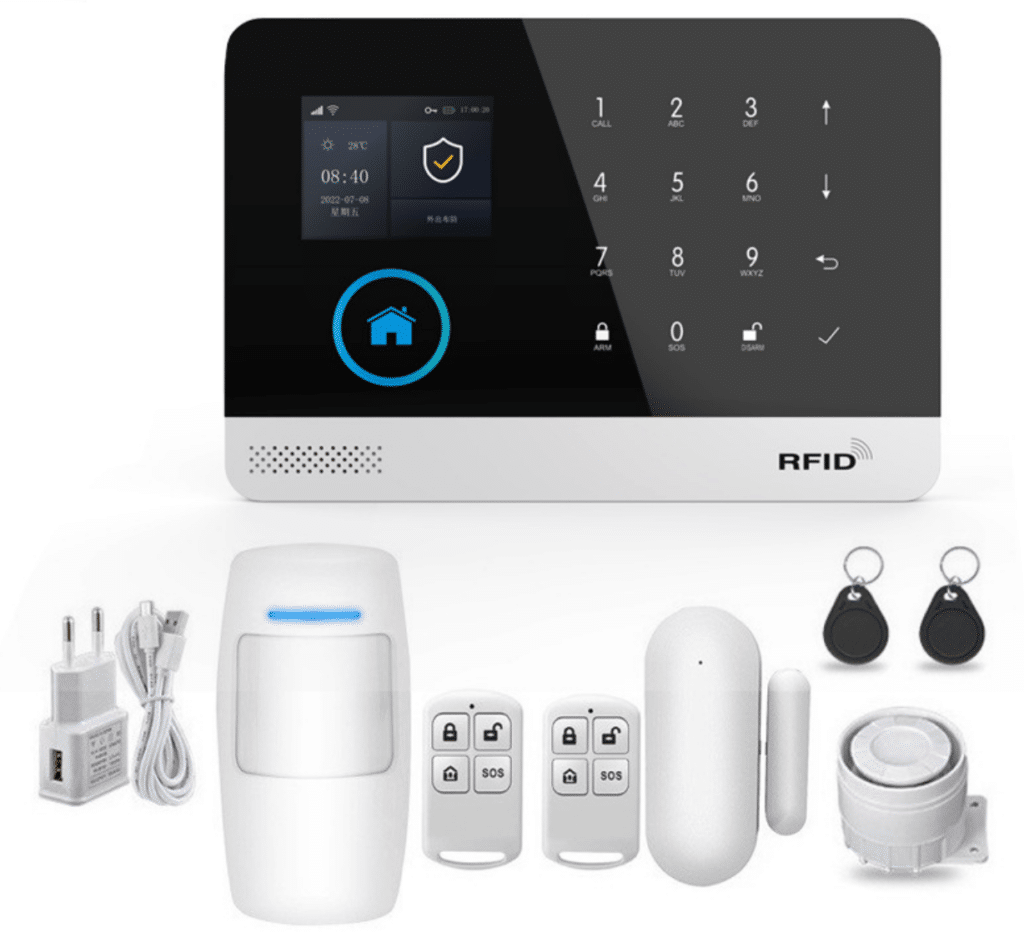
In today’s rapidly evolving residential threat landscape, home burglary is no longer a random or unsophisticated crime. Modern intruders actively study household routines, exploit weak system configurations, and even attempt wireless interference or social engineering. As a professional with over 20 years of hands-on experience designing, deploying, and optimizing burglary alarm systems across thousands of residential environments, I can state unequivocally: a properly designed and configured smart alarm control center is the single most critical element in modern home theft prevention.
This guide is not theoretical. It is written from real-world deployment experience—where systems either stop intrusions decisively or fail due to poor planning, weak configuration, or misunderstood technology. The purpose of this article is to help security professionals, system integrators, decision-makers, and technically minded homeowners build, configure, and operate a smart alarm control center for home environments that actually prevents theft, rather than simply reporting it after the fact.
We will expand beyond basic concepts to cover system architecture, selection criteria, operational workflows, installation best practices, common failure points, and long-term optimization—ensuring this guide delivers practical, field-tested value.
Understanding the Core Role of a Smart Alarm Control Center in Home Theft Protection
A smart alarm control center for home use is far more than a modern replacement for a traditional alarm panel. It is the command brain of a layered intrusion defense system, responsible for sensing, analyzing, deciding, and responding to threats in real time.
Traditional alarm panels operate on a binary logic: trigger or not trigger. This outdated approach leads to two chronic problems:
- Excessive false alarms, which train occupants to ignore alerts
- Delayed response, where alarms sound but no meaningful countermeasure occurs
A smart alarm control center solves this by introducing context awareness, automation, and intelligence.
What Defines a “Smart” Alarm Control Center?
A true smart alarm control center integrates four essential capabilities:
- Multi-Sensor Data Fusion Motion detectors, door/window contacts, glass break sensors, cameras, and environmental sensors are analyzed together—not in isolation.
- Rule-Based and AI-Assisted Decision Logic The system understands how, when, and why an event occurs. For example:
- Motion + forced door opening at night = high-confidence intrusion
- Motion only during daytime = likely occupant or pet
- Automated Response Execution Instead of waiting for human input, the system can:
- Trigger sirens and strobes
- Lock smart doors
- Activate exterior lighting
- Send verified alerts with video evidence
- Remote and Redundant Communication Alerts reach homeowners, monitoring centers, and authorities even during power or internet outages.
From an industry standpoint, this evolution moves home security from reactive alerting to active intrusion prevention.
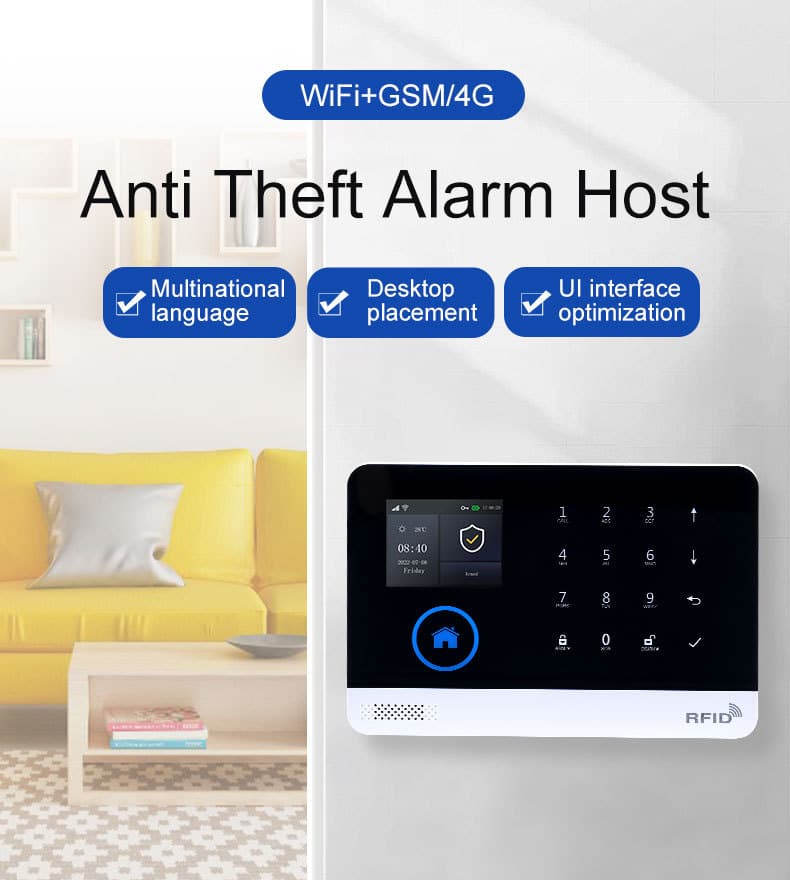
System Architecture: How a Smart Alarm Control Center Actually Works
Understanding architecture is essential for correct deployment.
Core Components
- Control Panel / Hub Central processing unit with touchscreen or keypad interface, backup battery, and tamper detection.
- Intrusion Sensors
- PIR and dual-tech motion detectors
- Door/window magnetic contacts
- Glass break sensors (acoustic or shock-based)
- Alert & Deterrence Devices
- Indoor and outdoor sirens (100–110 dB)
- Strobe lights
- Voice alert modules (two-way audio or pre-recorded warnings)
- Connectivity Modules
- Wi-Fi / Ethernet
- Cellular (LTE/5G backup)
- Encrypted wireless protocols (Z-Wave, Zigbee)
- User Interface & Cloud Platform
- Mobile app
- Web dashboard
- API access for professional integration
A properly designed smart alarm control center never relies on a single point of failure. Power, communication, and detection must always be redundant.
Why a Smart Alarm Control Center Is a Game-Changer for Home Theft Prevention
Based on field deployments across urban, suburban, and rural environments, the advantages are both measurable and decisive.
1. Proactive Intrusion Deterrence (Not Just Alerts)
Verified intrusions trigger immediate, multi-layered responses, often stopping crimes within seconds:
- Lights activate
- Sirens escalate
- Voice warnings announce police notification
In practice, this causes most intruders to flee before entry is completed.
2. Drastic Reduction in False Alarms
AI-assisted filtering, pet immunity logic, and behavior learning reduce nuisance alarms by 70–90%, protecting system credibility and user trust.
3. Real-Time Situational Awareness
Live video verification allows homeowners and monitoring centers to assess threats instantly, improving police response priority.
4. Scalability for Bulk Deployment
Professional-grade smart alarm control centers support:
- 64–128 zones
- Multi-user permission roles
- Centralized management dashboards
This is essential for residential developments, property managers, and security providers.
5. Financial and Insurance Benefits
Homes equipped with monitored smart alarm systems often qualify for:
- Insurance premium reductions (10–20%)
- Higher property valuation
- Lower theft-related losses
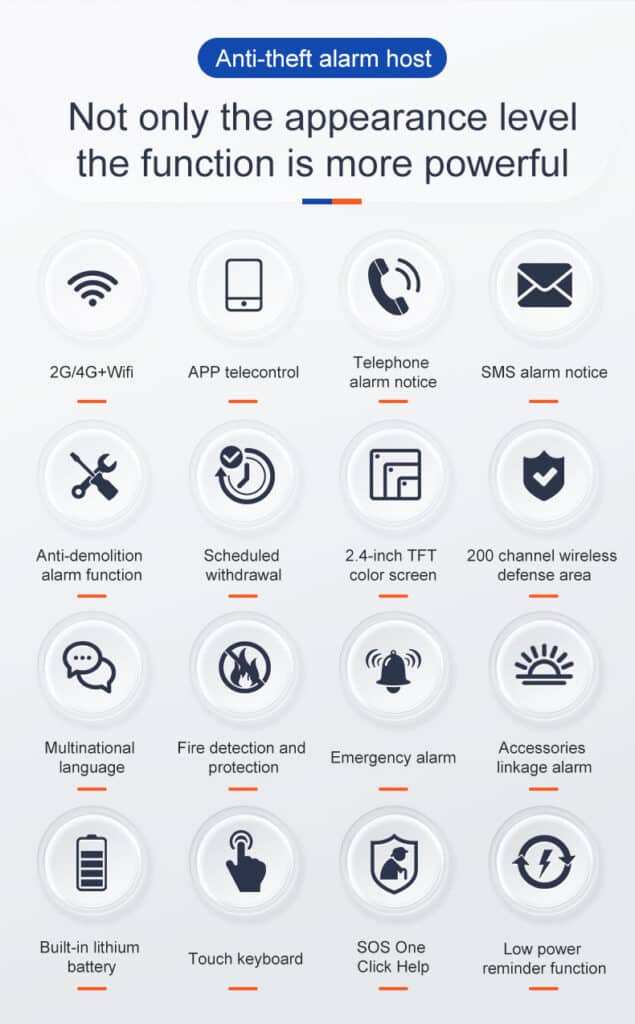
Selecting the Right Smart Alarm Control Center: Professional Criteria That Matter
For security professionals, selection errors are costly. Focus on performance, reliability, and future-proofing, not marketing features.
Mandatory Selection Criteria
- Standards Compliance UL 1023, ANSI/SIA CP-01, EN 50131
- Encryption & Anti-Jamming Protection AES-128/256, frequency hopping, tamper alerts
- Redundant Connectivity Wi-Fi + Cellular backup is non-negotiable
- Battery Backup Minimum 24 hours, preferably 48+
- Firmware & Cloud Support Lifecycle Ongoing updates for at least 5 years
Procurement Tip
Always conduct a pilot deployment before large-scale rollout. Real-world RF interference, layout complexity, and user behavior reveal issues lab tests do not.
Step-by-Step Installation Guide: Professional, Theft-Focused Deployment
Step 1: Threat-Oriented Site Assessment
- Identify forced-entry points
- Map sightlines and blind zones
- Evaluate lighting and concealment risks
Step 2: Control Panel Placement
- Central, concealed, elevated location
- Away from main entry doors
- Strong wireless coverage
Step 3: Sensor Installation (Critical Accuracy)
- Motion sensors: 2.1–2.4 m height, angled downward
- Door/window contacts: aligned within 10–12 mm
- Glass break sensors: calibrated for room acoustics
Step 4: Network & App Configuration
- Enable encrypted communication
- Set user roles and permissions
- Activate geofencing and automation rules
Step 5: Response Logic Programming
- Define escalation sequences
- Link sensors to cameras and lighting
- Set verified alert thresholds
Step 6: Full System Testing
- Walk tests
- Simulated intrusion scenarios
- Power and network failover tests
Advanced Enhancements for Maximum Theft Resistance
- Smart Lock Integration – auto-lock on arming
- Voice Deterrence – personalized warnings
- Behavioral Analytics – detect abnormal patterns
- Central Monitoring APIs – professional oversight
These features significantly increase deterrence effectiveness when properly configured.
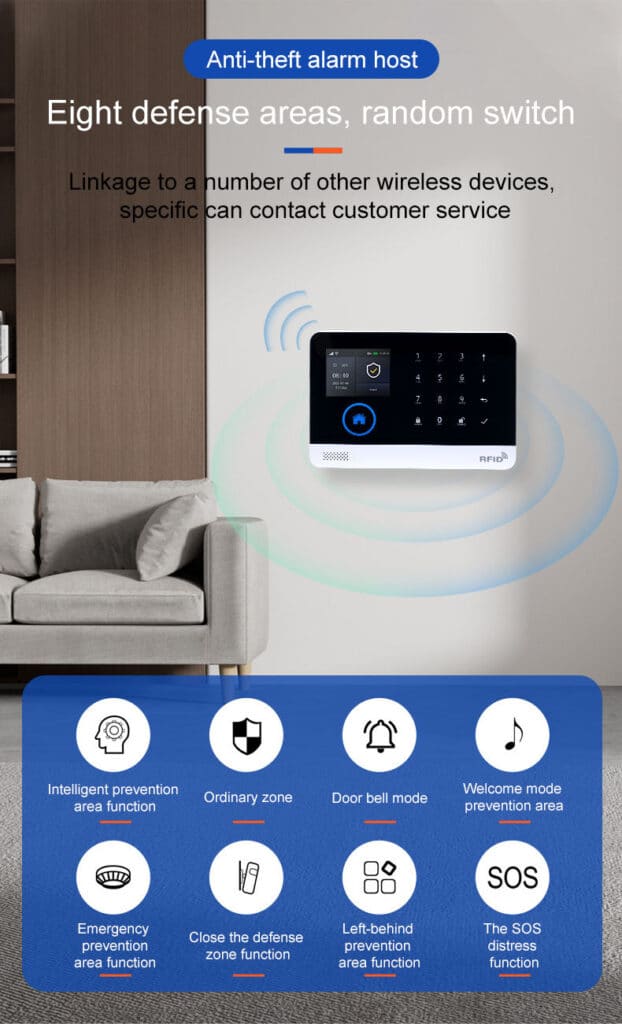
Maintenance, Optimization & Common Failure Points
Routine Maintenance
- Monthly sensor tests
- Firmware updates
- Battery health checks
Common Mistakes to Avoid
- Overlapping motion zones
- Poor Wi-Fi planning
- Ignoring user training
A smart alarm system fails more often due to human configuration errors than hardware faults.
Real-World Deployment Results
- 50-home community: 70% burglary reduction within 12 months
- High-value residence: intrusion aborted within 18 seconds after AI-verified alert
- Property management group: 40% reduction in false dispatches
Conclusion: From Alarm System to True Home Defense
A smart alarm control center for home use is not a luxury—it is the foundation of modern theft prevention. When designed and deployed correctly, it transforms passive security into active, intelligent defense.
As professionals in the security industry, our responsibility is not to install devices—but to engineer outcomes: fewer break-ins, faster responses, and safer homes.