

Introduction
System integrators and procurement teams often encounter a familiar yet costly challenge: after selecting and installing a series of detectors, the security alarm panel begins generating false alarms, dropping wireless signals, or failing to recognize specific zones. In nearly all such cases, the root cause is incompatible sensors—a mismatch between selected detection devices and the technical specifications of the chosen security alarm panel model.
This guide addresses the critical question: Are all the selected sensors compatible with this specific security alarm panel model? Compatibility is not merely a convenience—it is a foundational requirement for ensuring stable intrusion detection, preventing operational downtime, and maximizing ROI in professional-grade burglar alarm systems.
Designed for alarm technicians, product managers, security procurement specialists, and bulk purchasing decision-makers, this technical guide offers practical evaluation methods, expert insights, and authoritative references to help you make informed decisions when selecting and verifying sensors for any modern security alarm panel.
Section 1: Understanding Security Alarm Panels and Sensor Fundamentals
What Is a Security Alarm Panel?
A security alarm panel, also called an intruder alarm control panel or alarm system hub, serves as the central processing unit that receives, interprets, and reacts to signals transmitted by various intrusion and environmental detection sensors. It supports multiple zone inputs, communication modules, and output devices—coordinating the entire intrusion alarm ecosystem.
Panel Categories: Wired, Wireless, and Hybrid
- Wired alarm panels rely on hardwired sensors connected via zone terminals or bus lines (e.g., RS-485).
- Wireless alarm panels support RF technologies such as 433MHz, 868MHz, or proprietary encrypted protocols such as Honeywell 5800 Series or DSC PowerG.
- Hybrid panels integrate both wiring methods and may also support smart home protocols like Z-Wave, Zigbee, or Wi-Fi modules.
Each type has specific compatibility constraints that influence sensor selection.
Sensor Types Relevant to Panel Compatibility
Common devices include:
- PIR motion detectors
- Dual-tech motion sensors
- Door/window magnetic contacts
- Glass break detectors
- Environmental sensors (smoke, heat, flood, gas)
- Smart IoT sensors connected through cloud gateways
Why Compatibility Matters
A sensor that is not aligned with the panel’s:
- electrical characteristics
- communication protocols
- voltage thresholds
- data formatting requirements
can lead to system instability, reduced detection accuracy, or total communication failure.
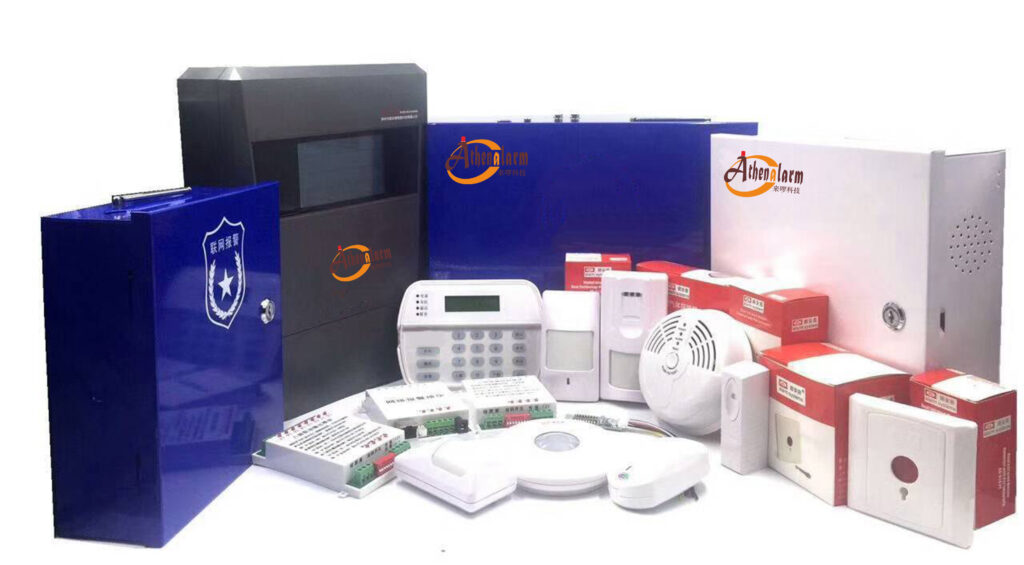
Section 2: Key Factors Influencing Sensor Compatibility
1. Communication Protocol Alignment
A sensor must use the same communication architecture as the alarm panel. Key protocols include:
- RF protocols: 433MHz, 868MHz, 915MHz
- Encrypted proprietary protocols: DSC PowerG, Visonic PowerCode, Bosch Radion
- Smart home protocols: Z-Wave Plus, Zigbee 3.0
- Network-based protocols: Wi-Fi, IP over Ethernet (for advanced IoT systems)
Using a 433MHz sensor with an 868MHz panel, or pairing a non-authorized PowerG-like device with a DSC panel, will result in complete incompatibility.
2. Electrical and Hardware Considerations
For wired sensors, compatibility depends on:
- Voltage rating (commonly 12VDC)
- Current consumption limits
- Detector type (NO/NC circuits)
- Required EOL (End-of-Line) resistor configuration
- BUS protocol (RS-232, RS-485, CAN Bus)
Example:
A panel supporting only digital addressable detectors cannot read analog voltage-based sensors.
3. Software and Firmware Support
Modern security alarm panels rely heavily on firmware for:
- expanding device libraries
- enabling new protocol integrations
- adding support for updated models from third-party manufacturers
Compatibility often changes after firmware releases. For example:
- Some Honeywell Vista panels require firmware updates to support newly released wireless door contacts.
- IoT-enabled alarm systems may require API updates to integrate third-party cloud sensors.
4. Environmental and Regulatory Factors
Compliance with security industry standards often influences allowable sensor types:
- UL 1023 — Household Burglar Alarm System Units
- UL 985 — Household Fire Warning System Units
- EN 50131 — Intrusion and Hold-Up Alarm Systems (Europe)
Some panels only accept sensors certified under the same standard for insurance or project compliance purposes.
5. Common Mismatch Examples
- Using analog PIR sensors with a digital-only control panel
- Pairing Z-Wave sensors with a panel that supports Zigbee only
- Attempting to add older 433MHz magnetic contacts to a new encrypted 868MHz panel
- Applying high-current glass break sensors on low-current auxiliary outputs, causing resets
These issues often cause false alarms, erratic zone behavior, or failure to enroll sensors during programming.

Section 3: Step-by-Step Guide to Verifying Sensor Compatibility
Step 1: Review the Manufacturer’s Datasheet
Start with the technical documentation for your specific panel model—e.g.,
- Paradox MG5000
- Honeywell/Ademco Vista 20P
- DSC PowerSeries Neo
- Texecom Premier Elite
Look for supported sensor lists, protocol specifications, bus wiring diagrams, and voltage tolerances.
Step 2: Cross-Reference Sensor Specifications
Compare the sensor’s:
- operating frequency
- voltage/current requirements
- interface type
- firmware version
- compatibility notes
professionals often rely on compatibility matrices provided by manufacturers or distributors.
Step 3: Conduct Bench Testing
Before field deployment:
- enroll wireless sensors at short range
- measure signal strength
- test zone response times
- simulate alarm conditions
- analyze bus communication logs (for wired systems)
Step 4: Field Trial and Environmental Validation
Test sensors in the intended environment:
- account for RF interference
- measure real-world signal attenuation
- ensure proper zone reporting and event logging
Step 5: Procurement Best Practices for Bulk Buyers
For large-volume purchases:
- request compatibility certification from manufacturers
- confirm firmware versions required for seamless integration
- consult authorized distributors for updated compatibility documents
- avoid mixing uncertified third-party sensors in critical projects
Troubleshooting Partial Compatibility
If issues appear during integration:
- use zone expanders where appropriate
- introduce protocol adapters (when officially supported)
- upgrade panel or sensor firmware
- reconfigure EOL resistors for wired devices
Do not rely on unsupported adapters, as they may introduce security vulnerabilities.
Section 4: Case Studies and Real-World Applications
Case Study 1: Commercial Retail Installation
A retail chain installed third-party PIR motion detectors on a Visonic wireless alarm panel. The PIRs operated on a similar RF band but did not use the proprietary PowerCode protocol. Result:
- random false alarms
- dropped signals
- inconsistent supervision reports
Resolution: Replacement with protocol-certified sensors and a panel firmware update eliminated the issues.
Case Study 2: Industrial Warehouse Using an Outdated Panel
A logistics warehouse using an older Ademco Vista panel attempted to integrate modern encrypted 868MHz contacts. The panel’s wireless receiver could not decode the newer format.
Resolution: Integration succeeded only after installing a compatible wireless receiver module and updating the main board firmware.
Case Study 3: Hybrid Panel IoT Integration
A smart building attempted to pair IoT cloud-based sensors with a Texecom hybrid alarm panel. The lack of API compatibility initially prevented data synchronization.
Resolution: Vendor-provided API updates and a cloud gateway module enabled full integration.
Conclusion
Ensuring that selected sensors are fully compatible with your security alarm panel is essential for achieving stable, scalable, and professional-grade intrusion protection. By evaluating communication protocols, electrical specifications, firmware support, environmental standards, and manufacturer documentation, you can avoid costly mistakes and optimize system reliability.
Whether you’re designing a new intrusion detection system, upgrading an existing installation, or planning bulk procurement, applying the technical guidance provided here will help you make informed decisions and maintain the highest standards of security performance.