
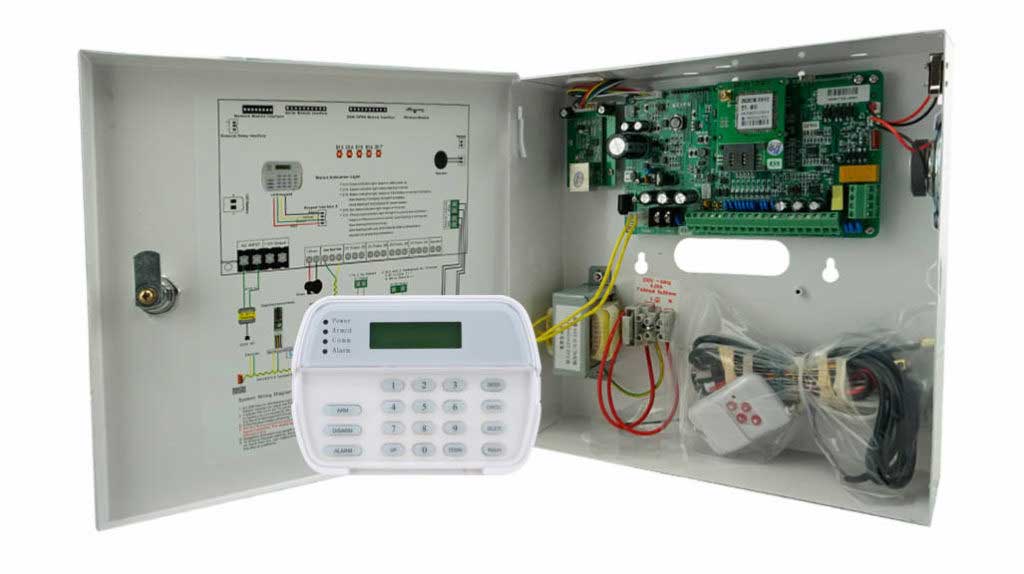
Introduction: Why Commercial Grade Intrusion Panels Are the Backbone of Serious Security
In the professional security world, few components are as misunderstood—and as critical—as commercial grade intrusion panels. I have worked with thousands of projects across retail chains, logistics hubs, manufacturing plants, data centers, campuses, and multi-site enterprises. Again and again, I see the same mistake: decision-makers underestimate the role of the intrusion control panel, treating it as a commodity rather than the strategic brain of the entire burglar alarm system.
This article is written specifically for professional buyers of intrusion alarm systems: security integrators, distributors, enterprise procurement teams, facility managers, and product managers who purchase and deploy burglar alarm systems at scale. My goal is not to repeat generic definitions or marketing claims. Instead, I will provide a practical, field-validated, commercial-grade guide to understanding, selecting, deploying, operating, and maintaining commercial grade intrusion panels that actually perform under real-world attack conditions.
Everything in this guide is grounded in operational experience, industry standards, and lessons learned from both successful deployments and painful failures. If you are responsible for protecting assets, people, or continuity of operations, this article is designed to help you make better, safer, and more profitable decisions. To make it even more actionable, I’ll include detailed checklists, step-by-step procedures, real-world troubleshooting tips, and cost-benefit analyses where they add the most value—drawing from decades of hands-on work in high-stakes environments.
What Defines a Commercial Grade Intrusion Panel (And What Does Not)
The Fundamental Difference Between Commercial and Residential Panels
A commercial grade intrusion panel is not simply a “bigger” residential panel. The difference is structural, architectural, and operational.
A true commercial grade intrusion panel is designed to:
- Operate continuously, 24/7/365, in demanding environments
- Support dozens to thousands of zones
- Integrate with multiple subsystems (access control, CCTV, fire, BMS, SOC platforms)
- Survive tampering, sabotage, power instability, and network failures
- Comply with commercial security standards and certifications
Residential panels, by contrast, prioritize ease of installation and cost. They are not engineered for scale, redundancy, or hostile threat models. For instance, a residential panel might handle 8-16 zones in a home setting, but it lacks the robust fault tolerance needed for a warehouse where environmental factors like dust, humidity, or temperature swings could cause frequent failures.
Core Characteristics of Commercial Grade Intrusion Panels
A panel can only be considered commercial grade if it meets most or all of the following criteria:
- Modular hardware architecture
- High zone capacity with expansion support
- Multiple communication paths (IP, cellular, serial, bus)
- Advanced user roles and permissions
- Robust event logging and audit trails
- Fail-safe and fail-secure design philosophy
- Standards compliance (UL, EN, Grade 3/4, etc.)
Anything less is a compromise. To expand on this, let’s consider specific examples: Modular architecture means you can add modules like a 128-zone expander without downtime, while standards compliance might include UL 1610 for central station burglar alarms or EN 50131 Grade 3 for high-risk sites. If a panel lacks these, it could void insurance coverage or fail audits—common pitfalls I’ve seen in rushed deployments.

The Strategic Role of Commercial Grade Intrusion Panels in Modern Security Architecture
The Panel as the “Security Operating System”
In professional deployments, the intrusion panel functions as a security operating system, not just an alarm trigger.
A commercial grade intrusion panel:
- Correlates inputs from multiple sensors
- Applies programmable logic
- Enforces security policies
- Communicates with monitoring centers and enterprise platforms
- Drives automated responses
Without a capable panel, even the best sensors and detectors become isolated devices with limited value. In practice, this means the panel can process data from PIR motion detectors, glass break sensors, and seismic vaults simultaneously, using logic to differentiate between a false alarm (like a balloon popping) and a genuine breach.
Why Panel Selection Determines Long-Term System Success
From a lifecycle perspective, intrusion panels typically remain in service 10–15 years, far longer than sensors, cameras, or user interfaces. Choosing the wrong panel locks the organization into:
- Limited scalability
- Costly retrofits
- Vendor dependency
- Operational blind spots
This is why experienced buyers always start with the panel—not the peripherals. To illustrate, in a recent multi-site retail rollout I consulted on, selecting a panel with native cloud integration avoided $200,000 in future upgrades when the client shifted to remote monitoring.
Architecture of Commercial Grade Intrusion Panels
Hardware Design Principles
Commercial grade intrusion panels are built around industrial design principles:
- Metal enclosures with tamper detection
- Supervised power supplies
- Battery backup with health monitoring
- Redundant processing paths (in higher-end systems)
These are not aesthetic choices—they are survival requirements. For example, tamper detection might involve micro-switches that trigger an alert if the enclosure is opened, while supervised power supplies monitor voltage levels to prevent undetected brownouts that could disable the system during a power sabotage attempt.
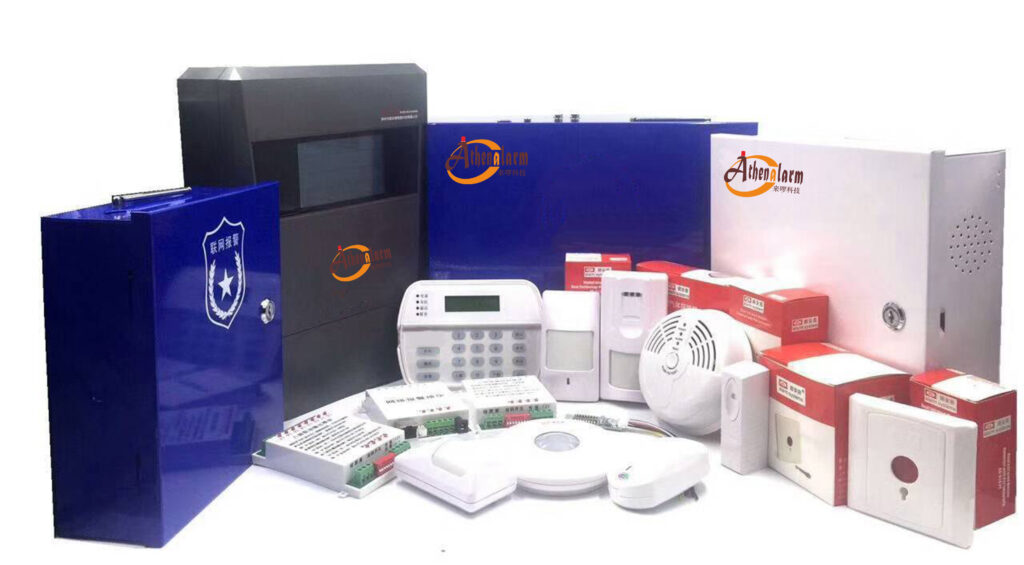
Modular Expansion Framework
Most commercial panels support:
- Zone expansion modules
- Input/output boards
- Relay modules
- Communication modules
- Keypads and touch interfaces
This modularity allows the system to scale from a single site to multi-facility deployments without replacing the core panel. A key tip: When expanding, always verify module compatibility through the vendor’s spec sheet—mismatches can lead to intermittent faults that are hard to diagnose.
Zone Management at Commercial Scale
Understanding Zones Beyond “Doors and Windows”
In commercial environments, zones may represent:
- Motion detection areas
- Perimeter fencing segments
- Roof access points
- High-value asset cages
- Vaults or server rooms
- Safety-critical equipment zones
A commercial grade intrusion panel must support flexible zone typing, partitioning, and logic. Beyond basics, advanced panels allow custom zone attributes like sensitivity thresholds or integration with environmental sensors for flood or smoke detection.
Zone Supervision and Anti-Bypass Design
Commercial panels implement:
- End-of-line supervision
- Dual-resistor or balanced loops
- Anti-masking integration
- Zone fault reporting
These features prevent silent failures and intentional bypassing—common tactics in professional break-ins. Here’s a quick step-by-step for setting up end-of-line supervision: 1) Install a resistor (typically 1kΩ) at the end of each zone loop; 2) Configure the panel to monitor for resistance changes; 3) Test by shorting or opening the loop to ensure faults are logged. Easy to overlook, but skipping this can allow intruders to cut wires undetected.
Advanced Partitioning and Area Control
Why Partitioning Is Non-Negotiable
Commercial facilities rarely operate as a single security area. Partitioning allows:
- Independent arming schedules
- Role-based access
- Tenant separation
- Department-specific policies
A commercial grade intrusion panel should support dozens or hundreds of partitions, not just a handful. Without it, arming the entire building for one late worker becomes a daily hassle, increasing user errors.
Real-World Partition Use Cases
- Retail chains with open storefronts and secured stockrooms
- Warehouses with shared loading docks
- Office buildings with multi-tenant floors
- Campuses with mixed public and restricted zones
Adding to these, consider a hospital scenario: Partitioning separates public ER areas from secure pharmacy zones, allowing 24/7 access to one while locking down the other after hours.
Communication Paths and Redundancy
Multi-Path Communication as a Core Requirement
A single communication path is a single point of failure.
Commercial grade intrusion panels typically support:
- Ethernet (IP)
- Cellular (LTE/5G)
- PSTN (legacy but still used)
- Serial or proprietary protocols
High-end systems allow simultaneous active paths, not just backup. For redundancy, configure primary IP with cellular failover: Step 1) Set IP as default in panel settings; Step 2) Program cellular module with SIM details; Step 3) Test by disconnecting Ethernet to confirm seamless switchover.
Why Communication Security Matters
Panels must support:
- Encrypted transmission
- Authentication with monitoring centers
- Anti-spoofing mechanisms
- Heartbeat supervision
Unsecured communication is an invitation to compromise. In detail, encryption like AES-256 prevents man-in-the-middle attacks, while heartbeat signals (every 30-60 seconds) ensure the panel alerts if connectivity drops—critical for remote sites.

Integration Capabilities: Where Commercial Panels Truly Shine
Integration with Access Control
Commercial grade intrusion panels often integrate tightly with access control systems to:
- Automatically disarm areas upon authorized entry
- Trigger alarms on forced or invalid access events
- Enforce anti-passback and lockdown logic
To set this up: 1) Connect via RS-485 or IP; 2) Map access readers to panel zones; 3) Program rules like “disarm partition on valid badge swipe.” This integration cuts response times in half during incidents.
Integration with Video Surveillance
When integrated properly, panels can:
- Trigger camera presets
- Bookmark alarm events in VMS
- Enable alarm verification workflows
This dramatically reduces false alarms and improves response quality. Extend this to AI-driven video analytics: Panels can receive alerts from smart cameras detecting loitering, linking to intrusion logic for smarter escalations.
Integration with Other Subsystems
Beyond access and video, top-tier panels connect to fire alarms for unified evacuation protocols, building management systems (BMS) for HVAC shutdown during breaches, and even IoT sensors for environmental monitoring. A common error is assuming plug-and-play—always test integrations in a lab setup first to avoid field failures.
Alarm Logic, Automation, and Rule-Based Programming
Moving Beyond Simple Triggers
Commercial grade intrusion panels support complex logic, including:
- AND / OR conditions
- Time-based rules
- Cross-zone verification
- Sequential detection
This reduces nuisance alarms while increasing real threat detection. Programming these requires careful planning to avoid logic loops that could ignore real threats.
Example: Warehouse After-Hours Logic
- Motion detected in aisle A
- No authorized access logged in last 10 minutes
- Secondary detector confirms movement
- Alarm escalates to priority event
- Cameras auto-focus and monitoring center notified
This is impossible without a capable panel. Another example: Retail theft prevention—AND logic requiring both door contact and motion before alarming, reducing wind-induced false positives.
Step-by-Step Programming Guide for Alarm Logic
To program custom rules: 1) Access the panel’s software interface (e.g., via web portal or dedicated app); 2) Navigate to “Logic Rules” section; 3) Define inputs (e.g., Zone 5 AND Zone 6 within 30 seconds); 4) Set outputs (e.g., siren activation, email alert); 5) Simulate tests using built-in tools; 6) Document rules for future audits. Key pitfall: Overly complex rules can delay responses—aim for simplicity where possible.

Step-by-Step: Deploying Commercial Grade Intrusion Panels Correctly
Step 1: Threat Modeling and Risk Assessment
Before hardware selection:
- Identify assets
- Analyze attack vectors
- Define acceptable response times
- Understand regulatory requirements
Expand this by creating a threat matrix: List assets (e.g., inventory, data), threats (e.g., insider theft, smash-and-grab), and mitigations (e.g., reinforced zones). Use tools like ISO 31000 for structured assessments.
Step 2: Panel Selection Based on Scale and Complexity
Evaluate:
- Maximum zones and partitions
- Integration requirements
- Communication redundancy
- Vendor ecosystem and roadmap
Add a checklist: Does it support 500+ zones? Native API for third-party integrations? 5-year warranty? Compare at least three vendors using a scoring table (see below for an example).
Step 3: System Design and Zoning Strategy
Create:
- Logical zone maps
- Partition definitions
- User role matrices
- Alarm escalation flows
Steps: 1) Sketch facility blueprints; 2) Assign zones by risk level; 3) Define roles (e.g., admin vs. user); 4) Flowchart escalations (local siren → central monitoring → police dispatch).
Step 4: Installation and Physical Hardening
- Secure panel enclosures
- Protect wiring paths
- Implement tamper detection
- Validate grounding and power stability
Detailed procedure: 1) Mount panel in a locked, climate-controlled room; 2) Use conduit for all wiring; 3) Wire tamper switches; 4) Test grounding with a multimeter (resistance <1Ω); 5) Surge protect all inputs. Common error: Poor grounding causes noise-induced false alarms.
Step 5: Programming and Testing
- Program zones and logic
- Configure communication paths
- Test alarm scenarios
- Validate failover behavior
Full walkthrough: 1) Enter programming mode (often via keypad code); 2) Assign zone types; 3) Set up paths; 4) Simulate breaches (e.g., trip sensors); 5) Check logs for errors; 6) Repeat under power loss. Test at least 20 scenarios to catch edge cases.
Step 6: Handover, Training, and Documentation
- Train operators and administrators
- Provide as-built documentation
- Define maintenance procedures
Enhance with: Hands-on sessions covering arm/disarm, fault clearing; Digital docs with QR codes to panel manuals; Quarterly review schedules.
Cybersecurity Considerations for Modern Intrusion Panels
The Panel as an Attack Surface
As intrusion panels become IP-connected, they become cybersecurity targets.
Commercial grade panels must support:
- Secure firmware updates
- Role-based access control
- Network segmentation
- Logging and monitoring
Ignoring cyber risk undermines physical security. Best practices: Use VLANs to isolate panels; Enable two-factor authentication; Regularly scan for vulnerabilities using tools like Nessus. A real-world lesson: Unpatched panels in a 2022 breach led to remote disarming—always prioritize OTA updates.
Emerging Cyber Threats and Defenses
With IoT proliferation, panels face DDoS or ransomware. Defend by: 1) Implementing firewalls; 2) Using VPN for remote access; 3) Monitoring logs for anomalies (e.g., unusual login attempts); 4) Conducting annual penetration tests.
Maintenance, Lifecycle Management, and Total Cost of Ownership
Preventive Maintenance Best Practices
- Scheduled battery testing
- Firmware updates
- Communication path verification
- Zone health audits
Create a calendar: Monthly battery checks (replace if <80% capacity); Quarterly firmware reviews; Annual full audits. Tools like multimeters for voltage and ohmmeters for loops are essential.
Why Commercial Panels Deliver Lower Long-Term Costs
While initial costs are higher, commercial grade intrusion panels reduce:
- False alarms
- Downtime
- Replacement frequency
- Emergency service calls
Over a 10-year lifecycle, they are almost always more economical. See the table below for a sample TCO breakdown.
Sample Total Cost of Ownership Comparison
| Aspect | Residential Panel (10-Year Cost) | Commercial Grade Panel (10-Year Cost) | Savings with Commercial |
|---|---|---|---|
| Initial Purchase | $500 | $2,000 | N/A |
| Installation | $300 | $500 | N/A |
| Maintenance/Year | $200 (frequent failures) | $100 (robust design) | $1,000 |
| False Alarm Fines/Year | $150 (higher rate) | $50 (advanced logic) | $1,000 |
| Retrofits/Upgrades | $1,500 (limited scalability) | $500 (modular) | $1,000 |
| Total | $6,100 | $4,500 | $1,600 |
This table assumes a mid-sized facility; adjust based on scale.
Common Mistakes Buyers Make (And How to Avoid Them)
- Choosing panels based on price alone—Avoid by calculating TCO, not just upfront costs.
- Underestimating future expansion needs—Forecast growth; select panels with 50% headroom in zones.
- Ignoring integration requirements—Map all subsystems early; test proofs-of-concept.
- Overlooking certification and compliance—Verify UL/EN ratings match your industry’s regs (e.g., HIPAA for healthcare).
- Treating panels as interchangeable commodities—Evaluate vendor support; prefer those with open APIs.
Adding another frequent error: Skipping user training, leading to misuse. Counter it with mandatory certification programs.
How to Evaluate Vendors of Commercial Grade Intrusion Panels
Ask vendors:
- What is your largest deployed system?
- How long is your product lifecycle?
- How do you handle firmware security?
- What integrations are native vs. third-party?
- What certifications do you maintain?
Expand the list: What’s your MTBF (mean time between failures)? Do you offer 24/7 support? How do you manage end-of-life transitions? Probe for case studies from similar industries.
Why Commercial Grade Intrusion Panels Are a Business Decision, Not Just a Security Decision
For enterprises, intrusion systems impact:
- Insurance premiums
- Regulatory compliance
- Brand reputation
- Operational continuity
The panel is where these concerns converge. Financially, a robust panel can lower premiums by 10-20% through certified risk reduction, while poor choices lead to fines (e.g., GDPR violations for data centers).
Final Thoughts: Building Security That Actually Holds Up Under Pressure
In my professional experience, commercial grade intrusion panels are the single most important investment in any burglar alarm system. They determine not only how the system performs today, but how it adapts, scales, and survives tomorrow.
If you are responsible for selecting or deploying intrusion alarm systems at scale, do not compromise at the panel level. Choose platforms designed for commercial realities, hostile environments, and long-term operation.
A well-chosen commercial grade intrusion panel does more than trigger alarms—it protects businesses, livelihoods, and reputations.
If you want to design or source a commercial intrusion system that is genuinely fit for purpose, I strongly encourage you to explore the rest of our technical resources or contact us directly. The difference between a system that looks good on paper and one that works in the real world almost always starts with the panel. For ongoing support, consider subscribing to industry updates on standards like UL 365 or EN 50136, which evolve to address new threats.