

In modern intrusion alarm systems, power efficiency is no longer optional—it is a core design requirement. As wireless sensors become the backbone of residential, commercial, and industrial security deployments, hardware engineers must balance two conflicting demands: ultra-low power consumption and immediate threat responsiveness.
This article explores sensor wake-up logic and power saving modes, with a strong focus on low-power design in wireless alarm sensors. It provides practical engineering guidance, real-world design strategies, and proven techniques used in professional alarm systems. The goal is to help engineers design sensors that operate reliably for years while maintaining compliance with security performance standards.
Understanding Sensor Wake-Up Logic in Alarm Systems
Sensor wake-up logic defines how and when a sensor transitions from a low-power state into active detection or communication mode. In intrusion detection systems, this logic is critical because sensors must remain alert without continuously consuming energy.
Most wireless alarm sensors—such as PIR motion detectors, door/window contacts, vibration sensors, and glass-break detectors—operate in event-driven architectures. Instead of continuous sampling, they remain in a low-power sleep mode until a defined stimulus occurs.
Core Wake-Up Mechanisms Used in Alarm Sensors
- Hardware Interrupt-Based Wake-Up
The most power-efficient approach. A low-power comparator or interrupt pin monitors sensor output. When a threshold is crossed, the MCU wakes instantly. - Timer-Based Wake-Up
The MCU periodically wakes using an internal RTC to perform system health checks or supervision signaling. - Hybrid Wake Logic
Combines interrupts with scheduled wake-ups, commonly used in professional-grade alarm sensors.
In intrusion systems, interrupt-driven wake-up is preferred because it minimizes current draw while maintaining immediate response to real threats.
Power Saving Modes in Wireless Alarm Sensors
Effective low-power design relies on correctly selecting and managing power states. Most modern microcontrollers used in alarm sensors support multiple power modes:
1. Active Mode
Used during signal processing, RF transmission, or alarm triggering. Power consumption is highest.
2. Idle Mode
CPU halted, peripherals active. Suitable for short idle periods.
3. Sleep Mode
CPU off, RAM retained, interrupts active. This is the most commonly used mode in wireless alarm sensors.
4. Deep Sleep / Standby Mode
Minimal power usage; only essential wake-up sources remain active.
In optimized alarm designs, sleep current should remain below 10 µA, enabling multi-year battery life even under frequent supervision signaling.
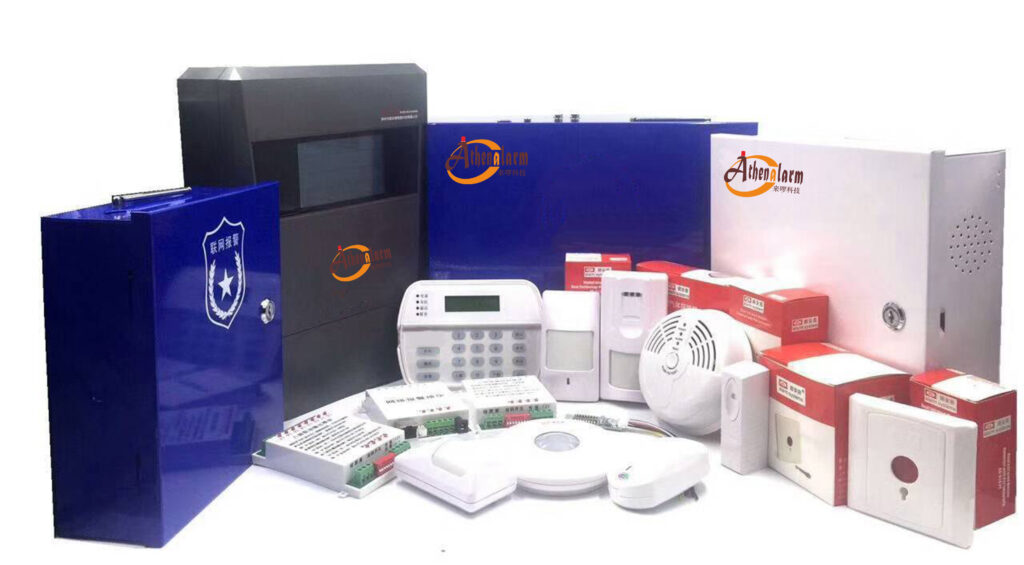
Practical Low-Power Design for Wireless Alarm Sensors
Step 1: Choose the Right MCU Architecture
Select MCUs specifically designed for ultra-low power operation. Common choices include:
- Texas Instruments MSP430 series
- Nordic Semiconductor nRF52 series
- Silicon Labs EFM32 series
These platforms support sub-µA sleep currents and fast wake-up latencies (<10 ms), critical for alarm responsiveness.
Step 2: Implement Intelligent Wake-Up Filtering
False wake-ups are one of the biggest power drains in real-world deployments. Environmental noise, vibration, and temperature drift can trigger unnecessary activity.
Recommended techniques:
- Apply analog filtering before ADC sampling
- Use digital debounce windows (e.g., 50–200 ms)
- Set adaptive thresholds based on environmental baselines
Example:
For a PIR sensor used in indoor intrusion detection, set a voltage threshold that filters out HVAC airflow while still detecting human movement reliably.
Step 3: Optimize RF Transmission Behavior
Wireless transmission consumes significantly more power than sensing or processing.
Best practices include:
- Event-driven transmission only
- Packet aggregation where possible
- Adaptive transmission power based on link quality
- Avoid constant polling from the control panel
Protocols such as Zigbee, sub-GHz proprietary RF, or low-power mesh protocols are commonly used in professional alarm systems for this reason.
Step 4: Measure and Validate Real Power Consumption
Engineers should always validate power performance in real conditions:
- Measure sleep current using a precision ammeter
- Confirm wake-up latency with an oscilloscope or logic analyzer
- Verify battery voltage stability under temperature stress
If sleep current exceeds expected values (e.g., >50 µA), common causes include:
- Floating GPIOs
- Improper pull-up/down resistors
- Peripheral leakage paths
Addressing Real-World Challenges in Alarm Sensor Power Design
Environmental Impact on Power Consumption
Outdoor and industrial alarm sensors face temperature extremes that significantly affect battery chemistry. Use:
- Temperature-compensated voltage regulation
- Industrial-grade lithium batteries rated from –40°C to +85°C
This ensures consistent performance in perimeter security applications.
Case Example: Reducing False Wake-Ups in a Commercial Deployment
In a warehouse intrusion system, vibration sensors caused excessive wake-ups due to machinery operation. By refining wake-up logic and introducing pattern recognition thresholds at the firmware level, false activations dropped by over 60%.
As a result:
- Battery life increased from 9 months to nearly 3 years
- Maintenance visits were significantly reduced
- System reliability improved measurably
This demonstrates how intelligent wake-up logic directly impacts operational cost and reliability.

Advanced Power Optimization Techniques
For high-end alarm systems, advanced techniques can further optimize power usage:
- Event-priority wake scheduling
- Dynamic sleep interval adjustment based on risk level
- Multi-sensor fusion to validate real intrusion events
Field data from large-scale deployments shows that adaptive wake strategies can reduce total energy consumption by up to 40% while maintaining full detection accuracy.
Compliance and Industry Standards
Professional alarm systems should comply with recognized standards, including:
- EN 50131 – Intrusion and hold-up alarm system requirements
- IEC 62642 – Alarm system performance and reliability
- IEEE 802.15.4 – Low-rate wireless communication standard
Compliance ensures reliability, interoperability, and regulatory acceptance across markets.
Conclusion
Sensor wake-up logic and power saving modes are fundamental to building reliable, long-lasting wireless alarm systems. By applying intelligent low-power design principles—such as interrupt-driven wake-up, optimized RF transmission, and adaptive power management—engineers can significantly extend battery life without compromising security performance.
For modern intrusion detection systems, mastering low-power design is no longer optional; it is a defining factor of product quality, reliability, and long-term success.
Authoritative References
- Texas Instruments. MSP430 Ultra-Low-Power Microcontrollers Application Note.
- IEEE Standards Association. IEEE 802.15.4 – Low-Rate Wireless Personal Area Networks.
- CEN/TC 79. EN 50131 – Intrusion and Hold-Up Alarm Systems.
- Analog Devices. Low-Power Design Techniques for Wireless Sensors.
- Zigbee Alliance. Zigbee PRO Specification for Energy-Efficient Networks.