
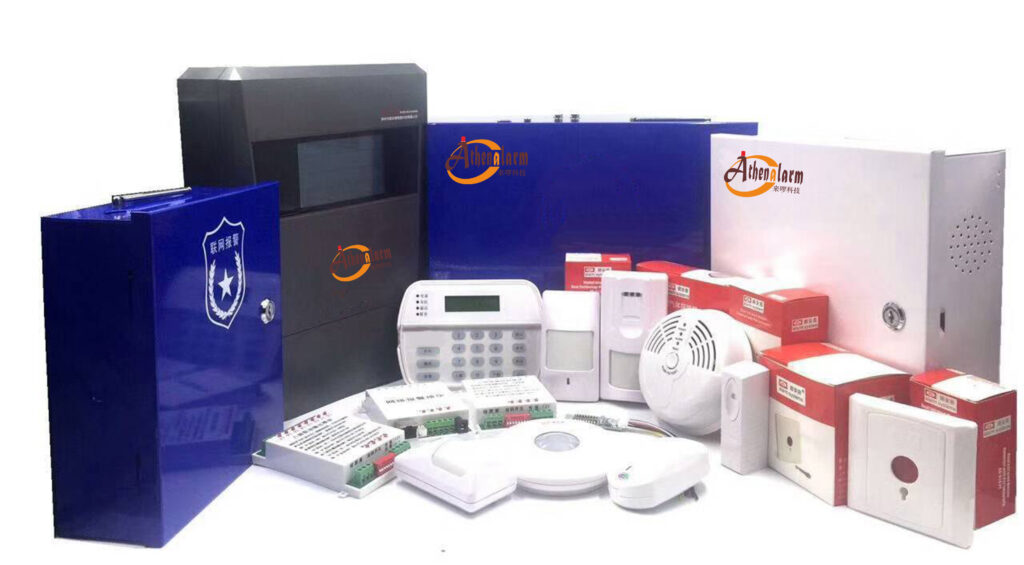
Remote alarm management has shifted from a convenience feature to an operational necessity in modern intrusion detection systems. For engineers and IT security professionals responsible for alarm infrastructure, the ability to arm, disarm, and monitor systems remotely must never come at the expense of security integrity. Poorly designed or misconfigured remote access has become one of the most common attack surfaces in contemporary alarm deployments.
This guide focuses on secure remote alarm management, with a practical emphasis on safe arming and disarming without security compromise. It addresses real operational risks, explains why they occur, and provides concrete, repeatable configuration practices that can be applied to commercial, residential, and industrial alarm systems.
What Secure Remote Alarm Management Really Means
Remote alarm management refers to controlling alarm system functions—arming, disarming, status checks, event review, and configuration changes—via off-site interfaces such as mobile applications, web dashboards, or centralized monitoring platforms.
In secure deployments, remote management is not simply “enabled.” It is engineered using controlled authentication, encrypted communication, role-based access, and continuous monitoring. When these elements are missing or poorly implemented, remote arming and disarming becomes a high-risk operation.
From an operational security perspective, remote alarm management must satisfy three core principles:
- Authentication assurance: Only verified, authorized users can issue commands.
- Command integrity: Arming and disarming signals cannot be altered, replayed, or intercepted.
- Traceability: Every remote action is logged, attributable, and reviewable.
Failing any of these principles creates opportunities for silent system compromise.
Why Remote Arming and Disarming Is a High-Risk Function
Among all remote alarm operations, arming and disarming carries the highest security impact. A successful attack does not need to disable sensors or panels; it only needs to issue a valid disarm command.
Common real-world risk factors include:
- Weak password-only authentication for remote users
- Unencrypted or outdated communication protocols
- Exposed cloud APIs with insufficient access control
- Shared credentials between installers, monitoring centers, and end users
- Lack of real-time alerting for remote disarm events
Industry incident analyses consistently show that credential compromise, not hardware failure, is the dominant cause of unauthorized remote disarming. Once credentials are stolen, attackers can operate within the system’s “legitimate” control plane.

Core Security Controls for Remote Alarm Management
Encrypted Communication Is Non-Negotiable
All remote alarm management traffic must be protected using modern encryption. TLS 1.2 should be considered a minimum baseline, while TLS 1.3 is strongly recommended where supported.
Encryption protects against:
- Command interception during remote disarming
- Session hijacking on public or compromised networks
- Replay attacks using captured packets
Engineers should explicitly verify cipher suites and disable legacy protocols at both the alarm panel and management server levels.
Strong Authentication Beyond Passwords
Password-only authentication is no longer acceptable for remote arming and disarming. Multi-factor authentication (MFA) significantly reduces the risk of unauthorized access, even when credentials are leaked.
Effective MFA implementations in alarm systems typically combine:
- Something the user knows (password or PIN)
- Something the user has (hardware token, authenticator app)
- Optional contextual checks (trusted device or network)
For high-risk environments such as warehouses, data centers, or critical infrastructure, remote disarm authority should always require MFA, regardless of user role.
Role-Based Access and Least Privilege
Not every remote user needs the ability to disarm an alarm system. Secure remote alarm management enforces role separation:
- Monitoring users: view-only access
- Maintenance users: limited configuration access
- Security administrators: arming and disarming authority
By limiting who can issue remote disarm commands, you reduce the blast radius of a compromised account.
Step-by-Step: Configuring Safe Remote Arming and Disarming
The following process reflects best practices used in professionally deployed IP-based alarm systems.
Step 1: Lock Down the Local System First
Before enabling remote access, ensure the local alarm panel is secured:
- Update firmware to the latest manufacturer-approved version
- Change all default installer and admin credentials
- Disable unused communication interfaces and ports
Remote security is only as strong as the local control layer.
Step 2: Enable Encrypted Remote Communication
Within the alarm panel or management server settings:
- Enforce HTTPS or encrypted VPN tunnels
- Disable plaintext HTTP or legacy encryption
- Verify certificate validation for mobile or web clients
If a mobile app is used, confirm it rejects insecure connections by design.
Step 3: Implement Multi-Factor Authentication
Configure MFA for all users with arming or disarming privileges:
- Assign MFA at the user role level
- Require MFA on every remote disarm attempt
- Avoid “remember this device” options for critical actions
This ensures that even stolen credentials cannot be used silently.
Step 4: Restrict Network Access
Limit where remote management connections can originate:
- Apply IP whitelisting for corporate or monitoring networks
- Use VPN access for installers and administrators
- Block geographic regions irrelevant to operations
Reducing exposure dramatically lowers attack probability.
Step 5: Enable Detailed Audit Logging
Logging is essential for operational security and post-incident analysis:
- Record all arming and disarming events
- Log user identity, device, IP address, and timestamp
- Generate alerts for abnormal behavior patterns
Logs should be retained and reviewed as part of routine security operations.
Step 6: Test Failure Scenarios
Security controls must be validated, not assumed:
- Attempt remote disarm with invalid credentials
- Test MFA enforcement under poor network conditions
- Verify alerts trigger on repeated failed attempts
Testing confirms that protections function under real-world conditions.

Operational Example: Reducing Remote Disarm Abuse
A logistics facility operating multiple alarmed zones experienced recurring unauthorized disarm events traced to compromised installer credentials. By redesigning their remote alarm management model—introducing MFA, eliminating shared accounts, and enforcing encrypted access—they eliminated unauthorized disarming entirely over the following operational year.
This outcome was achieved without changing sensors or panels, demonstrating that secure remote management is primarily a control-plane problem, not a hardware one.
Key Takeaways for Engineers and Security Teams
Secure remote management for alarm systems is not about adding more features. It is about controlling risk at the moment of authority—when an alarm is armed or disarmed remotely.
To maintain safe arming and disarming without security compromise:
- Encrypt all remote communications
- Enforce multi-factor authentication
- Apply least-privilege access controls
- Monitor and audit every remote action
- Regularly test and update configurations
When implemented correctly, remote alarm management enhances operational efficiency without weakening security posture.
Authoritative References and Standards
- NIST Special Publication 800-53 Rev. 5
Security and Privacy Controls for Information Systems and Organizations - ANSI/SIA CP-01-2019
Control Panel Standard – False Alarm Reduction and Remote Control Considerations - Verizon Data Breach Investigations Report (2024)
Credential-based attack analysis relevant to remote system access