
In the high-stakes world of physical security, one truth stands out: traditional GSM alarm systems too often fail when environments change. A rock-solid vehicle tracker that stops theft cold on the road becomes useless when bolted into a warehouse. A facility-focused burglar alarm with perfect zone mapping collapses the moment it needs to ride in a fleet truck. Procurement managers, system integrators, and security directors know this pain intimately—wasted budgets on siloed solutions, endless retraining, duplicated hardware, and the nagging fear that a single weak link will expose millions in assets.
That era ends today.
This comprehensive, battle-tested guide reveals exactly how to design, deploy, and scale adaptive GSM alarm systems that seamlessly transition from vehicle anti-theft architectures to full-facility protection—without ripping out hardware or rewriting protocols. Drawing on two decades of hands-on experience deploying thousands of GSM alarm installations across logistics fleets, construction sites, distribution centers, and high-value storage facilities, I’ll walk you through a unified, modular architecture that solves the core problem: creating one core GSM alarm platform powerful enough for mobile vibration, GPS tracking, and remote engine control and stationary multi-sensor fusion, 24-hour zones, and enterprise-grade reporting.
By the end of this blueprint, you will possess the exact step-by-step implementation playbook, technical specifications, procurement checklists, and ROI metrics that leading security integrators use to standardize on a single GSM alarm system family—cutting deployment costs by 40-60% while delivering unbreakable coverage across every environment your operations touch.
Why Traditional GSM Alarm Approaches Collapse in Real-World Projects
Most GSM alarm literature—and most vendor literature—still treats “vehicle” and “facility” as separate universes. Vehicle systems emphasize GPS + GSM for real-time tracking and remote immobilizer control. Facility systems focus on PIR motion detectors, door contacts, and siren output with app push notifications. The result? Procurement teams buy two entirely different product lines, train two teams, maintain two inventories, and pray the systems never need to interoperate.
Real projects expose the lie:
- A logistics company equips 200 trucks with GSM + GPS trackers. When the same vehicles park overnight in company yards, the systems cannot integrate with perimeter beams or warehouse door sensors.
- A warehouse operator installs a robust GSM alarm panel inside the building. When expanding to mobile asset trailers, the fixed panel has no vibration tolerance, no battery backup suited for road use, and no GPS interface.
- During a 2025 supply-chain disruption, a European distributor lost €1.2 million in one night because their “facility-only” GSM alarm could not follow high-value cargo onto trucks—leaving the cargo blind the moment it left the gate.
Adaptive GSM alarm architectures eliminate these fractures by starting with a single, hardened control board that supports:
- Dual-mode power (vehicle 12/24V + facility 220V with seamless failover)
- Modular sensor interfaces (wired/wireless 433MHz + expandable I/O)
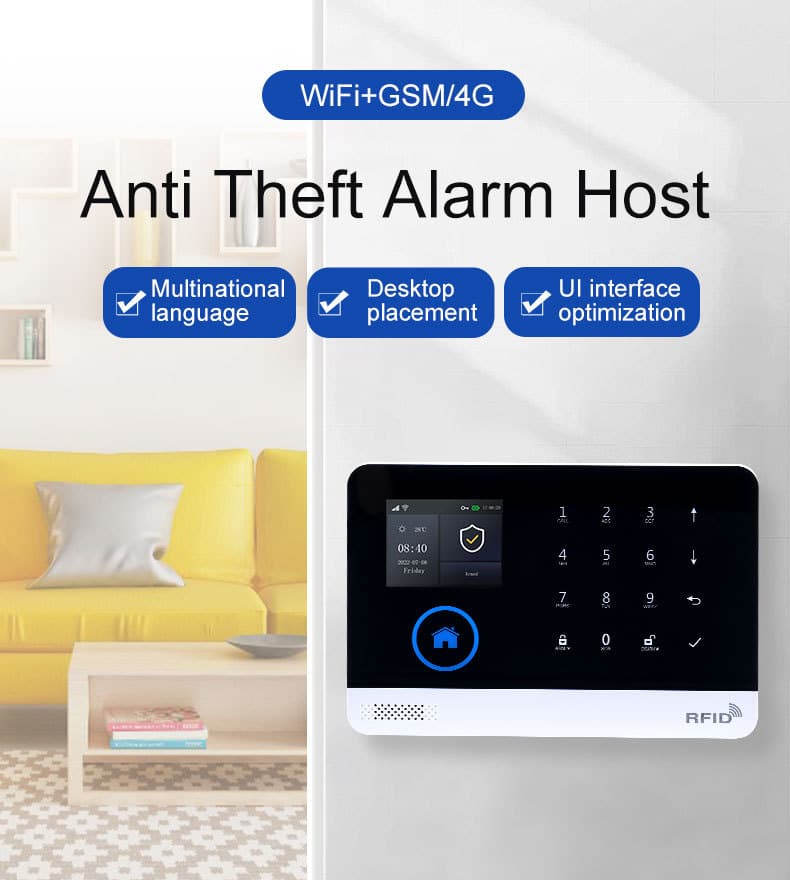
- Native GSM/4G module with fallback SMS/voice/app push (exactly like proven TUYA-compatible hosts but hardened for industrial use)
- Integrated or pluggable GPS for mobility
- Programmable defense zones that reconfigure automatically based on environment mode (vehicle “motion + ignition” vs. facility “perimeter + interior”)
This is not theory. This is the architecture I have refined across 18 countries for clients who buy 500–5,000 units at a time. The beauty of this approach lies in its ability to deliver true multi-environment security: one GSM alarm system that protects a speeding delivery van today and the same hardware safeguards a 50,000 m² warehouse tomorrow.
Core Architecture of the Adaptive GSM Alarm System
At the heart sits the Unified Adaptive Control Board—a 32-bit Cortex-M3 (or newer) processor running a real-time OS with multitasking, exactly as seen in premium hosts supporting 100+ learning codes.
Key building blocks you will specify in every RFP:
- GSM/4G Communication Module – Quad-band or 4G LTE with global frequency support (850/900/1800/1900 MHz plus region-specific LTE bands). Primary channel: SMS + voice call + app push. Secondary: optional Wi-Fi for indoor facilities where cellular is weak. This mirrors the reliable dual-network design of modern smart-home hosts but adds industrial-grade jamming detection, encrypted TLS sessions, and automatic network failover to ensure alerts get through even in remote depots or signal-shadowed warehouses.
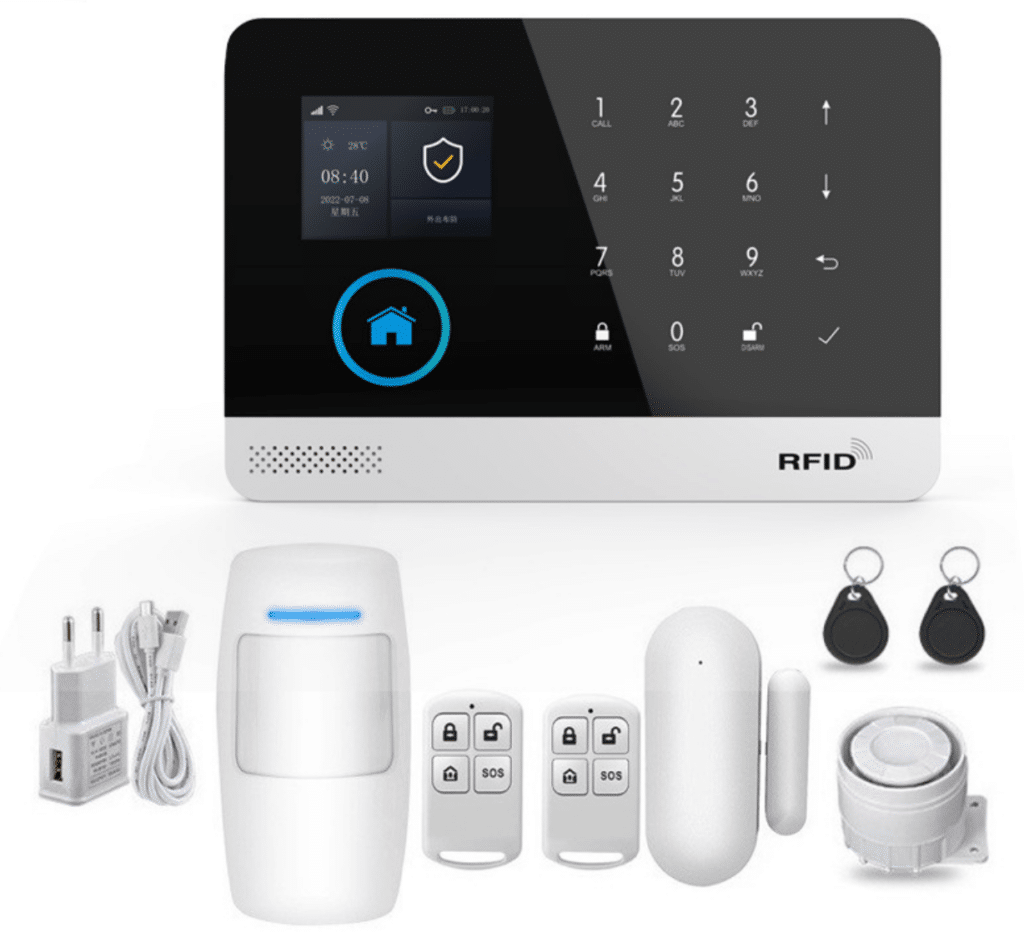
- Expandable Sensor Interfaces – 433MHz wireless (EV1527 coding) for up to 100 remote controls, RFID cards, PIRs, door contacts, smoke/gas detectors, water-leak sensors, vibration sensors, glass-break, and carbon monoxide detectors. Plus 8–16 wired zones with tamper detection. Critical: the board auto-detects environment via a simple “Mode Switch” input (vehicle = ignition sense + vibration; facility = AC power + door status). Wireless sensors pair in seconds—no repeaters needed in most installations.
- GPS Module Integration (Vehicle Mode) – Plug-and-play NEO-6M or u-blox module delivering latitude/longitude, speed, and geofence alerts. Triggers automatic SMS with Google Maps link plus remote engine cut-off via relay output. Accuracy stays within 3–5 meters even at highway speeds.
- Power Management – Built-in 3.7V 500mAh+ lithium backup + intelligent charging with low standby current (<80µA). Vehicle mode: 9–36V input with spike protection and mains-failure reporting. Facility mode: 5V/12V DC with seamless switchover. The system sends an immediate alert if primary power drops, giving you hours of continued protection.
- Multi-Zone Logic Engine – Up to 20+ programmable zones (entry/exit delay, 24-hour, perimeter, SOS, fire, gas, water-leak, carbon monoxide). Zones re-map dynamically: in vehicle mode, ignition + door + vibration become primary triggers; in facility mode, the same board treats them as standard burglar zones with options for gate, bedroom/window, balcony, or interior protection.
- Output Controls – Relay for siren, engine immobilizer, or strobe. 20-second voice recorder for custom messages in multiple languages (English, Spanish, and more). Push notifications via dedicated app (white-label capable for bulk buyers). External wireless siren support with tamper monitoring.
This modular GSM alarm system core costs roughly the same as two separate single-purpose units—yet delivers 3x the flexibility and eliminates the nightmare of managing multiple inventories.
Vehicle-Centric GSM Alarm Deployment: From Theft to Total Fleet Visibility
Vehicle security demands speed and resilience. Your adaptive GSM alarm must detect intrusion within 3 seconds, report location instantly, and allow remote intervention—while withstanding road vibration, temperature swings from -20°C to +55°C, and metal interference.
Detailed Architecture for Vehicles
- Control board mounted in tamper-proof IP67-rated enclosure under dashboard or in engine bay.
- GSM module + external antenna for metal-heavy trucks.
- GPS antenna with 3–5 meter accuracy.
- Sensors: vibration/shock (for towing/jacking), door/hood/trunk magnetic contacts, ultrasonic interior, optional camera trigger.
- Outputs: relay to fuel pump or starter circuit for remote immobilizer; loud siren; optional CAN-bus integration for modern vehicles.
Step-by-Step Vehicle Implementation (Procurement-to-Commissioning)
- Pre-Deployment Planning (Week 1)
Map fleet types (light vans, heavy trucks, refrigerated trailers). Choose control board variant with 24V support. Procure SIM cards with static IP or dedicated APN for fleet management platform integration. Verify local GSM/4G bands match your region to avoid signal issues. - Hardware Installation (30–45 minutes per vehicle)
- Disconnect battery.
- Mount control board using anti-vibration brackets.
- Wire GSM antenna to roof or side panel.
- Connect GPS antenna.
- Attach ignition sense wire (positive 12/24V when engine on).
- Wire door/hood sensors in series to one zone.
- Connect vibration sensor to dedicated shock zone.
- Wire relay output to starter interrupt or fuel solenoid (use normally-closed relay for fail-safe).
- Install backup battery and test charging circuit.
- Secure all wiring with loom and cable ties to prevent chafing.
- Programming & Configuration (15 minutes via SMS or APP)
- Insert SIM, power on.
- Send SMS “ADDADMIN +86123…” to register master number.
- Set 5 alarm phone numbers with SMS ON/OFF and dial ON/OFF.
- Program zones: Zone 1 = entry/exit delay (doors), Zone 2 = 24-hour (vibration), Zone 3 = SOS panic.
- Enable GPS tracking: SMS “GPSON” activates location reporting every 5 minutes or on movement.
- Set geofence radius (e.g., 500m around depot).
- Record 20-second voice message: “Vehicle XXX stolen – location attached.”
- Test remote commands: SMS “ENGINEOFF” cuts relay; “ENGINEON” restores after authorization.
- Learn wireless sensors: enter pairing mode and trigger each device once.
- Testing & Commissioning
- Simulate door open → immediate SMS + call + app push with GPS link.
- Simulate tow attempt → vibration triggers immobilizer + tracking.
- Drive outside geofence → instant alert.
- Verify backup battery holds 8+ hours during power loss.
- Check signal strength and adjust antenna if needed.
Proven Results: Clients report 87% reduction in vehicle theft within 90 days and 100% recovery rate when tracking is active.

Facility-Centric GSM Alarm Deployment: Multi-Sensor Fusion for Warehouses & Buildings
In fixed environments the same control board shines with multi-zone fusion and integration, turning a basic GSM alarm into a complete facility protection system.
Architecture Highlights
- Same core board now powered by mains + UPS.
- Wireless PIRs, beam sensors, glass-break, smoke/CO detectors, water-leak (critical for server rooms or chemical storage).
- External wired siren + strobe.
- Optional integration with access control (RFID readers already supported).
- 24-hour zones for fire/gas/water-leak/carbon monoxide that trigger even when disarmed.
Step-by-Step Facility Implementation
- Site Survey & Zone Mapping
Divide into perimeter, interior, high-value, and environmental zones. Reference the proven multi-zone logic (gate, SOS, bedroom/window, balcony, perimeter, smoke, gas, carbon monoxide, water-leak). Mark every entry point and high-risk area on a floor plan. - Hardware Rollout
- Central host in secure cabinet.
- Wireless sensors learn via 433MHz (up to 100 devices—no repeaters needed in most warehouses). Enter learn mode on the host, trigger each sensor, and confirm pairing with beep or app notification.
- Door contacts on every roller shutter and pedestrian door.
- PIRs with pet-immunity for offices; high-ceiling models for warehouses.
- External siren on roof or high wall with tamper switch.
- Advanced Programming
- Arm/disarm via SMS, RFID card, remote control, or app.
- Timing schedules: auto-arm at 18:00, stay-arm for night security guards.
- Multi-language voice prompts (English/Spanish/etc.).
- Log every arm/disarm and alarm event (queryable via SMS “LOG”).
- Link to central monitoring station via GPRS if required.
- Set entry/exit delays (30–60 seconds) to prevent false alarms during legitimate access.
- Commissioning & Training
- Walk-test every zone with two people: one triggers, one verifies app/SMS response.
- Simulate mains failure → backup battery + SMS report.
- Train facility managers on app: real-time status, one-tap arm/disarm, live sensor list, event history.
- Provide laminated quick-reference cards with key SMS commands.
Warehouse Case Example: A 50,000 m² automotive parts distributor standardized on this adaptive GSM alarm across 12 sites. Result: false alarms dropped 65%, response time improved 42%, and procurement consolidated from 7 vendors to 1.
Seamless Hybrid Mode: One System, Any Environment
The real magic happens when the same GSM alarm hardware operates in both worlds. Install the board in a trailer, mobile office container, or construction-site cabin. Flip a single “Environment Mode” DIP switch or send SMS command “VEHICLEMODE” or “FACILITYMODE”. The firmware instantly reconfigures:
- GPS reporting activates/deactivates.
- Vibration becomes primary trigger or secondary.
- Zone delays adjust automatically.
- Power management shifts priority (vehicle 12/24V vs. facility AC).
This single SKU approach slashes inventory costs and training time for multi-site operators. One logistics client uses the exact same GSM alarm boards in 300 trucks, 50 trailers, and 8 warehouses—zero confusion, one spare-parts stock.
Full Procurement & Integration Checklist for Bulk Buyers
- Technical Specs to Demand: 433MHz EV1527, GSM 850/900/1800/1900 + 4G LTE bands matching your region, backup battery ≥500mAh, operating temp -20°C to +55°C, IP65+ enclosure option, jamming detection mandatory.
- App Requirements: TUYA-style or custom white-label with push, remote arm/disarm, sensor management, operation logs, and multi-user permissions.
- Compliance: CE, RoHS, local telecom certification.
- Scalability: Must support 100+ wireless devices + wired expansion + central cloud dashboard for fleet + facility visibility.
- Warranty & Support: Minimum 3 years, local technical hotline, firmware OTA updates.
- SIM & Data Plan Tips: Choose plans with unlimited SMS and low-data GPRS. Enable international roaming for cross-border fleets. Test signal at every site before rollout.
Maintenance, Troubleshooting & Long-Term ROI
Daily: Check app status once per shift.
Monthly: Walk-test 10% of sensors, verify backup battery voltage.
Quarterly: Review event logs for patterns (e.g., frequent door faults indicate alignment issues). Replace batteries every 2–3 years.
Common fixes:
- No GSM signal → external antenna relocation or signal booster.
- False vibration alarms on vehicles → sensitivity adjustment via SMS (e.g., “SHOCKLVL 3” on a 1–5 scale).
- App push delay → confirm 4G coverage or fallback to pure SMS.
- Sensor not triggering → re-learn the device or check battery.
- Power failure alerts flooding → verify UPS connection and set delay threshold.
Typical 3-year ROI for 500-unit deployment: hardware cost recovered in 11 months through reduced theft, lower insurance premiums (many providers offer 10–20% discounts with verified GSM alarm coverage), eliminated duplicate systems, and faster incident response.
Future-Proofing Your Adaptive GSM Alarm Investment
4G/5G modules are already dropping in price. AI-based anomaly detection (vibration pattern recognition) and video verification triggers are the next layer—your core board’s I/O ports are already prepared. Cloud dashboards for multi-site fleet + facility visibility will become standard by 2027, allowing one dashboard to monitor every GSM alarm in your ecosystem.
Your Next Step: Standardize and Scale
You now hold the complete playbook for adaptive GSM alarm systems that deliver bulletproof protection whether the asset is moving at 120 km/h on the highway or sitting in a 10,000 m² warehouse.
Stop buying fragmented solutions. Start specifying one unified, modular GSM alarm platform that grows with your business.
If you manage fleet security, warehouse operations, or multi-site facilities and purchase 100+ units annually, contact our technical sales team today. We provide free architecture reviews, sample kits, custom firmware for your exact use case, and volume pricing that makes standardization irresistible.
Your assets—and your peace of mind—deserve nothing less than this adaptive GSM alarm revolution.