
1. Introduction
When a warehouse’s motion sensor triggers an alarm at 3 a.m., seconds matter.
But in many organizations, alarm alerts are routed manually — from device to monitoring center to human operator — before a security officer takes action. That delay can be the difference between preventing a break-in and reporting a loss.
Network Alarm Automation changes this equation. It connects alarm sensors, cameras, and control panels through intelligent networks that can detect, analyze, and respond to security events automatically, without waiting for manual intervention.
In this post, we’ll explore what Network Alarm Automation really means, how it works, and why it’s becoming a cornerstone of modern enterprise security. We’ll break down its key technologies, explain how it improves efficiency, and offer practical steps to get started.
As a security systems expert with over 15 years of experience designing and deploying enterprise alarm infrastructures, I’ve seen firsthand how automation transforms response times, reduces costs, and simplifies operations. If you manage corporate security, IT infrastructure, or facility protection, this guide will help you understand how to leverage automation to secure your assets and people effectively.
2. Understanding the Basics of Network Alarm Systems
2.1 Core Components
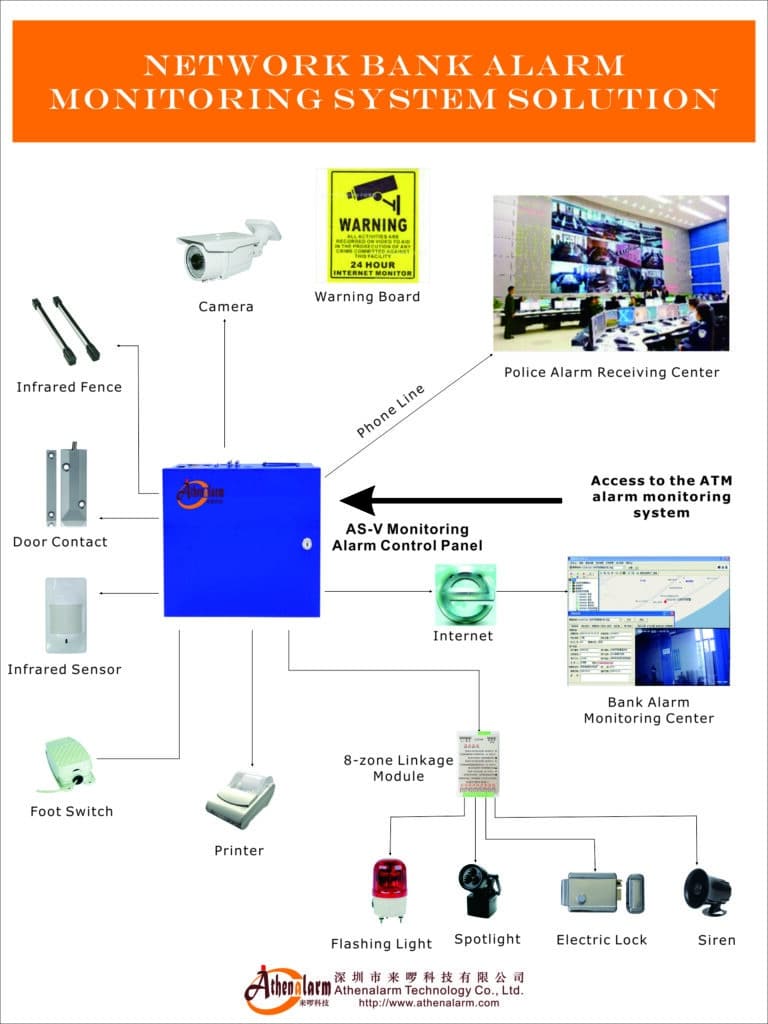
Modern networked alarm systems consist of several interconnected layers:
- Sensors: Motion detectors, glass-break sensors, door/window contacts, and environmental sensors (temperature, smoke, gas).
- Network Protocols: Data travels through TCP/IP, MQTT, or HTTP for cloud communication and IoT integration.
- Controllers & Gateways: Central or distributed processing units that interpret data and trigger automated actions.
- Actuators: Devices such as sirens, lights, access locks, or video cameras that execute programmed responses.
- Monitoring Interfaces: Cloud dashboards or mobile apps that provide real-time system visibility and control.
These components communicate through a network backbone — wired or wireless — allowing event data to be transmitted instantly across the system.
2.2 How Automation Fits In
Automation adds intelligence and autonomy to this network.
It introduces programmable rules and AI-driven decision-making layers that enable systems to react faster and more accurately than human operators.
- Rule-Based Automation: Simple “if-this-then-that” logic, e.g., If door sensor is triggered and camera detects motion, lock all exits.
- AI-Driven Automation: Machine learning models analyze historical data to identify unusual activity patterns, reducing false alarms.
- Hybrid Approaches: Combine deterministic rules with AI to create adaptable security workflows.
Practical Checklist: Do You Need Automation?
If your system suffers from any of the following, automation can help:
- Frequent false alarms or delayed responses
- Multiple siloed security systems that don’t communicate
- Limited visibility across sites or departments
Expert Tip: Refer to IEEE 802.11 and ONVIF standards when evaluating automation compatibility across different alarm devices.
3. Key Technical Features of Network Alarm Automation
3.1 Real-Time Data Processing and Integration
A major advantage of Network Alarm Automation is real-time integration across heterogeneous devices. Using standardized communication protocols such as ONVIF and RESTful APIs, systems can seamlessly link cameras, sensors, and access controls from multiple manufacturers.
Edge computing enhances performance by processing data locally, minimizing latency and bandwidth use. For example, a camera can detect motion and verify it before sending only critical alerts to the cloud — reducing false positives.
This interoperability allows for unified dashboards that centralize event data, simplifying management for large organizations with multiple sites.
3.2 AI and Machine Learning Enhancements
AI is revolutionizing alarm automation. Modern systems use machine learning to:
- Predict threats by analyzing behavioral patterns or environmental anomalies.
- Filter false alarms caused by pets, light reflections, or sensor noise.
- Optimize response by ranking events by risk level.
Implementation Tip:
If you have technical resources, you can integrate TensorFlow or PyTorch to train custom models on local event data — enabling personalized intelligence.
3.3 Security and Scalability
Network Alarm Automation introduces new cybersecurity considerations. To ensure resilience:
- Encryption: Use AES-256 or TLS 1.3 for all communications.
- Redundancy: Implement failover servers or dual-network configurations to maintain uptime.
- Access Control: Enforce multi-factor authentication and role-based permissions.
Whether cloud-hosted or on-premise, scalability is key. Cloud platforms offer flexibility and remote management, while local servers provide stronger data sovereignty — choose based on your compliance needs.
Expert Insight: In enterprise deployments, automated systems that follow UL 681 standards and NIST cybersecurity frameworks are more reliable and auditable.
4. Benefits and Real-World Applications
4.1 Efficiency Gains
- Faster Response: Automated alerts trigger immediate actions — from locking doors to dispatching guards.
- Lower Costs: Reduces the need for 24/7 manual monitoring staff.
- Fewer False Alarms: AI validation minimizes wasted resources.
- Data Insights: Analytics dashboards reveal long-term trends in alarm frequency and causes.
4.2 Solving Specific Problems
Retail: Detects theft attempts in real-time and automatically records incidents with timestamped video.
Healthcare: Monitors restricted areas or patient movement without constant manual checks.
Industrial Facilities: Identifies perimeter breaches or hazardous conditions and activates safety protocols automatically.
ROI Example:
A mid-sized logistics warehouse implemented automation and reduced false alarm dispatches by 40%, saving over $15,000 annually in security costs.
4.3 Case Study: The Automated Warehouse
A logistics company managing five regional warehouses faced constant false alarms and inconsistent responses across sites. By deploying a centralized Network Alarm Automation platform:
- Alarm data from sensors and cameras were unified via ONVIF protocols.
- AI algorithms filtered non-critical events.
- Automated workflows alerted on-site guards instantly through mobile push notifications.
Result: Response times dropped from 2 minutes to under 10 seconds, and incident resolution improved by 35%.
5. Implementation Guide: Getting Started with Network Alarm Automation
5.1 Step-by-Step Deployment
- Assess Current Infrastructure: Identify all existing devices, protocols, and network bandwidth.
- Choose Compatible Hardware/Software: Select automation-ready sensors and controllers from trusted vendors like Honeywell or Bosch.
- Plan Network Architecture: Define IP allocation, QoS settings, and failover mechanisms.
- Configure Automation Rules: Use built-in management consoles or open-source tools like Home Assistant or Node-RED.
- Test and Validate: Simulate alarm conditions and fine-tune response logic.
5.2 Common Challenges and Solutions
| Challenge | Solution |
|---|---|
| Device Compatibility | Use ONVIF- or MQTT-compliant equipment |
| Data Privacy | Ensure GDPR-compliant data retention policies |
| Network Latency | Deploy local edge processing nodes |
| Maintenance | Schedule firmware updates and security audits quarterly |
Troubleshooting Tip:
Keep a network diagnostics checklist — monitor ping times, event logs, and cloud latency to detect communication failures early.
5.3 Best Practices
- Regularly update firmware and patch vulnerabilities.
- Train staff on automated workflows and alert interpretation.
- Conduct annual penetration tests and redundancy audits.
- Integrate alarm data with your organization’s broader SIEM (Security Information and Event Management) system.
6. Conclusion
Network Alarm Automation is more than a trend — it’s a transformative evolution in how organizations manage risk. By connecting devices intelligently and automating decisions, companies gain faster reactions, lower costs, and stronger operational visibility.
If your current alarm setup still relies on manual responses or disconnected systems, now is the time to explore automation. Evaluate your network readiness, start small, and scale as you prove success.
Stay ahead of evolving threats — subscribe to our System Knowledge channel for ongoing insights, or consult a security integration expert to plan your automation roadmap.
Future Outlook: As technologies like 5G and blockchain mature, expect even smarter, tamper-proof, and self-learning alarm ecosystems in the years ahead.
Network Alarm Automation is the key to achieving smarter, safer, and more responsive security systems for the digital era.