
Introduction: Why Choosing the Wrong Burglar Alarm Supplier Is a Costly Mistake Most Buyers Don’t Realize Until It’s Too Late
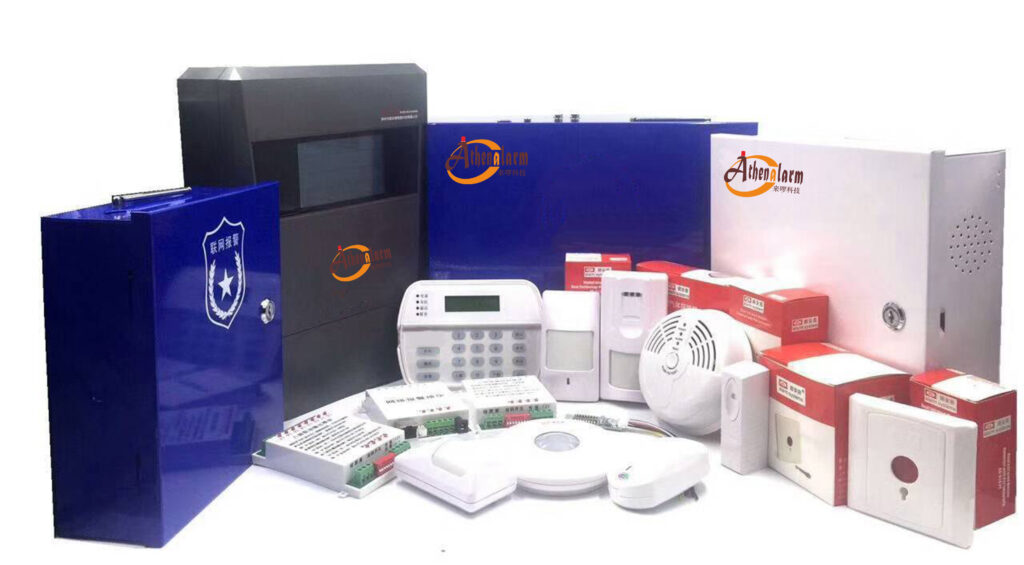
In the global security market, burglar alarms are no longer simple devices that trigger sirens—they are mission-critical risk management systems. For professional buyers, system integrators, distributors, and security operators, selecting the right burglar alarm suppliers is not a branding exercise or a short-term price comparison. It is a strategic procurement decision that directly affects:
- System reliability under real intrusion conditions
- False alarm rates and monitoring efficiency
- Installation time and labor cost
- Long-term maintenance and upgrade paths
- End-user satisfaction and contractual retention
- Your own professional reputation in the market
After decades of working directly with burglar alarm equipment suppliers across commercial, industrial, and residential projects, I continue to see even experienced buyers repeat the same costly mistakes:
- Choosing suppliers based on brochures instead of engineering depth
- Overvaluing surface-level features while ignoring system architecture
- Ignoring firmware lifecycle management and supply chain continuity
- Underestimating post-sale technical support requirements
This guide exists to eliminate those mistakes.
What follows is not theory. It is a practical, field-tested, procurement-focused playbook designed for bulk purchasers and professional security decision-makers who need intrusion alarm systems that perform reliably in real-world conditions—not just in demonstrations or marketing materials.
1. Understanding the Modern Role of Burglar Alarm Suppliers in Today’s Security Ecosystem
1.1 Burglar Alarm Suppliers Are No Longer Just Hardware Vendors
In the past, burglar alarm suppliers primarily sold control panels, detectors, and sirens. Today, any professional supplier must function as a long-term security partner, capable of supporting complex, evolving environments.
A qualified burglar alarm supplier should realistically act as:
- A system architecture partner, not just a product vendor
- A technical standards advisor who understands regulatory requirements
- A lifecycle support provider covering firmware, hardware, and spare parts
- A risk mitigation consultant who understands real intrusion behavior
The most capable burglar alarm equipment suppliers design systems that integrate cleanly with:
- Access control platforms
- Video management systems (VMS)
- Central monitoring stations (CMS)
- IP networks and hybrid cloud infrastructures
Suppliers who fail to understand this interconnected reality often create fragmented systems that look advanced on paper but fail under operational stress.

2. Core Categories of Professional Intruder Alarm Suppliers (And Why It Matters)
Not all intruder alarm suppliers operate at the same technical or operational level. Understanding supplier categories allows buyers to set realistic expectations and avoid structural risk.
2.1 OEM Manufacturers vs. Assembly-Only Suppliers vs. Trading Companies
Professional buyers must clearly distinguish between:
- True OEM burglar alarm suppliers (in-house hardware, firmware, and protocol design)
- Assembly-only suppliers (third-party boards and firmware, limited control)
- Pure trading companies (no engineering ownership at all)
True OEM suppliers typically provide:
- Deeper system customization
- Firmware continuity and version control
- Long-term product availability
- Clear technical accountability
In contrast, non-OEM suppliers often disappear when firmware issues, compliance updates, or component shortages arise.
2.2 Vertical Intrusion Specialists vs. General Security Product Vendors
The most reliable wired alarm system suppliers usually focus heavily—or exclusively—on intrusion detection rather than spreading engineering resources across unrelated security categories.
Specialization translates directly into:
- More accurate detector signal processing
- Better false alarm suppression logic
- Stronger tamper, supervision, and fault detection
- Better understanding of intrusion behavior patterns
For professional deployments, depth almost always beats breadth.
3. Wired Alarm System Suppliers: Why Hardwired Systems Still Dominate Professional Deployments
Despite aggressive wireless marketing, wired intrusion systems remain the backbone of serious security deployments, including:
- Commercial office buildings
- Industrial facilities and factories
- Warehouses and logistics centers
- Critical infrastructure
- High-risk retail and banking environments
3.1 Advantages Only Professional Buyers Fully Appreciate
Experienced buyers understand why wired alarm system suppliers continue to dominate professional markets:
- Predictable signal integrity
- Immunity to RF congestion and jamming
- Lower long-term maintenance costs
- Superior tamper and line supervision
- Stable performance over decades
Professional intruder alarm suppliers design wired systems with features such as:
- End-of-Line (EOL) and double EOL supervision
- Anti-masking and anti-substitution detection
- Redundant power and battery supervision
- Fault reporting aligned with monitoring protocols
These are not marketing features—they are operational necessities.
4. A Professional Buyer’s Framework for Evaluating Burglar Alarm Equipment Suppliers
4.1 Step 1: Audit the Supplier’s System Architecture Philosophy
Before discussing features, evaluate architecture. Ask directly:
- Is the system modular or monolithic?
- How are zones expanded—locally, remotely, or both?
- How does the system handle single-point failures?
- What happens when components fail or are removed?
A serious burglar alarm supplier can explain architectural trade-offs clearly and honestly—without hiding behind buzzwords.
4.2 Step 2: Verify Compliance with International Standards
Professional intruder alarm suppliers should clearly support:
- EN 50131 standards
- Grade 2 and Grade 3 system requirements
- CE, FCC, or applicable regional certifications
Compliance is not paperwork—it reflects disciplined engineering, testing, and documentation processes.
4.3 Step 3: Evaluate Firmware Strategy and Update Control
Firmware defines system behavior. A supplier without a clear firmware strategy is a long-term liability.
Ask specifically:
- How often firmware is updated
- How updates are delivered (local, remote, controlled rollout)
- Whether backward compatibility is maintained
- How bug fixes are communicated
Reliable burglar alarm suppliers treat firmware as a living system—not a one-time release.
5. Step-by-Step: How to Qualify a Burglar Alarm Supplier Before Bulk Procurement
Step 1: Define Your Deployment Environment Clearly
Before contacting any supplier, document:
- Site size and complexity
- Threat and risk profile
- Installation constraints (wiring, power, legacy systems)
- Monitoring and response requirements
Clear definitions prevent overselling and misaligned system designs.
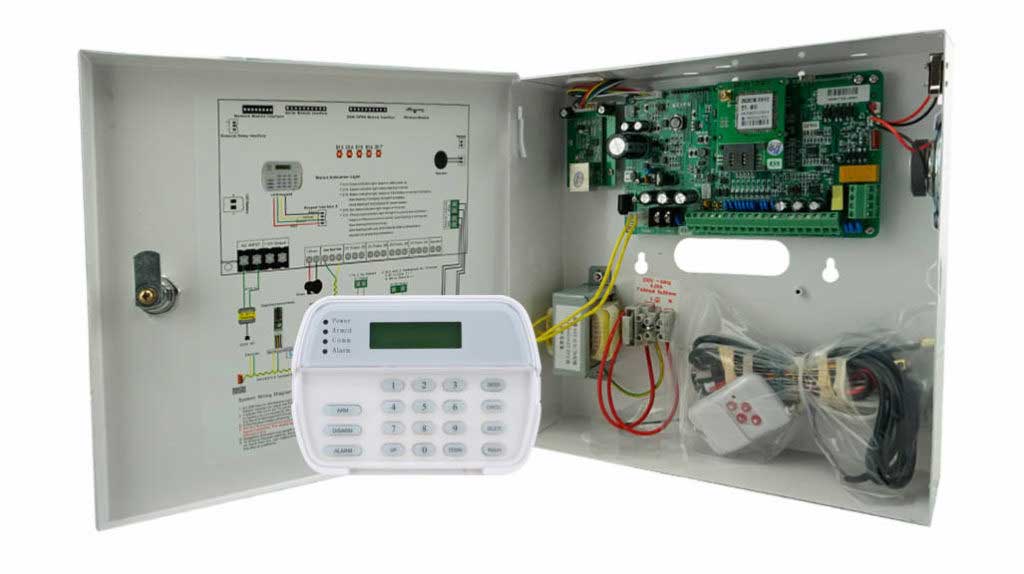
Step 2: Request System Diagrams, Not Just Datasheets
Professional burglar alarm equipment suppliers should provide:
- Wiring and topology diagrams
- Power distribution models
- Expansion and redundancy scenarios
If a supplier cannot provide diagrams, they likely did not design the system.
Step 3: Demand Sample Evaluation Under Real Conditions
Field testing is non-negotiable. Test for:
- Detector sensitivity and stability
- False alarm behavior in real environments
- Panel response times
- Communication reliability under stress
Laboratory specs do not equal field performance.
6. Operational Realities: What Separates Reliable Intruder Alarm Suppliers from Risky Ones
6.1 Supply Chain Stability
Suppliers who cannot guarantee component continuity create:
- Spare part shortages
- Inconsistent installations
- Forced system redesigns
- Increased service costs
Ask directly about component lifecycle planning.
6.2 Depth of Technical Support
Clarify support structure early:
- Is support handled by engineers or sales staff?
- Is support local, regional, or centralized?
- Are response time SLAs defined?
True burglar alarm suppliers invest in post-sale engineering support—not just pre-sale persuasion.

7. Cost Analysis: Why the Cheapest Burglar Alarm Supplier Is Often the Most Expensive
Professional buyers understand total cost of ownership (TCO):
- Hardware typically represents only 30–40% of total system cost
- Installation labor, false alarms, maintenance, and retraining dominate long-term expenses
Stable wired alarm system suppliers reduce:
- Service calls
- System downtime
- Training costs
- Monitoring disruptions
Price without context is meaningless.
8. Integrating Intruder Alarm Suppliers into a Long-Term Security Strategy
Strong supplier relationships extend beyond transactions.
Strategic intruder alarm suppliers actively support:
- Future system scaling
- New detector and technology integration
- Regulatory and compliance changes
- Migration planning without forced replacement
This reduces risk and protects long-term investment.
9. Common Red Flags When Dealing with Burglar Alarm Suppliers
Avoid suppliers who:
- Dodge detailed technical questions
- Push cloud dependency without offline redundancy
- Cannot explain alarm logic clearly
- Frequently abandon product lines
- Avoid discussing firmware lifecycle
Professional suppliers value transparency.
10. Case-Driven Insights: What High-Performing Buyers Do Differently
Experienced procurement teams consistently:
- Shortlist fewer suppliers
- Test deeper, not wider
- Prioritize consistency over novelty
- Value support and stability over feature count
They treat burglar alarm equipment suppliers as long-term partners—not interchangeable vendors.
Conclusion: Choosing the Right Burglar Alarm Supplier Is a Strategic Decision, Not a Purchase Order
Selecting among burglar alarm suppliers is ultimately about risk control, operational stability, and professional accountability.
The right supplier:
- Understands real intrusion scenarios
- Designs systems for longevity
- Supports buyers long after delivery
- Protects your reputation as much as your assets
Approach supplier selection with the same rigor you apply to security system design itself—and you will build not just better systems, but a stronger, more resilient security business.