
Reliable backup power is a foundational requirement of any intrusion alarm system. When mains power fails—whether due to grid outages, sabotage, or maintenance—backup batteries determine whether the system continues protecting the site or becomes a silent liability. For installers and procurement professionals, selecting the right alarm backup batteries is not a trivial accessory decision; it directly affects system uptime, false alarm rates, maintenance cost, and regulatory compliance.
This article provides a practical, technically grounded guide to battery lifespan and selection for alarm panels, focusing on real-world installation conditions, industry standards, and long-term ownership considerations.
The Role of Backup Batteries in Intrusion Alarm Reliability
Intrusion alarm panels are designed to operate continuously, including during extended power interruptions. Backup batteries support:
- Control panel logic and zone supervision
- Keypads and local annunciation
- Communication modules (IP, cellular, PSTN)
- Peripheral devices drawing auxiliary power
Industry standards clearly define this requirement. NFPA 72 mandates that secondary power sources must support a minimum of 24 hours of standby operation, followed by alarm operation under load. In practical terms, this means the battery must not only exist, but must still deliver usable capacity after years of float charging and environmental stress.
From a field perspective, battery-related failures remain one of the top three causes of alarm system trouble signals, service calls, and unexpected system downtime.
Common Backup Battery Technologies Used in Alarm Panels
Understanding battery chemistry is essential for making informed procurement decisions.
Sealed Lead-Acid (SLA) Batteries
Sealed lead-acid batteries remain the most widely used alarm backup batteries in intrusion systems.
Key characteristics:
- Nominal voltage: 12V
- Typical capacity range: 4Ah–18Ah
- Expected service life: 3–5 years under ideal conditions
- Compatible with most legacy and modern alarm panels
SLA batteries are cost-effective and well understood, but they are sensitive to temperature and prolonged deep discharge.
Lithium-Based Backup Batteries
Lithium battery solutions are increasingly adopted in modern intrusion systems, particularly in high-end or wireless-centric panels.
Advantages:
- Higher energy density
- Longer operational lifespan (often 7–10 years)
- Lower weight and smaller footprint
- Improved performance under partial discharge
Considerations:
- Higher upfront cost
- Requires integrated battery management systems (BMS)
- Must be explicitly supported by the alarm panel design
Lithium batteries are best suited for sites where maintenance access is limited or where long service intervals are required.
Gel and AGM Variants for Harsh Environments
For installations exposed to vibration or fluctuating temperatures, gel or AGM (absorbed glass mat) batteries offer improved mechanical stability and reduced electrolyte movement. These are commonly specified in industrial or perimeter intrusion applications.
What Determines Battery Lifespan in Alarm Systems?
Battery lifespan in alarm panels is not fixed—it is influenced by system design and installation environment.
Temperature Exposure
Battery aging accelerates rapidly at elevated temperatures. Industry data shows that for lead-acid batteries, every 10°C increase above 25°C can cut service life nearly in half. Panels installed in ceiling voids, metal cabinets, or unventilated enclosures are particularly vulnerable.
Load Profile and Standby Current
Modern intrusion systems draw significantly more standby current than older designs due to IP communicators, cellular modules, and continuous supervision circuits. Undersized batteries may meet voltage requirements but fail prematurely due to chronic under-capacity operation.
Charging Method and Float Voltage Accuracy
Alarm panels typically use constant float charging. Poor voltage regulation or lack of temperature compensation leads to overcharging or undercharging—both of which shorten battery life and increase failure risk.
Battery Age and Shelf Time
Even unused batteries degrade over time. Reputable manufacturers recommend installing batteries within 6–12 months of production and replacing them proactively, not reactively.
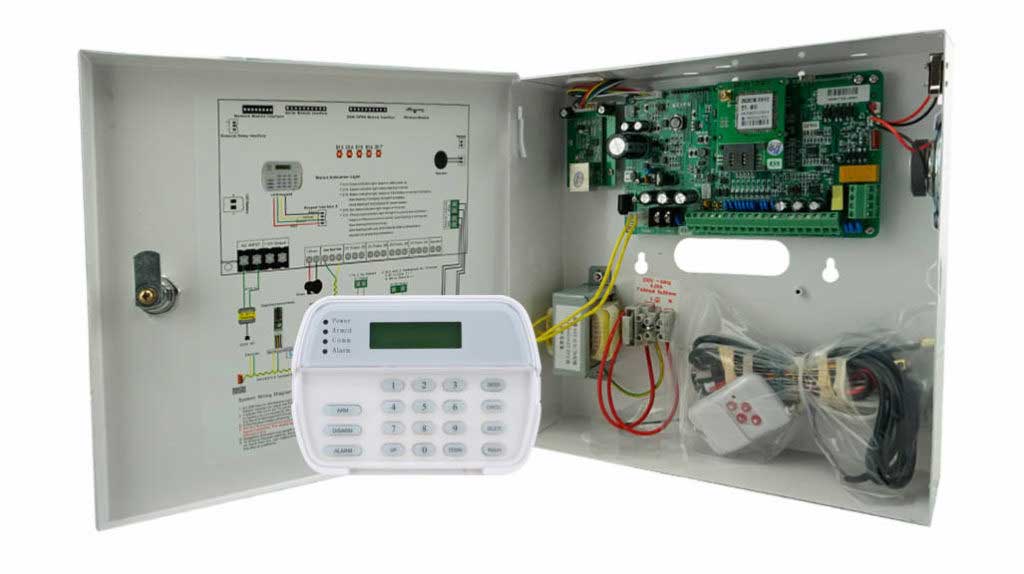
How to Select the Right Backup Battery for an Alarm Panel
The following practical workflow applies to both installers and procurement teams.
Step 1: Confirm Electrical Requirements
Review the alarm panel documentation for:
- Battery voltage (typically 12V)
- Maximum supported capacity
- Physical battery compartment dimensions
Never exceed the panel’s charging current rating when upsizing capacity.
Step 2: Calculate Real Standby Load
Add the current draw of:
- Control panel
- Keypads
- Expanders
- Communication modules
- Powered detectors
Then apply a safety margin of at least 20–30%. This ensures compliance with standby time requirements even as the battery ages.
Step 3: Match Battery Technology to Environment
- Climate-controlled indoor sites → SLA or AGM
- High-temperature or hard-to-reach sites → lithium-based solutions
- Industrial vibration environments → gel or AGM
This step alone prevents a large percentage of premature battery failures.
Step 4: Verify Certifications and Compliance
Select batteries certified for security and alarm use, including:
- UL listings appropriate for alarm systems
- Compliance with applicable regional safety standards
Using uncertified batteries increases liability and may violate system approvals.
Installation and Replacement Best Practices
Battery Replacement Procedure
- Place the alarm system into test or maintenance mode
- Disconnect AC power
- Remove the old battery (negative terminal first)
- Install the new battery (positive terminal first)
- Restore power and verify charging voltage
- Simulate power loss to confirm proper operation
This procedure minimizes false alarms and avoids panel damage.
Ongoing Maintenance Recommendations
- Perform visual inspection at least annually
- Measure float voltage and charging behavior
- Replace batteries proactively based on age, not failure
Many professional installers schedule battery replacement as part of preventive maintenance contracts, reducing emergency service calls.
Common Battery Selection Mistakes in Intrusion Systems
- Selecting capacity based only on cabinet size
- Ignoring communicator power consumption
- Mixing old and new batteries in multi-battery systems
- Buying low-cost batteries with unclear manufacturing origin
Industry testing consistently shows that battery issues account for a significant percentage of alarm system reliability problems, despite being one of the easiest components to specify correctly.
Final Thoughts: Treat Backup Power as a Core Security Component
Backup batteries are not accessories—they are integral to intrusion system performance. Proper alarm backup battery selection, realistic lifespan planning, and disciplined maintenance directly reduce system downtime, false alarms, and total cost of ownership.
For installers, this means fewer callbacks and stronger system reputation.
For procurement teams, it means predictable lifecycle cost and compliance confidence.
Investing time in correct battery selection pays dividends long after installation is complete.