

Introduction: The Hidden Crisis in Modern Alarm Monitoring Systems
In the global security industry, the alarm monitoring system has long been considered the backbone of intrusion detection and response. Whether protecting banks, ATMs, retail stores, warehouses, or critical infrastructure, alarm monitoring ensures that security events are detected and transmitted to a monitoring center capable of coordinating an appropriate response.
However, beneath this essential function lies a persistent and costly problem that continues to undermine the effectiveness of security systems worldwide: false alarms.
Industry studies repeatedly show that over 80–95% of alarms received by monitoring centers are false alarms. These false triggers may originate from environmental factors, user mistakes, equipment instability, or poorly designed detection logic.
The consequences are significant:
- Monitoring centers become overwhelmed with non-critical alerts
- Security personnel waste time investigating non-events
- Police departments impose fines or ignore repeated alarms
- Businesses lose trust in their alarm infrastructure
For professional security integrators and alarm monitoring providers, false alarm management is no longer a minor operational concern—it is a core system design challenge.
A modern alarm monitoring system must do far more than simply transmit signals. It must intelligently filter, verify, and validate alarms before escalating them to authorities.
This article explores how to design a next-generation alarm monitoring architecture capable of filtering up to 90% of false alarms, using a layered verification strategy that combines:
- Advanced sensor deployment
- Intelligent algorithmic filtering
- Video and AI verification
- Human operator confirmation
- Structured alarm verification workflows
The result is a high-credibility alarm system that delivers faster response times, improved operational efficiency, and significantly higher trust from both users and law enforcement agencies. By integrating intrusion alarms with CCTV through cloud-based network platforms, operators gain real-time visual context that turns raw signals into actionable intelligence—exactly what today’s high-stakes environments demand.
Understanding the Root Problem: Why Traditional Alarm Monitoring Systems Produce So Many False Alarms
Before designing a better system, it is essential to understand why traditional alarm monitoring systems fail to control false alerts.
Most legacy alarm infrastructures were built with a simple architecture:
Sensor → Alarm Panel → Monitoring Center → Response
While functional, this design lacks context validation mechanisms, meaning that every detected signal is treated as a potential security event.
In practice, this leads to widespread false alarms.
1. Environmental Interference
Security sensors often operate in uncontrolled environments.
Common sources of interference include:
- Temperature fluctuations
- Air conditioning airflow
- Small animals
- Vibrations from nearby machinery
- Electrical interference
- Lighting changes
For example, a PIR motion detector installed in a retail store may trigger when HVAC airflow moves hanging displays.
Without filtering mechanisms, the system transmits a full alarm.
2. Human Operational Errors
A significant percentage of false alarms originate from user mistakes.
Examples include:
- Employees forgetting disarm codes
- Incorrect entry/exit procedures
- Cleaning crews activating motion detectors
- Staff accidentally triggering panic buttons
Retail stores and banks experience these incidents frequently during shift changes.
3. Poor Sensor Placement
Incorrect installation practices remain a major issue.
Examples:
- Motion detectors facing glass windows exposed to sunlight
- Door contacts installed on flexible frames
- Vibration sensors mounted on unstable surfaces
These design errors produce repeated nuisance alarms.
4. Outdated Detection Technology
Many security systems still rely on single-technology sensors, which lack cross-validation capabilities.
For example:
- Single PIR detectors
- Basic magnetic contacts
- Simple shock sensors
Without additional context, these sensors cannot distinguish between genuine intrusions and harmless disturbances.
5. Lack of Alarm Verification
Traditional monitoring centers frequently operate with a single verification step:
Receive alarm → Dispatch authorities
In many regions, law enforcement now requires verified alarms before responding.
Therefore, systems that cannot verify alarms risk being ignored.
6. Limited Network Integration and Scalability Issues
Many older setups still rely on fragmented PSTN or basic dial-up connections, causing delays in transmitting video or contextual data. Without seamless TCP/IP or 4G networking, even good sensors and cameras cannot deliver instant verification—leaving monitoring teams guessing and increasing false dispatches.

The Modern Solution: A Three-Layer False Alarm Filtering Architecture
To reduce false alarms effectively, modern alarm monitoring systems must incorporate multiple layers of validation.
A highly effective architecture includes:
Layer 1 — Sensor Intelligence
Layer 2 — Algorithmic Analysis
Layer 3 — Human Verification with Networked Video Integration
This layered approach allows systems to filter noise at the earliest possible stage while preserving genuine threat detection. When built on a cloud-connected network platform, the entire system becomes scalable for single sites or hundreds of locations across cities or countries.
Layer 1: Sensor-Level Intelligence — Designing Detection That Prevents False Triggers
The first defense against false alarms is proper sensor design and deployment.
Poor detection hardware cannot be fixed later by software.
Multi-Technology Motion Detection
Dual-technology sensors combine two detection methods, typically:
- Passive Infrared (PIR)
- Microwave radar
An alarm is generated only when both technologies detect motion simultaneously.
This dramatically reduces environmental triggers.
Benefits include:
- Lower false alarm rates
- Higher detection reliability
- Improved performance in dynamic environments
Pet-Immune Motion Sensors
In environments where animals may be present, such as warehouses or residential areas, pet-immune detectors prevent alarms caused by small moving objects.
These sensors analyze:
- Heat signature size
- Movement patterns
- Object weight estimates
Vibration and Seismic Sensors for ATMs
For ATM security, seismic sensors are essential.
However, poor calibration can cause frequent false alarms due to:
- Nearby traffic vibrations
- Construction activities
- Thunderstorms
Modern sensors use pattern recognition algorithms to differentiate between:
- Mechanical drilling
- Explosive attacks
- Environmental vibration
Glass Break Detection with Acoustic Analysis
Traditional glass break sensors triggered frequently from loud noises.
Advanced models now analyze:
- Initial glass flex sound
- High-frequency shatter signature
Both must occur in sequence before generating an alarm.
Layer 2: Algorithmic Filtering — Using Smart Logic to Validate Alarms
Once sensor signals are received by the alarm panel or server, algorithmic filtering becomes the second layer of defense.
Instead of reacting to every signal, the system evaluates context and event patterns.
Cross-Zone Verification
Cross-zone verification requires multiple sensors to trigger within a defined time window.
Example rule:
Motion detector + door contact within 15 seconds.
If only one sensor triggers, the alarm is classified as low confidence.
Time-Based Logic
Alarm systems should analyze activity based on time schedules.
Examples:
Motion detection during business hours → ignore or log event
Motion detection after closing hours → escalate alarm
Activity Pattern Analysis
Advanced systems track behavior patterns.
Example:
Cleaning staff motion between 8:00–9:00 PM daily.
The system recognizes this as normal activity, preventing unnecessary alarms.
Alarm Priority Scoring
Each alarm can be assigned a risk score based on:
- Sensor type
- Number of triggered zones
- Time of day
- Video confirmation
- AI analysis results
High-score events trigger immediate response.
Low-score events require verification.
Layer 3: Video Verification — Turning Alarm Signals into Visual Evidence
One of the most powerful tools in false alarm reduction is video verification.
Instead of relying solely on sensor data, the monitoring center receives video clips or images associated with alarm events.
How Video Verification Works
- Sensor triggers alarm
- Camera automatically records event
- Video clip is transmitted to monitoring center
- Operator reviews footage
- Alarm is confirmed or dismissed
This process allows operators to visually confirm intrusion attempts.
Advantages of Video Verification
Video verification enables:
- Faster response decisions
- Reduced false dispatches
- Increased law enforcement trust
- Improved evidence collection
Some police departments prioritize verified alarms for response.
The Networked Platform Advantage: Real-Time Integration of Alarm + CCTV
To make video verification truly effective at scale, deploy a dedicated network alarm monitoring platform that unifies intrusion alarms and CCTV over TCP/IP or 4G connections. When an alarm occurs, the central software automatically:
- Pops up live video from the linked camera channel on every logged-in operator screen
- Displays an interactive electronic map with the exact alarm location
- Records and stores high-quality video clips on secure cloud servers for later review
- Sends instant notifications and audible alerts to all users
This cloud-based architecture supports remote arming/disarming of panels from the monitoring center, works with popular camera brands (HIKVISION, DAHUA, etc.), and handles single-site LAN setups or nationwide multi-point networks. For unattended ATMs or outdoor stations, 4G ensures reliable connectivity where wired internet is unavailable.
AI-Powered Video Analysis: The Next Evolution of Alarm Monitoring
Artificial intelligence has transformed how alarm monitoring systems analyze video data.
AI algorithms can identify:
- Human presence
- Suspicious movement
- Unauthorized entry
- Loitering behavior
- Forced access attempts
Instead of transmitting raw video for every event, the system filters events based on AI analysis.
For example:
Camera detects movement → AI determines object is a cat → event ignored.
This dramatically reduces operator workload.
Human Verification: The Critical Final Layer
Even the most advanced systems benefit from trained monitoring operators.
Human operators provide:
- Context awareness
- Situational judgment
- Communication with site personnel
- Emergency coordination
Operators follow structured procedures to confirm alarms.
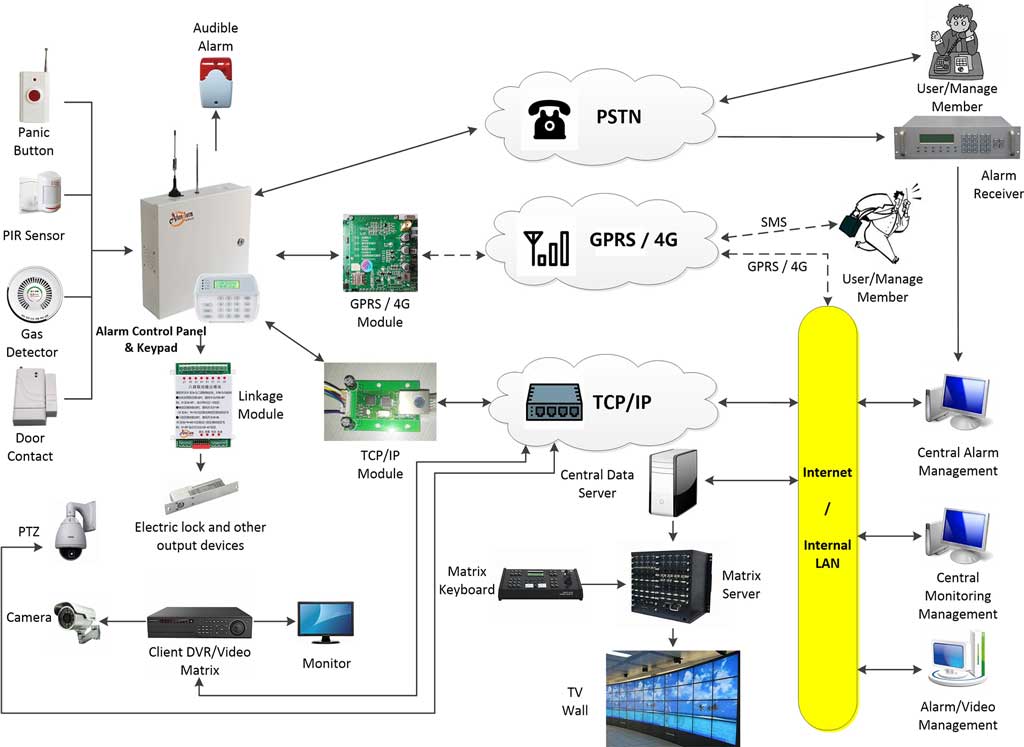
Alarm Verification Workflow for Monitoring Centers
A well-designed monitoring center follows a standardized Alarm Verification Workflow that leverages network software for speed and accuracy.
Step 1 — Alarm Reception
The monitoring platform receives an alarm signal containing:
- Location
- Sensor ID
- Event type
- Time stamp
Step 2 — Automated System Analysis
The monitoring software performs automatic checks:
- Cross-zone validation
- AI video analysis
- Sensor credibility scoring
Step 3 — Video Verification
Operators instantly see the linked live video and interactive map automatically displayed on their client screens—no manual searching required. They review footage in real time while the system records the event.
Step 4 — Customer Contact
Operators call the site contact to confirm:
- Authorized activity
- Possible intrusion
- System malfunction
Step 5 — Dispatch Decision
If the alarm is confirmed:
- Police
- Security patrol
- Internal response team
are notified.
Step 6 — Incident Logging
All events are recorded for:
- Compliance
- Performance analysis
- System improvement
Video clips remain stored on the platform for evidence and training.
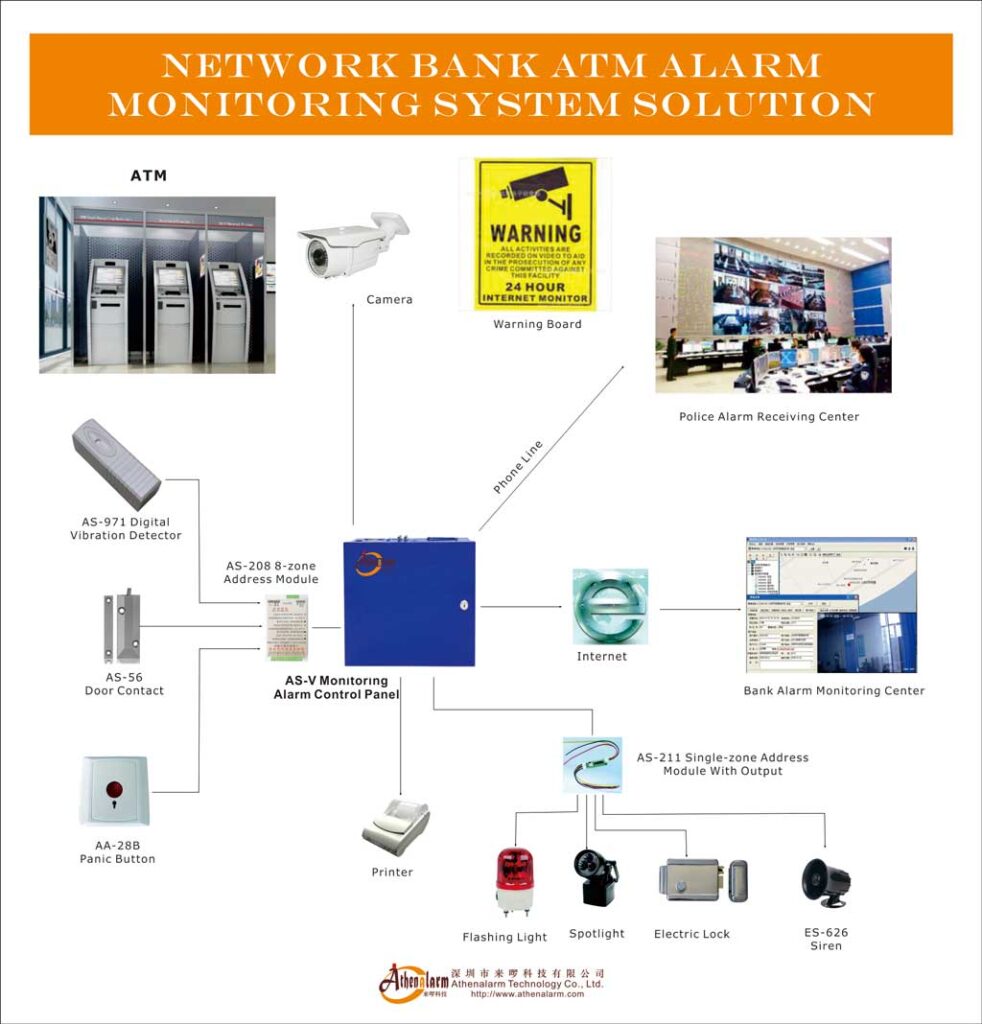
Case Study: False Alarm Reduction in ATM Security
ATMs represent high-risk assets requiring continuous monitoring.
However, ATM alarm systems historically produced frequent false alerts due to vibration sensors.
Traditional System
Typical architecture:
- Vibration sensor
- Door contact
- Monitoring center
False alarm rate: 70–80%
Improved Architecture
Modern ATM monitoring integrates:
- Seismic detection
- Camera verification with automatic video pop-up
- AI activity detection
- Cross-zone validation
- 4G network transmission for remote sites
False alarm rate reduced to below 10%. Operators verify threats instantly via live video and map, while stored recordings provide court-ready evidence.
Case Study: Retail Chain Alarm Monitoring Optimization
Retail chains often experience false alarms from:
- Night cleaning crews
- HVAC airflow
- Display movement
By deploying:
- Dual-tech motion detectors
- Video verification with network auto-display
- Time-based logic
- Centralized cloud platform for hundreds of stores
false alarms can be reduced by over 85%. Shift managers receive instant notifications on their phones, and operators can remotely disarm zones during authorized cleaning—eliminating unnecessary police calls.
Case Study: Banking Security Alarm Optimization
Banks demand extremely high alarm reliability.
Modern banking alarm monitoring systems integrate:
- ATM seismic sensors
- Vault vibration detectors
- Access control integration
- Video analytics with real-time network verification
Alarms are verified using multiple data sources before dispatching police. The interactive map and stored video clips ensure every response is justified and documented.
Step-by-Step Guide: Designing a False-Alarm-Resistant Alarm Monitoring System
Security integrators can follow this structured process.
Step 1 — Conduct Site Risk Assessment
Identify:
- Entry points
- Asset value
- Environmental factors
- Operational schedules
Step 2 — Select Appropriate Sensors
Use layered detection:
- Door contacts
- Dual-tech motion sensors
- Glass break detectors
- Vibration sensors
Step 3 — Design Detection Zones
Divide the facility into logical security zones and program cross-zone rules in the alarm panel.
Step 4 — Choose and Install Network Monitoring Software
Install the central alarm monitoring software (server on Windows Server environment, client on any Windows PC). Configure TCP/IP or 4G communication, link every alarm zone to specific camera channels, and set up automatic video pop-up and map display rules.
Step 5 — Deploy Video Verification Cameras
Ensure coverage of alarm zones. In the software, map each camera to its corresponding zones so alarms trigger instant live view.
Step 6 — Implement AI Video Analytics
Train algorithms to detect suspicious behavior and filter non-threats automatically.
Step 7 — Establish Monitoring Center Procedures
Create standard verification workflows inside the client software interface.
Step 8 — Train Monitoring Operators
Operators must understand:
- Alarm priorities
- Verification procedures
- Customer communication
- How to use remote arm/disarm and map functions
Step 9 — Test and Optimize
Perform regular testing, review false alarm logs, adjust thresholds, and update AI models.
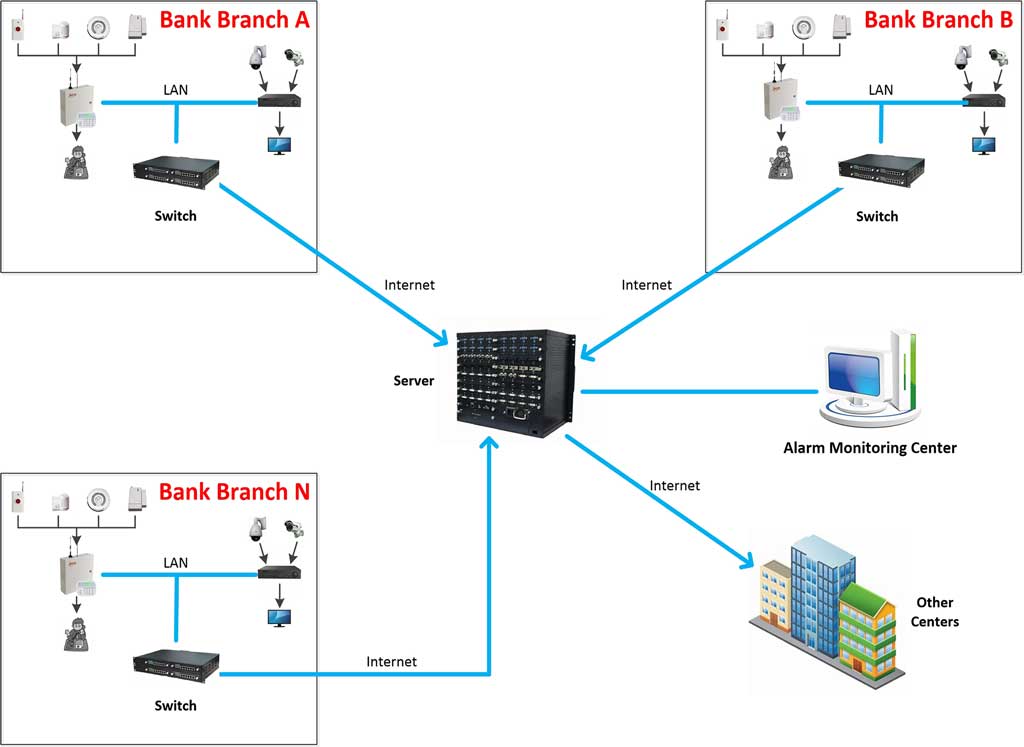
Best Practices for Alarm Monitoring System Integrators
Professional integrators should adopt several best practices.
- Use layered detection technology
- Never rely on single sensors
- Implement verification before dispatch
- Verified alarms improve response reliability
- Maintain proper sensor calibration
- Routine maintenance prevents drift
- Train customers on alarm operation
- User errors cause many false alarms
- Choose platforms with broad camera compatibility and remote control
- Enable video storage and map functions for every site
- Schedule monthly software updates and false-alarm audits
Future Trends in Alarm Monitoring Systems
The next generation of monitoring systems will integrate:
- AI predictive analytics
- Edge computing
- Cloud monitoring platforms
- Behavioral analysis
- Smart city security networks
- Seamless 4G fallback for uninterrupted remote coverage
These innovations will further reduce false alarms while improving response speed and providing enterprise-grade scalability.
Conclusion: Building an Alarm Monitoring System That Security Professionals Can Trust
The effectiveness of an alarm monitoring system is not measured by how many alarms it generates—but by how accurately it identifies genuine security threats.
False alarms waste resources, erode trust, and reduce the effectiveness of security operations.
By implementing a layered verification architecture that combines:
- intelligent sensors
- algorithmic filtering
- video verification
- AI analytics
- human operator validation
- cloud-based network integration
security professionals can design monitoring systems capable of filtering up to 90% of false alarms while maintaining rapid detection of real threats.
For security product distributors, system integrators, and enterprise security managers, investing in false-alarm-resistant alarm monitoring infrastructure is no longer optional—it is essential for building reliable, scalable, and trusted security operations.
Organizations that adopt this advanced monitoring strategy will not only improve operational efficiency but also deliver the level of alarm credibility that modern security environments demand—turning every alarm into a trusted call for help rather than another false alert.