
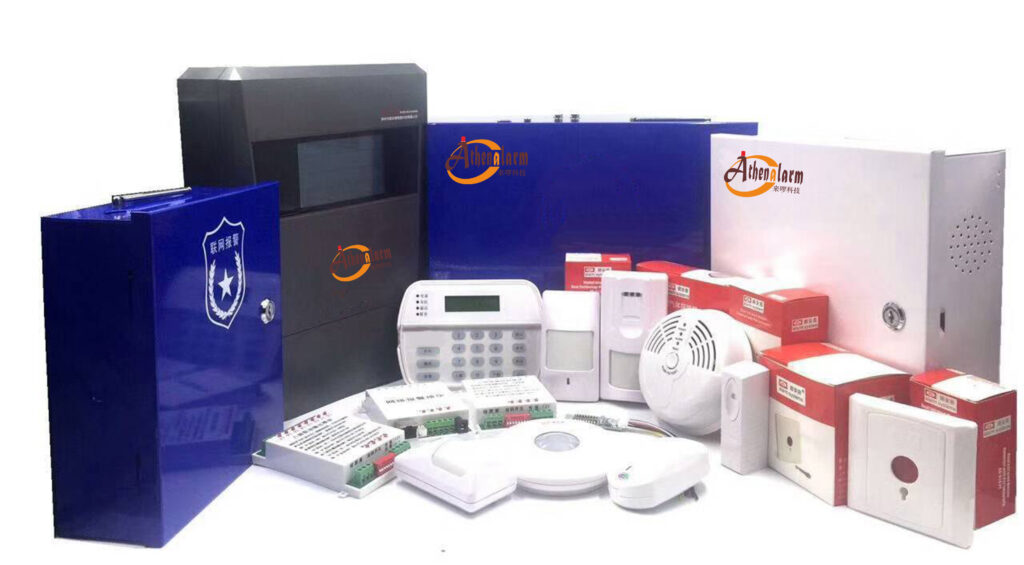
In today’s fast-evolving commercial security landscape, relying on legacy intrusion alarm panels designed around analog communication is no longer a manageable risk—it is a structural weakness. Aging POTS lines, limited remote visibility, slow alarm transmission, and fragmented system management all combine to increase response time, operational costs, and liability exposure.
For professional buyers, system integrators, and security decision-makers responsible for protecting warehouses, office campuses, retail chains, industrial facilities, and multi-tenant buildings, the challenge is no longer whether to upgrade—but how to do it correctly, securely, and at scale.
This is where an intrusion panel with IP integration becomes the cornerstone of a modern commercial security architecture.
This guide is written from real-world deployment experience, not theory. It goes beyond feature lists and marketing claims to show you how IP-integrated intrusion panels actually perform in production environments, how to deploy them correctly, and how to avoid the most common (and costly) mistakes that occur during migration from legacy systems.
By the end of this guide, you will clearly understand how to select, install, configure, harden, and operate an intrusion panel with IP integration that delivers measurable improvements in alarm reliability, response speed, operational efficiency, and long-term ROI—while remaining compliant, scalable, and future-proof through 2026 and beyond.
Why IP Integration Is No Longer Optional for Commercial Intrusion Panels
Traditional intrusion panels were built around telephone-based signaling models that assumed stable copper infrastructure and localized system management. That assumption no longer holds.
Telecom providers worldwide are decommissioning copper networks. At the same time, commercial security requirements have expanded to include real-time visibility, centralized oversight, cybersecurity resilience, and seamless integration with video, access control, and cloud platforms.
An intrusion panel with IP integration fundamentally changes how alarm systems operate by using secure IP-based communication over Ethernet and cellular networks.
Key Operational Advantages
- Near-Instant Alarm Transmission IP-based alarm signaling reaches monitoring centers within seconds, dramatically reducing response latency compared to POTS systems.
- True Remote Management Authorized users can arm/disarm systems, review event histories, acknowledge alarms, and perform diagnostics remotely—without site visits.
- Lower Operating Costs Eliminating analog phone lines removes recurring telecom fees. Integrated verification reduces false dispatch penalties.
- Enterprise-Grade Scalability IP networks allow expansion across hundreds of zones and dozens of sites without major rewiring or architectural redesign.
- Communication Redundancy Dual-path configurations (IP primary, cellular backup) ensure alarm delivery even during network or ISP outages.
In practice, IP integration transforms the intrusion panel from a standalone alarm device into a networked security platform capable of supporting modern commercial operations.
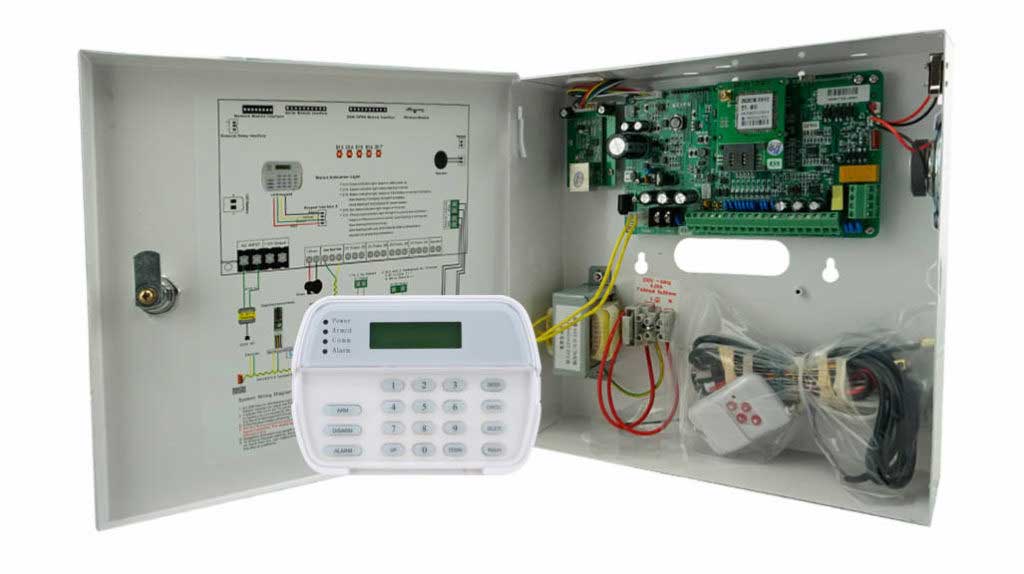
Anatomy of an Intrusion Panel with IP Integration
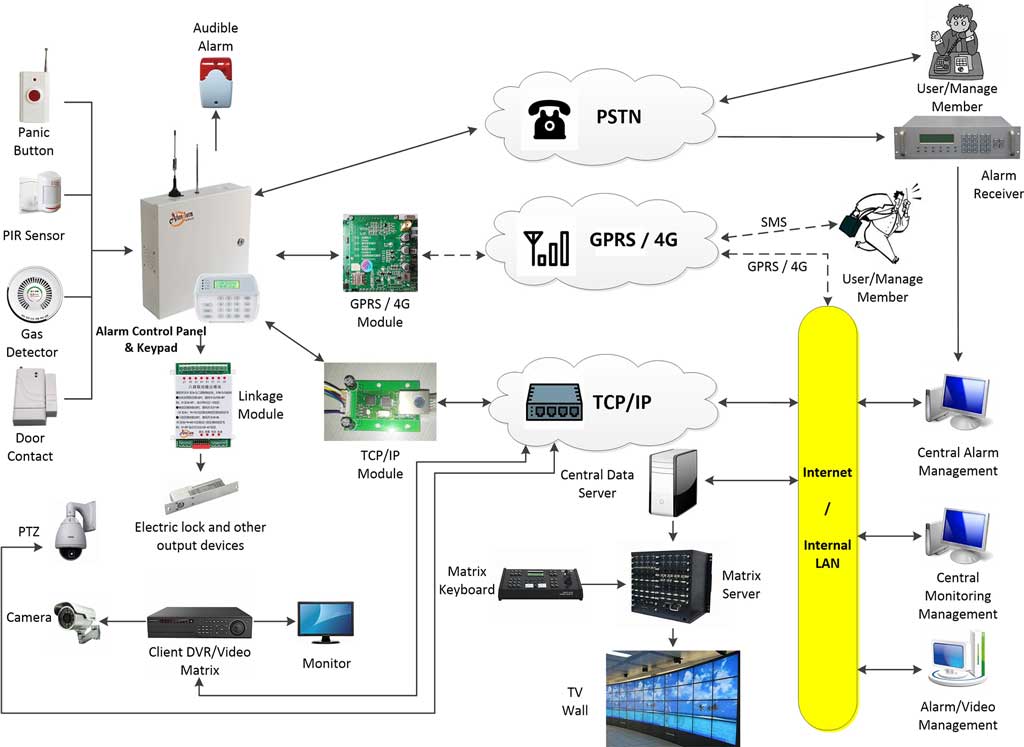
Understanding the full system architecture is critical for proper design and deployment. An IP-integrated intrusion system is not just a panel with an Ethernet port—it is an ecosystem.
1. Control Panel (Core Intelligence)
Modern commercial panels support hybrid zone architectures (wired + wireless), multiple partitions, advanced user roles, and high zone counts suitable for enterprise environments.
2. IP Communication Layer
This may be built-in or modular, but it must support:
- Encrypted IP transmission
- Supervised polling
- Multi-receiver reporting
- Dual-path failover logic
3. Network Infrastructure
- Managed switches and routers
- VLAN segmentation for security systems
- UPS-protected network equipment
- Firewall and traffic control policies
4. Detection & Field Devices
- Supervised door contacts
- PIR and dual-tech motion sensors
- Glass break detectors
- IP-aware peripherals where applicable
5. Monitoring & Software Ecosystem
- Central station receivers supporting IP protocols
- Web portals and mobile apps
- Optional integration with VMS, access control, and SOC platforms
When designed correctly, these components operate as a single, resilient security fabric, not isolated subsystems.
How to Select the Right Intrusion Panel with IP Integration
Selecting the wrong panel creates long-term constraints that are expensive to fix later. Use the following decision framework.
Step 1: Define Operational Requirements
- Number of zones (current and future)
- Number of partitions and user groups
- Multi-site centralized management needs
- Regulatory and insurance compliance (UL, EN Grade)
Step 2: Validate IP Capabilities
- Native Ethernet support (preferred)
- AES-level encryption
- Supervised heartbeat intervals
- Dual-path (IP + LTE/5G) support
Step 3: Integration Readiness
- Compatibility with leading VMS platforms
- Access control integration options
- Open APIs or SDKs for custom workflows
Step 4: Lifecycle & Vendor Stability
- Firmware update cadence
- Long-term product roadmap
- Global technical support and documentation
- Proven performance in large deployments
Panels commonly selected for commercial IP deployments include Bosch G Series, Honeywell VISTA enterprise models, and DSC PowerSeries Pro—each offering different strengths depending on scale and complexity.
Step-by-Step Installation Guide: IP-Integrated Commercial Deployment
Phase 1: Pre-Deployment Planning
- Perform a physical and network site survey
- Confirm IP addressing strategy (static vs reserved DHCP)
- Verify cellular signal strength for backup paths
- Coordinate with IT teams on firewall policies
Phase 2: Physical Installation
- Mount the panel in a restricted, monitored location
- Connect AC power and battery backup
- Terminate zones using supervised wiring methods
- Install IP and cellular modules
- Connect Ethernet to protected network infrastructure
Phase 3: Network & Panel Programming
- Change all default credentials immediately
- Assign IP settings and DNS
- Enable encryption and polling supervision
- Program monitoring center receiver paths
- Configure failover logic and reporting priorities
Phase 4: Commissioning & Validation
- Trigger all zone types
- Verify IP and cellular reporting
- Simulate network failures
- Test remote access and notifications
- Document configuration and recovery procedures
Configuration Best Practices for Long-Term Stability
- Segment intrusion panels onto dedicated VLANs
- Limit inbound network access
- Enforce role-based user permissions
- Enable automated alerts for communication faults
- Schedule firmware and configuration audits
A properly configured system reduces nuisance alarms, improves diagnostics, and simplifies long-term maintenance.

Common IP Integration Pitfalls—and How to Avoid Them
| Issue | Root Cause | Professional Solution |
|---|---|---|
| Missed alarms | Network outage | Dual-path communication + UPS |
| Cyber exposure | Default credentials | Password rotation + segmentation |
| False faults | Aggressive polling | Tuned supervision intervals |
| Integration delays | Proprietary protocols | Open standards & APIs |
Understanding these pitfalls upfront prevents service calls, client dissatisfaction, and system downtime.
Real-World Commercial Outcomes
Across retail, logistics, industrial, and office environments, IP-integrated intrusion panels consistently deliver:
- Faster alarm response times
- Reduced false dispatches
- Lower operational costs
- Improved audit and compliance reporting
Most organizations recover upgrade costs within 18–24 months through savings and loss prevention alone.
Future-Proofing: What Matters Beyond 2026
- Cloud-assisted panel management
- AI-driven anomaly detection
- Zero-trust network models
- Deeper convergence with access control and video analytics
- 5G-native communication modules
Choosing the right panel today determines whether your system evolves—or becomes obsolete again.
Final Thoughts: Make IP Integration a Strategic Advantage
An intrusion panel with IP integration is not simply a technical upgrade. It is a strategic decision that impacts security posture, operational efficiency, compliance, and scalability for years to come.
Organizations that deploy IP-integrated panels correctly gain control, visibility, and resilience—while those that delay face growing risk and rising costs.
The question is no longer if you should modernize, but how well you execute it.