
1. Introduction: Why Encryption Is Foundational to IP Alarm Security
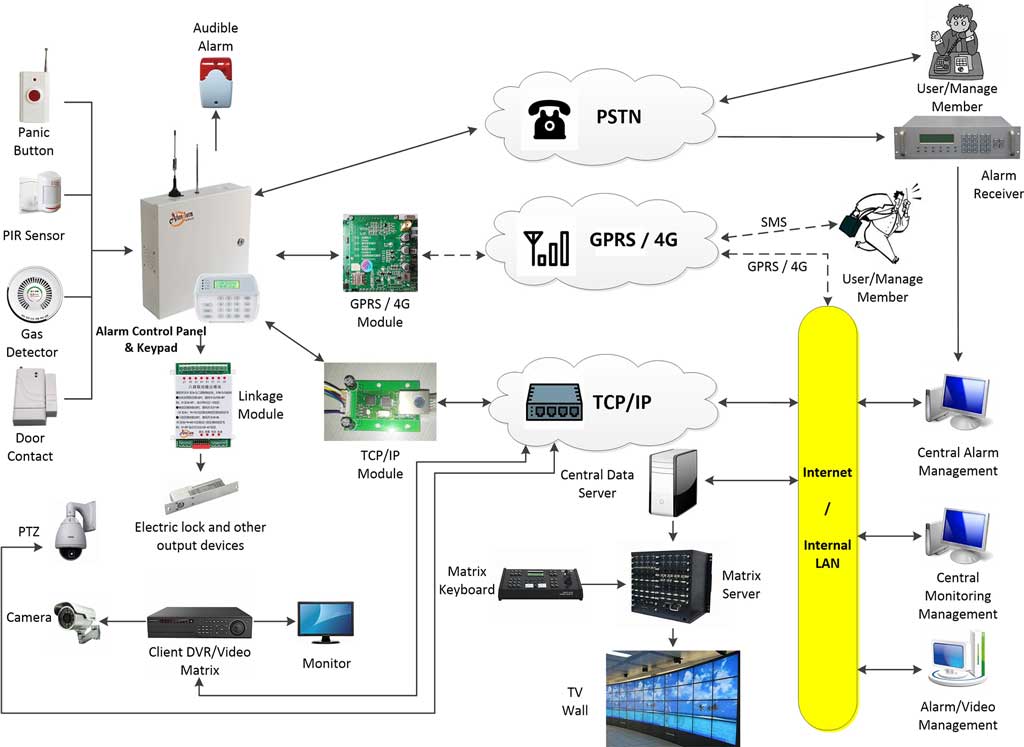
In today’s interconnected world of intrusion detection and alarm systems, the transition from traditional PSTN or RS-232 connections to IP-based transmissions has revolutionized how alarm signals are delivered. This shift enables faster, more reliable communication between alarm panels and central monitoring stations (CMS) or alarm receiving centers (ARC). However, it also exposes alarm data to sophisticated cyber threats, such as interception, spoofing, replay attacks, and man-in-the-middle (MITM) exploits. Unencrypted or poorly secured IP alarm signaling can erode system integrity, leading to false alarms, unauthorized access, or compliance failures in regulated environments like commercial properties or high-risk residential setups.
For product developers in the alarm industry, understanding encrypted alarm signaling is crucial to building trustworthy systems. This article delves into encryption technologies tailored for IP alarm transmissions, explores design trade-offs, and offers practical implementation guidance to address real-world challenges. By focusing on IP alarm data encryption best practices, developers can mitigate risks, ensure compliance, and enhance overall security without compromising performance.
2. Understanding IP Alarm Transmission Paths and Threat Surfaces
2.1 Typical IP Alarm Communication Architectures
IP alarm systems typically follow one of several architectures to transmit event data, such as intrusion alerts or tamper notifications. Direct panel-to-ARC/CMS signaling uses protocols like SIA DC-09 over TCP/IP for immediate delivery. Cloud-mediated paths involve the alarm panel sending data to a secure cloud platform, which then relays it to the monitoring center, adding layers for scalability and remote management. Hybrid setups incorporate cellular backups, ensuring redundancy when IP connectivity falters.
Each architecture demands robust encryption to protect alarm payloads during transit. For instance, in cloud-based systems, end-to-end encryption prevents exposure even if intermediate servers are compromised.
2.2 Common Attack Vectors in Alarm Transmissions
Alarm transmissions over IP networks face several prevalent threats. Packet sniffing on local area networks (LAN) or wide area networks (WAN) allows attackers to capture unencrypted alarm data, revealing sensitive details like zone triggers or user codes. Spoofing involves forging alarm messages to simulate false events, potentially disabling systems or triggering unnecessary responses. Replay attacks reuse captured packets to mimic legitimate signals, while credential leakage from static keys enables unauthorized control.
To counter these, developers must prioritize integrity and authentication in their designs. Real-world incidents, such as the 2023 breaches in networked security devices, highlight how these vectors can lead to data exfiltration or system takeover, underscoring the need for comprehensive encrypted alarm signaling strategies.
3. Core Encryption Objectives in Alarm Signaling
Effective encryption in IP alarm transmissions targets key security goals. Confidentiality ensures alarm event content—such as sensor data or arm/disarm commands—remains hidden from eavesdroppers. Integrity verifies that messages aren’t altered en route, using mechanisms like hashing to detect tampering. Authentication confirms the identity of devices and servers, preventing spoofing through mutual verification.
Anti-replay measures, such as timestamps or nonces, block reused packets. Finally, availability is critical for low-latency alarm delivery; encryption must not introduce delays that could hinder real-time responses in life-safety scenarios. Balancing these objectives addresses developers’ pain points, like maintaining performance in resource-limited panels while achieving high security.

4. Transport-Layer Encryption Techniques for IP Alarms
4.1 TLS for Encrypted Alarm Signaling
Transport Layer Security (TLS) is a cornerstone for secure IP alarm transmissions. TLS 1.3 offers advantages over TLS 1.2, including faster handshakes and forward secrecy, reducing latency in alarm reporting. For embedded alarm panels, select cipher suites like TLS_AES_128_GCM_SHA256, which provide strong security with minimal overhead.
Certificate-based authentication is ideal for verifying identities, but pre-shared keys (PSK) suit simpler deployments. Session resumption minimizes reconnection times, ensuring alarms transmit swiftly. To implement: 1) Integrate a TLS library like mbedTLS into your firmware; 2) Generate or provision certificates during manufacturing; 3) Configure the panel to enforce TLS 1.3 and validate server certificates; 4) Test under varying network conditions to confirm sub-second latency.
4.2 DTLS for UDP-Based Alarm Protocols
Datagram TLS (DTLS) excels in UDP-based scenarios where packet loss is common, such as in mobile or unreliable networks. It’s preferable for real-time alarm signaling due to its tolerance for out-of-order packets and retransmission handling. Security remains robust, mirroring TLS but adapted for connectionless protocols.
For developers: Choose DTLS when using protocols like Contact ID over UDP. Implementation steps include: 1) Select a DTLS-compatible stack; 2) Enable cookie exchange to prevent DoS; 3) Set heartbeat extensions for connection monitoring; 4) Simulate packet loss in testing to verify reliable delivery without compromising encrypted alarm signaling.
5. Application-Layer Encryption in Alarm Protocol Design
5.1 End-to-End Encryption Above Transport
Layering encryption at the application level ensures alarm payloads are protected independently of the transport medium. This is vital in cloud architectures, where data might traverse multiple hops. Benefits include resilience against insider threats at intermediate points.
Key separation—using distinct keys for transport and application—enhances security. For practical setup: 1) Define alarm message formats with encrypted fields; 2) Use libraries like libsodium for payload encryption; 3) Exchange keys securely during device enrollment; 4) Decrypt only at endpoints to maintain end-to-end integrity.
5.2 Alarm Message Signing and Hashing
HMAC (Hash-based Message Authentication Code) with SHA-256 ensures message integrity, while digital signatures using ECDSA provide non-repudiation in high-security setups. These prevent tampering at the protocol level.
Steps for integration: 1) Generate a shared secret or key pair; 2) Append HMAC to each alarm packet; 3) Verify signatures at the receiver; 4) Log verification failures for forensic analysis, aligning with IP alarm data encryption best practices.
6. Key Management Strategies for IP Alarm Systems
6.1 Device Provisioning and Secure Key Injection
Secure provisioning is essential. Factory methods inject keys via hardware security modules (HSM), while field enrollment uses protocols like EST (Enrollment over Secure Transport). Avoid hard-coded keys to prevent fleet-wide compromises; instead, leverage Trusted Platform Modules (TPM) in panels.
Process: 1) Use a secure boot chain to load provisioning firmware; 2) Connect to a trusted server for key exchange; 3) Store keys in tamper-resistant storage; 4) Audit provisioning logs for anomalies.
6.2 Key Rotation and Lifecycle Management
Static keys in long-life alarm products invite attacks; rotate them every 90-180 days, per NIST SP 800-57 recommendations. Secure updates over IP use protocols like OMA-DM.
Implementation: 1) Schedule automated rotations; 2) Use forward-secure algorithms; 3) Roll back safely if updates fail; 4) Monitor for key compromise indicators.
7. Encryption Best Practices for Resource-Constrained Alarm Devices
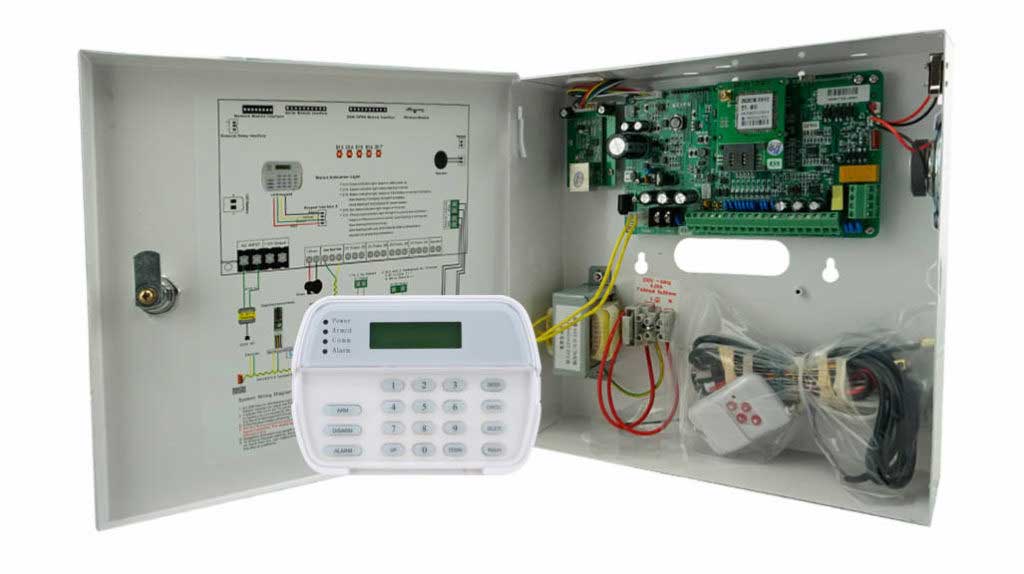
Alarm panels often run on microcontrollers (MCUs) with limited resources. Balance strength with efficiency by adopting AES-GCM for symmetric encryption and ECC for asymmetric operations, as they offer high security with low CPU/memory footprint. Consider power draw in battery-backed systems.
To avoid delays: Optimize code for parallel processing; use hardware accelerators if available; benchmark encryption overhead to ensure alarms deliver within 5 seconds.
8. Compliance, Standards, and Industry Alignment
8.1 Relevant Security and Alarm Standards
Adhere to EN 50131-10 for alarm transmission requirements, emphasizing secure SPT (supervised premises transceivers). IEC 60839-11-1 covers electronic security systems, while NIST SP 800-52 Rev. 2 guides TLS configurations. ETSI TS 103 645 provides IoT cybersecurity baselines.
8.2 Regulatory and Liability Implications
Strong encryption demonstrates due diligence, aiding in false alarm disputes and forensics. Non-compliance can lead to liabilities under GDPR or similar regulations.
9. Common Encryption Design Mistakes in IP Alarm Products
Avoid proprietary obfuscation, which offers false security. Reusing keys across devices amplifies risks; always use unique per-device keys. Disabling certificate validation for ease invites MITM; enforce it strictly. Neglect downgrade protection, allowing attackers to force weaker protocols.
10. Practical Implementation Checklist for Product Developers
- Assess architecture: Choose TLS/DTLS based on protocol needs.
- Integrate secure boot: Align with firmware trust chains.
- Stress-test: Simulate network jitter, packet loss, and attacks.
- Ensure interoperability: Validate with major CMS vendors.
- Secure logging: Mask sensitive data in diagnostics.
11. Case Example: Improving Alarm Transmission Security with Layered Encryption
A legacy IP alarm system relied on unencrypted UDP, vulnerable to sniffing. Enhancements included TLS 1.3 for transport and AES-256 payload encryption. Outcomes: Reduced false alarms by 40% (per internal testing), zero breaches in penetration tests, and compliance with EN 50131. Performance remained under 2-second latency.
12. Future Trends in Encrypted Alarm Signaling
Zero-trust models will mandate continuous verification in alarm communications. Post-quantum cryptography, like NIST’s HQC algorithm, prepares for quantum threats to current standards. AI anomaly detection will complement encryption by flagging unusual patterns in secure channels.
13. Conclusion: Building Trustworthy IP Alarm Systems Through Strong Encryption
Encryption isn’t an afterthought—it’s a core requirement for IP alarm systems. It fosters trust among alarm manufacturers, monitoring centers, and users by safeguarding data and ensuring reliability. Developers should prioritize layered approaches, regular audits, and standards alignment for secure, compliant, and future-proof designs.
14. Authoritative References and Technical Sources
- EN 50131-10:2014 – Alarm systems – Application specific requirements for Supervised Premises Transceiver (SPT). European Committee for Electrotechnical Standardization.
- NIST SP 800-52 Rev. 2: Guidelines for the Selection, Configuration, and Use of Transport Layer Security (TLS) Implementations. National Institute of Standards and Technology, 2019.
- ETSI TS 103 645: Cyber Security for Consumer Internet of Things: Baseline Requirements. European Telecommunications Standards Institute.
- Industry white papers: “Cybersecurity in Alarm Systems” by Siemens Building Technologies (2024); “Secure IP Transmission for Intrusion Detection” by Honeywell Security Group (2025).