
1. Why Alarm Scalability Matters in Enterprise Security
1.1 Growth of Distributed Commercial Infrastructure
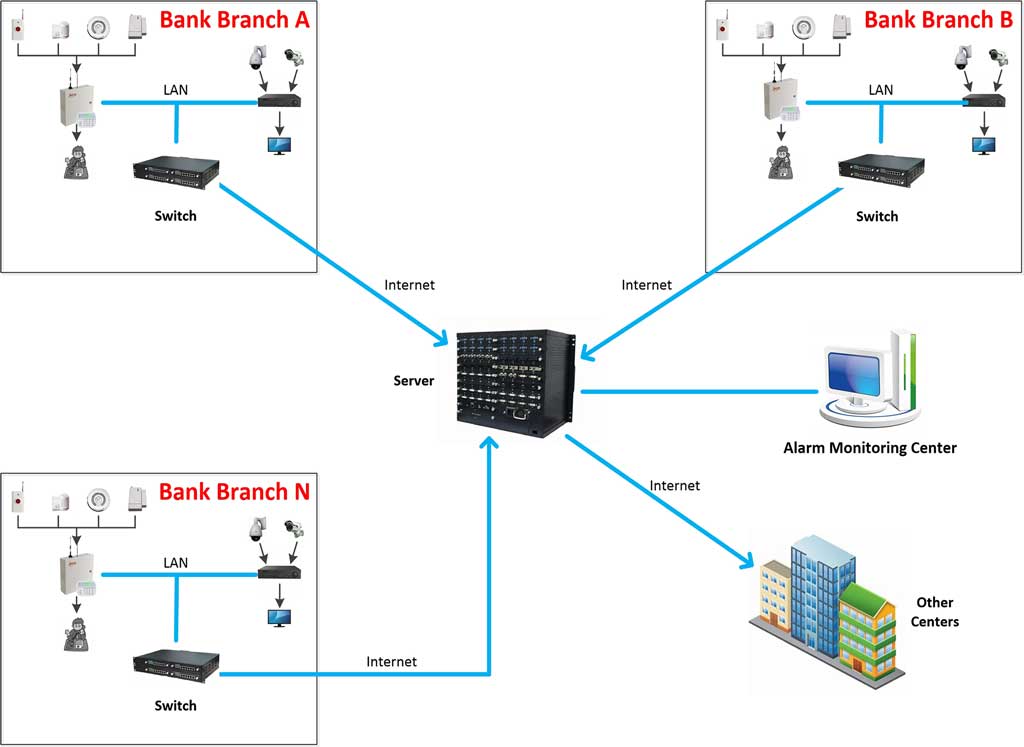
Modern enterprise infrastructure is increasingly decentralized, spanning commercial retail chains, logistics fulfillment centers, regional bank branches, and expansive industrial campuses. As an organization scales from managing dozens of localized systems to orchestrating tens of thousands of alarm endpoints across geographically dispersed facilities, the underlying intrusion alarm architecture faces severe compounding stress. Scaling a physical security apparatus is not a linear process of adding more control panels; it requires building a resilient, machine-readable infrastructure capable of maintaining real-time telemetry across unstable Wide Area Networks (WANs).
In large-scale deployments, adding new nodes or physical sites introduces geometric complexity to data routing, device state synchronization, and platform management. Traditional security systems built on localized, single-site assumptions fail when subjected to the demands of multi-site enterprise footprints. Security engineering teams must pivot from legacy hardware-centric implementations to cloud-coordinated or hybrid distributed networking models to ensure continuous operational availability.
1.2 Operational Complexity in Multi-Site Security
The primary friction point in enterprise alarm scalability is the management overhead of centralized oversight versus localized operational autonomy. When an organization controls thousands of edge nodes, standard operational tasks—such as updating panel firmware, synchronizing user access credentials, and cross-site event routing—become highly complex logistical challenges.
Without robust architectural planning, enterprise security operations centers (SOCs) experience severe alert fatigue caused by unfiltered event distributions, while local facilities suffer from configuration drift and delayed localized responses. Enterprise alarm networking requires a strict decoupling of the physical detection layer from the logical transit and monitoring layers. This separation ensures that localized WAN disruptions or central database deadlocks do not compromise the fundamental life-safety and intrusion capabilities of the edge intrusion panels.
2. Core Scalability Challenges
2.1 Network Congestion
In multi-site deployments, network congestion represents a constant threat to transmission integrity. Security systems relying on continuous legacy polling mechanisms emit repetitive, synchronous “heartbeat” packets to verify line integrity between the edge gateway and the central alarm server. When multiplied across thousands of sites over an enterprise WAN or public internet connection with fluctuating quality, this traffic generates significant bandwidth overhead.
[Alarm Sensor] ──> [Local Panel] ──> [Edge Gateway] ──> [WAN / Public Internet] ──> [MQTT Broker / Cloud Platform] ──> [SOC Dashboard]
WAN jitter, packet loss, and asymmetric routing paths cause legacy TCP/IP connections to repeatedly drop and attempt reconnection, inducing severe socket exhaustion on the central receiving server. During a localized network brownout, thousands of edge gateways may simultaneously enter reconnection back-off loops, creating a self-inflicted Distributed Denial of Service (DDoS) event on the cloud alarm platform’s ingress infrastructure.
2.2 Event Flooding
An “event storm” or alarm flood occurs when a major localized disruption—such as a facility power outage, a regional telecommunications failure, or a widespread weather event—triggers hundreds of concurrent physical sensors and system faults across multiple sites. A single enterprise intrusion panel can generate dozens of technical events (e.g., AC loss, low battery, communication loop faults) per second.
When an event storm occurs simultaneously across dozens of sites, the centralized monitoring platform is inundated with thousands of raw data packets. Without edge-based processing or real-time deduplication mechanisms, this event surge overloads message queues, saturates database write capacities, and creates severe latency cascades, delaying high-priority life-safety or actual intrusion signals behind low-priority technical telemetry.
2.3 Synchronization Delays
Maintaining database uniformity across thousands of distributed nodes is a critical challenge. When global security administrators push changes—such as revoking an employee’s access PIN, updating a holiday arming schedule, or altering a zone definition—those changes must propagate down to every relevant intrusion alarm panel.
Over a highly distributed network, synchronous API updates will fail due to offline devices, varying firmware versions, or mid-transit packet drops. As a result, systems experience configuration drift, where the central cloud platform’s recorded state diverges from the actual physical state of the edge panels. Inadequate synchronization engines can lock up local panel memory buffers during heavy data writes, creating dangerous gaps in real-time intrusion monitoring.
2.4 Monitoring Bottlenecks
Centralized monitoring architectures inherently create single points of failure and operational bottlenecks. When thousands of endpoints stream raw, unfiltered SIA DC-09 or Contact ID packets directly into a single central station receiver or localized SOC platform, human operators face severe cognitive overload.
The lack of contextual, automated cross-site prioritization means a critical visual verified intrusion alarm at an executive facility can be placed in the same chronological queue as a routine supervisory door-chime signal from a warehouse thousands of miles away. This lack of hierarchical routing leads to unacceptable response delays and invalidates the core purpose of centralized enterprise monitoring.
3. Architecture Models for Scalable Alarm Systems
3.1 Centralized Architecture
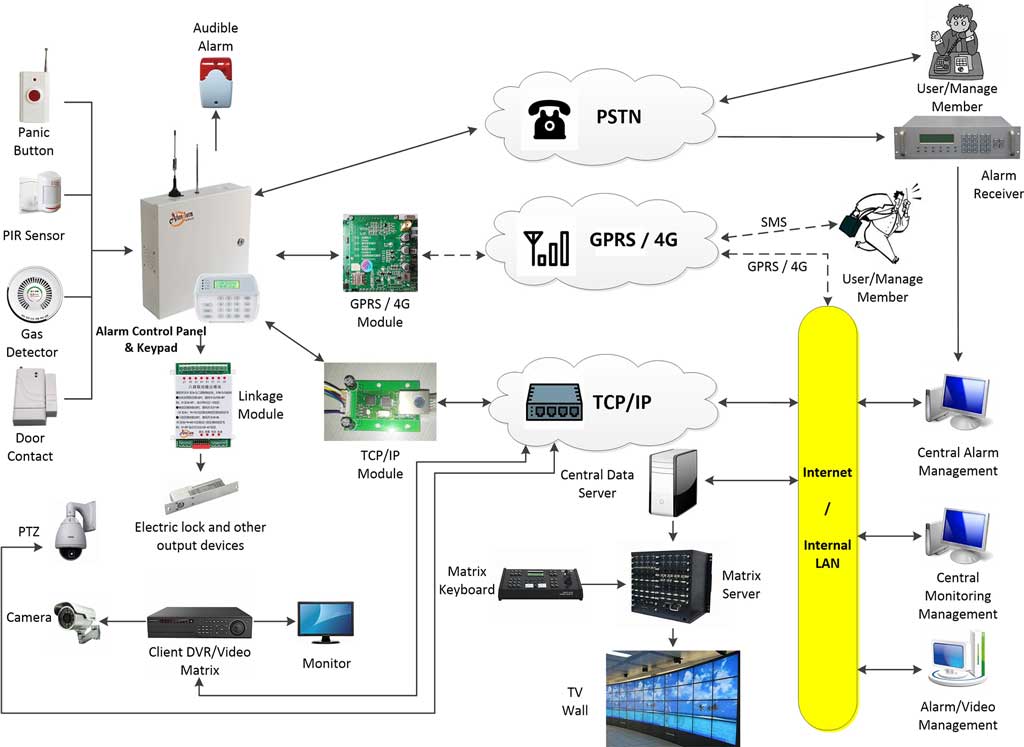
A centralized alarm architecture routes all field telemetry directly from the local intrusion panels to a singular cloud platform or central corporate data center. All decision-making logic, user authentication, and event logging reside within this core hub.
- Advantages: Simplified data governance, unified single-pane-of-glass management, straightforward global configuration updates, and reduced local hardware footprints.
- Limitations: Highly vulnerable to WAN outages. If connection to the central hub is severed, remote sites lose remote management, cloud logging, and centralized dispatch capabilities. Central processing engines face severe scaling limits when managing real-time concurrent TCP connections.
- Best Use Cases: Organizations with highly stable, redundant corporate SD-WAN networks and footprints concentrated within small, dense geographic regions.
3.2 Distributed Architecture
A distributed architecture allocates autonomy directly to the edges of the network. Each site or regional cluster operates its own localized alarm server, edge gateway, and independent database, handling its own monitoring logic and routing.
- Advantages: Exceptional fault tolerance and resilience. Localized network failures or central database corruptions have zero impact on individual site operations. Network traffic is contained locally, eliminating WAN bandwidth concerns.
- Limitations: Extremely high management complexity. Synchronizing configuration updates, user credentials, and firmware versions across independent, distributed nodes requires significant manual overhead and increases the risk of configuration drift.
- Best Use Cases: Critical industrial facilities, utility infrastructure, and highly isolated sites operating in low-bandwidth or hostile network environments.
3.3 Hybrid Architecture
A hybrid intrusion architecture combines local edge autonomy with centralized cloud orchestration. Edge gateways handle real-time sensor processing, protocol conversion (e.g., converting legacy Contact ID to structured MQTT), and localized event buffering. The cloud layer manages global state orchestration, complex event processing, and unified user interfaces.
- Advantages: Provides balanced, multi-dimensional scalability. The system achieves high localized resilience because edge gateways maintain local operations and event queues even during prolonged WAN disconnects. Concurrently, the centralized cloud infrastructure allows global administrative oversight and seamless scalability to thousands of locations without performance degradation.
- Limitations: Requires highly sophisticated software engineering and advanced network design, resulting in higher initial capital expenditures.
- Best Use Cases: Multi-national retail chains, large logistics networks, banking institutions, and complex enterprise deployments.
3.4 Architecture Trade-Off Analysis
| Architecture Type | Operational Resilience | Management Complexity | Scalability Latency | Bandwidth Efficiency |
| Centralized | Low (Single Point of Failure) | Low (Unified Control) | High under peak load | Low (Continuous Polling) |
| Distributed | High (Complete Autonomy) | High (No Unified Control) | Low (Localized Processing) | High (Localized Data) |
| Hybrid | High (Edge Autonomy + Cloud Sync) | Moderate (Orchestrated Platform) | Extremely Low (Asynchronous Queue) | High (Event-Driven Push) |
4. Communication Protocol Considerations
4.1 MQTT Alarm Communication
Message Queuing Telemetry Transport (MQTT) has emerged as the premier protocol for scalable, cloud-managed intrusion systems. Operating over a publish/subscribe model, MQTT eliminates the need for resource-intensive synchronous polling loops.
[Edge Gateway] ──(Publish: Status/Events)──> [MQTT Broker] <──(Subscribe)── [Cloud Platform / SOC]
MQTT utilizes a lightweight header footprint (2 bytes minimum), making it significantly more bandwidth-efficient than traditional HTTP or raw TCP streaming. The protocol’s built-in Quality of Service (QoS) levels provide fine-grained transport control:
- QoS 1 (At least once): Ensures critical alarm events are delivered and acknowledged, automatically retrying transport if a connection drops mid-transit.
- QoS 2 (Exactly once): Guarantees zero duplicate packets, which is essential for ensuring that precise, sequentially sensitive event sequences (e.g., an Arming command immediately followed by a Duress code) are executed flawlessly without state corruption.
Furthermore, the MQTT “Last Will and Testament” (LWT) feature provides an elegant solution for real-time offline monitoring. If an edge gateway drops its connection unexpectedly due to hardware or WAN failure, the central MQTT broker immediately publishes the gateway’s predefined LWT message to the central monitoring station, identifying the offline state without requiring continuous, bandwidth-heavy polling pings.
4.2 TCP/IP-Based Alarm Networking
Traditional network alarm systems rely on raw TCP/IP sockets or UDP transport executing legacy protocols like SIA DC-09 or Contact ID over IP.
While TCP ensures ordered delivery via three-way handshakes and packet acknowledgments, it scales poorly across thousands of sites over variable WAN conditions. Persistent long-polling TCP connections require central receiver servers to maintain open, dedicated sockets for every field panel. When network connections flicker, these sockets hang in TIME_WAIT states, rapidly exhausting server memory resources.
UDP alternatives avoid socket exhaustion but lack inherent packet-delivery verification or error correction. This requires custom, non-standard application-layer validation schemes that increase programming complexity and reduce interoperability across multi-vendor fleets.
4.3 Secure Event Transport
Scalable alarm networks must treat security as an integral part of system transport. All transmission strings across public or shared corporate networks must be wrapped in Transport Layer Security (TLS 1.3), using Mutual Authentication (mTLS) to validate both the central cloud platform and the individual edge gateway.
To mitigate the risk of perimeter physical tampering, edge gateways must contain hardware-based Secure Elements or Trusted Platform Modules (TPM) to securely store cryptographic certificates. Network architecture designs should strictly block all inbound listening ports at the remote facility level. Edge devices must initiate outbound-only connections to designated, load-balanced cloud entry points, drastically reducing the external network attack surface and shielding the local facility from external scanning and intrusion attempts.
5. Operational Strategies for Large Deployments
5.1 Alarm Prioritization
To prevent monitoring bottlenecks and combat operator alert fatigue, enterprise cloud platforms must implement an automated, multi-tiered alarm prioritization engine. Incoming event telemetry should be dynamically categorized at the edge before transit and parsed at the cloud ingestion layer based on strict priority matrix routing.
[Raw Event Ingestion]
       │
       ├──> Life-Safety / Verified Intrusion (Priority 1) ──> Instant SOC Escalation
       ├──> Perimeter / Technical Faults     (Priority 2) ──> Local Queue / Automated Check
       └──> Operational / Disarm Chimes      (Priority 3) ──> Silent Database Log
- Priority 1 (Critical): Immediate panic button activations, verified duress codes, and confirmed volumetric intrusion signals. These bypass standard message queues and are routed directly to frontline SOC dashboards.
- Priority 2 (Urgent): Perimeter tamper alerts, power disruptions, and device communication faults. These are assigned to internal technical support workflows or automated verification systems.
- Priority 3 (Routine): Scheduled arm/disarm updates, opening/closing logs, and regular diagnostic test signals. These are silently written straight to historical analytical databases, entirely avoiding active operator queues.
5.2 Regional Monitoring
As enterprise networks expand globally, a singular centralized SOC becomes a major risk factor and logistically inefficient. Scalable deployments utilize a hierarchical regional monitoring architecture.
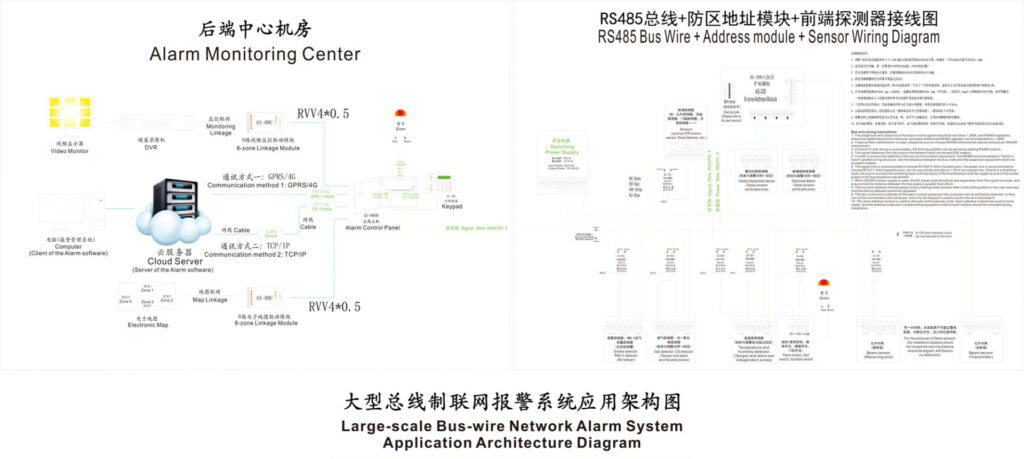
Edge locations stream event telemetry to localized regional brokers or edge processing hubs. Regional facilities handle local operators, video verification, and localized authority dispatches. Concurrently, a stripped, highly consolidated stream of operational metadata is pushed upward to a global enterprise command center for long-term analytics, auditing, and corporate compliance oversight. This tiered structure minimizes WAN cross-talk and ensures localized operations continue unimpeded during major regional connectivity failures.
5.3 Redundancy Planning
High-availability multi-site installations require multi-layered fault-tolerance protocols across hardware, transport, and platform infrastructure.
                       ┌──> Primary WAN (Fibre / Broadband) ──> Cloud Active Node
                       │
[Intrusion Edge Node] ─┼──> Secondary WAN (Cellular 5G / LTE) ──> Cloud Standby Node
                       │
                       └──> Local Micro-Broker Storage (Offline Buffering)
At the hardware level, edge gateways must feature dual SIM cellular backup cards capable of hot-swapping network providers dynamically upon primary broadband failure. At the transport level, edge platforms must contain local storage capacity to act as an offline buffer, securely archiving all transactional logs locally during a total network blackout and cleanly back-filling the primary database once connectivity is restored. At the platform level, cloud infrastructures must be deployed across geo-redundant Active-Active availability zones utilizing auto-scaling load balancers to fluidly distribute incoming device connections across multiple running server instances.
6. Enterprise Deployment Best Practices Checklist
- [ ] Outbound-Only Networking: Ensure all edge gateways and panels communicate exclusively via outbound connections. Explicitly disable all inbound listening ports on local facility firewalls.
- [ ] Mutual TLS Enforcement: Implement mTLS using TLS 1.3 for all edge-to-cloud and edge-to-broker communications. Store keys in hardware-bound TPM modules.
- [ ] Event-Driven Architecture Adoption: Migrate from legacy synchronous polling configurations to an event-driven publish/subscribe framework like MQTT.
- [ ] Localized Autonomy Validation: Verify that local edge panels retain 100% functionality for localized sensor processing, alarm sounding, and access control actions during simulated complete WAN disconnection testing.
- [ ] Hardware Capacity Buffering: Select edge hardware with sufficient internal flash storage memory to safely queue at least 72 hours of detailed local event and analytical data during extended offline states.
- [ ] Strict Data Prioritization: Configure software ingestion engines to automatically filter out routine diagnostic logs (e.g., AC line checks, daily test reports) from active human operator queues.
- [ ] Automated Certificate Rotation: Deploy automated orchestration pipelines to manage and rotate device-level digital certificates globally without requiring manual field-technician intervention.
7. FAQ
1. What is a scalable alarm system?
A scalable alarm system is an enterprise-grade security infrastructure designed to expand efficiently in size, geographic footprint, and data volume without suffering degradation in communication speed, network reliability, or monitoring performance. It maintains stable operational latencies and predictable bandwidth requirements whether managing 10 sites or 10,000 sites.
2. What is the difference between centralized and distributed alarm systems?
A centralized alarm system routes all field telemetry directly to a single, master cloud or data center hub where all processing and management logic takes place, creating a single point of failure. A distributed system assigns complete data and operational autonomy to individual remote nodes, mitigating central failure risks but dramatically increasing administrative overhead and configuration management complexity across the enterprise.
3. Why use MQTT in alarm deployments instead of legacy protocols?
MQTT uses an event-driven publish/subscribe model that eliminates the continuous bandwidth overhead of synchronous legacy polling loops. Its extremely lightweight header size reduces WAN load, and its native Quality of Service (QoS) tiers and Last Will and Testament (LWT) features provide reliable packet delivery and real-time offline status tracking across unstable networks.
4. How do enterprises manage thousands of alarm devices without operator alert fatigue?
Enterprises combat alert fatigue by implementing automated data prioritization engines. These software configurations automatically parse incoming data streams, filtering out routine technical, diagnostic, and informational logs into historical storage while escalating only high-priority, life-safety events to active human monitoring screens.
5. What are the biggest challenges in multi-site alarm deployments?
The primary challenges are network congestion caused by legacy polling, event flooding during widespread environmental outages, configuration drift during system-wide database synchronizations, and operational monitoring bottlenecks at the central monitoring center.
6. How is alarm traffic secured across WAN connections?
Scalable alarm transport enforces outbound-only network paths to eliminate external perimeter attack vectors, wraps all communication strings in Mutual TLS (mTLS) 1.3 encryption, and secures individual device identity certificates inside dedicated, hardware-level Trusted Platform Modules (TPM).