
Introduction
In recent years, businesses worldwide have experienced an alarming rise in both physical and cyber intrusions targeting networked alarm systems. In one notable case, a large corporate facility suffered a breach after attackers exploited weak authentication settings in its legacy alarm control panel—an incident that resulted in substantial downtime and operational losses. Situations like this highlight the urgency of strengthening enterprise alarm security, especially as modern organizations rely heavily on interconnected and cloud-enabled alarm infrastructures.
Enterprise alarm security refers to the protection of networked alarm systems—including sensors, communication pathways, software platforms, and backend infrastructure—against physical tampering and cyber-based threats. For technicians, product managers, and procurement decision-makers, ensuring robust security is not just a best practice; it is a core requirement for maintaining business continuity and protecting high-value assets.
This guide provides practical, actionable strategies for fortifying networked alarm systems across enterprise environments. It focuses on technical fundamentals, cybersecurity integration, procurement considerations, and long-term maintenance best practices—all essential for organizations aiming to strengthen their corporate alarm security protocols.
I. Understanding the Fundamentals of Enterprise Alarm Security
The Core Components of Networked Alarm Systems
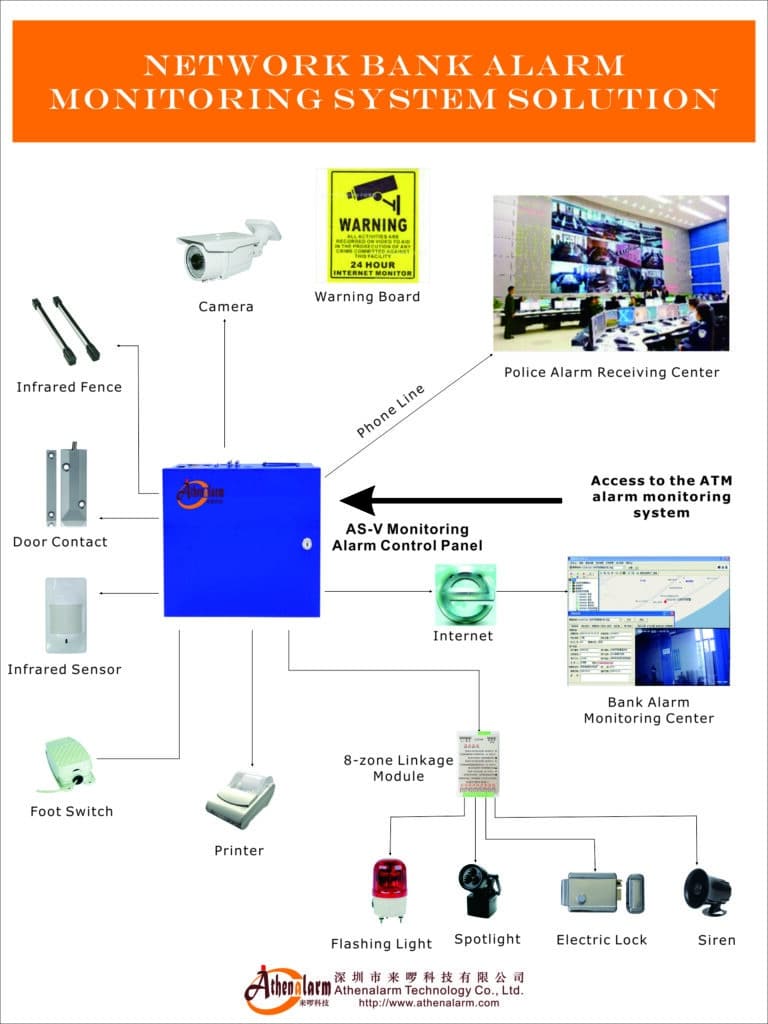
Enterprise alarm systems are no longer standalone installations; they are interconnected, IP-based platforms integrated with broader IT infrastructures. Their core components include:
- Sensors and detectors (PIR, dual-tech, magnetic contacts, glass-break sensors)
- Control panels and communication modules supporting IP, cellular, and encrypted channels
- Backend management platforms for monitoring and event analysis
- Integration interfaces linking alarms with access control, CCTV, and IoT devices
However, these connected systems are exposed to several common vulnerabilities:
- Weak encryption on communication links
- Outdated firmware in control panels
- Unauthorized remote access points left open during installations
- Poorly secured IoT integrations that bridge physical and digital attack surfaces
Why Security Matters in Enterprise Settings
Enterprise environments face a mix of threats:
- Cyberattacks targeting alarm servers and IP panels
- Physical intrusions bypassing weak lock-down procedures
- Insider threats arising from shared credentials or poor access management
Robust enterprise alarm security offers measurable benefits:
- Reduced operational downtime
- Improved compliance with regulatory and insurance requirements
- Stronger protection of personnel, assets, and business reputation
II. Essential Security Strategies for Networked Alarm Systems
1. Implementing Robust Access Controls
Access control is often the weakest link in enterprise alarm security. To mitigate risks:
- Enforce multi-factor authentication (MFA) for system administrators
- Implement role-based access control (RBAC) to limit privileges
- Conduct regular access audits to remove inactive users or shared accounts
Least privilege configuration should be the baseline. For example, technicians require different access levels than security officers or IT administrators.
Common issues such as lost credentials, shared logins, and remote technician accounts should be addressed through strict access policies and centralized identity management.
2. Enhancing Data Encryption and Communication Security
Secure communication is essential for all networked alarm systems.
Recommended practices include:
- Using AES-256 encryption for all alarm signal transmissions
- Implementing TLS 1.3 for secure panel-to-server communication
- Using VPN tunnels for remote access and multi-site connectivity
- Upgrading legacy systems that rely on unencrypted serial or RF links
These measures protect against interception, spoofing, and man-in-the-middle attacks—common methods used in intrusion attempts.
3. Regular System Audits and Vulnerability Assessments
A proactive audit strategy helps maintain long-term system integrity:
- Quarterly vulnerability scans using enterprise-grade tools
- Annual penetration testing focused on alarm servers and control panels
- Real-time monitoring of firmware update advisories
- Third-party audits to validate compliance and performance
Post-incident assessments should be performed after every major alarm event or security anomaly.
4. Integration with Broader Enterprise Security Frameworks
Enterprise alarm systems should not operate in isolation. Integrating them with wider security frameworks enhances detection and response:
- SIEM integration (e.g., Splunk, IBM QRadar) to centralize event logs
- Firewall policies aligned with alarm system network architecture
- Endpoint protection securing operator workstations
- CCTV and access control synchronization for unified audit trails
A real-world example: A multinational logistics company integrated its alarm events with its SIEM platform, enabling automated correlation between intrusion attempts, failed logins, and network anomalies. This reduced incident investigation time by over 40%.
Procurement teams often face compatibility challenges, which can be solved by selecting vendors offering standardized APIs, ONVIF compliance, and multi-system integration toolkits.

III. Best Practices for Procurement and Deployment
1. Selecting Secure Alarm Products for Enterprise Use
When procuring networked alarm systems, evaluate products based on:
- UL 681, EN 50131, or equivalent certification
- ISO/IEC 27001 compatibility for information security alignment
- Vendor reputation and product lifecycle support
- Scalability to accommodate multi-site operations
- Strong cybersecurity features such as secure boot and encrypted storage
Procurement decision-makers should request proof of cybersecurity testing, NDAA compliance documentation, and manufacturer patching policies.
2. Training and Maintenance Protocols
Even the most advanced systems can be compromised by poor maintenance or operator error.
Recommendations include:
- Training technicians and operators on security hygiene, such as credential management
- Establishing scheduled firmware and OS updates
- Backing up configurations regularly
- Implementing incident response procedures tailored to alarm-related breaches
Providing checklists or maintenance schedules ensures consistency across large organizations and reduces operational risk.
Conclusion
Strengthening enterprise alarm security requires a comprehensive approach that addresses access control, encryption, system audits, integration, and informed procurement. By applying the strategies outlined in this guide, organizations can significantly enhance the resilience of their networked alarm systems and reduce exposure to physical and cyber threats.
As enterprise environments evolve, emerging trends—such as AI-assisted intrusion detection, unified security dashboards, and zero-trust frameworks—will continue shaping the future of corporate alarm security. Continuous education, regular assessments, and a proactive security culture remain essential for protecting mission-critical infrastructure.
References
- National Institute of Standards and Technology. (2020). NIST SP 800-53: Security and Privacy Controls for Information Systems.
- ASIS International. (2019). ASIS Physical Security Principles.
- International Organization for Standardization. (2013). ISO/IEC 27001: Information Security Management Systems Requirements.
- Gartner Research. (2023). Market Guide for Physical Security and Cyber-Physical Systems Protection.
- Forrester Research. (2022). The State of Enterprise Security Architecture.
- HID Global. (2023). 2023 State of Physical Security Industry Report.