

I. Introduction
In today’s fast-evolving threat landscape, enterprises face a dual challenge: rising physical intrusions and sophisticated cyberattacks. According to the IBM Cost of a Data Breach Report 2024, the global average cost of a security breach has reached $4.88 million, while physical security incidents continue to disrupt operations and damage brand reputation.
Security Management Optimization has emerged as a strategic response to these challenges—integrating systems, processes, and intelligence to create resilient, efficient, and compliant enterprise security environments.
As a seasoned security professional with over 15 years of experience in anti-theft alarm systems, enterprise risk management, and multi-site security deployments, I have witnessed how optimization transforms security from a cost center into a value-driving component of business continuity.
This article explores three real-world case studies that demonstrate how Security Management Optimization delivers measurable improvements—reducing false alarms, cutting costs, enhancing compliance, and accelerating response times.
II. Understanding Security Management Optimization
Definition
Security Management Optimization is the systematic process of improving an organization’s security framework by integrating physical and digital controls, automating response workflows, and aligning policies with risk priorities. It’s not just about technology—it’s about creating synergy between people, processes, and platforms.
Key Components
- Risk Assessment: Identifying and prioritizing vulnerabilities across facilities, networks, and operations.
- System Integration: Combining access control, surveillance, and alarm systems under a unified management platform.
- Automation & AI: Using data-driven analytics for predictive monitoring and faster incident response.
- Employee Training: Building awareness and clear escalation procedures to reduce human error.
- Continuous Audits: Reviewing performance and compliance against frameworks such as NIST, ISO 27001, or GDPR.
Common Problems It Solves
- Outdated systems that lack interoperability.
- High false alarm rates increasing operational costs.
- Fragmented monitoring leading to delayed responses.
- Compliance gaps exposing businesses to legal penalties.
Benefits
Optimized security management leads to:
- 30–50% faster threat detection through real-time data integration.
- 20–40% cost savings from centralized monitoring and automation.
- Improved regulatory alignment, reducing compliance fines.
- Enhanced business continuity by minimizing disruption.
Let’s now look at how these principles translate into tangible enterprise results.
III. Case Study 1: Optimizing Physical Security in a Manufacturing Enterprise
Background
A mid-sized manufacturing company in Southeast Asia was struggling with frequent thefts and unauthorized access events. The existing alarm system generated hundreds of false alarms per month, overwhelming the security team.
Challenges
- Legacy alarm hardware not integrated with CCTV or access control.
- Manual monitoring causing delayed incident verification.
- High staff turnover leading to inconsistent security practices.
Optimization Strategy
- Comprehensive Risk Audit: Identified blind spots and obsolete sensors.
- Integrated Alarm Deployment: Introduced IoT-enabled anti-theft alarms connected to AI-powered analytics platforms.
- Access Control Upgrade: Implemented RFID-based entry systems with audit trails.
- Staff Training: Conducted quarterly drills and SOP reviews.
Implementation Insights
The company selected an open-platform solution compatible with existing infrastructure—reducing hardware replacement costs by 35%. Real-time notifications were integrated into mobile dashboards for rapid decision-making.
Results
- False alarms reduced by 42%.
- Theft incidents dropped 25%.
- Response time improved by 40%.
- Security audit compliance achieved across all factory units.
Lessons Learned
Gradual, phased deployment minimized downtime, and staff involvement at every stage ensured long-term adoption.
IV. Case Study 2: Enhancing Cybersecurity Integration in a Financial Services Firm
Background
A regional financial institution faced hybrid threats: phishing campaigns, insider risks, and physical access breaches to server rooms.
Challenges
- Separate management of physical and IT security teams.
- Overlapping controls without unified incident visibility.
- Gaps in GDPR and PCI-DSS compliance reporting.
Optimization Strategy
- Unified Security Platform: Integrated physical access logs with cybersecurity dashboards.
- Smart Alarm Integration: Connected network intrusion detection with building access events.
- Regular Red-Blue Simulations: Tested response protocols under hybrid-attack scenarios.
- Automated Compliance Reports: Ensured audit readiness through system-driven logs.
Implementation Details
A centralized dashboard displayed correlated data from both physical and digital systems, improving decision speed. Employee access was linked to endpoint authentication for real-time threat correlation.
Results
- Incident resolution improved by 50%.
- Compliance penalties eliminated.
- Employee awareness increased by 60% after new training programs.
Lessons Learned
Cross-department collaboration was the cornerstone of success—security is most effective when IT, compliance, and facility teams operate on shared intelligence.
V. Case Study 3: Scaling Security Optimization for a Retail Chain
Background
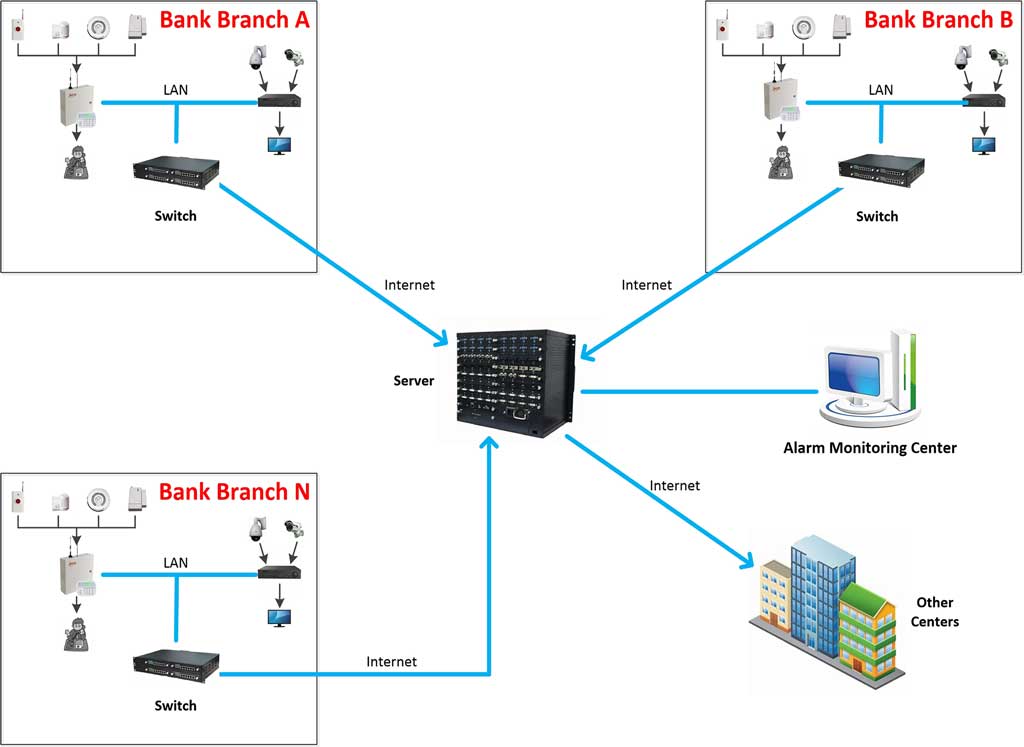
A national retail chain with 120 stores faced inconsistent alarm policies, varying vendor contracts, and high operational costs.
Challenges
- Disconnected alarm systems per store.
- No centralized event visibility.
- Maintenance costs exceeding ROI.
Optimization Strategy
- Cloud-Based Central Monitoring: Implemented unified alarm management across all outlets.
- Predictive Analytics: Deployed data-driven insights for theft pattern prediction.
- Vendor Consolidation: Partnered with a single integrator for maintenance standardization.
Implementation Details
Deployment began with 20 pilot stores before full-scale rollout. The analytics dashboard helped prioritize high-risk locations and optimize patrol schedules.
Results
- Operational cost savings: 30%.
- Inventory shrinkage reduced by 20%.
- System uptime reached 99.8%.
Lessons Learned
Scalable cloud solutions offer consistent control across multiple sites while enabling rapid updates. Success depends on continuous performance tracking and adaptive configuration.
VI. Best Practices for Implementing Security Management Optimization
Actionable Steps
- Start with a comprehensive security audit.
- Adopt interoperable technologies to ensure future scalability.
- Prioritize user training to build organizational resilience.
- Leverage analytics for continuous performance monitoring.
- Review quarterly for evolving compliance and threat trends.
Tools and Resources
- NIST Cybersecurity Framework for baseline controls.
- ISO 27001 for integrated risk management.
- Open-source tools like Security Onion or Wazuh for monitoring.
Potential Pitfalls
- Relying solely on automation without human oversight.
- Neglecting cross-department communication.
- Ignoring long-term maintenance budgets.
By avoiding these mistakes, enterprises can ensure that optimization delivers both security and sustainability.
VII. Conclusion
Security Management Optimization is more than a technical upgrade—it’s a strategic evolution. Through these case studies, we’ve seen how manufacturers, financial institutions, and retailers transformed fragmented systems into intelligent, responsive, and cost-efficient security ecosystems.
For organizations seeking similar improvements, start by conducting a comprehensive audit and identifying integration opportunities within your existing infrastructure.
To help you begin, download our free Enterprise Security Audit Checklist or contact our experts for guidance on designing an optimization roadmap tailored to your business.
Staying informed and proactive ensures that your enterprise not only stays secure—but thrives in a complex threat environment.