
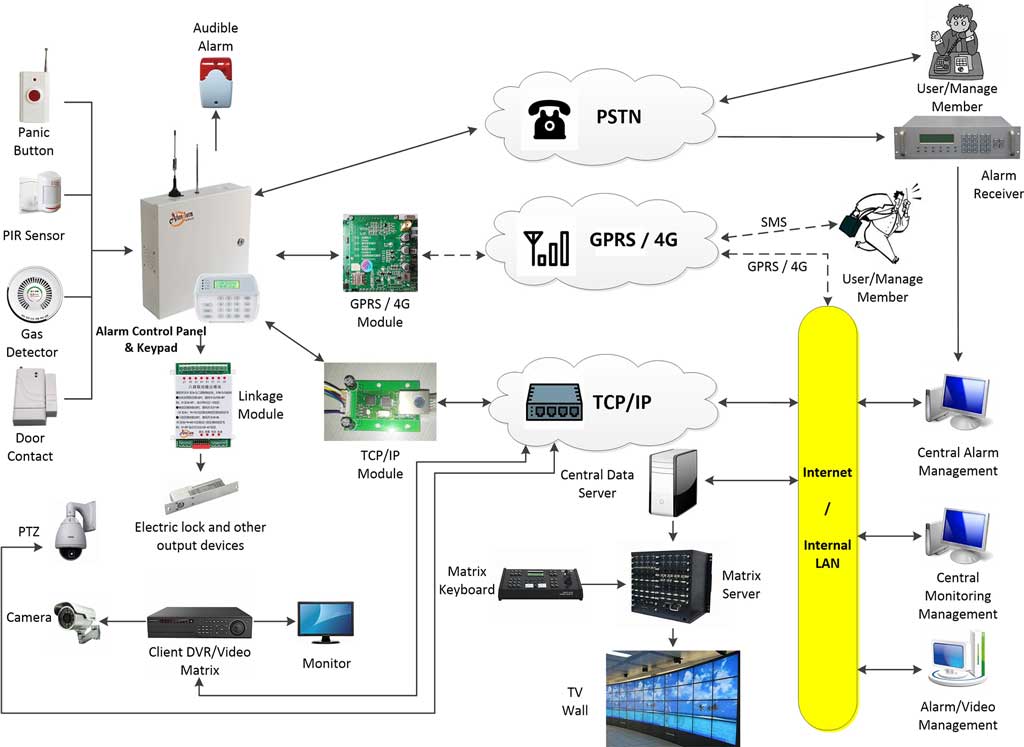
In modern intrusion detection environments, one of the most common vulnerabilities is unsecured alarm communication. Real-world incidents have shown that unencrypted alarm signals—whether from wireless intrusion sensors or alarm panels communicating over IP—can be intercepted, replayed, or manipulated. Attackers exploit these weaknesses to disable alarms remotely, trigger false alerts, or gain unauthorized access to secured premises.
As alarm systems increasingly rely on cloud platforms, mobile apps, and IP-based monitoring centers, data breaches involving alarm traffic have become a serious concern. Compromised alarm communication can expose sensor events, user credentials, remote arming commands, and even facility layouts. Encryption is the foundation that prevents these failures.
This guide provides IT security teams and alarm engineers with a practical, implementation-ready approach to securing alarm communication channels using TLS, VPNs, and secure tunnels for alarms. Each method is explained with hands-on steps, industry-validated best practices, and real-world data.
Thesis: When applied correctly, TLS, VPN, and advanced secure tunneling create reliable, tamper-resistant, and future-proof communication for intrusion alarm networks.
Understanding Encryption Basics in Alarm Systems
Encryption in alarm secure communication ensures that any alarm data—sensor triggers, panel logs, user commands—cannot be read or altered by unauthorized parties. Two models dominate alarm system design:
- Symmetric encryption: Same secret key for encryption/decryption. Suitable for high-speed event data between sensors and control panels.
- Asymmetric encryption: Public/private key pairs. Often used in TLS handshakes for alarm panels communicating with cloud servers.
Why Encryption is Critical
Attackers targeting alarm systems focus on unencrypted wireless links, unsecured IP channels, and legacy systems. Without encryption:
- Wireless intrusion sensors can be spoofed.
- IP alarm panels can be hijacked via MITM attacks.
- Remote management apps may leak authentication tokens.
A Practical Starting Point
For most alarm data streams, AES-256 is the recommended baseline. It provides a strong level of protection without affecting alarm panel performance. Many modern alarm controllers already support AES-encrypted messaging; older models may require gateway add-ons or firmware upgrades.
Implementing TLS for Secure Alarm Communication
Transport Layer Security (TLS) is the industry standard for encrypting alarm data in transit—particularly between alarm control panels, cloud servers, and remote monitoring centers.
Benefits of TLS for Alarm Systems
- Prevents MITM attacks on alarm channels
- Creates secure tunnels for alarms without requiring new physical wiring
- Ensures message integrity for high-priority intrusion events
Step-by-Step TLS Implementation Guide
Step 1: Check TLS Support
Verify whether your alarm controller or alarm gateway supports TLS 1.3. Most vendors list this under “encrypted IP communication” or “secure cloud connection.”
Step 2: Generate Certificates
Using OpenSSL:
openssl req -new -newkey rsa:4096 -nodes -keyout alarm.key -out alarm.csr
openssl x509 -req -days 365 -in alarm.csr -signkey alarm.key -out alarm.crt
Use CA-issued certificates for production.
Step 3: Configure the Alarm Server or Interface
Example (Nginx for a web-based alarm management portal):
server {
    listen 443 ssl;
    ssl_certificate /etc/ssl/alarm.crt;
    ssl_certificate_key /etc/ssl/alarm.key;
}
Step 4: Test the TLS Connection
- Capture traffic with Wireshark
- Confirm packets show “TLSv1.3” instead of clear-text application data
- Attempt a basic MITM simulation to verify rejection
Case Study Insight
A 2023 NIST analysis of IP-connected alarm panels reported a 40% reduction in successful intrusion attempts after TLS 1.3 was enforced across all alarm communication endpoints.

Leveraging VPN for Enhanced Alarm Network Security
A Virtual Private Network (VPN) creates an encrypted tunnel that protects all alarm communication—ideal for remote monitoring, multi-site enterprises, and off-site service teams.
Advantages of VPNs for Alarm Secure Communication
- Full-channel encryption (not just application-layer)
- Masks alarm panel IP addresses from attackers
- Allows secure remote management of alarm systems
Pain Points Addressed
Many commercial alarm systems rely on unsecured remote access portals or port forwarding. VPNs eliminate these high-risk exposure methods.
Beginner-Friendly VPN Implementation Steps
Step 1: Choose the VPN Protocol
- OpenVPN – mature, widely supported
- WireGuard – faster, simpler configuration
Step 2: Install the VPN Software
On an alarm gateway or alarm server:
apt install openvpnDownload official configuration templates (avoid third-party sources for security reasons).
Step 3: Generate Keys and Configure Ports
- Create server and client key pairs
- Use UDP port 1194 (default for OpenVPN)
- Add the alarm system’s private subnet to allowed routes
Step 4: Monitor and Maintain
- Enable detailed logging
- Patch VPN firmware regularly
- Enable MFA for remote VPN access users
Industry Data
A 2024 study by the International Association for Alarm Systems (IAAS) showed that organizations deploying VPN-protected alarm communication experienced a 65% decline in unauthorized access attempts within six months.
Advanced Secure Tunnels for Comprehensive Alarm Protection
Beyond traditional VPN solutions, modern alarm deployments often require layered or specialized tunneling techniques.
IPsec for Enterprise Alarm Networks
IPsec is ideal for enterprise networks where alarm servers are integrated with broader security infrastructure. It provides:
- Network-layer encryption
- Strong authentication
- Stability for high-priority alarm traffic
SSH Tunneling for Secure Technician Access
SSH tunnels work well for:
- Firmware updates
- Debugging alarm controllers
- Temporary secure access
Combining TLS + VPN for Critical Infrastructure
High-security facilities—data centers, airports, energy plants—often implement:
- TLS for application-level alarm messages
- VPN or IPsec for transport-layer encryption
- MFA and hardware token authentication
This layered defense ensures alarm secure communication remains reliable under sophisticated attack scenarios.
Troubleshooting Example: Latency from Tunneling
If alarm messages appear delayed:
- Lower MTU to 1450 to prevent fragmentation
- Optimize tunnel routing
- Avoid chaining excessive layers of encryption unless required
Expert Insight: Preparing for Post-Quantum Security
Quantum computing may weaken RSA and ECC algorithms. For future alarm system upgrades:
- Track NIST post-quantum standards
- Consider hybrid TLS implementations combining classical + post-quantum keys

Best Practices and Maintenance for Alarm Secure Communication
1. Conduct Regular Security Audits
Check for weak cipher suites, expired certificates, and outdated firmware.
2. Implement Key Rotation
Rotate TLS and VPN keys at least every 6–12 months.
3. Use Multi-Factor Authentication
Critical for remote alarm management portals.
4. Employ Automated Certificate Management Tools
Certbot simplifies certificate renewal in systems integrated with web-based alarm dashboards.
5. Perform Vulnerability Assessments
Recommended steps:
- Scan alarm network endpoints
- Identify unencrypted channels
- Test for replay and MITM vulnerabilities
- Validate tunnel integrity with packet inspection
Conclusion
Securing alarm communication is no longer optional—it’s a foundational requirement for intrusion detection systems operating in an IP-connected world. By implementing TLS, VPN, and advanced secure tunnels for alarms, security engineers can prevent data breaches, block unauthorized access, and ensure the integrity of every alarm event.
Organizations that adopt these protections today significantly reduce operational risk and strengthen trust in their alarm infrastructure.
For complex deployments, partnering with certified alarm security professionals ensures proper configuration and long-term reliability.
References
- NIST Special Publication 800-52 (2023): Guidelines for the Selection, Configuration, and Use of TLS Implementations
- International Association for Alarm Systems (IAAS) (2024): Advancements in Secure Alarm Communication
- OpenVPN Project: Official Configuration and Security Guide
- ISO/IEC 27001: Information Security Management Requirements
- Journal of Security Engineering (2022): VPN Efficacy in Intrusion Detection Networks