
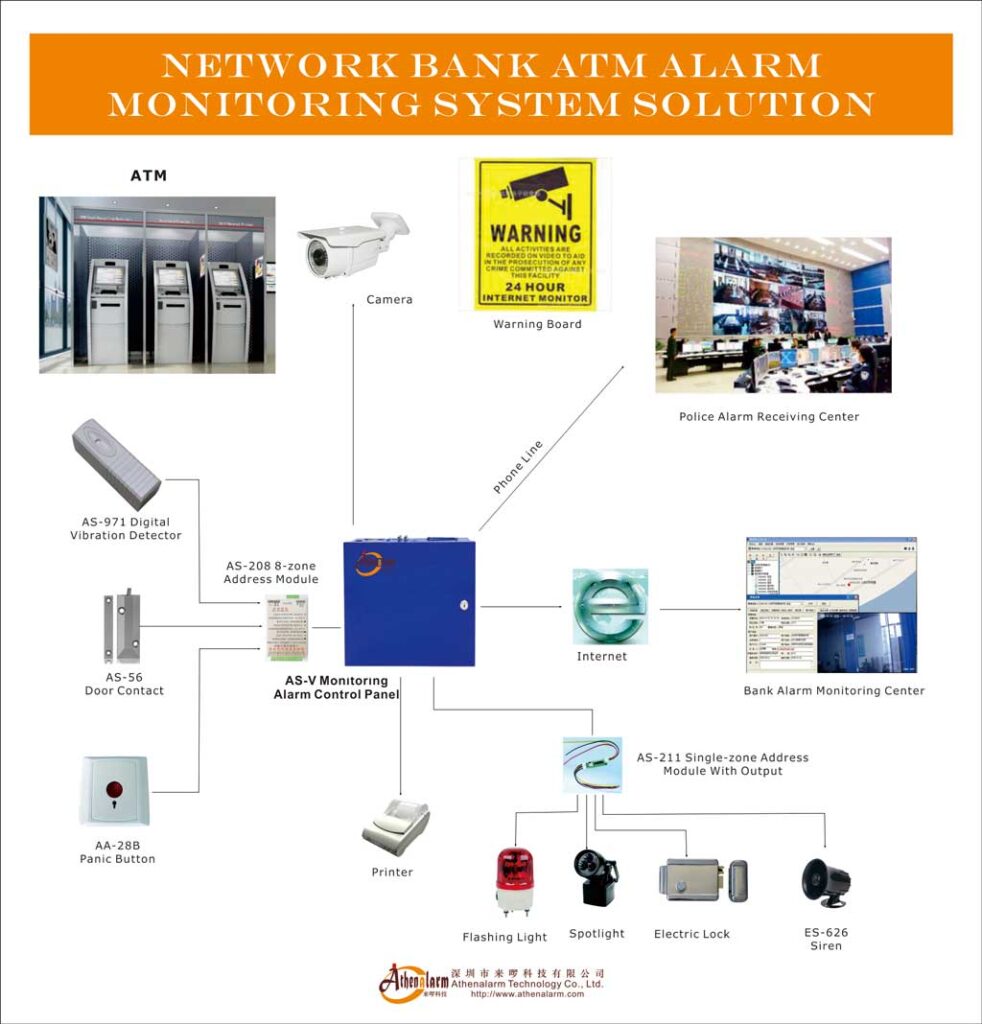
Introduction: Why ATM Alarm Logic Is the Most Overlooked Layer of ATM Security
In the global banking infrastructure, Automated Teller Machines (ATMs) remain one of the most targeted assets for organized criminal attacks. From gas explosions and ram raids to drilling and prying, criminals continuously evolve their methods to bypass physical security controls.
Most ATM security discussions focus on:
- Reinforced safes
- Anti-gas mechanisms
- Surveillance cameras
- ATM placement strategies
While these measures are essential, they all share a fundamental limitation: they often react after an attack has already started.
The real opportunity to stop an ATM attack lies earlier in the attack chain — during the preparation and intrusion phase.
This is where a well-designed ATM alarm system becomes the silent but decisive layer of protection.
A professional ATM security system is not merely a collection of sensors. Its true effectiveness lies in alarm logic design — the intelligent rules that determine:
- When a sensor event becomes suspicious
- When multiple signals indicate an actual attack
- When the system should trigger a pre-alarm or full alarm
- How to minimize false alarms while maintaining rapid response
In other words, alarm logic transforms raw sensor signals into actionable security intelligence.
This article explores how advanced ATM alarm trigger logic works in modern ATM intrusion detection systems, and how financial institutions, ATM deployers, and security integrators can design alarm strategies that detect attacks before criminals reach the cash safe.
To make this guide truly practical, we’ll delve into real-world applications, including integration with broader security ecosystems, regulatory considerations, and cost-effective implementation tips. By focusing on these elements, you’ll gain tools to address common challenges like high installation costs, integration hurdles, and ongoing maintenance in your ATM security operations.
Understanding the ATM Attack Lifecycle
To design effective alarm logic, it is essential to first understand how ATM attacks unfold in real-world scenarios.
Most ATM attacks follow a predictable sequence of actions, though variations can occur based on location, criminal sophistication, and ATM model. Recognizing these phases helps in mapping sensor responses and alarm triggers to specific threats, allowing for proactive rather than reactive security.
Phase 1: Reconnaissance
Criminals identify ATMs with:
- Weak physical security
- Poor monitoring
- No alarm systems
- Low public visibility
- Easy escape routes
They often test ATMs by:
- Slightly shaking the machine
- Opening service panels
- Checking for vibration sensors
- Scanning for cameras
During this phase, subtle disturbances might not trigger alarms, but advanced systems can log these as baseline data for pattern recognition. For instance, repeated low-level vibrations over several days could indicate scouting, prompting a review of surveillance footage.
Phase 2: Initial Tampering
Attackers begin interacting with the ATM structure.
Typical actions include:
- Pulling the cabinet
- Removing fascia panels
- Opening maintenance doors
- Applying force to locks
This phase generates low-level physical disturbances, which can be detected by vibration, tilt, and door sensors. However, without proper calibration, these could be mistaken for routine customer use, such as someone leaning on the machine. To avoid this, alarm logic should incorporate time-of-day filters—e.g., heightened sensitivity during off-hours.
Phase 3: Attack Preparation
At this stage criminals prepare the primary attack method.
Examples include:
Gas attacks
- Drilling holes into the safe
- Injecting flammable gas
- Sealing the chamber
- Preparing ignition devices
Pry attacks
- Using crowbars
- Applying hydraulic tools
- Removing front panels
Ram attacks
- Using vehicles to dislodge the ATM
Additional preparations might involve disabling cameras or jamming signals, which underscores the need for tamper-proof sensors and backup communication channels in your alarm system design.
Phase 4: Safe Breach Attempt
Once preparation is complete, criminals attempt to breach the safe using:
- Explosives
- Gas ignition
- Power tools
- Thermal cutting
At this stage the ATM may already be severely compromised, with potential for significant financial loss and structural damage.
Key Security Insight
If an ATM alarm system triggers only during Phase 4, it is too late.
A properly designed ATM intrusion detection system must detect attacks during Phase 2 or Phase 3.
This requires multi-layer sensor detection combined with intelligent alarm logic. Moreover, understanding regional variations—such as higher gas attack prevalence in Europe versus ram raids in urban U.S. areas—allows for tailored logic that addresses local threats more effectively.
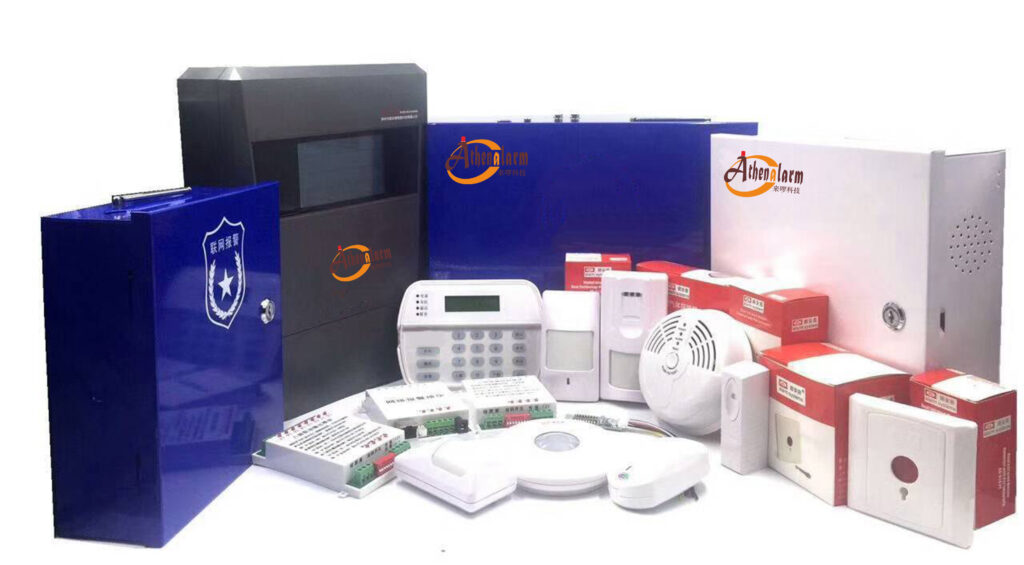
The Core Components of an ATM Alarm System
Before discussing alarm logic, we must understand the sensor ecosystem inside a professional ATM security system.
An ATM alarm system typically integrates several sensor types, often connected via a central control panel that processes signals in real-time. Selecting the right combination depends on your ATM’s environment, such as indoor versus freestanding installations, and budget constraints.
1. Vibration Sensors
Vibration detectors identify mechanical disturbances on the ATM body or safe.
They can detect:
- Hammer strikes
- Drilling attempts
- Grinding tools
- Physical shaking
High-quality sensors can differentiate between:
- Background vibration (e.g., from nearby traffic)
- Human interaction (e.g., customer button presses)
- Forced attack (e.g., sustained high-frequency vibrations)
These sensors are essential for detecting tool-based ATM attacks. For optimal performance, mount them directly on the safe’s interior walls and calibrate sensitivity levels during installation to account for site-specific noise.
2. Tilt Sensors
Tilt sensors detect when the ATM is lifted, moved, or tilted.
This is critical for preventing:
- ATM ram raids
- Forklift theft
- Truck pulling attacks
Even a few degrees of tilt can trigger an alarm condition. Advanced models include adjustable thresholds and can integrate with GPS for location tracking if the ATM is moved.
3. Door Contact Sensors
Magnetic contacts detect when ATM doors are opened.
Common locations include:
- Safe door
- Upper service cabinet
- Cash cassette compartment
- Rear maintenance panel
Unauthorized door opening is a strong indicator of intrusion. To enhance reliability, use dual-reed switches to prevent bypassing with magnets, a common criminal tactic.
4. Seismic Sensors
Seismic sensors are designed specifically for safe protection.
They detect:
- Explosions
- High-frequency drilling
- Cutting torches
- Hammering
These sensors are essential for detecting gas explosion attacks. Place them inside the safe for maximum sensitivity, and pair them with accelerometers for better differentiation from earthquakes or heavy machinery.
5. Temperature Sensors
Temperature sensors detect abnormal heat levels caused by:
- Gas ignition
- Thermal cutting tools
- Fire attempts
Sudden temperature increases inside the ATM enclosure can signal an attack. Set baselines based on normal operating temperatures, and include alerts for gradual rises that might indicate pre-ignition heating.
6. Gas Detection Sensors
In regions with frequent ATM gas attacks, specialized sensors detect:
- Methane
- Propane
- Butane
- Acetylene
Gas detection enables the system to trigger alarms before ignition occurs. For accuracy, calibrate these sensors monthly and ensure ventilation doesn’t dilute readings.
Additional Essential Components
Beyond sensors, a complete ATM alarm system should include:
- Communication Modules: For transmitting alerts via cellular, IP, or satellite networks, ensuring redundancy in case of jamming.
- Power Backup: Battery systems to maintain operation during power cuts, which criminals often exploit.
- Tamper Detection: Sensors that alert if the alarm system itself is compromised, such as wire cutting or enclosure opening.
Integrating these components ensures a robust foundation for alarm logic, reducing vulnerabilities in high-risk environments.

Why Sensors Alone Are Not Enough
Many ATM installations fail because they treat sensors as independent triggers.
For example:
- A vibration sensor triggers → alarm
- A door sensor opens → alarm
- A tilt sensor activates → alarm
This approach causes two major problems:
Problem 1: High False Alarm Rates
Normal activities can trigger sensors:
- ATM servicing
- Customer interaction
- Environmental vibration
- Road traffic
Without intelligent filtering, alarm systems become unreliable, leading to “alarm fatigue” where monitoring teams ignore legitimate alerts. In practice, this can result in fines from local authorities for excessive false dispatches or eroded trust in the system.
Problem 2: Slow Detection of Real Attacks
Single-sensor logic may miss coordinated attacks.
For example:
Criminals may:
- Gently open the cabinet
- Insert tools slowly
- Disable sensors
Sophisticated attackers might use damping materials to muffle vibrations, highlighting the need for cross-verification.
To solve this problem, modern ATM alarm systems rely on advanced alarm logic architecture that incorporates machine learning elements for pattern recognition over time.

The Concept of Alarm Logic in ATM Security Systems
Alarm logic refers to the rules that determine how sensor signals are interpreted and combined.
Instead of reacting to single sensor events, alarm logic evaluates:
- Event type
- Event sequence
- Event intensity
- Multiple sensor correlations
- Time intervals
In essence, alarm logic turns sensor signals into behavioral analysis, mimicking how a human security expert would assess threats. This can be programmed using if-then rules or more advanced algorithms in software-based control panels.
Key to effective logic is scalability—start with basic rules for small deployments and evolve to complex correlations for enterprise networks.
Multi-Sensor Correlation: The Foundation of ATM Intrusion Detection
A powerful ATM security system correlates signals from multiple sensors.
For example:
Scenario 1: Suspicious Activity
- Light vibration detected
- No door opening
- No tilt
System response:
- Log event
- No alarm
This prevents overreaction to minor incidents, like wind or passing vehicles.
Scenario 2: Potential Tampering
- Repeated vibration
- Door contact change
System response:
- Trigger pre-alarm
At this point, the system might also activate nearby cameras for verification.
Scenario 3: Confirmed Attack
- High vibration
- Safe door tampering
- Tilt detected
System response:
- Trigger full alarm
- Notify monitoring center
- Activate siren
- Send police dispatch
This layered approach dramatically improves attack detection accuracy. In real deployments, test these scenarios quarterly to refine correlations based on logged data.
To implement, use control software that allows custom scripting, ensuring logic accounts for environmental factors like urban vs. rural settings.
Designing a Two-Level Alarm Strategy
Professional ATM alarm systems often use a two-stage alarm model to balance sensitivity and reliability.
Stage 1: Pre-Alarm
Pre-alarms detect suspicious behavior before a confirmed attack occurs.
Examples:
- Repeated vibration signals
- Unauthorized cabinet opening
- Minor tilt movement
Pre-alarm actions may include:
- Silent alerts to monitoring centers
- Video verification
- Increased sensor sensitivity
This stage allows for human intervention, such as a remote check, without escalating to full response.
Stage 2: Confirmed Alarm
A confirmed alarm indicates a high probability of active intrusion.
Triggers may include:
- Strong vibration patterns
- Door breach
- Gas detection
- Safe attack
Actions include:
- Police notification
- Audible alarms
- Remote lockdown
- ATM shutdown
To customize, define escalation timers—e.g., if pre-alarm conditions persist for 30 seconds, automatically upgrade to confirmed alarm.
Alarm Logic for Specific Attack Types
Tailoring logic to common threats ensures targeted protection. Below, we expand on key examples with step-by-step implementation.
Alarm Logic for Gas Attacks
Gas attacks are one of the fastest-growing threats to ATMs.
Criminals drill a hole into the safe and inject gas before ignition.
A well-designed ATM alarm system must detect gas attack preparation, not just the explosion.
Recommended Alarm Logic Steps
- Detect Drilling Vibration Pattern: Use seismic sensors to identify high-frequency vibrations consistent with drilling (e.g., 100-500 Hz range). Set a threshold of 5 seconds sustained activity to filter out brief noises.
- Detect Safe Door Pressure Change: Monitor door contacts or pressure sensors for subtle shifts indicating hole creation. If combined with vibration, log as high suspicion.
- Detect Gas Presence: Gas sensors trigger if levels exceed 10% of lower explosive limit. Immediately cross-check with temperature sensors for rising heat.
- Trigger Confirmed Alarm Before Ignition: If two or more conditions met within 2 minutes, activate full alarm. Include auto-ventilation if equipped to mitigate explosion risk.
This allows security teams to respond minutes before detonation. Common pitfall: Poor sensor placement—ensure gas detectors are near potential entry points like the safe’s rear.

Alarm Logic for Pry Attacks
Pry attacks typically involve crowbars and hydraulic tools.
Sensors involved:
- Vibration sensor
- Door contact sensor
- Seismic sensor
Alarm Logic Example Steps
- Detect Vibration Above Threshold: Vibration sensor registers impacts over 50g force. Ignore if under 2 seconds to avoid false positives from customer bumps.
- Confirm Cabinet Door Displacement: Door sensors detect opening or bending. Use calibrated magnets to sense even partial separations.
- Detect Repeated Mechanical Impact: Seismic sensor confirms rhythmic patterns (e.g., 3 impacts in 10 seconds).
- Trigger Confirmed Alarm: If all conditions occur sequentially, escalate. Notify with specifics like “Pry attempt detected at front panel.”
For hydraulic tools, add strain gauges to detect sustained pressure, a often-overlooked enhancement.
Alarm Logic for Ram Raids
Ram raids use vehicles to smash and dislodge ATMs.
Recommended Alarm Logic Steps
- Initial Impact Detection: Vibration and seismic sensors pick up high-amplitude shocks (e.g., over 100g).
- Tilt Confirmation: Tilt sensor activates if angle exceeds 5 degrees.
- Movement Tracking: If equipped, GPS or accelerometer confirms displacement.
- Immediate Full Alarm: Trigger siren and police dispatch; integrate with bollards or shutters if available for physical resistance.
Easy error: Overlooking anchor bolt integrity—ensure sensors monitor base fixings for pre-ram tampering.
How to Reduce ATM Alarm False Alarms
False alarms are one of the biggest operational problems for ATM operators.
Poor alarm systems may generate thousands of unnecessary alerts, costing time and resources.
Strategy 1: Multi-Sensor Verification
Never rely on a single sensor.
Combine signals from multiple sources. For instance, require vibration plus door contact before alerting.
Strategy 2: Adjustable Sensitivity Levels
Sensor thresholds must be tuned according to:
- ATM installation location (e.g., lower in high-traffic areas)
- Environmental vibration (e.g., near construction sites)
- Customer traffic (e.g., peak hours vs. nighttime)
Use software tools to remotely adjust and monitor these levels, avoiding on-site visits.
Strategy 3: Time-Based Filtering
Short disturbances should not trigger alarms.
For example:
Trigger alarm only if vibration lasts longer than 3 seconds. Implement “debounce” periods to ignore transient spikes.
Strategy 4: Maintenance Mode
ATM service technicians should activate maintenance mode before opening cabinets.
This prevents service operations from triggering alarms.
Steps to Activate Maintenance Mode:
- Authenticate via keypad or app with technician credentials.
- Set a timer (e.g., 30 minutes) for the mode.
- System logs entry and disables triggers.
- Upon exit, verify all panels closed before deactivating.
Additional Strategies
- Environmental Compensation: Use weather data integration to adjust for storms or earthquakes.
- Machine Learning Filters: Over time, systems can learn normal patterns and flag anomalies.
- Regular Audits: Review false alarm logs monthly to refine logic, reducing rates by up to 80% in optimized setups.
Addressing false alarms not only saves costs but also maintains response team readiness.
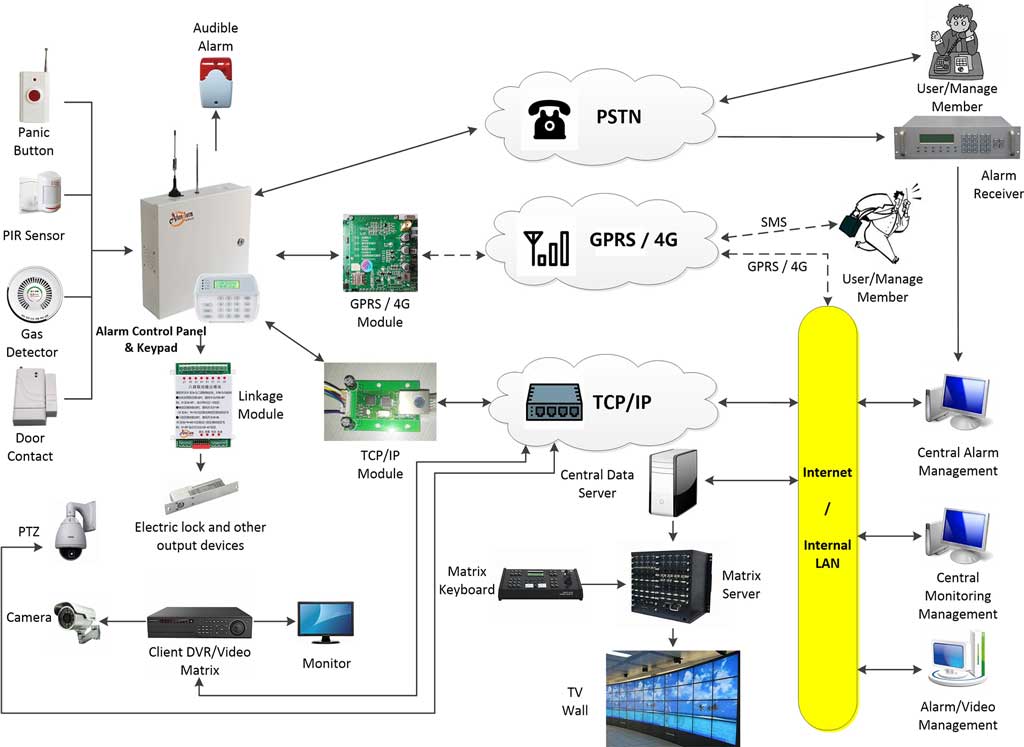
Step-by-Step Guide to Designing ATM Alarm Logic
Designing an effective ATM alarm system requires a structured approach that considers your specific operational needs.
Step 1: Risk Assessment
Evaluate:
- Crime statistics (e.g., consult local police reports or industry databases like ECRI)
- ATM placement (e.g., isolated vs. bank lobby)
- Physical security level (e.g., CEN-rated safes)
- Local attack patterns (e.g., gas in Europe, rams in the U.S.)
Involve stakeholders like branch managers and security consultants. Use tools like risk matrices to prioritize threats.
Step 2: Sensor Deployment
Install:
- Seismic sensors
- Door contacts
- Tilt detectors
- Gas sensors
- Temperature sensors
Ensure sensors cover all intrusion paths. For example, place vibration sensors on all exterior panels. Follow manufacturer guidelines for wiring to avoid signal interference.
Deployment Tips:
- Conduct site surveys to map potential weak points.
- Use wireless options for hard-to-reach areas, with encryption for security.
Step 3: Define Alarm Rules
Create rules such as:
IF vibration > threshold
AND door contact open
THEN trigger pre-alarm
Use flowchart software to visualize rules. Start simple and add complexity based on testing.
Step 4: Define Confirmed Attack Conditions
Example:
IF vibration pattern = drilling
AND gas detected
THEN trigger confirmed alarm
Incorporate “OR” conditions for flexibility, like vibration OR seismic for varied attacks.
Step 5: Integrate Monitoring Center
Connect the ATM alarm system to:
- Security monitoring centers
- Police response networks
- ATM management platforms
Use APIs for seamless data sharing. Ensure compliance with standards like UL 639 for intrusion systems.
Integration Steps:
- Select compatible protocols (e.g., SIA or Contact ID).
- Test connectivity with simulated alerts.
- Set up escalation protocols, including backup contacts.
Step 6: Test Attack Scenarios
Simulate:
- Drilling
- Cabinet opening
- Tilting
- Gas injection
Validate alarm performance. Use non-destructive tools like vibration simulators.
Testing Protocol:
- Document baseline normal operations.
- Run 10-15 scenarios per ATM type.
- Measure response times and accuracy.
- Adjust logic based on results.
Step 7: Continuous Optimization
Alarm logic should be updated regularly based on:
- New attack techniques (e.g., emerging drone-based reconnaissance)
- Sensor data analytics
- Operational feedback from incidents
Schedule annual reviews and use cloud-based updates for fleet-wide changes.
Additional Steps for Comprehensive Design
- Cost-Benefit Analysis: Calculate ROI by estimating loss prevention vs. system costs (e.g., $5,000 per ATM install yielding $50,000 in averted theft).
- Regulatory Compliance: Ensure alignment with standards like PCI DSS for data security and local alarm ordinances to avoid penalties.
- Training Programs: Develop user manuals and train staff on system use, reducing human-error false alarms.
This guide empowers you to build a system that not only detects but anticipates threats.
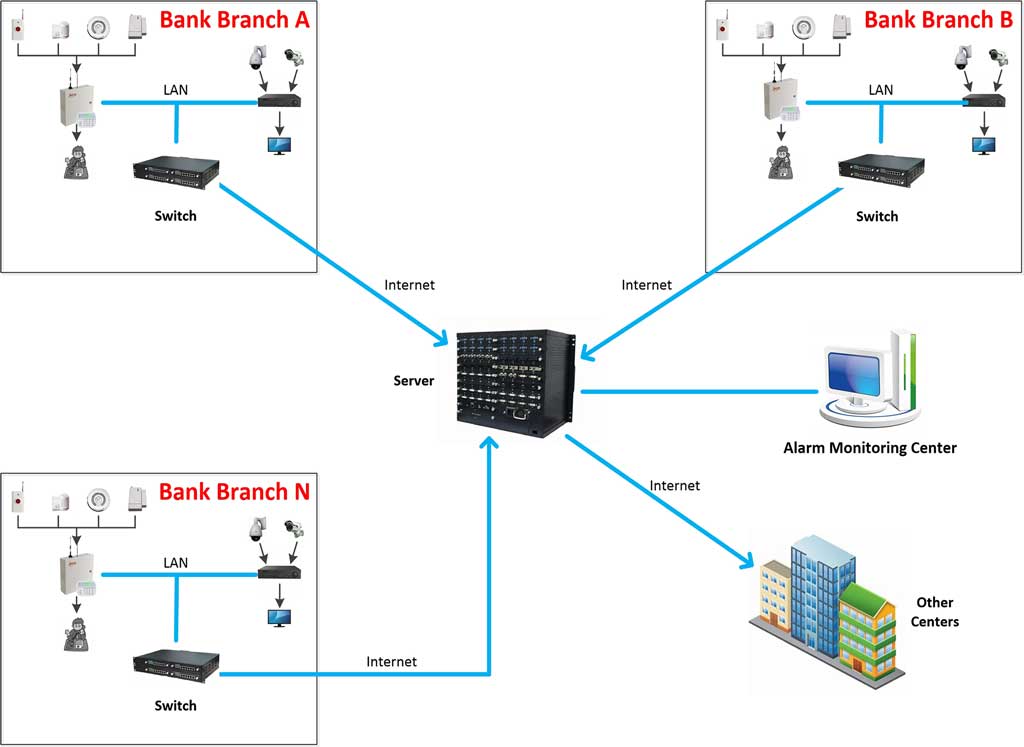
Case Studies: Real-World Applications of ATM Alarm Logic
To illustrate the practical impact, consider these anonymized examples from the field.
Case Study 1: Preventing a Gas Attack in Europe
A bank network in Spain faced repeated gas attacks. By implementing gas detection with vibration correlation, alarms triggered during drilling phases, allowing police response in under 5 minutes. Result: Zero successful breaches in 18 months, with false alarms reduced by 70% through time-filtering.
Case Study 2: Thwarting Ram Raids in Urban U.S.
In a high-crime city, tilt and seismic logic detected vehicle approaches via ground vibrations. Integrated with barriers, this stopped three attempts, saving over $200,000 in damages.
Case Study 3: Reducing False Alarms in Asia
A deployer in Singapore tuned sensitivity for tropical storms, combining weather APIs with sensors. False positives dropped 85%, improving operator efficiency.
These cases highlight how tailored logic solves region-specific issues, providing blueprints for your deployments.
The Future of ATM Intrusion Detection Systems
ATM security is evolving rapidly.
Future ATM alarm systems will incorporate:
AI-Based Behavior Analysis
Algorithms that detect suspicious activity patterns, such as anomalous vibrations at unusual hours, using machine learning to self-improve.
Remote Alarm Diagnostics
Monitoring centers will analyze sensor data remotely, predicting failures and optimizing logic via over-the-air updates.
Integrated Video Verification
Alarm events automatically trigger camera feeds, with AI facial recognition for threat assessment.
Predictive Attack Detection
Systems will predict attacks based on behavioral indicators, like correlated reconnaissance across multiple ATMs.
Emerging tech like IoT integration and blockchain for tamper-proof logs will further enhance reliability, making systems more resilient to cyber-physical threats.
Why Banks and ATM Operators Must Prioritize Alarm Logic
Investing in physical ATM security is important.
But alarm logic is the layer that converts security hardware into proactive protection.
Without proper alarm logic:
- Sensors produce noise
- Monitoring centers ignore alerts
- Criminals exploit system weaknesses
With advanced alarm logic:
- Attacks are detected early
- False alarms decrease
- Response time improves
- ATM losses are minimized
From a business perspective, effective systems reduce insurance premiums and downtime, while enhancing customer trust in secure banking.
Conclusion: The Silent Intelligence Behind ATM Security
The most effective ATM protection systems are not the loudest or most visible.
They are the quiet, intelligent systems working behind the scenes.
An advanced ATM alarm system powered by well-designed alarm trigger logic transforms simple sensors into a coordinated intrusion detection network.
By combining:
- Vibration detection
- Door monitoring
- Gas sensing
- Tilt detection
- Temperature monitoring
with multi-layer alarm logic, banks and ATM operators can detect attacks before criminals reach the cash safe.
For organizations responsible for ATM networks, the message is clear:
The future of ATM security is not just stronger metal — it is smarter alarm systems.
And the institutions that invest in intelligent ATM intrusion detection systems today will be the ones that successfully stop tomorrow’s ATM attacks. To get started, consult certified integrators and pilot test in high-risk sites for measurable results.