
As a security professional with over two decades deploying intrusion detection solutions for commercial chains, industrial sites, and high-security facilities, I’ve seen firsthand how traditional alarm monitoring systems drain budgets and exhaust teams. False alarms that trigger 90–99% of the time aren’t just annoying—they cost your operation in unnecessary police dispatches, technician callouts, and lost productivity. Meanwhile, threats evolve faster than your reactive setup can handle.
The good news? You don’t have to rip everything out and start over. You can upgrade your existing alarm monitoring system—the same network-based platforms many of you already run with centralized control panels, sensors, and CCTV integration—into a proactive powerhouse. This complete, step-by-step guide shows exactly how to integrate AI, edge processing, and predictive security so your system stops reacting and starts preventing incidents.
Whether you’re a product manager evaluating bulk upgrades for 50+ retail locations, a technical decision-maker at an industrial complex, or a procurement lead responsible for multi-site security budgets, this practical blueprint delivers measurable ROI: up to 90% fewer false alarms, sub-second response times, and threat prediction that lets you act before alarms even sound.
By the end of this guide, you’ll have clear, actionable steps, technical specifications you can hand to your integrator, cost-benefit calculators, and real-world deployment checklists tailored for professional buyers like you. Let’s transform your alarm monitoring system from a cost center into your strongest competitive advantage.

Why Traditional Alarm Monitoring Systems Are Costing You More Than You Realize
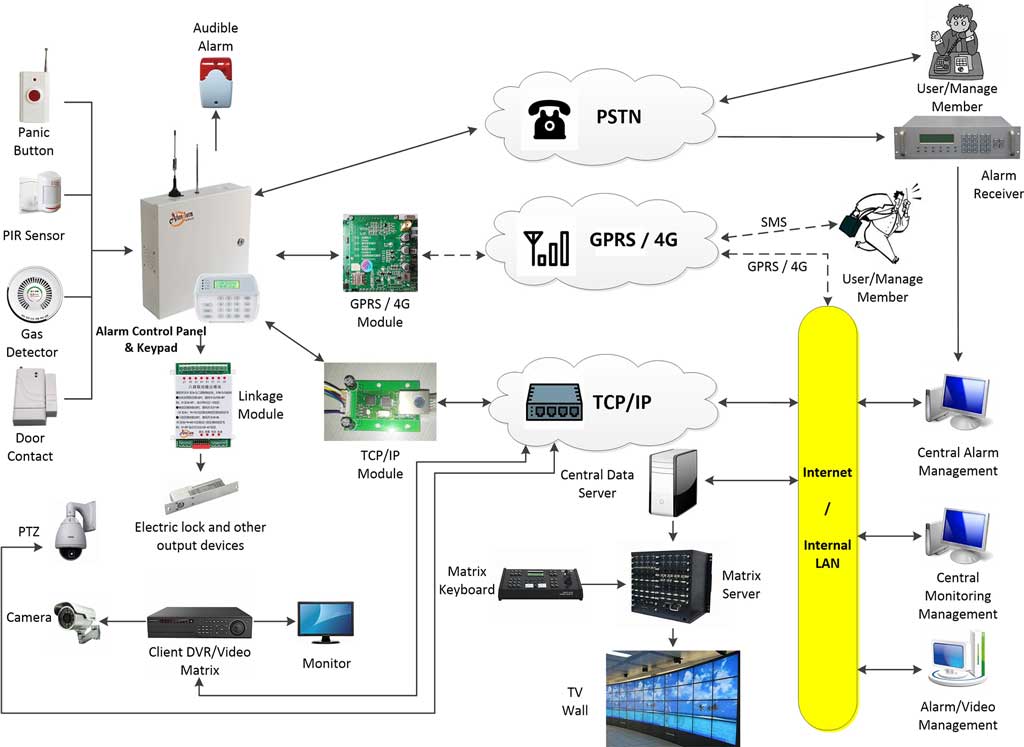
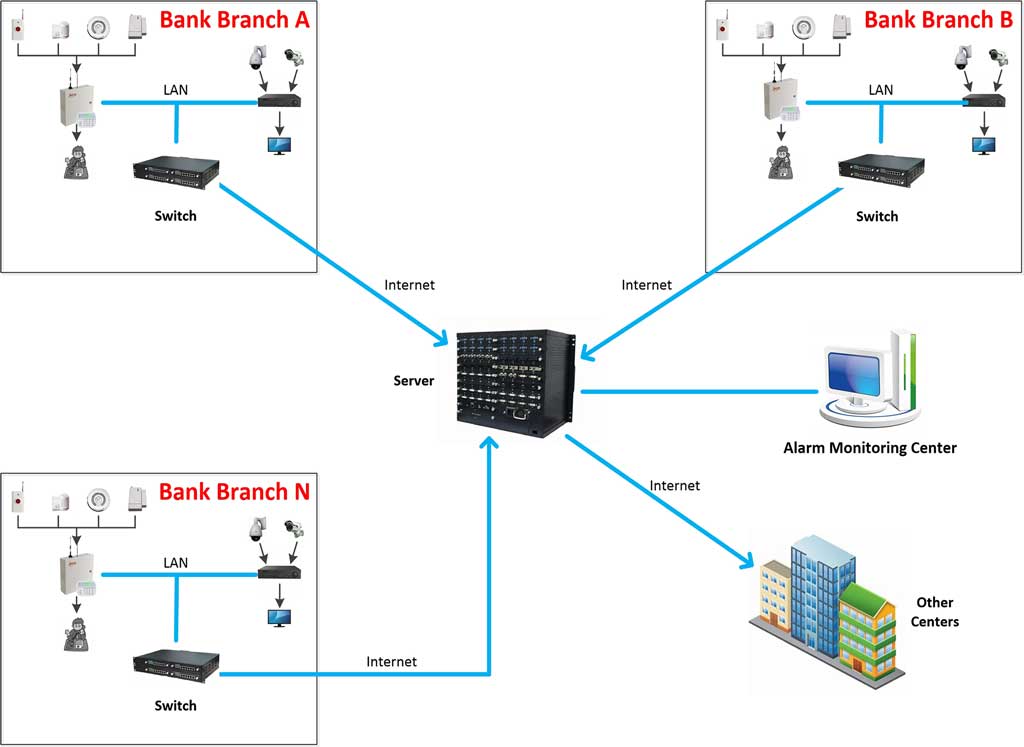
Most organizations still rely on network alarm monitoring systems built around control panels (think AS-9000 series or equivalent), door/window contacts, motion detectors, and cloud-linked CCTV. These systems transmit signals over TCP/IP or 4G to a central monitoring station, display live video on maps, and allow remote arm/disarm—capabilities that were revolutionary when first introduced.
They offer seamless integration of intrusion alarms with CCTV surveillance, automatic real-time video verification when an alarm triggers, secure storage of alarm-related video clips for evidence, interactive map displays that pinpoint the exact location during events, instant message notifications and audible alerts to all logged-in users, and full compatibility with multiple camera brands like Hikvision, Dahua, and XM. You can run single-point, multi-point, or multi-level networks across WAN, LAN, or 4G, giving centralized management of panels, zones, and video feeds from anywhere.
Yet today they fall short in three critical areas that directly hit your bottom line:
- False Alarm Overload – Human operators waste hours verifying every trigger. Wind, shadows, animals, or employees working late generate the majority of events. Even with live video pop-ups and map overlays, your team still has to watch raw footage manually. They learn to ignore alerts, creating dangerous complacency.
- Latency and Bandwidth Bottlenecks – Every sensor reading or camera feed travels to the cloud for analysis. In remote industrial sites or large campuses, this means 300–800 ms delays—enough time for an intruder to move past the detection zone. On 4G sites, high data usage quickly eats into budgets.
- Purely Reactive Nature – The system only notifies after a breach. No foresight. No pattern recognition. You’re always one step behind, even though remote arm/disarm and video storage give you solid post-event evidence.
The foundation is solid—centralized software, multi-brand camera compatibility, real-time video verification, scalable multi-site networking, and tools like interactive maps for faster coordination—but it was designed for a pre-AI world. The upgrade path is straightforward and far less expensive than a full replacement. You keep your existing panels and sensors; you simply add intelligence layers on top of the TCP/IP or 4G backbone you already use.
How AI Fundamentally Changes Alarm Monitoring Systems
Artificial intelligence doesn’t replace your hardware—it supercharges it. Modern AI engines process video streams, sensor data, and historical logs simultaneously to deliver three game-changing capabilities that build directly on your existing network alarm monitoring platform.
Contextual Event Classification
Instead of a motion sensor simply saying “movement detected” or a camera feed popping up raw video for manual review, AI analyzes the full scene in real time:
- Is it a person, vehicle, or animal?
- Is the person wearing a uniform (authorized) or carrying tools near a restricted door at 2 a.m.?
- Is the vehicle loitering or simply turning around?
Leading systems now achieve 95%+ accuracy in distinguishing real intrusion threats from nuisances, slashing false alarms dramatically while still using your current CCTV integration for verification.
Behavioral Pattern Learning
AI builds a baseline of “normal” for your specific site—employee traffic patterns, delivery schedules, lighting changes, even typical 4G signal behavior at remote substations. Any deviation triggers a weighted risk score rather than an instant alarm. Over weeks, the model self-improves without manual tuning, learning from the same alarm logs and video clips your central station already stores.
Automated Video Verification
When an event occurs, AI instantly pulls the most relevant camera angles from your existing Hikvision or Dahua feeds, applies object tracking, and generates a 10-second clip with annotations (“Person detected at rear loading dock – risk score 87%”). Operators see verified incidents only, cutting verification time from minutes to seconds and turning your interactive map into a smart triage tool.
For bulk buyers, this means one monitoring operator can now handle 3–5 times more sites with higher accuracy—directly lowering your monthly central station fees and eliminating the fatigue that comes from chasing hundreds of unverified triggers every week.
Edge Processing + Alarm Panels: The New Hybrid Architecture
Here’s where the revolution gets technical—and where you gain the biggest operational wins when protecting against intrusion.
Traditional cloud-only systems push every pixel to a distant server. Edge processing moves the heavy lifting to the device itself (cameras, alarm panels, or dedicated edge gateways). Lightweight AI models run locally using specialized neural processing units (NPUs) now standard in professional-grade hardware.
New Architecture Breakdown
- Edge Layer: AI runs on the camera or panel itself. Detection, classification, and initial risk scoring happen in under 50 ms—right at the perimeter where your door contacts and motion sensors sit.
- Hybrid Cloud Layer: Only high-risk events (risk score >70%) are forwarded with pre-analyzed metadata and clips over your existing TCP/IP or 4G connection.
- Central Monitoring Layer: Operators receive enriched data; predictive models run on aggregated anonymized data across your fleet while still supporting full remote arm/disarm and map functions.
Benefits You’ll Feel Immediately
- Near-zero latency for critical responses (door forced open → local siren + instant guard dispatch).
- Bandwidth savings of 70–90%—crucial for 4G sites or large campuses where video streaming used to max out your data plan.
- Privacy compliance—raw video never leaves the premises unless a real threat is confirmed.
- Offline resilience—the system continues protecting even during internet outages, keeping your intrusion detection active 24/7.
Many of today’s professional alarm panels (including the AS-9000 series) already have USB or PCIe slots for edge modules. Adding a $300–$600 NPU card turns your existing panel into an intelligent node without rewiring a single sensor or changing your current networking setup.
Predictive Security: From Reactive Alarms to Preemptive Action
This is the capability that separates leaders from followers in 2026—especially when stopping burglary and unauthorized access before it starts.
Predictive security uses machine learning to analyze weeks or months of data and forecast incidents before they happen. Examples that work today on top of your network alarm monitoring system:
- Loitering Pattern Detection: AI notices the same vehicle circling your perimeter three nights in a row at 11 p.m. It alerts security 20 minutes before any attempt, giving you time to reposition guards or activate extra lighting.
- Maintenance Prediction: Gradual increases in sensor false triggers indicate a failing door contact—schedule replacement before it creates a vulnerability that could be exploited.
- Behavioral Anomaly Forecasting: An employee who normally leaves at 6 p.m. is still on site at midnight and has accessed the server room twice this week. System flags insider threat risk with a detailed timeline pulled from your existing access logs and CCTV.
Industry reports confirm predictive analytics can prevent up to 40% of intrusion incidents by enabling preemptive intervention.
For retail chains, this means fewer smash-and-grab attempts because patrols are repositioned based on AI risk heatmaps. For factories and unattended substations, it means equipment tampering is stopped before valuable inventory disappears. Hospitals and banks gain “authorized presence only” zones that self-adjust after hours.

The Expanding Role of IoT Devices in Intelligent Alarm Monitoring
Your alarm monitoring system is no longer isolated. IoT sensors—environmental (temperature, humidity, vibration), access control readers, smart locks, and even asset trackers—feed into the same AI engine, expanding the protection you already get from your TCP/IP or 4G network.
Practical Integration Examples
- Warehouse: Vibration sensors on high-value pallets + AI edge cameras detect unauthorized forklift movement at night and automatically lock surrounding doors while sending a verified clip to your central map.
- Bank branches and ATMs: IoT door sensors combined with facial recognition predict tailgating attempts and trigger preemptive alerts.
- Hospitals and nursing homes: Patient room door sensors + staff badge IoT data create “authorized presence only” zones that self-arm after visiting hours, reducing after-hours intrusion risks.
- Factories and outdoor stations: Environmental sensors flag unusual vibration or temperature spikes that could indicate tampering, feeding directly into your predictive models.
The key is a unified platform where all IoT data is normalized and fed to the same machine-learning models. Modern systems support MQTT and REST APIs, making retrofitting straightforward on top of your existing multi-point network setup—no new cabling required for most sites.
Designing the Next-Gen Monitoring Center
Your central station evolves from a room full of monitors and stressed operators into an intelligent command hub that still feels familiar.
Key Features of 2026 Monitoring Centers
- AI triage dashboard showing only verified high-risk events with risk scores, annotated clips, and suggested actions—replacing the flood of raw notifications.
- Predictive risk maps across all sites, color-coded by threat probability and overlaid on your existing interactive map function.
- Automated response scripting—e.g., “If risk >85% and video confirms forced entry, trigger local siren + notify police with pre-filled report and stored evidence clip.”
- Integration with your existing network monitoring software so operators see the same familiar interface, remote arm/disarm buttons, and live video links—with new superpowers layered on top.
Operators become strategists rather than alarm verifiers. Training time drops, staff retention improves, and your SLA response times hit new records while still delivering the instant notifications and evidence storage your team already relies on.
Step-by-Step Implementation Guide: How to Upgrade Your Alarm Monitoring System Today
This is the section you’ve been waiting for—the exact playbook used by organizations that have successfully modernized hundreds of sites while keeping their existing AS-9000 panels, sensors, and 4G connections intact.
Phase 1: Site Assessment & Baseline (Weeks 1–2)
- Inventory every panel, sensor, camera brand, and communication method (TCP/IP, LAN, WAN, or 4G).
- Run a 30-day false alarm audit using your current logs. Calculate monthly cost (response fees + labor + bandwidth).
- Map network bandwidth and latency at each location, noting any remote 4G sites.
- Identify high-value assets and high-risk zones for prioritized AI coverage, including areas already linked to your interactive maps.
Phase 2: Hardware & Software Selection (Weeks 3–4)
- Choose edge-capable cameras (minimum 4K with onboard NPU) that integrate with your current Hikvision, Dahua, or XM feeds.
- Select alarm panels or gateways supporting edge AI modules (fully compatible with your AS-9000 series panels).
- Evaluate central software platforms that offer AI add-ons, open APIs, and preserve your existing remote arm/disarm and map features.
- Budget: $800–$1,500 per site for edge upgrades on a 50-site rollout. Expect payback in 6–9 months from reduced false alarms and response fees.
Phase 3: Pilot Deployment (Weeks 5–8)
- Install edge AI modules on 3–5 representative sites (mix of retail, industrial, and 4G locations).
- Train initial models using 14 days of normal activity data from your existing logs.
- Configure risk scoring thresholds (start conservative at 75%) and link to your current video verification pop-ups.
- Run parallel operation—compare old vs. new alerts daily, including map notifications and stored clips.
Phase 4: Full Rollout & Integration (Weeks 9–16)
- Deploy edge modules site-by-site using your existing integrator network—no disruption to current TCP/IP or 4G transmission.
- Connect IoT devices via standardized protocols while keeping your multi-point/multi-level network structure.
- Migrate monitoring operators to the new dashboard with two-week side-by-side training, showing how AI annotations speed up the familiar video verification process.
- Enable predictive models after 30 days of baseline data.
Phase 5: Optimization & Scaling (Ongoing)
- Weekly review of false alarm reduction metrics and bandwidth usage.
- Retrain models quarterly with new seasonal data (holiday foot traffic, weather changes).
- Expand predictive rules based on actual prevented intrusions.
- Test offline resilience monthly to confirm protection continues during network outages.
Pro Tips from Real Deployments
- Use phased budgeting—start with highest-loss locations to prove ROI in 90 days.
- Require your integrator to provide 24-month performance guarantees on false alarm reduction.
- Keep one traditional backup channel (e.g., cellular dialer) during transition for peace of mind.
- Always verify that new edge modules preserve your existing remote arm/disarm and alarm notification features.
Real-World Applications Across Industries
Retail chains using AI + edge now see smash-and-grabs prevented by predictive loitering alerts—exactly the protection needed for shopping malls and franchise outlets. Industrial plants and unattended substations report zero successful perimeter breaches after implementing vibration + video predictive fusion. Hospitals and nursing homes have eliminated unauthorized after-hours access through behavioral anomaly detection. Banks and corporate offices use the same upgraded network foundation for ATM and headquarters protection. These outcomes build directly on the network foundations many of you already operate, from centralized chain-store monitoring to remote 4G sites.

Overcoming Common Challenges
Budget Concerns: ROI typically arrives within 6–9 months through reduced response fees, lower insurance premiums, and bandwidth savings—plus the evidence clips from your upgraded system strengthen any insurance claims.
Integration Fear: Open APIs and modular design mean your existing panels, sensors, and multi-brand cameras stay in place with zero rewiring.
Staff Training: Modern platforms feature intuitive dashboards that look just like your current software; most operators are productive in under two weeks.
Cybersecurity: Choose vendors with zero-trust edge architecture and regular firmware updates to protect the same TCP/IP and 4G pathways you already trust.
The Road Ahead – Why 2026 Is Your Moment to Act
Industry analysts confirm AI, edge intelligence, and predictive capabilities are no longer optional—they are the new baseline for professional security. Organizations that delay will face higher insurance costs, greater liability, and competitive disadvantage.
You already have the network foundation—reliable TCP/IP or 4G transmission, centralized management, real-time video, and remote control. The upgrade path is proven, affordable, and delivers immediate operational relief plus long-term strategic advantage in stopping intrusions before they happen.
Ready to stop wasting resources on false alarms and start preventing incidents before they happen?
Contact our technical team today for a free 30-minute assessment of your current alarm monitoring system. We’ll provide a customized upgrade roadmap, detailed ROI calculator, and pilot proposal tailored to your exact portfolio of sites—whether you manage 10 locations or 500.
Don’t let another quarter of preventable losses slip away. The future of alarm monitoring systems is here—and it’s ready to protect your business more intelligently than ever before.