
Introduction
Recent industry research shows that over 60% of security breaches involve insiders, according to the Ponemon Institute’s 2024 Cost of Insider Threats Report. While most organizations focus heavily on external attacks, insider threats within alarm installations—whether committed by employees, subcontracted installers, or support technicians—present an equally significant operational risk.
In the context of burglar alarm systems, insider threats include unauthorized configuration changes, credential misuse, disabling sensors, leaking proprietary alarm protocols, or exploiting service access to bypass security functions. For security managers and compliance officers, these risks directly threaten asset protection, service continuity, and regulatory compliance.
This article provides a practical, operations-focused roadmap for mitigating insider threats in alarm installations. The goal is simple: enable organizations to identify vulnerabilities, reduce exposure, and build a resilient risk management framework tailored for modern alarm systems.
Understanding Insider Threats in Alarm Installations
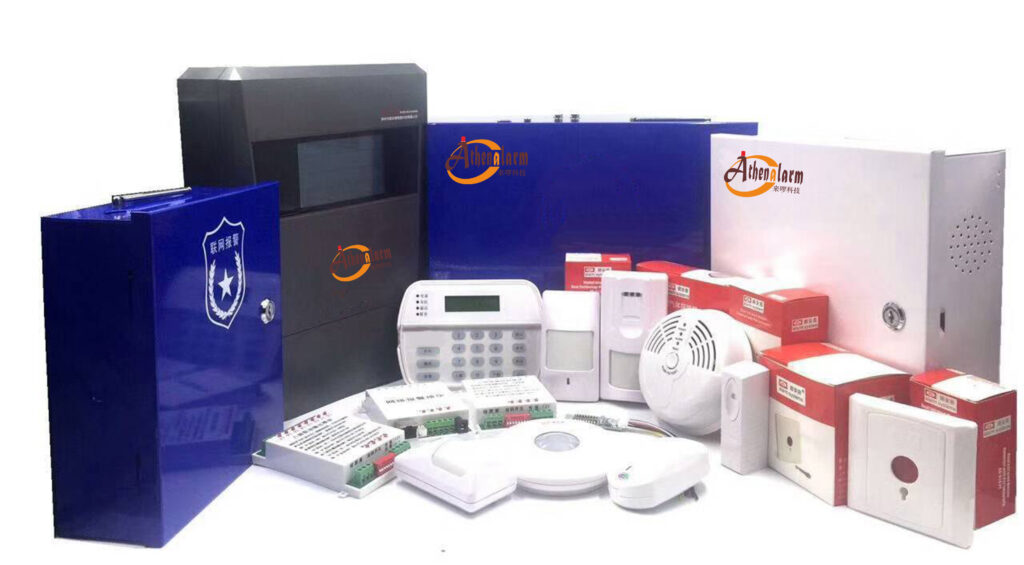
Alarm systems contain multiple components that insiders can exploit due to their privileged access. These include:
Key Vulnerabilities
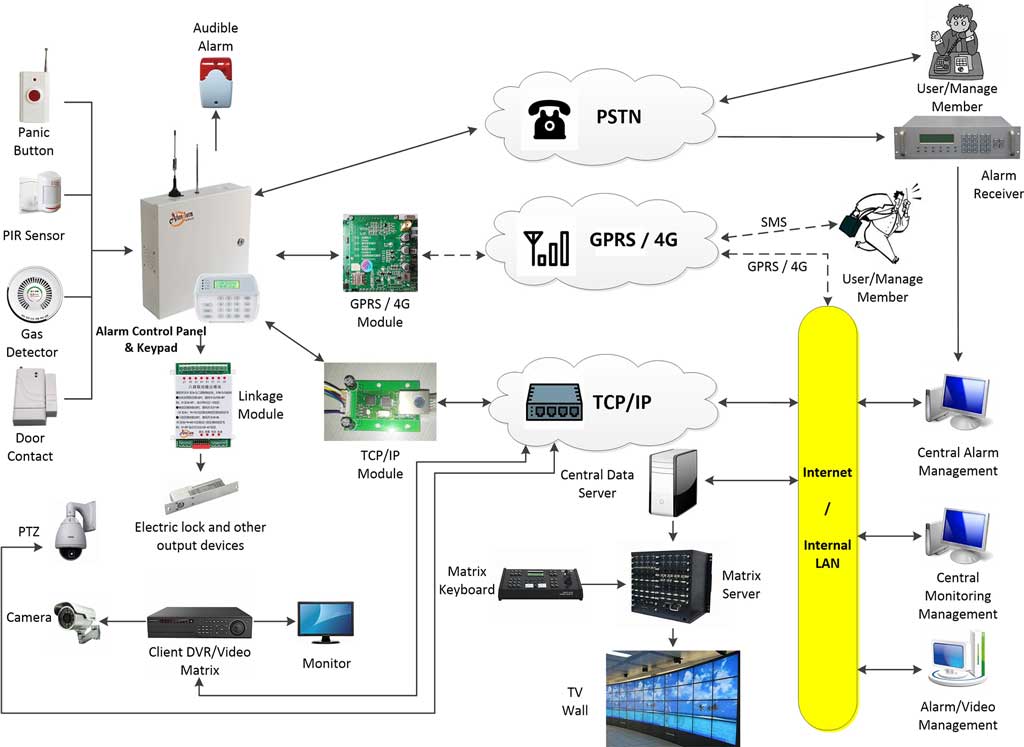
- Alarm control panels and keypads: Direct access allows configuration changes or suppression of event logs.
- Wiring routes and junction boxes: Insiders can bridge, bypass, or disable sensors during installation or maintenance.
- Monitoring software and remote access portals: Misuse can result in unauthorized alarm disarming, data extraction, or credential manipulation.
- Communication modules (GSM/IP): Configurations can be altered to redirect signals or weaken encryption.
Types of Insider Threats
- Malicious insiders
Disgruntled employees, terminated installers, or contractors seeking unauthorized gain by sabotaging systems or selling sensitive configuration data. - Negligent insiders
Poor password practices, sharing administrator codes during installations, or failing to secure programming tools. - Compromised insiders
Legitimate users coerced or manipulated by external attackers to disclose access details or intentionally weaken the system.
Real-World Consequences
- Bypassed PIR or magnetic sensors resulting in undetected intrusions.
- Tampered event logs that hide unauthorized entries.
- Exported programming templates enabling attackers to defeat proprietary alarm protocols.
- False alarms caused by intentional misconfiguration to overwhelm monitoring staff.
Even anonymized industry cases consistently show the same pattern: privileged access + lack of oversight = exploitable vulnerabilities.

Conducting a Comprehensive Insider Threat Risk Assessment
The following step-by-step process allows even non-technical security managers to perform an effective insider-focused risk assessment for alarm systems.
Step 1: Inventory All Alarm System Components
List every element that could be accessed or manipulated:
- Control panels
- Keypads
- PIR/microwave sensors
- Magnetic contacts
- Sirens
- GSM/IP communicators
- Cloud platforms and mobile apps
- Programming cables and software tools
This forms the baseline for your assessment.
Step 2: Map Personnel Roles and Access Levels
Create a simple table detailing who interacts with each system element:
| Role | Access Level | Interaction | Risk Notes |
|---|---|---|---|
| Installer | Full access during installation | Programming, wiring | High risk if unsupervised |
| Technician | Remote/local diagnostic access | Upgrades, resets | Medium to high |
| Administrator | System-level credentials | User management | High |
| Guarding center | Signal monitoring only | Event handling | Medium |
This mapping reveals where insider risks concentrate.
Step 3: Conduct Vulnerability Scanning and Audits
For internal breaches, focus on:
- Unused or default installer codes
- Unlogged remote access sessions
- Weak or unencrypted communication paths
- Lack of version control on configuration files
- Unreviewed bypass zones
Tools you can use:
- Simple audit checklists (UL 681 benchmarks)
- Built-in alarm system diagnostic logs
- Configuration version comparison tools
- Third-party vulnerability assessment platforms
Step 4: Evaluate Threat Likelihood and Impact
Use a simple 2×2 matrix to prioritize risks:
| Impact ↓ / Likelihood → | Low | High |
|---|---|---|
| Low Impact | Monitor | Monitor & review quarterly |
| High Impact | Mitigate immediately | Critical priority—mitigate now |
Alarm-specific factors to include:
- Remote access log frequency
- Installer code usage patterns
- Frequency of sensor integrity failures
- Whether programming tools are tracked and controlled
A risk assessment is only effective if repeated quarterly or after any contractor change.
Key Mitigation Strategies for Internal Security Breaches
1. Implement Robust Access Controls
A strong access control framework is the foundation of insider threat mitigation.
Recommended steps
- Use role-based access control (RBAC) to restrict programming privileges to essential personnel only.
- Enable multi-factor authentication (MFA) for remote access to IP communicators, alarm portals, or cloud systems.
- Rotate installer and administrator codes every 90 days or upon contractor turnover.
- Disable unused programming ports and restrict physical access to control panels using tamper-proof enclosures.
- Leverage user-specific credentials rather than shared master codes.
2. Employee Screening and Continuous Training
Alarm installation involves high levels of trust. Strengthen your personnel processes with:
- Background checks for installers, technicians, and administrators.
- Annual refresher training covering insider threat indicators, secure configuration practices, and password discipline.
- Clear whistleblower channels that allow staff to safely report suspicious behavior.
- Service contract clauses mandating compliance with security standards such as UL 681 and ASIS PSP principles.
3. Monitoring and Detection Mechanisms
Modern monitoring tools make insider anomalies detectable in real-time.
- Enable full audit trails within alarm management software.
- Use AI-driven anomaly detection (e.g., unusual login times, unauthorized sensor bypass attempts).
- Schedule periodic penetration tests targeting internal access paths.
- Integrate monitoring platforms so that CCTV, access control logs, and alarm logs correlate automatically.
4. Create a Tailored Incident Response Plan
When an insider breach occurs, fast containment is essential.
Your incident response plan should include:
- Immediate system lockdown – Disable compromised accounts, revoke installer codes.
- Forensic analysis – Extract event logs, trace configuration changes, and review access logs.
- Physical verification – Inspect wiring routes, junction boxes, and sensors.
- Restore validated configurations from backups.
- Report to compliance/regulatory bodies where required.
- Post-incident review – Update policies, refine access controls, retrain staff.
Best Practices and Advanced Techniques
Adopt Industry Standards
Standards provide structured, validated frameworks for security:
- UL 681 – Installation and classification requirements for burglar alarm systems.
- ASIS Physical Security Principles – Helps align compliance frameworks and best practices.
Adhering to these standards enhances credibility and audit readiness.
Use Data Encryption and Network Segmentation
- Encrypt alarm communication channels (TLS/IPSec).
- Segment alarm networks from corporate LANs using VLANs or dedicated routers.
- Apply least-privilege rules to firewall policies to prevent lateral movement.
Case Study: A Fictionalized Insider Breach in a Commercial Facility
A regional logistics company experienced repeated undetected after-hours entries. Investigation showed:
- A subcontracted technician had left a hidden bypass on two PIR sensors.
- He used a shared installer code that had not been rotated for over 18 months.
- The system had no audit trail enabled.
Outcome after mitigation:
- Unique user credentials and MFA implemented.
- Installer codes rotated every 30 days.
- Monitoring logs integrated with access control data.
- The company reported a 30% reduction in false alarm rates and significantly improved incident traceability.
Conclusion
Insider threats remain one of the most underestimated risks in burglar alarm security. By combining robust access controls, structured risk assessments, continuous monitoring, and compliance with industry standards, organizations can transform insider threats from unpredictable vulnerabilities into manageable operational risks.
Security managers and compliance officers should take immediate action:
Audit your alarm system access, rotate credentials, and enable audit logs today.
Even one quick improvement significantly reduces exposure to internal breaches.
Long-term, a proactive insider threat program strengthens operational security, protects valuable assets, and ensures ongoing compliance.