
Introduction
Security breaches in commercial buildings, data centers, and industrial facilities often occur not because organizations lack security equipment, but because they selected an intrusion alarm system that didn’t match their real risks. Whether it’s a warehouse with multiple blind spots or a retail chain struggling with repeated perimeter breaches, choosing the right intrusion alarm system can be the difference between proactive protection and costly losses.
An intrusion alarm system—also known as a burglar alarm system, intrusion detection system, or perimeter intrusion detection system—is designed to detect unauthorized entry through sensors, control units, and communication modules. With technology evolving toward IoT-enabled, AI-enhanced detection, selecting intrusion alarm systems has become increasingly complex for security technicians, procurement managers, product managers, and bulk buyers.
This guide breaks down the essential considerations to help professionals choose intrusion alarm systems that align with their environment, compliance requirements, and long-term operational goals. By focusing on risk assessment, system features, industry standards, vendor credibility, and lifecycle cost, this article provides a comprehensive, practical roadmap for selecting the right solution—while avoiding common mistakes such as over-specification, poor integration, or high false alarm rates.
1. Assessing Your Security Requirements
Choosing the right intrusion alarm system begins with a structured understanding of your security risks and operational environment.
Conduct a Formal Risk Assessment
Before comparing product specifications, evaluate:
- Entry points: Doors, windows, rooftops, loading docks
- Environmental conditions: Temperature changes, dust, humidity, electromagnetic interference
- Operational patterns: High-traffic areas, nighttime activity, staff access
- Integration needs: Existing CCTV, access control, fire alarms, network infrastructure
A proper risk assessment prevents mismatches—such as using indoor sensors in semi-outdoor spaces—or installing systems that are too basic for high-risk sites.
Scalability and Customization
For enterprises and multi-site operations, scalability plays a critical role. Factors include:
- Ability to add zones or detectors
- Cloud or centralized monitoring
- Custom alarm logic and automation
- False alarm reduction features
High-traffic areas such as lobbies and warehouses benefit from dual-technology motion sensors or AI analytics to minimize false activations.
Use Industry Standards for Guidance
Security professionals often reference:
- UL 681 (Installation and Classification of Burglar and Holdup Alarm Systems)
- IEC/EN 62642 (Intrusion and Hold-up Alarm Systems)
These standards help ensure that system performance aligns with expected threat levels and regulatory requirements.
2. Key Features and Technologies to Evaluate
Modern intrusion alarm systems offer a wide range of sensors and technologies. Selecting the correct features ensures reliable detection and operational efficiency.
Core Components
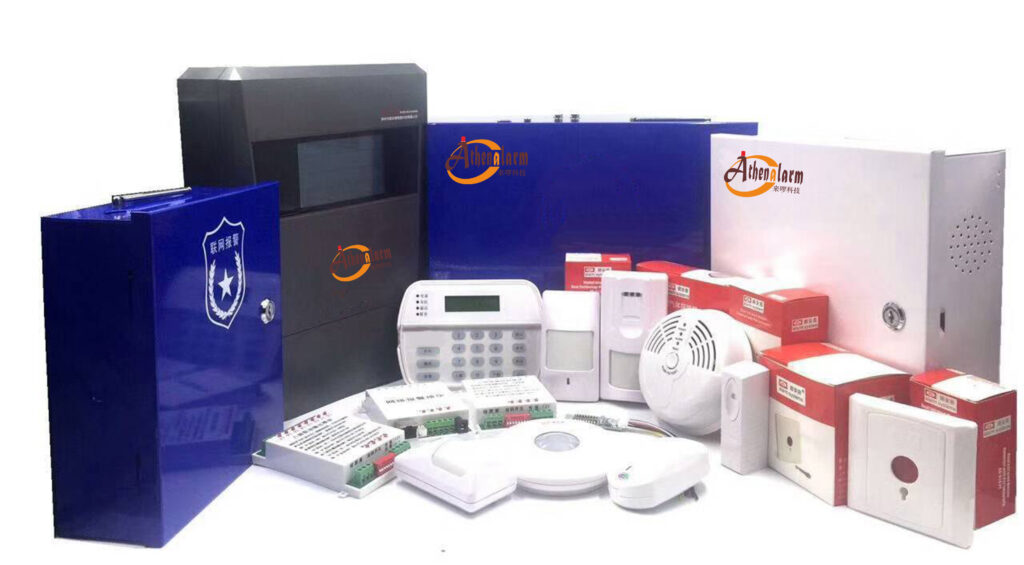
- Sensors
- Motion detectors (PIR, microwave, dual-tech)
- Door/window contacts
- Glass-break detectors
- Vibration/shock sensors
- Control Panels
- Zone capacity
- Encryption and cybersecurity
- Communication protocols (IP, LTE, RF)
- Alarm Outputs
- Internal and external sirens
- Event notifications (SMS, app, CMS)
Advanced Technologies
- IoT-enabled devices for remote diagnostics and real-time updates
- AI-based analytics to reduce false alarms
- Wireless systems for fast deployment in retrofits or large-scale facilities
- Mesh networks to ensure signal reliability in complex layouts
These technologies help procurement teams and product managers balance cost, performance, and long-term reliability.
Balancing Cost vs. Reliability
A common procurement challenge is weighing wired vs. wireless systems:
- Wired systems: Higher installation cost but excellent stability
- Wireless systems: Faster deployment, but dependent on battery maintenance and RF quality
Reports from organizations such as ASIS International provide benchmarks for evaluating system reliability in real-world conditions.

3. Types of Intrusion Alarm Systems and Their Applications
Understanding system categories helps match the right solution to specific environments.
Common System Types
| System Type | Best Use Case | Pros | Cons |
|---|---|---|---|
| Wired Systems | New constructions, high-security sites | Stable, low false alarm rate | Higher installation cost |
| Wireless Systems | Retrofits, retail chains, temporary setups | Fast deployment, flexible | Battery dependence |
| Hybrid Systems | Mixed environments | Combined strengths of both | Config complexity |
| Monitored Systems (CMS) | Enterprises, mission-critical sites | 24/7 monitoring | Monthly fees |
| Local Alarms | Small offices, homes | Low cost | Limited response actions |
Use-Case Scenarios
- Industrial sites: Perimeter sensors + seismic detectors
- Retail: Glass-break + wireless contacts
- Logistics: Long-range wireless PIR + integration with video analytics
Referencing NIST SP 800-116 and NIST Physical Security Standards, organizations can align system selection with recognized security practices.
4. Vendor Selection, Certifications, and Compliance
Choosing a reliable vendor is as critical as selecting the right system features.
Vendor Evaluation Checklist
- Proven industry reputation
- Third-party certifications
- Technical support quality
- Warranty terms
- Integration compatibility
- Availability of updates and long-term parts supply
Certifications to Verify
- EN 50131 (European intrusion system compliance)
- ANSI/SIA CP-01 (False alarm reduction)
- FCC/CE certifications for wireless devices
Bulk Procurement Recommendations
For security procurement officers and project managers:
- Use RFPs (Request for Proposals) with exact technical specifications
- Require third-party compliance documentation
- Avoid suppliers without verifiable testing or certification records
Sources such as the Security Industry Association (SIA) offer guidelines for evaluating manufacturers and integrators.
5. Installation, Maintenance, and Total Cost of Ownership
An intrusion alarm system is only as effective as its installation quality and maintenance plan.
Professional Installation Best Practices
- Conduct site surveys
- Proper zoning and mapping
- Pre-testing before final commissioning
- Ensuring redundancy in communication paths
Maintenance Essentials
- Battery checks for wireless devices
- Firmware/software updates
- Periodic vulnerability testing
- Annual system audits
Understanding Total Cost of Ownership (TCO)
TCO includes:
- Initial purchase
- Installation labor
- Monitoring fees
- Maintenance and spare parts
- Component replacements
Industry studies from Frost & Sullivan show that high-quality systems often reduce long-term operating costs through fewer false alarms, lower maintenance needs, and improved durability.
Conclusion
Choosing the right intrusion alarm system involves far more than comparing sensor types or brand names. By conducting a thorough risk assessment, understanding key system features, evaluating system categories, verifying certifications, and planning for installation and maintenance, organizations can make informed, confident decisions. This structured approach helps procurement managers avoid underperformance, excessive false alarms, and compliance risks.
Whether you are a security technician designing a system layout, a product manager developing a new solution, or a procurement professional evaluating suppliers, applying the principles outlined in this guide will ensure that the system you choose delivers long-term reliability, compliance, and value—ultimately strengthening your overall security posture.
References
- ASIS International. Physical Security Principles. ASIS Publications.
- UL 681. Installation and Classification of Burglar and Holdup Alarm Systems. Underwriters Laboratories.
- NIST Special Publication 800-116. A Recommendation for the Use of PIV Credentials in Physical Access Control Systems.
- EN 50131 Series. Alarm Systems – Intrusion and Hold-up Systems.
- Security Industry Association (SIA). Best Practices for Security System Procurement.
- Frost & Sullivan. Global Intrusion Detection and Alarm Systems Market Analysis.
- IEC 62642 Series. Intrusion and Hold-up Alarm Systems.
- MarketsandMarkets. Intrusion Detection and Prevention System Market Forecast.