
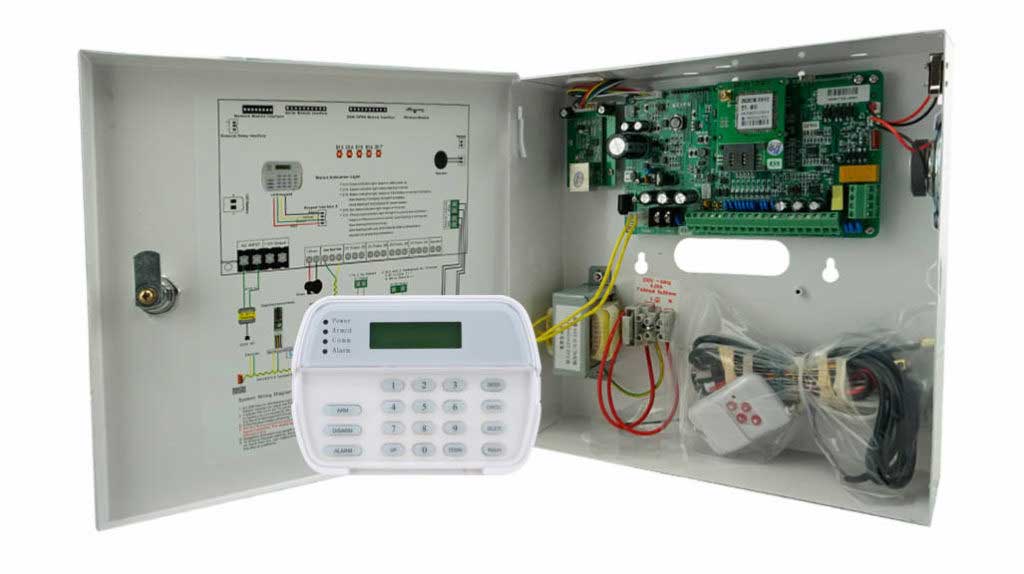
In the high-stakes world of campus and distributed-facility security, a single burglar alarm control panel simply isn’t enough anymore. Picture this: a sprawling university campus with 15 buildings spread across 200 acres, or a manufacturing complex with warehouses, offices, and production lines separated by miles of fencing. A lone intrusion alarm panel in the central security room might handle a small office, but when unauthorized entry hits the loading dock at 2 a.m. while a perimeter breach occurs simultaneously at the opposite gate, that single panel becomes a bottleneck. Response times stretch, false alarms multiply, and critical events slip through the cracks—costing thousands in downtime, insurance claims, or worse, actual losses.
This is why forward-thinking security decision-makers are turning to multi-panel burglar alarm networks. By interconnecting multiple burglar alarm panels (also called burglar alarm control panels, alarm panels, alarm control panels, or intrusion alarm panels) into a unified, resilient architecture, organizations achieve true scalability without sacrificing reliability. These networks transform isolated intrusion detection points into a cohesive, intelligent system capable of cross-site collaboration, automatic failover, and centralized command.
As a senior expert with over 25 years in the burglar alarm industry, I’ve designed, deployed, and optimized hundreds of these systems for universities, industrial parks, and commercial campuses. This guide distills that hard-won experience into a practical, step-by-step blueprint. Whether you’re a procurement manager evaluating bulk purchases, a technical integrator planning the next rollout, or a facility operations leader tired of fragmented security, you’ll walk away with actionable strategies to architect multi-panel networks that scale effortlessly, minimize downtime, and deliver measurable ROI.
We’ll cover everything: the core limitations of standalone panels, proven interconnection designs, redundancy tactics that survive real-world failures, cross-site pre-planned responses, detailed deployment checklists, real-world case applications, and long-term maintenance protocols. By the end, you’ll have the confidence to specify, implement, and manage a multi-panel burglar alarm network that grows with your organization—without costly rip-and-replace cycles.
Let’s dive in and master the art of scalable intrusion protection.
Section 1: Why Standalone Burglar Alarm Control Panels Fall Short in Large-Scale Environments
A burglar alarm control panel is the brain of any intrusion detection system. It receives signals from sensors (door contacts, motion detectors, glass-break devices, perimeter beams), processes logic rules, triggers local sirens or strobes, and transmits events to monitoring stations or mobile apps. Modern panels like those in the AS-9000 family offer impressive base capabilities: 16 wired + 30 wireless zones expandable to over 1,656 bus-type zones via address modules, multi-language LCD keypads with voice prompts, up to 11 user codes for role-based access, 1,500-event logging, and multi-channel communications (PSTN, 4G LTE, TCP/IP). They also include industrial-grade features such as automatic short-circuit and overload protection, tamper detection for power failures, battery faults, and line cuts, plus surge protection up to 4kV—making them built for high-risk environments like campuses and industrial parks.
Yet in a campus or distributed facility, these strengths become constraints when stretched across multiple buildings. A single panel’s zone capacity, while expandable, eventually hits practical limits due to wiring distances, latency, and single-point-of-failure risks. Communication paths become brittle—fiber cuts, power outages, or network congestion can blind the entire system. Operators lose visibility into which zone in Building 7 triggered first versus the gatehouse alarm. False alarm rates skyrocket because there’s no easy way to correlate events across distant sites (e.g., a forced door plus simultaneous motion should escalate faster than an isolated sensor trip).
Worse, compliance suffers. Universities must meet Clery Act reporting; factories face OSHA and insurance audits; commercial parks require unified incident logs for insurance. A fragmented single-panel setup forces manual data aggregation, delays response, and increases liability.
Multi-panel networks solve this by treating each burglar alarm control panel as a local “node” in a larger intelligent fabric. Each panel handles its building or zone cluster independently for speed and resilience, yet they share data, synchronize arm/disarm states, and escalate events through a central hub or cloud platform. The result? Near-instant cross-site awareness, automatic load balancing, and the ability to grow from 5 to 50 buildings without redesigning the core architecture. This approach leverages the inherent scalability of panels like the AS-9000 series, which are explicitly designed for multi-site facilities including educational institutions, industrial parks, and commercial enterprises.

Section 2: Understanding Multi-Panel Network Fundamentals
At its heart, a multi-panel burglar alarm network links multiple intrusion alarm panels via wired (RS-485, Ethernet) or wireless (LTE, mesh radio) backbones. Common topologies include:
- Ring topology: Panels daisy-chain in a loop; if one link fails, data routes the opposite direction. Ideal for linear campuses.
- Star topology: All panels connect to a central master panel or server. Simple to manage but creates a central vulnerability unless redundant.
- Mesh/hybrid: Panels communicate peer-to-peer with redundant paths. Best for complex distributed sites.
The magic happens through protocol translation and middleware. Modern panels support SIA DC-09, OSDP, or proprietary bus protocols (such as RS-485 addressable systems) that allow seamless data exchange. Integration software (such as centralized alarm management platforms) aggregates events, applies global rules, and pushes unified commands back to individual panels. This builds directly on the expandable bus architecture of advanced intrusion alarm panels, enabling cloud-based logging and real-time alerts via SMS, push notifications, or monitoring stations.
Key benefits for your procurement and operations teams:
- Scalability without obsolescence: Add panels as facilities expand—each new node inherits the same standardized features for zones, communications, and user management.
- Reduced total cost of ownership: Standardized training, spare parts, and firmware updates across the fleet.
- Faster incident response: Correlated alarms cut verification time by up to 40%.
- Regulatory peace of mind: Centralized logging and audit trails with 1,500+ events per panel plus unlimited cloud history.
Section 3: Designing the Interconnection Architecture – Step-by-Step Technical Blueprint
Designing a robust multi-panel network starts with a thorough site audit. Here’s the exact process I use with clients:
- Map the facility topology: Document every building, perimeter segment, and high-risk area. Measure distances between potential panel locations (max 1,200m for RS-485 without repeaters; use fiber for longer runs). Identify high-traffic zones like dormitories, labs, loading docks, or production lines where separate local panels will deliver the fastest response.
- Assess existing infrastructure: Inventory current burglar alarm panels, network switches, fiber backbone, power sources, and bandwidth. Identify legacy analog panels that need IP communicators or gateways. Pay special attention to power outlets and backup battery locations to ensure every node meets the 24/7 industrial-grade requirements.
- Choose panel models: Prioritize expandable intrusion alarm panels with native multi-channel comms. For example, panels supporting 1,656 zones, 32-bit processing, simultaneous PSTN/4G/TCP/IP, and tamper-proof design ensure each node remains operational even if the central link drops. Select models certified to standards like CCC and IEC 62368-1 for reliability in harsh campus or factory conditions.
- Select topology and media:
- Primary: Dedicated VLAN on existing fiber/Ethernet with AES-256 VPN tunnels.
- Backup: Cellular 4G/5G with automatic failover (use different carriers for true diversity).
- Redundant paths: Ring or dual-star configuration.
5. Define logical zones and hierarchies:
- Local panels handle intra-building logic (e.g., arm/disarm specific floors or zones).
- Master controller or cloud platform enforces global policies (e.g., campus-wide lockdown).
6. Plan integration points: Connect to access control, CCTV, and fire systems via ONVIF, SIA, or SDKs for automated workflows (motion + door forced = instant video pop-up + guard dispatch). This seamless integration is a core strength of modern burglar alarm control panels.
Implementation tip: Always design for N+1 redundancy—every critical component has a hot spare. In one university deployment I led, this prevented a fiber cut from disabling 8 buildings; the ring rerouted in under 3 seconds. Document everything in a detailed network diagram and bill of materials (BOM) to avoid costly surprises later.
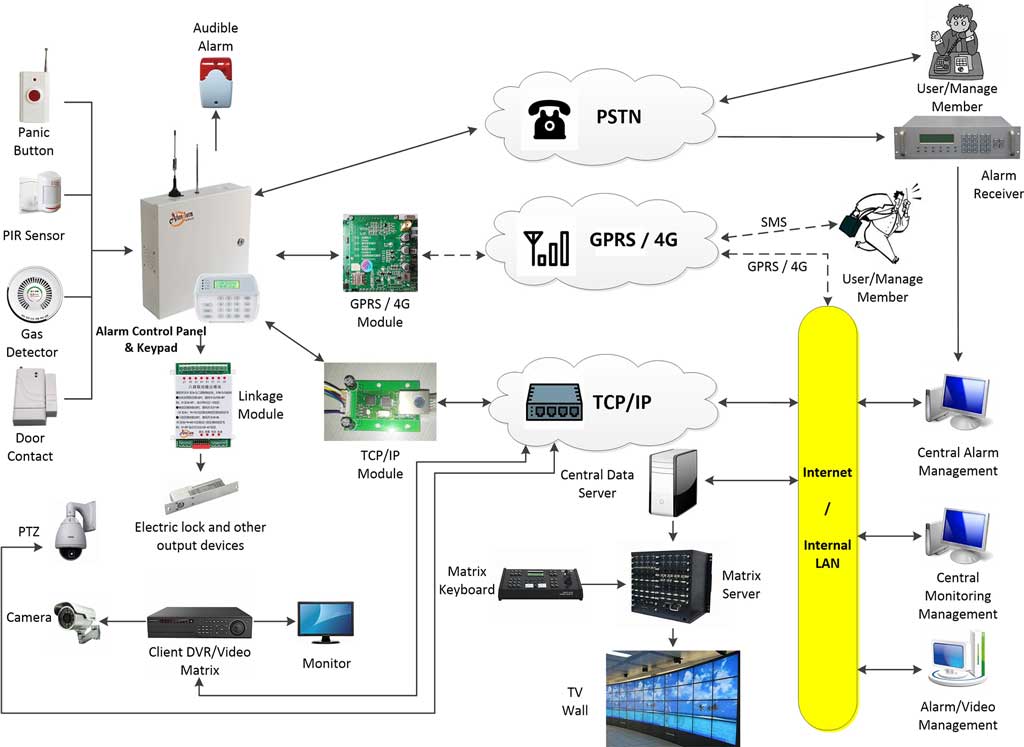
Section 4: Building Ironclad Redundancy Strategies That Actually Work
Redundancy isn’t optional—it’s your insurance policy against the inevitable. Here’s how to implement it operationally, with specific steps tied to real-world panel features:
Power redundancy:
- Each panel: 24-hour battery backup + generator tie-in, plus automatic short-circuit/overload protection and tamper alerts for battery faults.
- Network switches: Dual UPS with automatic transfer switches.
- Central hub: Clustered servers with geographic diversity if cloud-hybrid.
Communication redundancy (detailed steps):
- Configure primary TCP/IP over dedicated VLAN.
- Set secondary 4G LTE with SIM failover (use different carriers).
- Enable PSTN as tertiary for voice reporting.
- Program panels to test links every 60 seconds; auto-switch on >5% packet loss or line-cut detection.
- Test failover monthly: Simulate cable cut and verify <10-second recovery—document results for insurance audits.
Data and processing redundancy:
- Mirror event logs to both local panels and central cloud (1,500+ events per panel + unlimited cloud history).
- Use hot-standby master controllers that sync state every 5 seconds.
In practice, these strategies delivered 99.99% uptime for a 120-location retail client. False alarms dropped 65% because redundant paths allowed immediate cross-verification, while built-in surge protection and tamper detection kept the system running through storms and power fluctuations.
Section 5: Cross-Site Collaboration Pre-Planned Responses – Turning Alarms into Coordinated Action
The real power emerges when panels don’t just report—they collaborate. Develop these pre-plans to solve the most common pain points in large deployments:
- Tiered escalation matrix: Local panel triggers siren; if unacknowledged in 30 seconds, notify central + nearest guard + video analytics.
- Campus-wide lockdown scripts: One panel disarm command propagates to all others instantly.
- Inter-facility correlation: Door breach at Building A + motion at Building B (500m away) flags possible coordinated intrusion and automatically arms adjacent perimeters.
Operational steps to create pre-plans:
- Convene stakeholders (security, IT, facilities, legal).
- Map every plausible scenario (perimeter breach, internal theft, active shooter, weather-related false alarms).
- Document response SOPs with timelines and responsible roles—include exact keypad or app commands for arming/disarming.
- Program into central software with one-click activation.
- Simulate quarterly with tabletop and live drills, then review logs to refine rules.
This approach turned reactive monitoring into proactive defense for multiple factory clients, reducing internal theft and ensuring Clery Act compliance with a single unified report.

Section 6: Complete Step-by-Step Deployment Guide (Your Operational Playbook)
Here’s the exact 8-phase rollout I recommend—proven to complete in 6-12 weeks depending on scale. Each phase includes tips to avoid common pitfalls like mismatched firmware or cabling errors.
Phase 1: Discovery (Week 1-2)
- Site surveys, risk assessment, stakeholder interviews.
- Produce detailed network diagram and BOM.
Phase 2: Design & Procurement (Week 3)
- Finalize panel specs, topology, integration requirements.
- Order standardized burglar alarm control panels in bulk for cost savings (leverage multi-language support and voice prompts for diverse campus users).
Phase 3: Lab Testing (Week 4)
- Build miniature network in controlled environment.
- Validate failover, integration, and false-alarm filtering using real sensors and simulated breaches.
Phase 4: Installation (Weeks 5-8)
- Install panels per building (follow manufacturer mounting guidelines, secure tamper switches).
- Run cabling/fiber with proper conduit and labeling—label every zone and communication link clearly.
- Configure each panel locally first, then network join (test RS-485 bus or Ethernet individually).
Phase 5: Network Integration & Configuration (Week 9)
- Establish VPN tunnels, VLANs, and monitoring software.
- Program global rules and user roles (up to 11 per panel for role-based access).
- Import existing sensor mappings and verify multi-channel comms.
Phase 6: Commissioning & Training (Week 10)
- End-to-end testing including simulated failures.
- Train operators on dashboard, mobile app, and pre-plans (provide role-specific manuals in English/Chinese if needed).
Phase 7: Go-Live & Optimization (Week 11)
- Parallel run with old system for 7 days.
- Monitor KPIs (alarm response time, false positive rate).
Phase 8: Handover & Support (Ongoing)
- Deliver as-built documentation, warranty registration, and 24/7 support contract.
Pro tip: Phase installations building-by-building to maintain operations—no campus-wide shutdown required. This keeps your facility running safely during the transition.
Section 7: Real-World Success Stories from Campuses and Industrial Parks
A major Asian university with 12 faculties deployed a 28-panel network using expandable intrusion alarm panels. Result: 55% faster incident response, zero downtime during two major storms (thanks to redundant comms and battery backups), and centralized Clery-compliant reporting that satisfied auditors in one click.
A factory complex spanning 3 km² replaced 9 standalone systems with a ring-topology multi-panel setup. Cross-site collaboration reduced internal theft by 72% and cut annual monitoring costs by 38% while maintaining full operations across production lines.
These aren’t anomalies—they’re repeatable when you follow the blueprint above and select panels engineered for exactly these large-scale challenges.
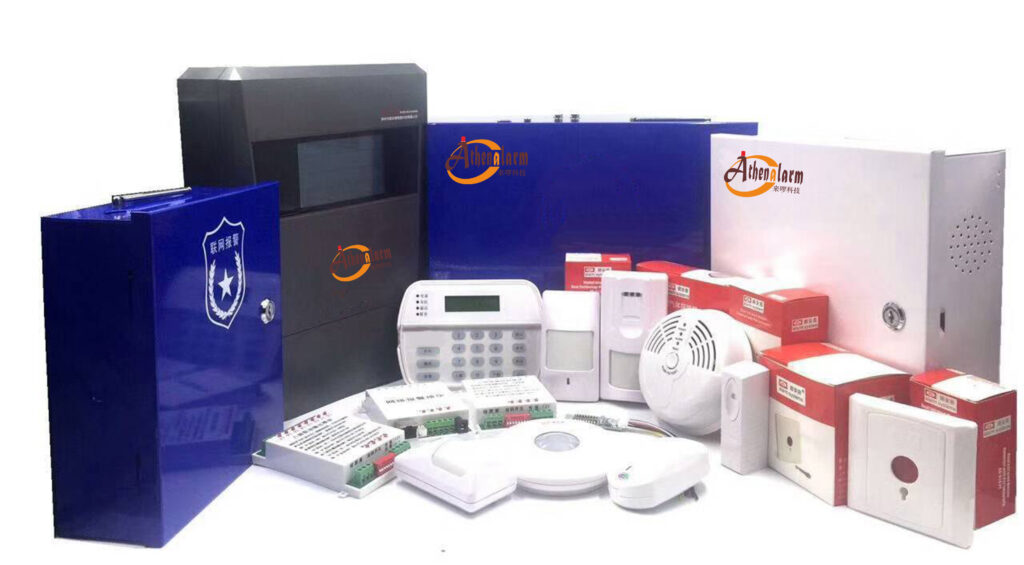
Section 8: Long-Term Maintenance, Optimization, and Future-Proofing
Treat your network like a living system to keep it performing at peak:
- Monthly: Test all failover paths and review event logs for patterns (use the 1,500-event local buffer plus cloud history).
- Quarterly: Firmware updates, sensor calibration, and battery health checks.
- Annually: Full penetration testing, capacity planning, and compliance audits.
- Use AI-driven analytics (available in modern platforms) to predict maintenance needs and further reduce false alarms.
Future-proof by choosing panels with firmware-upgradable features and open integration standards. Your investment will serve for 10+ years without obsolescence, even as your campus or facility expands.
Conclusion: Take Control of Your Scalable Security Future Today
Multi-panel burglar alarm networks aren’t a luxury—they’re the new baseline for any campus or distributed facility serious about intrusion protection. By following this operational guide, you’ll architect a system that scales, survives, and delivers peace of mind—while solving the real-world problems of downtime, false alarms, and fragmented reporting that plague standalone setups.
If you’re ready to move from theory to deployment, our team at Athenalarm stands ready to review your site plans, provide customized BOMs, and support every phase. Contact our technical sales engineers today for a no-obligation architecture workshop tailored to your exact pain points and growth roadmap.
Your facilities deserve security that grows with them. Let’s build it together—starting with your first multi-panel network.