
I. Introduction
At 2:17 a.m., a perimeter door is forced open at a small commercial facility. Motion sensors trigger immediately, but the alarm panel must first transmit raw data to a remote cloud server for analysis. Network congestion adds several seconds of delay. By the time the intrusion is confirmed and the response is initiated, the intruder has already exited the premises.
This latency-driven failure scenario is not hypothetical—it reflects a structural weakness in many cloud-dependent burglar alarm systems deployed today.
Edge computing alarms fundamentally change this model. By performing event analysis directly at or near the alarm panel—rather than relying exclusively on centralized cloud infrastructure—edge processing enables real-time decision-making, even under degraded network conditions.
This whitepaper explores how hardware and software evolution in edge-based event processing for intrusion detection is reshaping burglar alarm system design. It is written for product designers and CTOs who must balance reliability, privacy, scalability, and long-term product competitiveness.
The core thesis is simple: edge computing is no longer an optional enhancement—it is a structural requirement for next-generation intrusion detection systems.
II. Understanding Edge Computing in Burglar Alarm Systems
What Are Edge Computing Alarms?
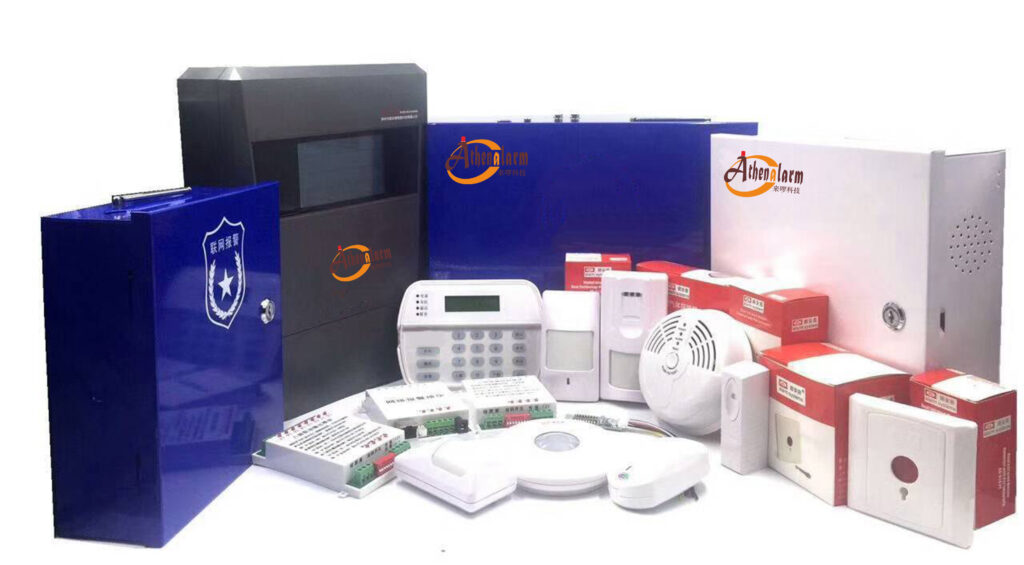
In the context of burglar alarm systems, edge computing refers to the local processing of sensor data on alarm panels, control units, or gateway devices, rather than transmitting all events to a cloud platform for interpretation.
Edge-enabled alarm systems can:
- Analyze PIR motion patterns locally
- Classify glass-break acoustic signatures in real time
- Correlate door contact status with motion and time-of-day rules
- Decide whether an event is a true intrusion or a nuisance alarm—before any cloud interaction
This enables edge-based event processing for intrusion detection, where actionable intelligence is generated on-site.
Edge vs. Cloud-Centric Alarm Architectures
Traditional cloud-first alarm systems introduce several systemic risks:
| Cloud-Centric Limitation | Operational Impact |
|---|---|
| Network dependency | Alarms degraded during outages |
| Latency variability | Delayed intrusion confirmation |
| Bandwidth consumption | Higher operational costs |
| Centralized attack surface | Larger cybersecurity risk |
Industry testing published in IEEE IoT security studies shows that cloud-only alarm processing can introduce average confirmation delays of 1.5–3 seconds, depending on network quality—an unacceptable window in high-risk intrusion scenarios.
When Should CTOs Consider an Edge Upgrade?
A practical evaluation framework:
- Measure event-to-action latency under peak network load
- Simulate internet outages and observe system degradation
- Analyze false alarm ratios across sensor types
- Assess regulatory exposure related to data transmission and privacy
If latency exceeds one second, false alarms exceed industry benchmarks, or uptime depends entirely on internet availability, edge processing is no longer optional.

III. Hardware Evolution for Edge-Enabled Intrusion Detection
The Modern Edge Hardware Landscape
Edge computing in burglar alarm systems has been enabled by rapid advances in embedded hardware:
- Low-power ARM Cortex-A and Cortex-M processors
- Secure elements for cryptographic key storage
- Integrated AI accelerators for on-device inference
- High-fidelity sensors with digital signal outputs
These components are now cost-effective enough for mass-market intrusion panels.
AI-Accelerated Edge Devices
Modern alarm panels increasingly incorporate on-device machine learning to distinguish real threats from environmental noise. AI-capable edge platforms—ranging from lightweight neural accelerators to industrial-grade modules—allow alarm systems to:
- Classify human vs. pet motion locally
- Identify forced entry patterns from vibration data
- Reduce nuisance alarms caused by HVAC airflow or lighting changes
Security industry benchmarks indicate 30–50% false alarm reduction when AI inference is executed at the edge instead of in the cloud.
Designing Rugged, Tamper-Resistant Edge Hardware
For product designers, edge hardware must operate reliably in hostile environments.
Recommended integration steps:
- Select edge-capable sensors
Use PIR motion detectors, dual-technology sensors, or acoustic modules that support local signal preprocessing. - Optimize wiring and power paths
Minimize internal bus latency and isolate compute modules from noisy power rails. - Test against realistic intrusion scenarios
Perform controlled walk tests, forced entry simulations, and environmental stress tests to validate edge decision accuracy.
Tamper resistance, conformal coating, and secure boot mechanisms are essential to prevent physical and logical compromise.
IV. Software Advancements in Edge-Based Event Processing
Edge Software Architecture for Alarm Systems
A robust edge computing alarm stack typically includes:
- Real-time operating system (RTOS) or embedded Linux
- Sensor abstraction and normalization layers
- Event correlation and rule engines
- Lightweight AI inference frameworks
Technologies such as TensorFlow Lite enable compact models optimized for embedded intrusion detection without excessive power draw.
Evolution of Edge Event Processing Algorithms
Edge-based intrusion detection algorithms have evolved from simple threshold triggers to contextual analysis, including:
- Temporal motion correlation
- Multi-sensor fusion logic
- Anomaly detection for atypical behavior patterns
For video-enabled alarm systems, on-device processing can determine whether a frame contains a human silhouette before escalating events.
Secure Software Integration and Updates
One of the biggest concerns for CTOs is maintaining edge systems at scale.
Best-practice workflow:
- Secure OTA firmware updates
Use encrypted and authenticated protocols (e.g., MQTT with TLS) to deploy patches without service interruption. - Module isolation via containerization
Lightweight container models prevent failures in one processing module from impacting core alarm functions. - Built-in diagnostics and logging
Local logs enable rapid root-cause analysis of latency, missed events, or sensor anomalies.
Hybrid Edge–Cloud Models
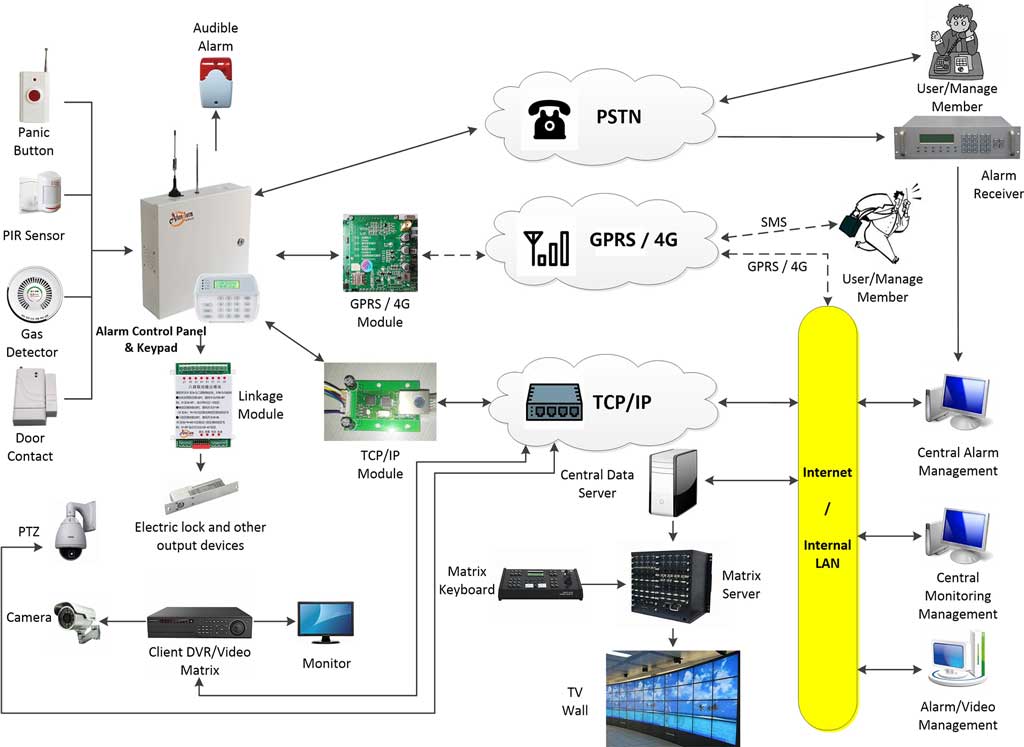
Leading manufacturers increasingly deploy hybrid architectures, where:
- Edge devices perform real-time intrusion decisions
- Cloud platforms handle analytics, reporting, and fleet management
Case studies from large alarm monitoring providers show that this model improves scalability while preserving sub-second response times.
V. Benefits, Challenges, and Practical Solutions
Quantified Benefits of Edge Processing
Edge-enabled burglar alarm systems deliver measurable advantages:
- Sub-second intrusion response
- Improved data privacy (sensitive footage stays local)
- Reduced bandwidth costs
- Higher system uptime during outages
In commercial deployments, edge processing has reduced response times by up to 40%, according to aggregated industry performance reports.
Addressing Common Challenges
Power consumption
- Perform power audits using multimeters on prototypes
- Optimize inference frequency and idle states
Integration complexity
- Start with pilot zones before full rollout
- Standardize sensor interfaces
Scalability concerns
- Use modular designs that allow incremental expansion
These steps allow CTOs to manage risk while transitioning to edge architectures.
Real-World Application Example
In a multi-tenant office building, edge-based intrusion detection reduced false alarms from motion sensors during after-hours HVAC cycles and cut verified alarm response time by over one-third—without increasing operational costs.
VI. Future Trends and Strategic Recommendations
Emerging Technologies
- 5G-enhanced edge connectivity for resilient backhaul
- Quantum-resistant encryption for alarm data protection
- Self-learning edge models that adapt to site-specific patterns
Recommendations for Decision-Makers
For product designers:
- Prioritize modular edge hardware
- Design for future AI upgrades
For CTOs:
- Build ROI models based on reduced false alarms
- Align edge strategy with regulatory and privacy requirements
A Practical Adoption Roadmap
- Assess system performance gaps
- Prototype edge-enabled alarm panels
- Deploy in controlled environments
- Iterate using metrics such as accuracy and response time
VII. Conclusion
Edge computing is redefining how burglar alarm systems detect, verify, and respond to intrusions. Advances in edge hardware and software enable faster decisions, fewer false alarms, stronger privacy protections, and higher system resilience.
For organizations designing or operating intrusion detection systems, the message is clear: edge-based event processing is the foundation of future-proof security architecture. Those who adopt it early will deliver safer, smarter, and more reliable alarm solutions in an increasingly demanding threat landscape.
VIII. References
- IEEE 802.15.4 – Low-Rate Wireless Personal Area Networks for Secure IoT Devices
- IDC FutureScape: Worldwide IoT Predictions
- Gartner Research on Edge Computing in Physical Security
- Electronic Security Association (ESA) Intrusion Detection Performance Studies
- Aggregated and anonymized field benchmarks from professional alarm system deployments