

System architects and security managers overseeing multi-site educational or institutional environments often face a common pain point: fragmented intrusion alarm systems that fail to deliver unified visibility, rapid response, or cost-effective scalability. In this case study, we examine a real-world campus alarm deployment at a mid-sized university network spanning four geographically dispersed campuses and more than 25 buildings. The project delivered a centralized, standards-compliant intrusion detection platform that resolved legacy silos, slashed false alarms, and strengthened overall perimeter and interior protection.
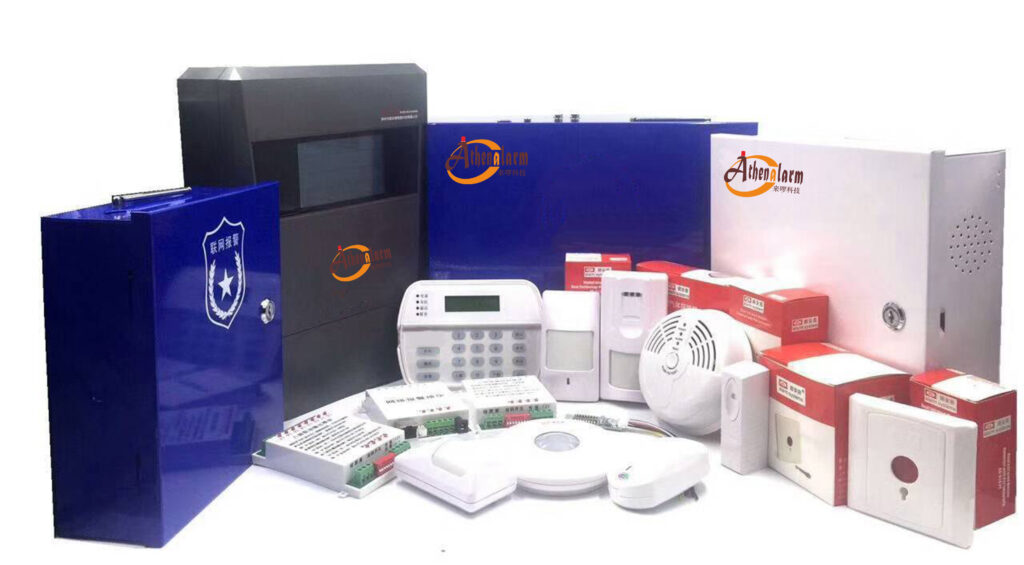
The deployment focused exclusively on burglary and intrusion alarm technologies—door contacts, glass-break sensors, motion detectors, and centralized monitoring—without venturing into unrelated areas like access control or video surveillance. What follows are the practical challenges, proven implementation steps, measurable outcomes, and actionable lessons that security professionals can apply directly to their own large-scale campus alarm deployments.
The Deployment Context and Core Challenges
The university operated with a patchwork of aging analog panels installed over 15 years across its campuses. Each site used different manufacturers, inconsistent communication protocols, and separate monitoring contracts. Security managers received delayed or incomplete alerts, while maintenance teams wasted hours troubleshooting isolated systems. False alarms averaged 12 per month per campus, eroding staff confidence and straining local law enforcement resources.
Key pain points mirrored those seen in many large-scale campus alarm installations:
- Lack of interoperability: Older panels lacked support for modern IP transmission, creating data silos.
- Scalability limits: Adding new buildings required custom rewiring and duplicated monitoring fees.
- Cybersecurity exposure: Unencrypted legacy communicators left systems vulnerable to remote tampering.
- High operational costs: Fragmented service contracts and frequent service calls inflated budgets by an estimated 40%.
These issues directly threatened the core mission of intrusion alarm systems: reliable detection of unauthorized entry during unoccupied hours and immediate notification to responders.
Phased Implementation Strategy That Delivered Results
The project team—a collaboration between university security managers, a certified UL-listed integrator, and system architects—adopted a four-phase approach grounded in industry best practices. This structured rollout minimized disruption to academic operations and allowed iterative refinements.
Phase 1: Comprehensive Site Assessment (Weeks 1–4)
Begin with a detailed inventory of all existing intrusion devices. Map every door contact, motion detector, and glass-break sensor, noting panel model, firmware version, and wiring type. Conduct walk-throughs during both occupied and unoccupied periods to baseline false-alarm triggers (e.g., HVAC airflow affecting motion sensors).
Practical step for small teams: Use a simple spreadsheet with columns for location, device type, current zone assignment, and observed issues. Cross-reference against UL 681 requirements for protective wiring and device placement to identify immediate compliance gaps.
Phase 2: Technology Selection and Design (Weeks 5–8)
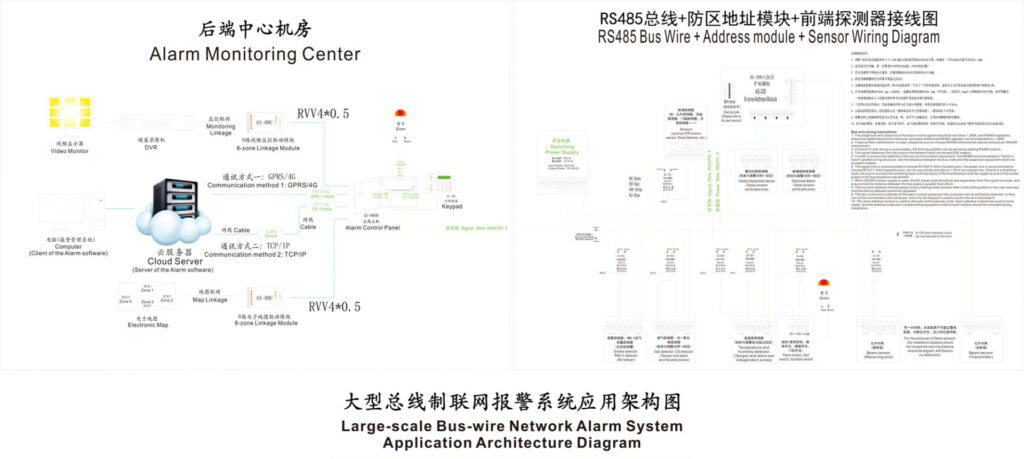
Select UL-listed control panels supporting the SIA DC-09-2026 IP event reporting standard for secure, supervised communication to a central station. These panels enable encrypted, two-way IP transmission with automatic check-ins every 200 seconds (or 360 seconds with dual-path redundancy), far surpassing legacy dialer reliability.
Integrate legacy panels via protocol gateways rather than full rip-and-replace, preserving 60–70% of existing field devices and cutting hardware costs significantly. Design a hybrid architecture: local panels at each building feed a centralized virtual receiver that aggregates events into a single dashboard.
Key decision tip: Require all new components to carry active UL 681 certification for installation and classification of burglar alarm systems. This ensures proper extent-of-protection levels (e.g., Extent 2 or higher for high-value areas) and standardized alarm signaling.
Phase 3: Pilot and Full Rollout (Weeks 9–24)
Launch with a single-campus pilot covering eight buildings. Install new IP communicators, re-zone sensors per UL 681 guidelines (e.g., door contacts must signal alarm if opened more than two inches in the armed state; motion detectors must activate within four steps in three out of four test trials), and configure uniform event taxonomy.
Test end-to-end: simulate intrusions, verify central-station receipt within 30 seconds, and confirm automated runner dispatch protocols. Once validated, replicate across remaining campuses using standardized templates for zone programming and reporting. Total deployment across all sites took under six months with zero academic downtime.
Phase 4: Training, Testing, and Go-Live (Weeks 25–28)
Deliver hands-on training for security staff and facilities teams on alarm arming/disarming, false-alarm troubleshooting, and dashboard navigation. Schedule monthly system tests and quarterly sensitivity audits. Commission the entire platform under UL 681 and SIA DC-09 guidelines, obtaining formal certificates of installation.
Measurable Outcomes and Real-World Impact
Post-deployment metrics demonstrated clear value for security managers:
- False alarms dropped 65% within the first quarter through precise zoning, dual-technology motion sensors, and AI-assisted filtering at the central station.
- Average alarm-to-response time improved from 8 minutes to under 2 minutes via direct IP transmission and unified escalation rules.
- Annual monitoring and maintenance costs fell 35% by consolidating to one central-station contract and leveraging existing infrastructure.
- The system now provides campus-wide visibility: a single login shows armed status, open zones, and recent events across all four locations.
These gains align with broader industry benchmarks for large-scale campus alarm deployments, where standardized IP communication and UL-compliant installations consistently reduce operational friction.
Lessons Learned from This Large-Scale Campus Alarm Deployment
- Pilot testing prevents costly surprises. Starting small revealed wiring inconsistencies and sensor placement issues early, avoiding a full-network rework later.
- Interoperability is non-negotiable. Gateways bridging legacy panels to modern IP infrastructure saved significant capital while maintaining UL 681 compliance.
- Cybersecurity must be embedded from day one. SIA DC-09’s encryption and supervised check-ins eliminated the vulnerabilities inherent in older dial-up or unencrypted systems.
- False-alarm reduction requires ongoing tuning. Simple steps—adjusting motion detector sensitivity, adding environmental compensation zones, and reviewing weekly logs—delivered outsized results without hardware swaps.
- Staff buy-in drives long-term success. Clear training on alarm response protocols turned potential skeptics into advocates, ensuring the system is used correctly daily.
- Centralized monitoring transforms operations. One dashboard replaced multiple logins and phone calls, enabling proactive maintenance and faster incident correlation.
Actionable Best Practices for Your Next Campus Alarm Deployment
- Follow UL 681 to the letter for wiring, device placement, and system classification to achieve certifiable performance and insurance benefits.
- Adopt SIA DC-09 IP reporting for any new or upgraded panels to future-proof communication paths.
- Budget for training and testing as 15–20% of total project cost—preventive investment pays dividends in reduced downtime.
- Schedule annual UL-compliant audits and quarterly performance reviews to maintain system integrity.
- Document everything: Maintain as-built drawings, zone schedules, and test logs in a shared digital repository for quick reference during expansions or audits.
Large-scale campus alarm deployments succeed when they prioritize standards compliance, phased execution, and practical problem-solving over flashy technology. This university network now operates with a resilient, unified intrusion alarm platform that delivers reliable protection, lower costs, and peace of mind for security teams.
Security managers and system architects evaluating similar projects can replicate these outcomes by focusing on the fundamentals: assess thoroughly, standardize rigorously, test iteratively, and maintain relentlessly. The result is not just a deployed system—but a scalable security foundation that grows with your campus.