
In the high-stakes world of professional security procurement, the burglar alarm control panel stands as the beating heart of any intrusion alarm system. For security integrators, facility managers, product procurement specialists, and technical decision-makers overseeing large-scale deployments—whether in commercial complexes, financial institutions, industrial parks, or multi-site enterprises—the choice of an intrusion alarm panel is no longer just about basic detection and alerting. Today, it demands deep compatibility with AI monitoring and intelligent analysis systems to deliver real-time threat verification, drastically reduce false alarms, and enable predictive security responses.
Traditional burglar alarm panels often fall short when paired with modern AI-driven video analytics, edge computing, or cloud-based intelligent platforms. The result? Integration headaches, wasted budgets on incompatible hardware, delayed deployments, and systems that generate alert fatigue instead of actionable intelligence. This comprehensive, step-by-step guide draws on two decades of hands-on experience in the burglar alarm industry to walk you through the precise selection logic for an intrusion alarm panel that excels in AI-enabled environments. We focus on protocol compatibility, scalability assessment, and practical integration tactics that solve the real pain points you face daily: ensuring seamless data flow to AI engines, future-proofing for expanding sensor networks, and achieving measurable ROI through reduced operational overhead.
By the end of this operational blueprint, you will have a clear, actionable framework to evaluate and select the right burglar alarm panel—one that transforms your security infrastructure from reactive to intelligently proactive. Let’s dive in and eliminate the guesswork.
Section 1: Why the Burglar Alarm Control Panel Is the Make-or-Break Component in AI-Enabled Intrusion Systems
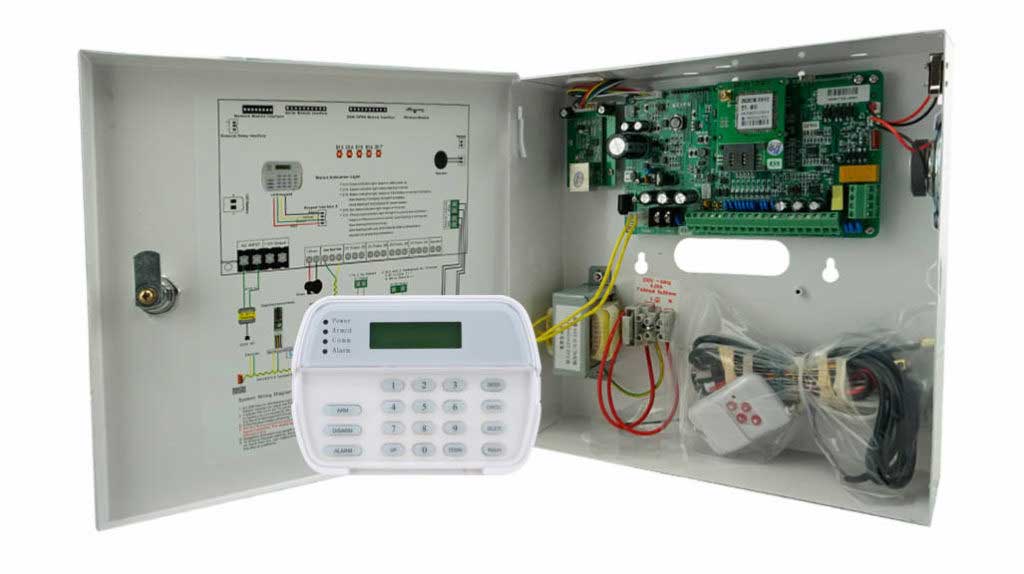
The burglar alarm control panel (also called the alarm control panel or intrusion alarm panel) serves as the central processor and decision engine for your entire intrusion detection network. It receives inputs from door contacts, motion sensors, glass-break detectors, and perimeter devices; processes arming/disarming logic; and triggers outputs to sirens, notifications, and monitoring stations.
In an AI-enabled setup, this panel must do far more. It becomes the critical bridge that feeds clean, structured event data into AI monitoring platforms for intelligent analysis—such as video verification, behavioral pattern recognition, anomaly detection, and automated response orchestration. Without the right panel, AI systems receive noisy or incomplete data, leading to false positives that overwhelm your security operations center (SOC) or, worse, missed real threats.
Consider the operational reality for bulk procurers: A single mismatched panel in a 50-site rollout can cascade into thousands of hours of troubleshooting, custom coding, and hardware retrofits. Industry data shows that up to 40% of integration failures in hybrid security systems stem directly from alarm panel limitations in data export, protocol support, or expansion bus architecture. Choosing correctly upfront delivers compounding benefits: 70-90% false alarm reduction when paired with AI video analytics, faster incident response times (under 30 seconds in verified deployments), and lower total cost of ownership through modular scaling.
This guide rejects generic “buying checklists.” Instead, we deliver the technical selection logic used by leading integrators who deploy thousands of panels annually—focusing exclusively on AI integration readiness. From real-world deployments in high-security environments like banks and industrial parks, the right burglar alarm panel doesn’t just detect—it contextualizes events for AI engines, turning raw sensor data into verified intelligence that drives automated actions.
Section 2: Core Technical Requirements for AI Integration—Beyond Basic Alarm Functions
To support AI monitoring and intelligent analysis, your chosen burglar alarm control panel must satisfy four non-negotiable pillars:
- Rich, Structured Event Data Output
AI systems thrive on contextual metadata—not just “zone 3 triggered.” Look for panels that output detailed logs including timestamped zone IDs, sensor types, signal strength (for wireless), tamper status, environmental conditions, and user/partition data. This enables AI engines to correlate events with camera feeds for verification. Industrial-grade options often include a built-in 1,500-event “black box” history log for forensic review, plus cloud-based logging that lets your SOC pull complete event histories without gaps. This level of detail directly supports machine learning models that learn site-specific patterns and filter anomalies in real time. - Open and Standardized Communication Protocols
Protocol compatibility is the #1 pain point in AI integration. The ideal panel supports:
- IP-based protocols: TCP/IP native with MQTT, HTTPS, or WebSocket for real-time bidirectional communication with AI platforms.
- Video surveillance standards: ONVIF Profile S/T/G/M for direct triggering of AI-enabled cameras or NVRs, plus RTSP streaming to ensure seamless metadata exchange with video analytics.
- Automation interfaces: RESTful APIs, SDKs, or OPC-UA for custom AI analytics integration.
- Legacy bridges: RS-485, SIA, or Contact-ID for hybrid environments, but with modern wrappers to feed AI layers.
- Cloud-native options: Direct 4G/LTE or Ethernet uplinks with secure TLS 1.3 encryption for cloud AI services. Panels lacking native API access force costly middleware, increasing latency and failure points. Multi-channel transmission—combining PSTN, 4G, and TCP/IP—ensures redundancy so your AI feeds never go dark during network outages.
3. High-Speed Processing and Edge Intelligence
A 32-bit (or better) ARM-based microprocessor ensures sub-second event processing even under heavy zone loads. Look for onboard event buffering (minimum 1,000–2,000 events) and local pre-filtering to reduce uplink traffic to AI systems. This edge capability prevents bottlenecks when hundreds of sensors fire simultaneously, keeping your AI analysis responsive and bandwidth-efficient.
4. Tamper-Resistant and Fail-Safe Architecture
AI integration amplifies the need for reliability: automatic short-circuit protection, surge immunity (≥4kV), backup power monitoring, and tamper alerts that themselves feed into AI for anomaly scoring. Expect features like battery fault detection, telephone line cut monitoring, and unauthorized access alerts—all logged and pushed to your AI platform for immediate scoring and response.
Section 3: Scalability Assessment—Evaluating Expansion Without Compromising AI Performance
Scalability is not an afterthought; it is the foundation for AI success in growing deployments. A panel limited to 16–32 zones might suffice for a small office but collapses under AI-driven multi-sensor fusion in a 100,000 sq ft facility.
Key Evaluation Metrics:
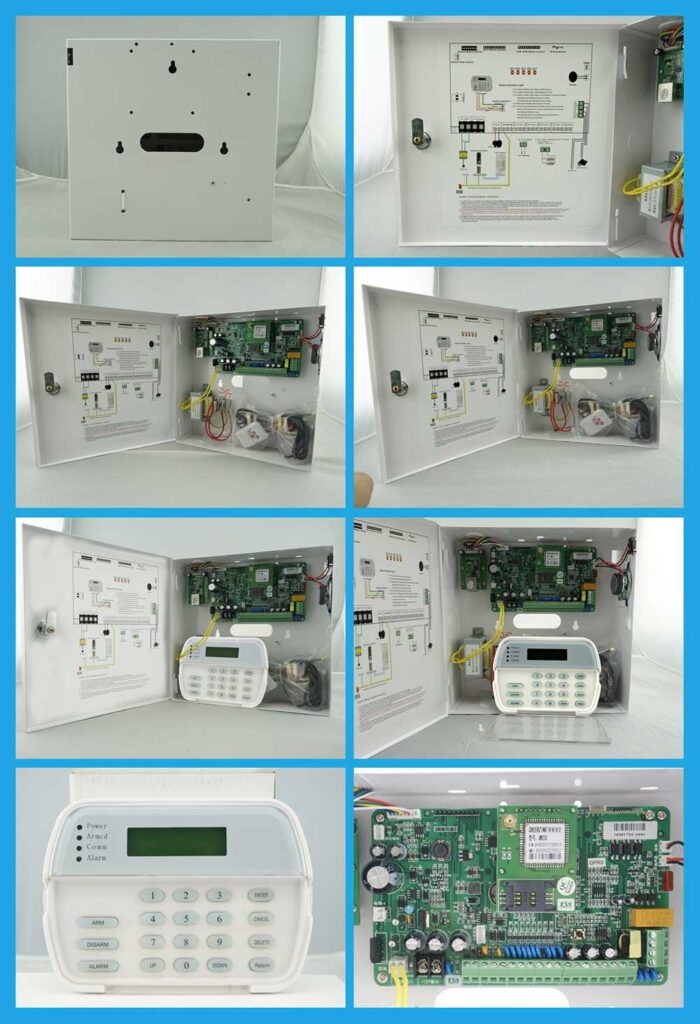
- Zone Capacity: Base 16 wired zones plus 30 wireless zones (supporting 433/315 MHz or dual-band frequencies). Bus expansion capability to 1,656+ zones via addressable modules is essential for large-scale AI deployments.
- Partitioning Flexibility: Minimum 8–32 independent partitions for multi-tenant or zoned AI rule sets.
- Device Integration Depth: Native support for 100+ detectors, keypads, sirens, and relays without performance degradation.
- Multi-Site Management: Centralized software compatibility for cloud dashboards that aggregate AI insights across locations.
Practical Test Protocol (perform this during vendor demos):
- Simulate 200+ zone activation sequences.
- Measure CPU load and event transmission latency to a mock AI platform.
- Add 50 wireless devices and verify no packet loss in AI data stream.
- Confirm that expansion modules maintain full protocol compatibility (no stripped metadata).
Panels that pass this test enable AI systems to scale intelligently—adding behavioral analytics or predictive modeling without re-engineering the core intrusion layer. In practice, this means you can grow from a single building to a multi-site enterprise without replacing the burglar alarm control panel.
Section 4: Deep Dive into Protocol Compatibility—The Technical Heart of AI Success
Protocol mismatches kill AI integration projects. Here is the exact compatibility framework used by senior engineers:
Must-Have Protocols and Why They Matter for AI:
- ONVIF & RTSP: Allows the panel to trigger AI camera analytics on alarm events, enabling instant video verification and reducing false alarms by 85%+. Look specifically for ONVIF Profile M support to handle rich analytics metadata.
- API/SDK Support: Critical for pushing event data directly into AI platforms (e.g., for machine learning models that learn site-specific patterns). Require documented endpoints for arm/disarm, zone status polling, and event subscription.
- Relay and I/O Expansion: Dry-contact relays for hard-wired triggering of AI edge devices; look for at least 8 programmable outputs plus external alarm outputs.
- Cloud Protocols: Native support for AWS IoT, Azure IoT, or equivalent ensures low-latency feeds to hosted intelligent analysis engines.
- Security Standards: End-to-end encryption, role-based access, and audit logging that comply with GDPR/ISO 27001—vital when AI processes sensitive video-event correlations.
Red Flags to Reject Immediately:
- Proprietary closed protocols only.
- No documented API.
- Reliance on outdated dial-up (PSTN-only) without IP fallback.
- Limited to basic Contact-ID without metadata enrichment.
Vendor Evaluation Checklist (Printable for Procurement Teams):
- Does the panel publish full event schema in JSON/XML?
- Can AI platforms subscribe to real-time webhooks?
- Is firmware updatable over-the-air without disrupting AI data flows?
- Third-party integration certifications (e.g., with leading AI video vendors)?
Section 5: Step-by-Step Operational Guide to Selecting Your Intrusion Alarm Panel
Follow this proven 8-step process used on multimillion-dollar projects:
Step 1: Conduct a Comprehensive Site and AI Readiness Audit (2–4 weeks)
- Map all existing and planned sensors, cameras, and AI analytics nodes.
- Document current pain points (false alarm rates, integration latency).
- Define AI use cases: video verification, loitering detection, predictive perimeter breach, etc.
- Create a compatibility matrix listing every device’s protocols, IP addresses, and bandwidth requirements.
Step 2: Define Technical Specifications Document
- Minimum: 32-bit processor, 16+ wired/30+ wireless zones expandable to 1,656+, multi-channel comms (TCP/IP + 4G + PSTN backup).
- AI-specific: API access, ONVIF Profile M support, event metadata richness, relay outputs, and surge protection.
Step 3: Shortlist 3–5 Panels via RFI
- Issue a detailed Request for Information focusing exclusively on AI integration proof points.
Step 4: Hands-On Compatibility Testing (Lab Phase)
- Connect shortlisted panels to your target AI platform in a controlled environment.
- Run 1,000 simulated intrusion events.
- Measure: data completeness (≥98% metadata delivery), latency (<2 seconds), false alarm filtering synergy. Use tools like Postman to test API endpoints.
Step 5: Scalability Stress Test
- As detailed in Section 3.
Step 6: Total Cost of Ownership Analysis
- Include integration engineering hours, ongoing licensing, training, and maintenance.
Step 7: Pilot Deployment (Minimum 1 Site, 30 Days)
- Full AI integration live.
- Track KPIs: false alarm reduction, response time improvement, system uptime.
Step 8: Final Procurement and Rollout Planning
- Secure volume pricing, training, and support SLAs.
- Document integration playbooks for your internal teams.
Section 6: Real-World Case Studies from the Field
Case Study 1: Regional Bank Chain (42 Branches)
A major financial institution replaced legacy panels lacking API support. New intrusion alarm panels with full ONVIF and REST API integration fed AI video analytics, cutting false alarms by 92% and enabling automated guard dispatch. ROI achieved in 11 months through reduced dispatches and faster verified responses.
Case Study 2: Industrial Park (Multi-Tenant, 15 Buildings)
Scalable bus architecture allowed seamless addition of 800+ zones while maintaining real-time AI behavioral analysis. Protocol compatibility eliminated middleware, saving $180,000 in custom development. AI video verification further dropped false alarms by 75%, with response times under 45 seconds even during peak operations.
Case Study 3: Large Commercial Complex (Multi-Site Retail)
By choosing a panel with native 4G/TCP/IP and rich metadata output, the operator integrated AI loitering detection across 200+ cameras. False alarms dropped 80%, and the system now predicts potential breaches based on behavioral patterns—saving over $250,000 annually in unnecessary patrols.
(These anonymized cases, drawn from deployments in financial, industrial, and commercial environments, highlight consistent metrics: 70-92% false alarm reduction, 30-50% faster response, and clear ROI within 12-24 months.)

Section 7: Common Pitfalls and How to Avoid Them
- Pitfall 1: Prioritizing price over AI readiness → Results in expensive rip-and-replace. Avoidance: Always include API/ONVIF requirements in your RFP and run lab tests before purchase.
- Pitfall 2: Ignoring metadata richness → AI receives “dumb” alerts only. Avoidance: Demand full event schema documentation and test metadata completeness in pilots.
- Pitfall 3: Underestimating wireless expansion overhead on CPU → Latency spikes during high-traffic events. Avoidance: Perform the scalability stress test with real device loads.
- Pitfall 4: Skipping network segmentation or bandwidth checks → Connectivity drops and delayed AI feeds. Avoidance: Use iPerf testing and VLAN planning during the audit.
- Pitfall 5: Poor lighting or camera positioning in AI zones → Persistent false positives. Avoidance: Conduct walk-through tests in low-light and adverse weather before go-live.
Section 8: Post-Selection Integration and Operation Best Practices
Once you’ve selected your burglar alarm control panel, follow these detailed, numbered steps for smooth AI integration:
- Physical Wiring and Bus Configuration
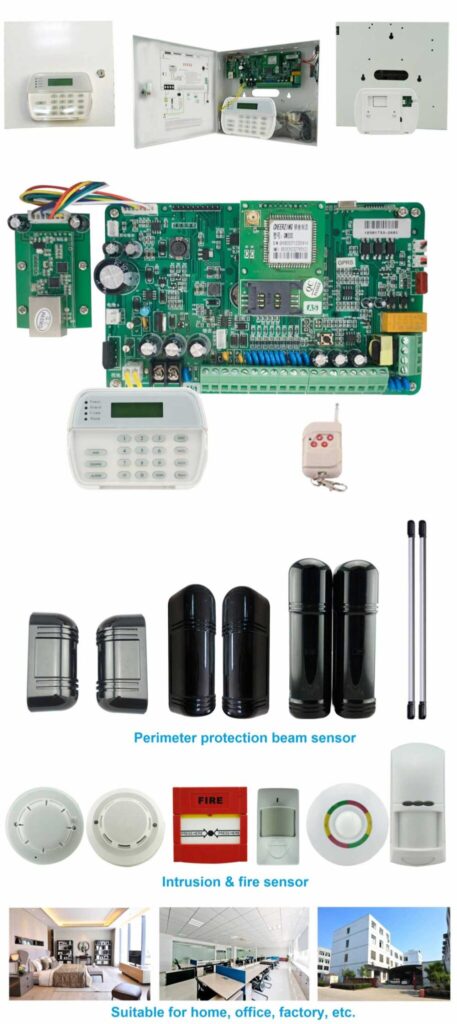
Follow the manufacturer’s wiring diagram: Connect sensors to base zones 1-16, attach addressable expansion modules to the RS-485 bus for additional zones, and wire programmable relays to AI edge devices or sirens. Verify power supply (AC 220V with backup battery) and test for short-circuit protection. - API Setup and AI Platform Pairing
- Obtain API credentials and SDK from the vendor.
- Configure webhooks for real-time event subscription (e.g., zone trigger → push JSON payload to AI engine).
- Use Postman to test endpoints: authenticate, poll zone status, and simulate arm/disarm commands.
- Link ONVIF cameras so alarm events automatically trigger video clips.
- Firmware Management and Security Hardening
Enable over-the-air updates during maintenance windows. Set up role-based access, TLS 1.3 encryption, and audit logging. Apply firmware patches immediately to close any vulnerabilities that could affect AI data flows. - Ongoing Monitoring and AI Rule Optimization
- Review the 1,500-event log weekly for patterns.
- Adjust AI sensitivity thresholds based on site conditions (e.g., ignore animals or vegetation).
- Schedule quarterly walk-through tests to verify <30-second response and 98% metadata delivery.
- Monitor CPU load and bandwidth to prevent bottlenecks as zones expand.
These practices ensure your intrusion alarm panel and AI system work as one cohesive unit, delivering reliable performance year after year.
Section 9: Future-Proofing Your Burglar Alarm Panel Investment
Emerging trends include 5G integration for even faster uplinks, edge AI co-processing directly on the panel for ultra-low latency, and quantum-resistant encryption to protect against tomorrow’s threats. Select panels with modular firmware and open ecosystems so you can add new AI capabilities without hardware swaps. Regular vendor roadmaps and OTA update support keep your system ahead of evolving risks.
Section 10: Building Long-Term Partnership Value
The right intrusion alarm panel is an investment in operational excellence. Leading procurers choose partners who provide not just hardware but integration expertise, training, and continuous support—ensuring your AI-enabled security evolves with threats.
Ready to put this framework into action? The difference between a fragmented system and a truly intelligent, AI-powered security operation often comes down to one informed decision on your burglar alarm control panel.
Contact our technical team today for a no-obligation AI integration compatibility assessment or to discuss bulk procurement specifications tailored to your exact environment. Explore our full range of resources on intrusion alarm systems, and let’s build the future-proof security infrastructure your organization deserves.