
Introduction: Why ATM Alarm Systems Must Be Designed Differently
Automated Teller Machines (ATMs) remain one of the most frequently targeted assets in the banking industry. From sophisticated organized crime to opportunistic vandalism, attackers continuously test weaknesses in ATM infrastructure. While surveillance cameras and physical vaults provide some level of deterrence, a professionally designed ATM Alarm System is still the most immediate and reliable line of defense.
However, many alarm deployments fail for one simple reason: they rely on a single protection layer. When criminals disable one sensor, jam one communication channel, or compromise one device, the entire system becomes ineffective.
Banks that truly protect their ATM networks take a different approach.
They implement multi-layer ATM alarm architectures — security designs where multiple independent detection, verification, and response mechanisms operate simultaneously. Even if one layer is compromised, other layers continue to detect and report the intrusion.
This article provides a practical, field-tested guide for designing a multi-layer ATM alarm system that financial institutions trust. It is written specifically for:
- Security integrators
- Alarm system distributors
- Bank security managers
- Security procurement teams
- ATM infrastructure planners
Rather than focusing on theory, this guide explains how to actually design, deploy, and maintain ATM alarm systems that remain operational during real attacks. We’ll also cover compliance with key standards like PCI DSS for ATM security, ensuring your system meets regulatory requirements while addressing real-world vulnerabilities.
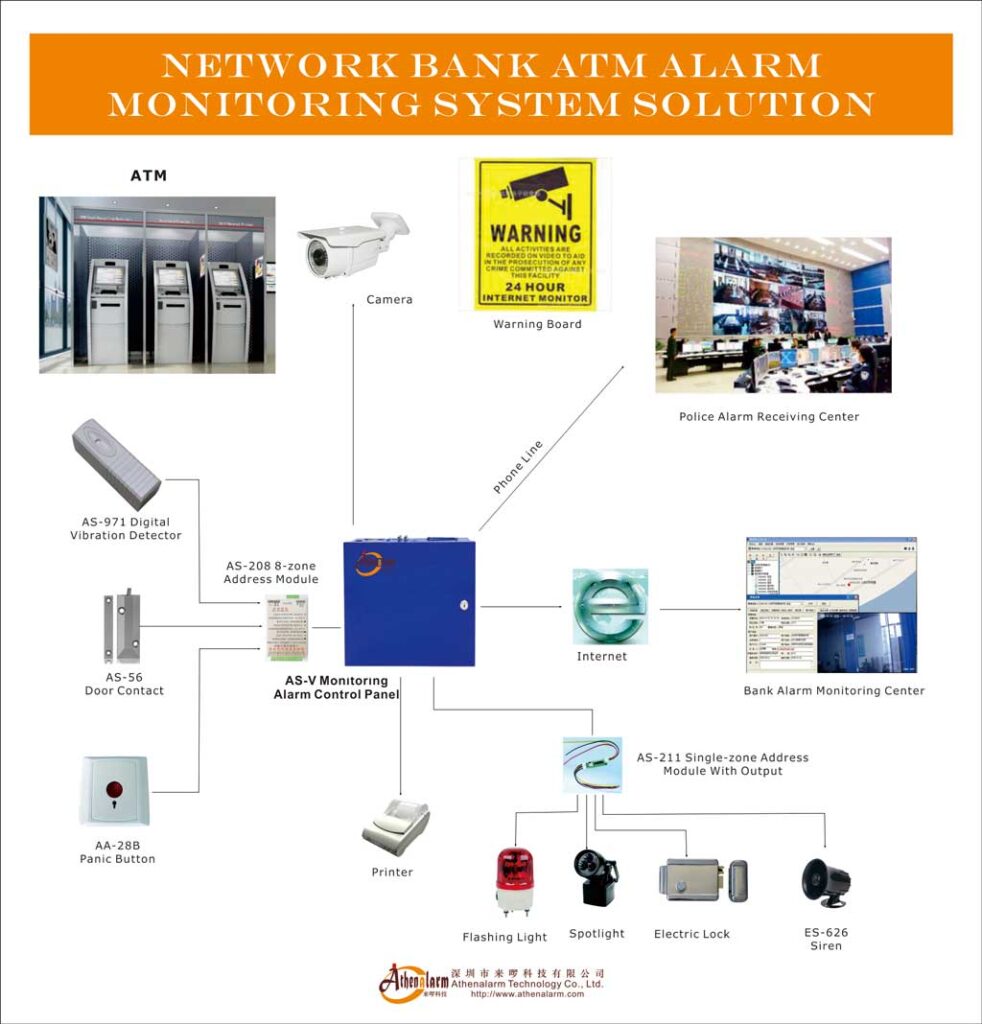
Understanding Modern ATM Threats
Before designing an effective ATM alarm system, it is essential to understand how ATMs are attacked today. Alarm architecture must be aligned with real attack methods, including emerging threats like malware-driven jackpotting and explosive breaches that have surged in recent years.
1. Physical Break-In Attacks
Traditional ATM burglaries still occur frequently. Criminals attempt to open the ATM cabinet using:
- Mechanical drilling
- Cutting tools
- Hydraulic spreaders
- Explosives
- Thermal lances
Attackers typically disable visible sensors first.
Common vulnerabilities include:
- Exposed door contacts
- Easily cut cables
- External sirens that can be destroyed quickly
A properly designed alarm system must detect these actions before the vault is opened. For instance, integrating seismic sensors calibrated to recognize tool-specific vibration patterns can alert operators instantly, allowing time for response before significant damage occurs.
2. ATM Ram-Raid Attacks
In many regions, criminals use vehicles to smash ATMs and remove them entirely.
These attacks often happen within 60 seconds or less.
A conventional alarm system may trigger after the ATM is already gone.
Effective alarm designs therefore require:
- Shock detection
- Tilt sensors
- Immediate silent alarm transmission
To enhance this, consider GPS tracking modules that provide real-time location data if the ATM is moved, enabling quick recovery and law enforcement coordination.
3. ATM Jackpotting
ATM jackpotting is a cyber-physical attack where criminals force an ATM to dispense cash. This threat has seen a dramatic rise, with over 700 incidents reported in 2025 alone, leading to more than $20 million in losses across the U.S.
This often involves:
- Opening the ATM cabinet
- Connecting external devices
- Installing malware like the Ploutus family, which exploits the ATM’s operating system to bypass authorization and dispense cash rapidly
The alarm system must detect:
- Cabinet opening
- Internal movement
- Unauthorized technician access
Key to countering this is integrating hardware encryption, such as AES standards, and tamper-evident seals on internal components to trigger alarms upon unauthorized access.
4. Explosive and Gas Attacks
A growing trend involves injecting combustible gases into ATMs to cause explosions, blasting open the vault. These attacks can unfold in minutes and cause extensive damage.
Detection requires:
- Gas sensors for early warning of volatile substances
- Blast-resistant reinforcements in the alarm design to ensure sensors survive initial impacts
5. Insider and Maintenance Risks
Not all threats come from criminals.
Some incidents occur during:
- Unauthorized technician access
- Maintenance abuse
- Service provider errors
Professional alarm systems must support:
- Access logging
- Maintenance mode authorization
- Remote supervision
To mitigate, implement role-based access control (RBAC) with biometric verification, ensuring only authorized personnel can disarm the system temporarily.
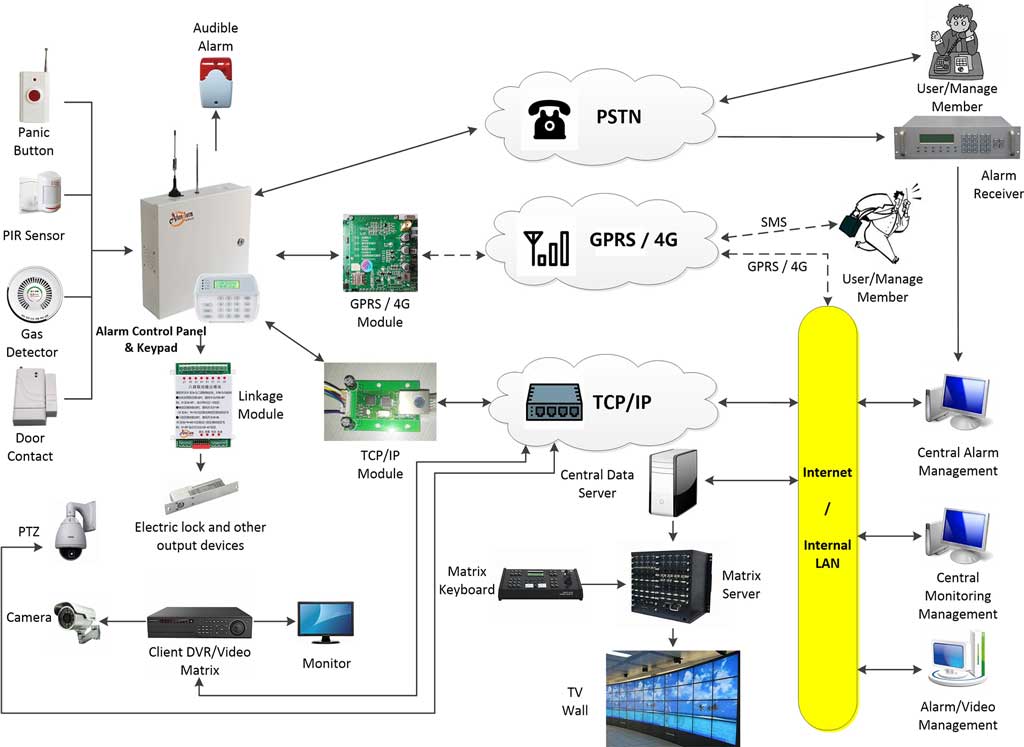
The Concept of Multi-Layer ATM Alarm Protection
A multi-layer ATM alarm system means multiple detection technologies working together, each protecting against different attack scenarios.
A well-designed architecture usually includes:
- Perimeter detection layer
- Cabinet intrusion layer
- Vault protection layer
- Environmental and vibration monitoring
- Communication redundancy
- Central monitoring verification
- Cyber-physical integration layer (new addition to address jackpotting and malware threats)
Each layer must function independently but cooperatively.
If criminals disable one sensor, another still detects the attack. This approach aligns with PCI ATM Security Guidelines, emphasizing hardware and software protections that fail securely.
Layer 1: ATM Perimeter Protection
The first layer of security protects the ATM exterior and installation area.
Key Detection Technologies
Shock Sensors
Shock sensors detect:
- Drilling attempts
- Hammer strikes
- Mechanical force
They are installed on:
- ATM frame
- Surrounding mounting structure
Professional models allow adjustable sensitivity to avoid false alarms from environmental vibrations. Calibration steps: 1) Mount the sensor securely to the metal frame; 2) Use the manufacturer’s software to set baseline vibration levels based on site-specific testing; 3) Test with simulated low-impact events to fine-tune thresholds.
Seismic Sensors
Seismic detectors are designed for vault protection.
They can detect:
- Cutting tools
- Thermal attacks
- Explosives
- Mechanical drilling
These sensors are highly sensitive and are commonly used in:
- Bank vaults
- Safes
- ATM cabinets
To install: 1) Affix directly to the ATM’s base; 2) Connect to the alarm panel via supervised wiring; 3) Program pattern recognition for common tools, reducing false positives.
Tilt Sensors
Tilt sensors detect when an ATM is being:
- Lifted
- Tilted
- Removed
This is critical for ram-raid protection.
Once the ATM angle changes beyond a configured threshold, the system immediately sends an alarm signal. Setup: 1) Position the sensor inside the ATM base; 2) Set a 5-10 degree threshold via the control interface; 3) Integrate with GPS for location alerts.
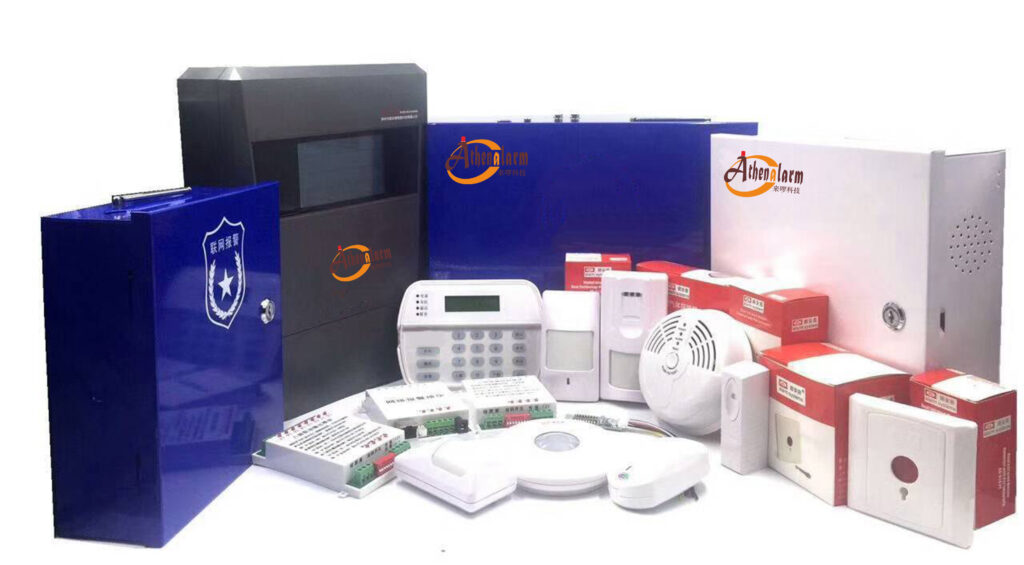
Layer 2: ATM Cabinet Intrusion Detection
The ATM cabinet itself must be protected with tamper detection sensors.
Door Contact Sensors
Magnetic contacts detect cabinet opening.
However, professional ATM alarm designs must include:
- Hidden contacts
- Anti-bypass protection
Criminals sometimes place magnets over sensors to prevent alarms.
Advanced systems use balanced magnetic circuits to prevent this. Installation tip: Conceal contacts within the cabinet frame and test for magnet interference by attempting bypass during commissioning.
Internal Motion Detectors
Small motion sensors installed inside the ATM detect movement within the cabinet.
These sensors identify:
- Unauthorized technician access
- Internal tampering
- Tool movement
Easy error: Poor placement can cause false alarms from normal vibrations—mount on stable internal brackets and calibrate for ATM-specific motion.
Tamper Switches
Tamper switches detect when someone attempts to remove alarm components.
These switches should be installed on:
- Alarm control panels
- Communication modules
- Sirens
Layer 3: ATM Vault Protection
The vault contains the cash cassette and must receive the highest level of protection.
Seismic Vault Sensors
Vault sensors detect:
- Drilling
- Cutting
- Grinding
- Explosive attacks
These sensors analyze vibration patterns to differentiate between:
- Normal environmental vibration
- Real attacks
Professional sensors can identify specific tool signatures. Detailed setup: 1) Drill and mount on vault walls; 2) Use AI-enhanced models for pattern learning; 3) Regularly update firmware for new threat signatures.
Vault Door Monitoring
The vault door must be monitored with:
- High-security magnetic contacts
- Mechanical position sensors
The system should distinguish between:
- Authorized opening
- Forced entry
Layer 4: Environmental Threat Monitoring
Environmental sensors detect threats that conventional intrusion sensors cannot detect.
Temperature Sensors
Temperature sensors detect:
- Thermal attacks
- Fires
- Explosive heat signatures
This is important for ATMs attacked using gas explosions. Threshold setting: Program alerts for rises above 50°C, with integration to auto-shutdown ATM operations.
Gas Detection Sensors
Gas sensors identify combustible gases used in ATM explosion attacks.
If gas levels rise beyond a threshold, the alarm system triggers immediately. Best practice: Pair with ventilation systems or auto-lock mechanisms to contain threats.
Layer 5: Communication Redundancy
One of the biggest failures in alarm systems occurs when communication channels are disrupted.
Criminals frequently cut communication lines.
Therefore ATM alarm systems must use multiple communication paths.
Primary Communication
Typical options include:
- IP network
- Ethernet
- Fiber connection
Backup Communication
Backup channels may include:
- GSM / 4G / LTE
- NB-IoT
- Satellite links
When the primary channel fails, the system automatically switches to backup. Failover testing: Simulate cuts quarterly to ensure seamless handover within 5 seconds.

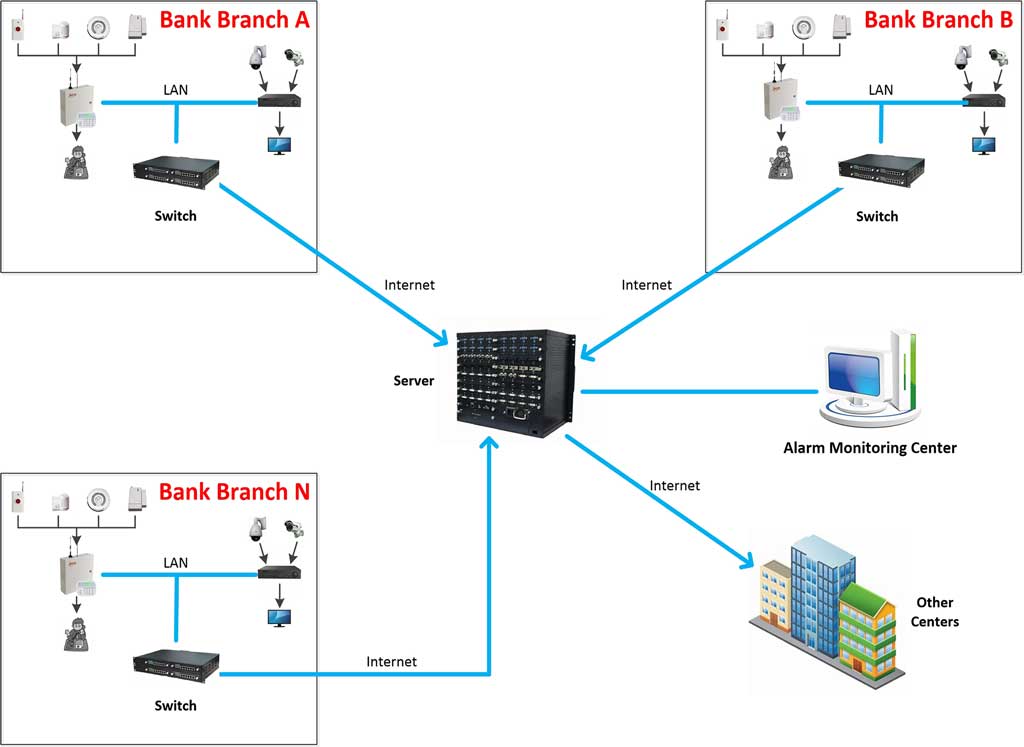
Layer 6: Central Monitoring Integration
A professional ATM alarm system must connect to a 24/7 monitoring center.
Central monitoring operators verify alarms and initiate response.
Key monitoring features include:
- Real-time alarm verification
- Multi-site supervision
- Remote diagnostics
- Event logging
To avoid false alarms: Implement video-linked verification where alarms trigger live feeds for operator review.
Layer 7: Cyber-Physical Integration
To combat jackpotting and malware, integrate:
- Hard drive encryption and malware detection software
- USB port locks and whitelist rules for connected devices
- AI-based anomaly detection for unusual dispensing patterns
This layer ensures physical alarms trigger on digital compromises, such as unauthorized USB insertions.
Step-by-Step: Designing a Professional ATM Alarm System
Below is a practical implementation process used by many banks and security integrators.
Step 1: Conduct a Security Risk Assessment
Start with a detailed ATM risk analysis.
Evaluate:
- ATM location risk level
- Crime statistics
- Installation environment
- Lighting conditions
- Existing security infrastructure
This determines the required alarm protection level. Practical steps: 1) Review local police reports for ATM crimes; 2) Site survey with vulnerability mapping; 3) Score risks on a 1-10 scale to prioritize layers.
Step 2: Select the Alarm Control Platform
Choose a professional alarm panel capable of:
- Multiple sensor zones
- Remote management
- Encrypted communication
- Battery backup
The control panel must support industrial reliability standards, such as UL certification. Selection criteria: Ensure compatibility with AES encryption and at least 6 supervised zones for sensors.
Step 3: Define Detection Layers
Map out sensor deployment for each protection layer:
Perimeter layer:
- Shock sensors
- Tilt sensors
Cabinet layer:
- Door contacts
- Motion detectors
Vault layer:
- Seismic sensors
Environmental layer:
- Gas sensors
- Temperature sensors
Cyber-physical layer:
- Malware scanners
- Port locks
Document placements in a site diagram for installation reference.
Step 4: Design Tamper-Resistant Wiring
Alarm wiring must be protected against sabotage.
Best practices include:
- Concealed cabling
- Armored cables
- Supervised circuits
- Anti-cut detection
Steps: 1) Route wires internally through ATM conduits; 2) Use loop supervision to detect cuts; 3) Test by simulating wire damage.
Step 5: Implement Redundant Communication
Install at least two communication paths.
Example configuration:
Primary: IP network
Backup: LTE cellular
The alarm panel automatically switches when communication fails. Configuration: 1) Program primary and backup in panel settings; 2) Set heartbeat signals every 30 seconds.

Step 6: Integrate Alarm Verification
False alarms can overwhelm monitoring centers.
Use verification methods such as:
- Video verification
- Audio verification
- Sensor cross-validation
Implementation: Link sensors to IP cameras; require dual-sensor confirmation before alerting authorities.
Step 7: Configure Alarm Response Procedures
Define clear response protocols:
- Police notification
- Security patrol dispatch
- Bank security escalation
Steps: 1) Draft SOPs with timelines (e.g., notify police within 1 minute); 2) Train staff via drills; 3) Integrate with local law enforcement for priority response.
Step 8: Perform System Testing
Testing must include:
- Sensor activation tests
- Communication failure simulation
- Power loss testing
- Tamper detection verification
Conduct full end-to-end tests biannually, documenting results for compliance audits.
Step 9: Evaluate Cost-Benefit and ROI
Assess implementation costs against potential losses from attacks. For example, a multi-layer system might cost $5,000 per ATM but prevent $50,000+ in theft. Include insurance premium reductions in calculations.
Installation Best Practices for ATM Alarm Systems
Even the best alarm hardware fails if installed poorly.
Critical installation practices include:
- Mounting sensors directly to ATM metal structure
- Isolating sensors from external vibration sources
- Securing all cables internally
- Hiding alarm control panels from external access
Professional installers also ensure that all alarm components are protected from visible tampering. Common pitfall: Overlooking environmental factors like traffic vibrations—always conduct on-site calibration post-installation.
Additionally, comply with PCI guidelines by ensuring ATMs fail securely, with core mechanisms validating applications and triggering alarms on failures.
Maintenance and Lifecycle Management
ATM alarm systems require ongoing maintenance.
Banks should implement:
- Quarterly sensor testing
- Communication channel verification
- Battery replacement schedules
- Firmware updates
Ignoring maintenance is one of the most common causes of alarm failure. To advance this, adopt predictive maintenance using AI to monitor sensor health and predict failures, reducing downtime.
Include annual compliance audits against standards like PCI DSS to ensure ongoing effectiveness.
Common ATM Alarm Design Mistakes
Many ATM alarm deployments fail due to poor system design.
Mistake 1: Single Sensor Protection
Using only door contacts leaves the ATM vulnerable.
Mistake 2: No Communication Backup
If criminals cut network cables, the alarm cannot report.
Mistake 3: Visible Alarm Components
Visible devices are easily destroyed.
Mistake 4: Poor Sensor Calibration
Incorrect sensitivity settings cause false alarms or missed detection.
Mistake 5: Ignoring Cyber Threats
Failing to integrate malware detection allows jackpotting without physical alarms triggering—always layer digital safeguards.
Mistake 6: Skipping Compliance Checks
Non-adherence to PCI or UL standards can void insurance and expose legal risks.
Future Trends in ATM Alarm Systems
ATM security continues to evolve.
Key developments include:
- AI-based alarm verification
- Predictive attack detection
- Integrated cyber-physical monitoring
- Remote alarm diagnostics
Banks increasingly demand smart alarm systems capable of adapting to emerging threats, such as IoT-enabled sensors for real-time anomaly detection.
Final Thoughts: Building ATM Alarm Systems Banks Truly Trust
Designing a reliable ATM Alarm System requires far more than installing a few sensors.
Banks trust alarm systems that provide:
- Multi-layer detection
- Tamper resistance
- Communication redundancy
- Professional monitoring integration
Security integrators and alarm product distributors who understand these principles can build solutions that genuinely protect ATM infrastructure.
A properly engineered ATM alarm architecture not only reduces theft risk but also strengthens long-term relationships between security providers and financial institutions.
For banks and ATM operators, investing in a well-designed multi-layer ATM alarm system is not simply a security upgrade — it is a critical component of financial risk management. By following this guide, you can create systems that stand up to real-world tests, backed by proven standards and technologies.