
1. Introduction
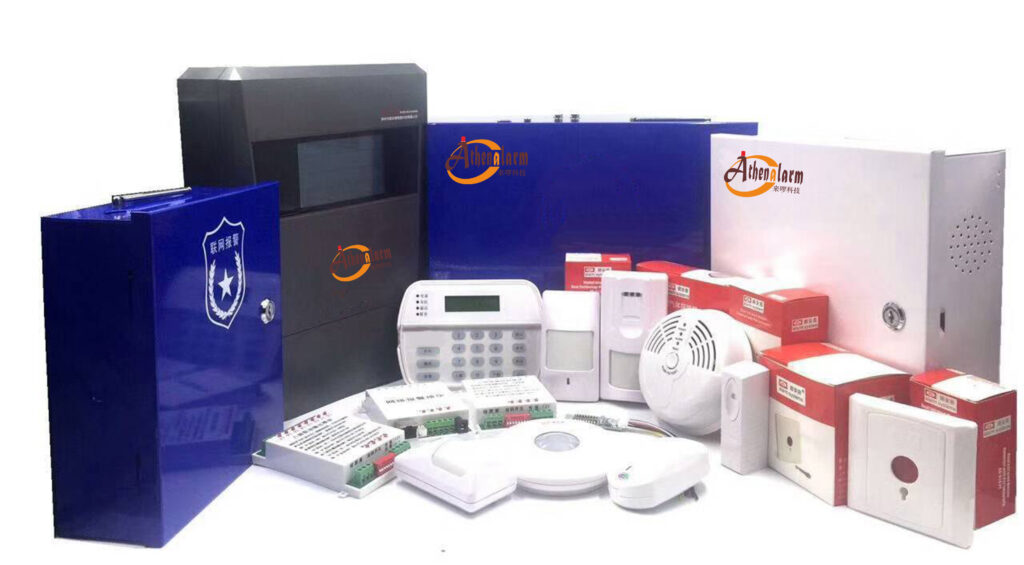
Modern commercial and industrial facilities face an increasing risk of intrusion, with many incidents linked to inadequate or poorly installed security systems. A properly installed burglar alarm control panel is the core of any intrusion detection system, ensuring reliable signal processing, stable communication, and compliant operation. For professional installers, product managers, and procurement decision-makers, understanding the correct installation workflow is essential for achieving long-term system performance and regulatory compliance.
This guide provides a comprehensive, technically grounded walkthrough of the burglar alarm control panel installation process—from preparation and wiring to programming and system testing. It focuses on practical techniques used by security system professionals, addresses common challenges, and incorporates industry standards and best practices. The goal is to help readers master burglar alarm control panel installation procedures and apply them in commercial deployments, retrofit projects, and large-scale procurement environments.
2. Understanding Burglar Alarm Control Panels: Types and Key Features
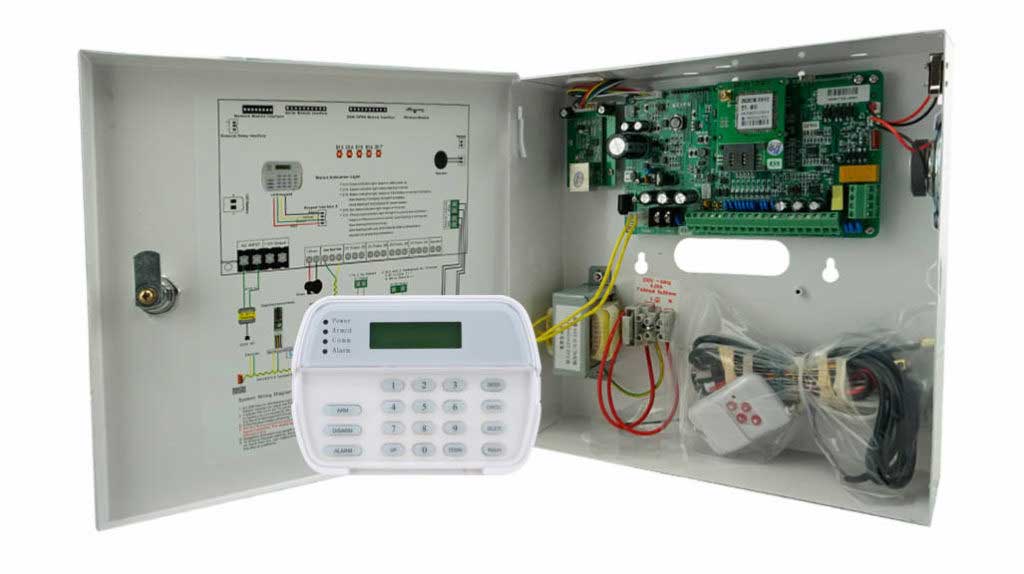
A burglar alarm control panel is the central processing unit that manages sensors, communication modules, keypads, sirens, and alarm reporting logic. Choosing the right panel is critical for system scalability and long-term reliability.
Types of Control Panels
- Wired Burglar Alarm Control Panels
Preferred for commercial environments requiring high stability, strong anti-interference capability, and complex zoning. Ideal for projects that follow UL 681 and EN 50131 installation standards. - Wireless Burglar Alarm Control Panels
Suitable for sites where wiring is difficult or disruptive. Modern models use encrypted RF protocols to enhance security. - Hybrid Control Panels
Combine wired and wireless technologies, offering flexibility for phased expansions or mixed infrastructure.
Key Features to Evaluate
- Zone capacity and expandability
- Power supply and battery backup configuration
- Compatibility with detectors, keypads, and sirens
- Communication options (PSTN, IP, LTE, dual-path reporting)
- Support for smart integrations such as cloud monitoring or building automation
For product managers and bulk procurement teams, scalability, lifecycle cost, multi-site standardization, and compliance with ANSI/SIA CP-01 (false alarm reduction) should be considered when selecting a panel.
3. Preparation Before Installation: Tools, Site Assessment, and Safety Measures
Thorough preparation reduces installation errors and ensures compliance with electrical and safety regulations.
Essential Tools and Materials
- Multimeter
- Cable stripper and crimping tools
- Screwdrivers and mounting hardware
- Drill and anchors
- Backup battery (typically 12V sealed lead-acid)
- Cat5/22-4 cable for zones and peripherals
- Cable labels for zone identification
Site Assessment
Before installing a burglar alarm control panel, conduct a detailed site survey:
- Identify the central location for the control panel to optimize wiring routes.
- Confirm access to a stable power source (per NFPA 70 – National Electrical Code).
- Evaluate potential RF interference for wireless systems.
- Inspect existing cable pathways for retrofit projects and assess cable integrity.
Safety Measures
- De-energize circuits when connecting power wiring.
- Follow NEC electrical safety requirements.
- Ensure proper grounding to prevent surges.
Common Pre-Installation Troubleshooting
- Replace deteriorated cables found during retrofit inspections.
- Verify transformer voltage output matches panel specifications.
- Check cellular/IP signal strength before installing communication modules.
4. Step-by-Step Installation Process
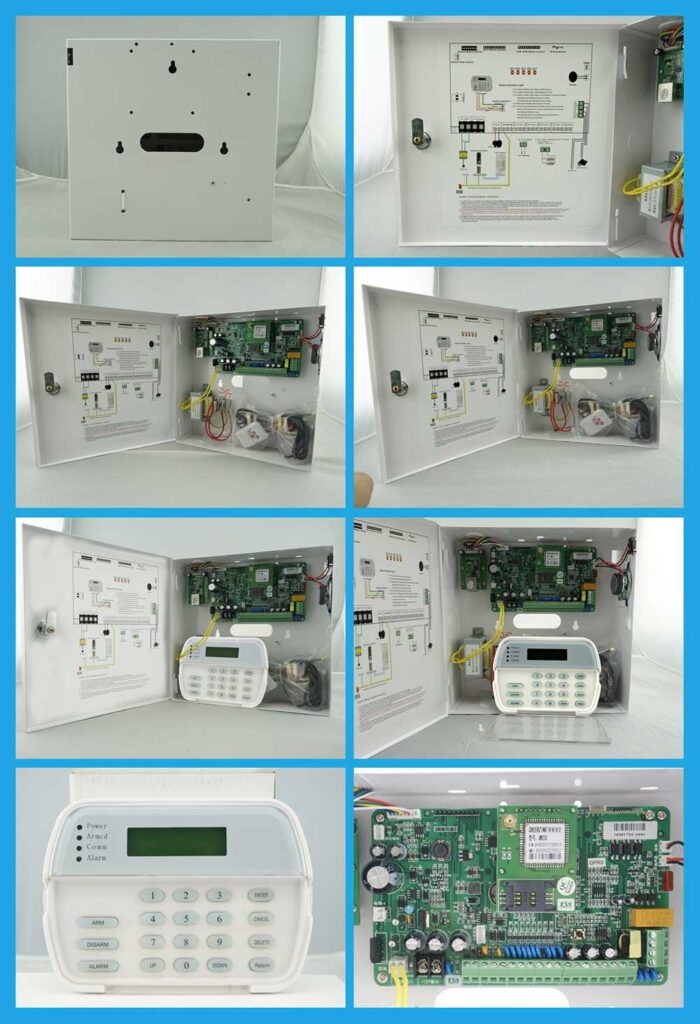
Below is a professional-grade installation workflow used in commercial intrusion alarm deployments.
1. Mount the Control Panel
Select a secure, non-visible location such as an electrical room or locked equipment cabinet. Ensure the panel is:
- Mounted on a flat surface
- Away from moisture and corrosive environments
- Positioned to minimize cable congestion
2. Connect AC Power and Backup Battery
- Connect the transformer to the panel’s AC input terminals.
- Install the backup battery and connect it to the battery terminals, observing polarity.
This ensures continued operation during power outages and supports UL alarm continuity requirements.
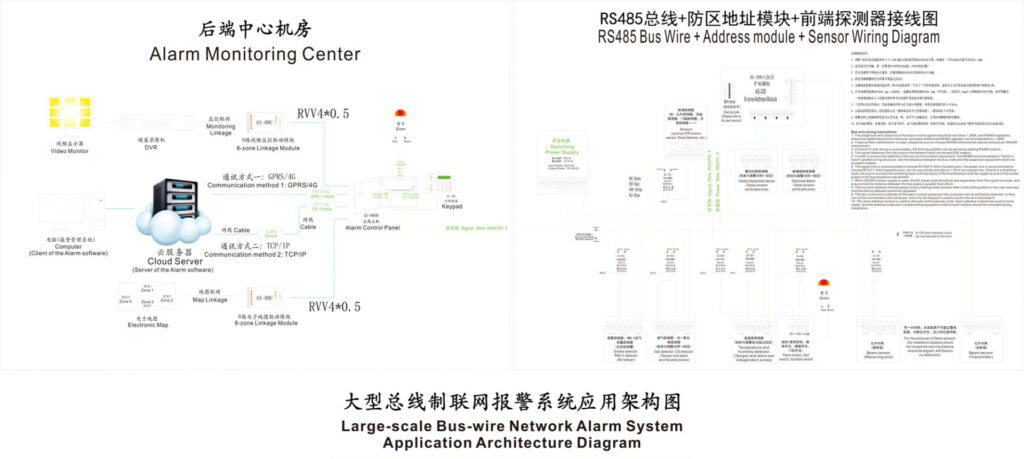
3. Wire Zones, Devices, and Peripherals
Wiring accuracy is critical for preventing false alarms and communication errors.
Typical connections include:
- Door/window magnetic contacts (normally closed loops)
- PIR motion sensors (12V power + zone wiring)
- Glass break detectors
- Keypads using 4-wire or bus wiring
- Internal/external sirens (with current draw calculation)
For wired systems, follow manufacturer wiring diagrams precisely. For wireless burglar alarm control panels, pair each device and confirm signal strength from the panel.
4. Integrate Communication Modules
Depending on monitoring services, connect:
- Ethernet/IP module
- Cellular LTE module
- Dual-path communication devices
Ensure the reporting format (Contact ID, SIA format) matches the monitoring center’s configuration.
5. Program the Panel
Panel programming defines system behavior:
- Set installer and user codes
- Configure entry/exit delays
- Assign zone types (e.g., perimeter, interior, 24-hour zones)
- Enable chime functions, partitions, and communication parameters
- Activate false alarm prevention features recommended by ANSI/SIA CP-01
Programming accuracy directly affects security performance and user experience.
5. Testing and Troubleshooting: Ensuring System Reliability
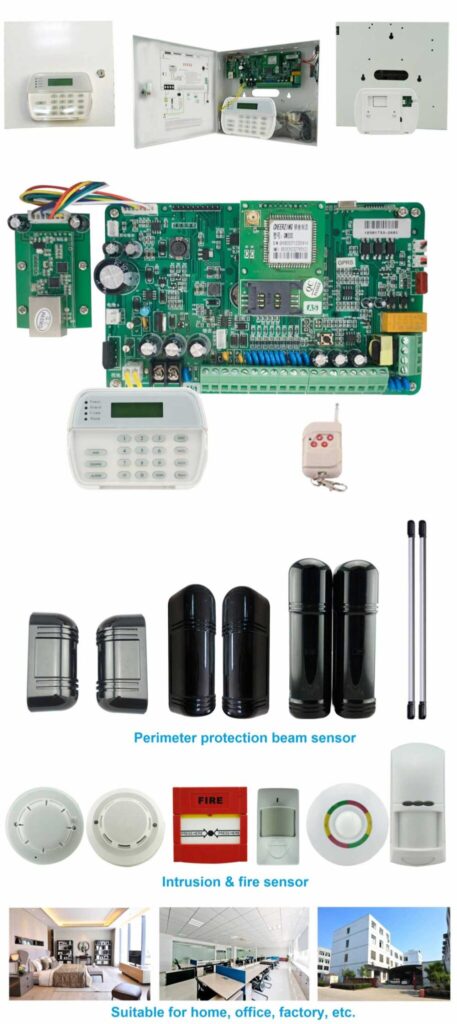
Comprehensive System Testing
Perform testing after wiring and programming:
- Walk test all intrusion zones
- Confirm siren output
- Verify communication reporting to the monitoring center
- Test battery backup runtime
Common Troubleshooting Scenarios
- Faulty zone wiring → check resistance and continuity
- Sensor power issues → verify 12V AUX output
- Weak wireless signal → reposition devices or add repeaters
- False alarms during testing → confirm zone type programming and sensor placement
Maintenance Recommendations
Professional installers should advise end-users to perform:
- Semi-annual battery inspections
- Annual walk tests
- Firmware updates for smart systems
Large procurement teams should standardize maintenance schedules across sites to reduce service inconsistencies.
6. Compliance, Regulations, and Best Practices for Professionals
Regulatory compliance is a core requirement in commercial burglar alarm installations.
Key Standards and Certifications
- UL 681 – Installation and Classification of Burglar and Holdup Alarm Systems
- NFPA 70 – Electrical safety and wiring rules
- EN 50131 – European intrusion system standard
- ANSI/SIA CP-01 – Panel design for false alarm reduction
Documentation and Procurement Considerations
- Maintain installation logs
- Record zone mapping and wiring paths
- Store programming files and backup configurations
- Review warranty terms, especially for large-scale deployments
Best Practices for Professionals
- Apply uniform device naming conventions
- Use surge protection for sensitive electronics
- Plan for future expansion during initial installation
- Validate system operation against customer use cases
These practices increase reliability and support long-term operational consistency across corporate or industrial facilities.
7. Conclusion
A properly installed burglar alarm control panel enhances intrusion detection reliability and ensures long-term protection for commercial facilities. By following professional installation procedures—covering preparation, wiring, programming, testing, and compliance—you can significantly improve system security performance and reduce lifecycle maintenance costs.
Whether you are an installer deploying systems across multiple sites or a procurement leader evaluating solutions, mastering burglar alarm control panel installation principles helps ensure every project operates at the highest standard of reliability and compliance.
References
- UL 681 – Installation and Classification of Burglar and Holdup Alarm Systems
- NFPA 70 – National Electrical Code
- Electronic Security Association (ESA) – Intrusion Detection Guidelines
- ASIS International – Physical Security Principles and Research
- ANSI/SIA CP-01 – Control Panel Standard for False Alarm Reduction
- Honeywell, DSC, Texecom, and Athenalarm Manufacturer Installation Manuals
- FBI Uniform Crime Reporting (UCR) – Burglary Trends