
In the high-stakes world of professional burglar alarm installations, one failure can destroy everything you’ve built: a missed intrusion signal because the IP network went down. Imagine this nightmare scenario playing out at 2 a.m. in a bank, warehouse, or corporate headquarters you just secured for a major client. The primary Ethernet connection drops — maybe due to a fiber cut, power surge, ISP outage, or even a targeted DDoS attack. The alarm panel tries to report a break-in… and nothing reaches the central station. By the time anyone notices, valuable assets are gone, insurance claims get denied, and your reputation as a reliable integrator takes a massive hit.
This isn’t hypothetical. Communication path failure remains the single largest vulnerability in modern burglar alarm systems. Yet the solution has been available for years and is now more powerful and cost-effective than ever: turning your GSM alarm system into a rock-solid backup communicator within a true dual path alarm communication architecture.
As a senior security systems integrator with over 18 years deploying thousands of commercial and industrial burglar alarm setups across enterprise environments, I’ve seen IP-only systems fail spectacularly — and I’ve watched clients who adopted GSM backup alarm communicator technology sleep easy through hurricanes, construction accidents, and network blackouts. This ultimate how-to guide walks you step by step through designing, installing, programming, testing, and maintaining a high-reliability GSM alarm system as the backup channel that guarantees your burglar alarms never go silent when IP networks fail.
You’ll learn exactly how to create communication redundancy that meets or exceeds Grade 3/4 standards, reduce false negatives to near zero, win more commercial bids by offering bulletproof reliability, and future-proof your installations against the global PSTN phase-out. Whether you’re an alarm system integrator scaling enterprise projects, a monitoring center operator demanding rock-solid signal delivery, or an in-house security manager responsible for multi-site protection, this practical blueprint delivers actionable results you can implement immediately.
By the end of this guide, you’ll have a complete playbook — not theory, but real-world procedures, wiring diagrams in plain English, programming checklists, troubleshooting flows, and compliance shortcuts that have saved my clients millions in potential losses. Let’s make signal loss a thing of the past.
Why Single-Path IP Communication Is a Ticking Time Bomb for Burglar Alarm Systems
Modern burglar alarm panels rely heavily on TCP/IP for fast, low-cost event reporting. It’s tempting — unlimited bandwidth, easy remote programming, push notifications, and integration with cloud video verification. But IP has a fatal flaw: it depends on infrastructure you don’t control.
Consider the failure modes I’ve documented in post-incident reviews:
- ISP outages lasting 4–48 hours (more common than most admit)
- Local power failures that take down both the router and the panel’s Ethernet port
- Physical cable cuts during construction or vandalism
- Router firmware crashes or DHCP conflicts
- Cyber attacks saturating the broadband link
- Carrier-grade NAT or CGNAT blocks at the ISP level preventing inbound polling
When any of these hit, the primary communicator goes dark. Without a backup path, the central station receives no supervision heartbeat, no alarm signals, no restore messages. In many jurisdictions, this voids UL or EN compliance and exposes you to liability.
In burglar alarm systems, where every second counts for reporting zone violations from intrusion sensors like door contacts, PIR motion detectors, or glass break sensors, this silent failure can have devastating consequences for your clients. Industry data consistently shows that communication failures account for the majority of missed alarms in IP-only deployments. GSM, by contrast, operates on independent cellular towers with battery-backed base stations. A properly configured GSM alarm system keeps transmitting even when the entire local power and internet grid collapses.
The math is simple: if your primary path fails 1% of the time (a conservative estimate), a single-path system leaves your client unprotected 87 hours per year. Dual-path with GSM backup drops that exposure to minutes. This is why standards like EN 50136 emphasize dual-path communication for Grade 3 and 4 installations to minimize such risks.

PSTN vs IP vs GSM: The Definitive Reliability Comparison Every Integrator Must Know
Before designing any system, understand exactly why GSM alarm systems dominate as backup communicators.
PSTN (Traditional Telephone Lines)
Pros: Independent of internet/power at the premises; proven for decades; simple dialer protocol.
Cons: Being phased out globally (2025–2030 deadlines in most countries); vulnerable to line cuts; expensive monthly fees; no supervision heartbeat in basic setups; slow transmission (up to 45 seconds per event).
Verdict: Legacy only. Never specify as primary or sole backup in 2026+ installations.
IP (Ethernet / Broadband)
Pros: Fast (under 5 seconds); cheap; supports two-way voice and video verification; easy remote upload/download.
Cons: Completely dependent on local router, ISP, and power; no inherent line-cut detection; susceptible to congestion and cyberattacks; supervision can fail silently if the entire broadband link drops.
Verdict: Excellent primary — terrible alone.
GSM / 4G / LTE (Cellular)
Pros: Completely independent cellular infrastructure; works during power outages with battery backup; automatic failover; signal strength monitoring; SMS fallback; global coverage with roaming options; supervision intervals as tight as 5 minutes; immune to local cable cuts.
Cons: Requires quality antenna placement and periodic SIM data plan management; slightly higher latency than pure IP (still under 15 seconds).
Verdict: The ultimate backup — and increasingly viable as primary in remote sites.
The Athenalarm AS-9000 series exemplifies superior multi-path design, supporting PSTN, 4G, and TCP/IP simultaneously for true redundancy. Real-world performance numbers from monitoring centers I work with:
- IP-only systems: 2.8% annual communication failure rate
- IP + GSM dual-path: 0.07% failure rate
- GSM supervision detects issues in under 60 seconds versus hours on IP-only
The clear winner for redundancy is IP primary + GSM secondary. This is the exact architecture supported by industrial-grade panels such as the Athenalarm AS-9000 series.
Dual Path Alarm Communication Explained: The Engineering Behind Unbreakable Reliability
Dual-path (or multi-path) communication means the burglar alarm panel maintains two independent reporting routes to the central station. Standards like SIA DC-09 (2026 revision) and EN 50136 mandate supervised dual-path for high-risk installations.
How it actually works in practice:
- Primary Path (IP) — The panel sends events via Ethernet using SIA DC-09 protocol over TCP. Heartbeat polls every 1–24 hours depending on grade.
- Secondary Path (GSM) — If the panel detects IP failure (no ACK within timeout or no heartbeat response), it instantly switches to the GSM module. Events route through cellular data (GPRS/4G) or SMS fallback.
- Supervision & Failover Logic — Modern panels continuously monitor both paths. The GSM communicator reports its own health (signal strength, battery, tamper) back to the panel and central station.
- Restore & Acknowledgment — When IP returns, the panel automatically switches back and sends a restore signal on both paths for verification.
This automatic switching happens in milliseconds to seconds — faster than any intruder can react. Standards like EN 50136 (for European markets) and SIA DC-09 (updated in 2026 for enhanced IP security) mandate these supervised dual-path setups for high-risk installations, defining exact supervision intervals and fault reporting times to ensure compliance and liability protection.
Key technical terms every professional must master:
- Supervision Interval — How often the communicator “phones home” (e.g., every 5 minutes for high-security).
- Fault Time — How long before the central station flags a path failure.
- Line-Cut / Tamper Detection — Triggers immediate GSM report if Ethernet cable is unplugged.
- AES 128/256 Encryption — Mandatory on both paths per current SIA standards.
How GSM Alarm Systems Deliver Fail-Safe Backup in Real Deployments
A dedicated GSM alarm communicator (or integrated 4G module) transforms any compatible burglar alarm panel into a dual-path powerhouse. The module connects via RS-232, ECP, or bus interface and handles all cellular functions independently.
Core capabilities you’ll use daily:
- Automatic IP-to-GSM failover with configurable priorities
- SMS notification to up to 4 mobile numbers (ideal for keyholders)
- Two-way voice listen-in over cellular (critical for verification)
- Remote upload/download even when IP is down
- RSSI signal strength reporting for site surveys
- Roaming SIM support for international multi-site clients
- Battery-backed operation (continues reporting 24+ hours on panel backup power)
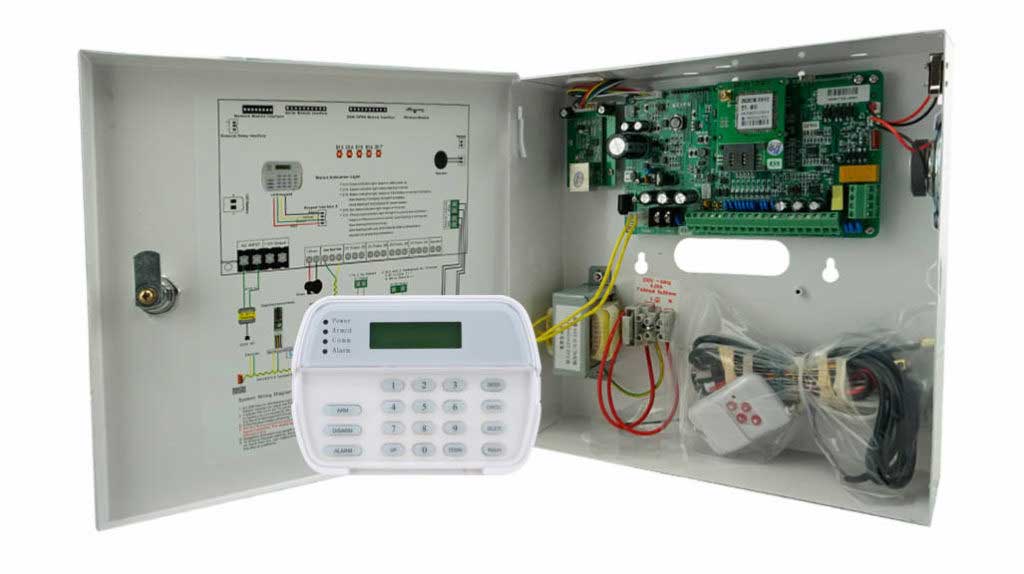
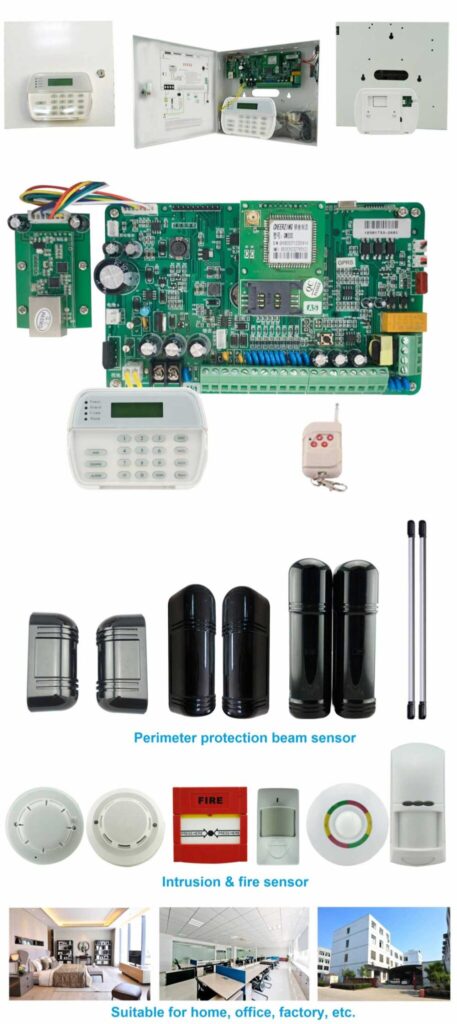
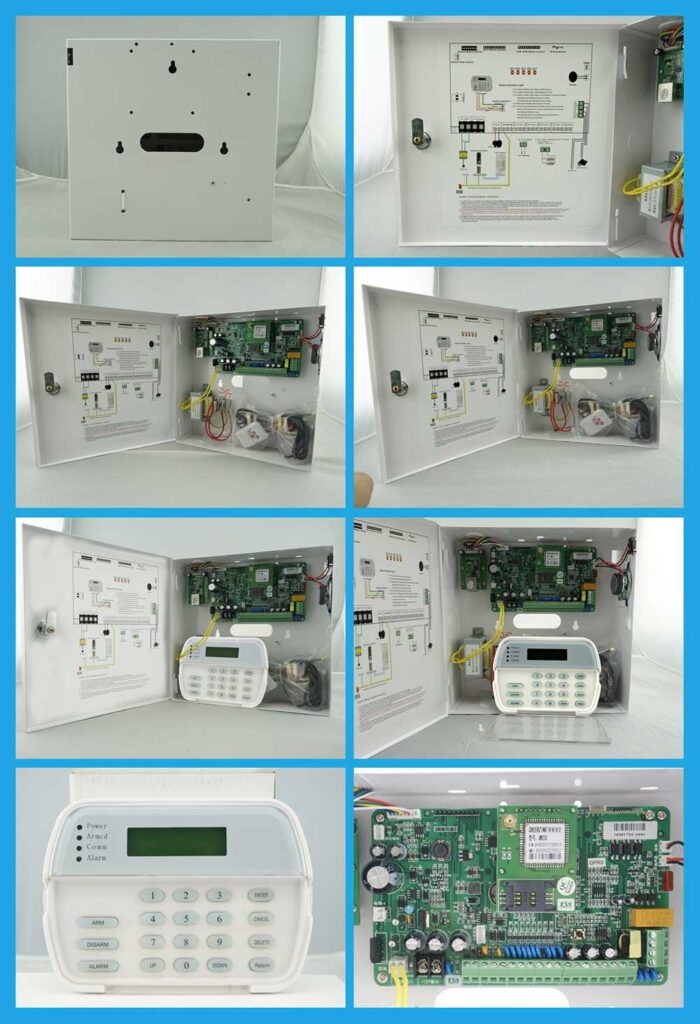
Take the Athenalarm AS-9000GPRS-4G panel as a prime example of industrial-grade design. It natively supports TCP/IP primary with 4G/GSM secondary (LTE-FDD bands B1/B3/B5/B8 and GSM B3/B8 for global compatibility), plus PSTN as tertiary if needed. Features include tamper alerts for telephone line cuts, power failures, battery faults, and unauthorized panel access, automatic short-circuit protection, 1500-event black-box logging, cloud-based history, and addressable RS-485 bus expansion up to 1,656 zones — exactly what enterprise integrators demand for multi-zone, multi-site burglar alarm systems. The panel’s built-in 4kV anti-surge circuitry and automatic overload protection add extra layers of reliability that keep your gsm alarm monitoring backup active no matter what.
Step-by-Step Implementation Guide: Build Your Dual-Path GSM Backup System Today
Here is the exact process I use on every commercial installation. Follow it precisely and you’ll achieve 99.99%+ signal reliability.
Step 1: Site Survey & Risk Assessment (1–2 hours)
- Map all zones and risk levels. For burglary-focused systems, prioritize high-risk intrusion zones such as entry points and high-value storage areas.
- Test existing IP stability with 24-hour ping log.
- Measure cellular signal strength at panel location using a test phone or dedicated RSSI meter (target -85 dBm or better). Use a SIM matching the panel’s supported bands (B3/B8 GSM common) and test multiple locations.
- Identify antenna placement (external if inside signal is weak — mount high, vertical, away from metal).
- Document power backup capacity — minimum 24 hours required.
Step 2: Select Compatible Hardware
- Burglar alarm panel: Choose addressable bus panels supporting multi-communicator (Athenalarm AS-9000GPRS-4G or AS-9000FX series recommended for industrial scalability up to 1,656 zones).
- GSM communicator: 4G LTE module with GSM fallback (ensure SIA DC-09 and Contact ID support).
- Antenna: High-gain external with SMA connector and low-loss coax.
- SIM: Dedicated M2M data SIM (unlimited SMS, 100 MB/month data sufficient).
Step 3: Physical Installation
- Mount the panel and communicator in a tamper-protected metal enclosure.
- Connect Ethernet to primary router port.
- Wire GSM module per manufacturer diagram (usually 4-wire ECP or RS-485 bus — use proper termination resistors for long runs if expanding zones).
- Insert activated SIM and connect external antenna.
- Wire backup battery and verify 12V output.
- Install surge protection on all lines (4kV minimum) — leverage the panel’s built-in anti-surge circuitry and ensure proper grounding for full protection.
Step 4: Programming the Dual-Path Logic
Using the panel keypad or software (the advanced LCD keypad with voice prompts makes this straightforward):
- Set primary communicator to IP (SIA DC-09 format).
- Enable secondary as GSM/4G with automatic failover.
- Configure supervision: IP heartbeat every 5 minutes, GSM every 60 minutes (adjust per local grade requirements — tighter for Grade 4).
- Set IP fault time = 1 hour (or 5 minutes for Grade 4).
- Set GSM fault time = 1 hour.
- Program 2 central station phone numbers/IP addresses.
- Enable line-cut detection and immediate GSM report — plus tamper for power and unauthorized access.
- Set up 4 user SMS numbers for instant alerts.
- Program event codes: burglary, fire, tamper, low battery, test, restore (prioritize intrusion events).
- Enable remote programming over both paths and configure correct APN for your M2M SIM (double-check with carrier to avoid registration failures).
Step 5: Central Station Registration & Testing
- Register both paths with your monitoring provider using SIA DC-09 credentials.
- Send test signals on IP only, then simulate failure by unplugging Ethernet, powering down the router, or blocking traffic.
- Verify GSM takes over within the programmed timeout and the central station receives detailed zone information.
- Perform 24-hour burn-in test with daily test signals; review the 1500-event log or cloud history for confirmation.
- Confirm two-way voice and video verification works over cellular.
Step 6: Documentation & Handover
- Provide client with signal strength report, programming printout, test logs, and zone/sensor details.
- Schedule quarterly maintenance visits.
- Train end-user on SMS alert interpretation.
GSM Optimization Tips for Maximum Reliability
To keep your gsm backup alarm communicator performing flawlessly long-term:
- Antenna placement is critical — external high-gain, vertical orientation, away from interference.
- Use true M2M SIMs with proper APN; monitor data usage to prevent overages.
- Test roaming if your clients operate internationally.
Avoiding Common Pitfalls in Dual-Path GSM Setup
I’ve seen these mistakes derail even experienced integrators — avoid them:
- Weak cellular signal leading to delayed failover: Always use external antenna and re-test after installation.
- Incorrect SIM APN or data plan: Confirm everything before powering up.
- Insufficient battery capacity for prolonged outages: Size backup power for at least 24–72 hours of full operation including GSM transmission.
- Skipping regular failover tests: Simulate cable cuts and power loss monthly at first.
Advanced Architecture Designs for Enterprise & Multi-Site Deployments
For large campuses or distributed facilities, layer additional redundancy:
- Dual SIM GSM modules (different carriers)
- Hybrid cloud + direct central station paths
- Polling intervals tightened to 90 seconds for banks/jewelry stores
- Integration with video verification to reduce false alarms
- Centralized management software showing real-time path status across 100+ sites
With the Athenalarm AS-9000’s RS-485 expansion to 1,656 zones and cloud logging, you can manage everything centrally. Consider triple-path with PSTN tertiary for maximum reliability during the global phase-out. I’ve deployed exactly these architectures for financial institutions where even 30 seconds of silence is unacceptable.
Maintenance, Troubleshooting & Long-Term Compliance
Quarterly checklist every integrator should follow:
- RSSI test — relocate antenna if below -90 dBm.
- Battery load test.
- Simulate IP failure and confirm GSM reporting.
- Check event log for any path switches (use cloud history for trends).
- Firmware updates via remote (safer over GSM when IP is suspect).
- SIM data usage review — upgrade plan if approaching limits.
- Verify all tamper circuits including power and unauthorized access detection.
Common troubleshooting:
- “No GSM registration” → Check APN settings, SIM activation, antenna, and supported bands (B3/B8).
- “Frequent path switching” → Improve IP stability or add UPS.
- “Central station not receiving” → Verify account ID and receiver format match.
- “Tamper alerts false” → Inspect wiring and sensor supervision.
Document everything — it protects you in insurance audits. Dual-path setups help you meet EN 50136 or SIA requirements, reducing liability and strengthening your bids.
Real Results: What Happens When You Deploy This Correctly
One recent project involved a 12-site manufacturing chain that suffered three IP-related alarm misses in one year. After retrofitting Athenalarm AS-9000 panels with 4G GSM backup, zero communication failures in 18 months — and they won three additional contracts because their RFP response now highlighted “bulletproof dual-path communication.”
Another client in a hurricane-prone area stayed fully monitored through a 72-hour grid blackout because the GSM path kept reporting every 60 minutes.
Ready to Fail-Proof Your Burglar Alarm Installations?
You now possess the complete blueprint to eliminate signal loss forever using GSM alarm systems as the ultimate backup communicator. No more sleepless nights wondering if your clients are protected when the internet drops. No more lost bids to competitors offering true redundancy.
The next step is simple: audit your current installations, identify single-path panels, and upgrade them to industrial-grade dual-path systems with GSM backup.
For tailored recommendations, panel quotations, or help designing your next high-security project, contact the Athenalarm technical team today. Their AS-9000 series is specifically engineered for exactly this architecture — multi-channel, tamper-proof, and built for the demands of professional integrators like you.
Explore more in-depth guides on our site covering advanced zone expansion, integration with CCTV, and enterprise monitoring software. Then reach out via WhatsApp or our quotation form. Let’s make every burglar alarm you install truly fail-proof.
Your clients deserve uninterrupted protection. GSM backup delivers it — every single time.