
Introduction
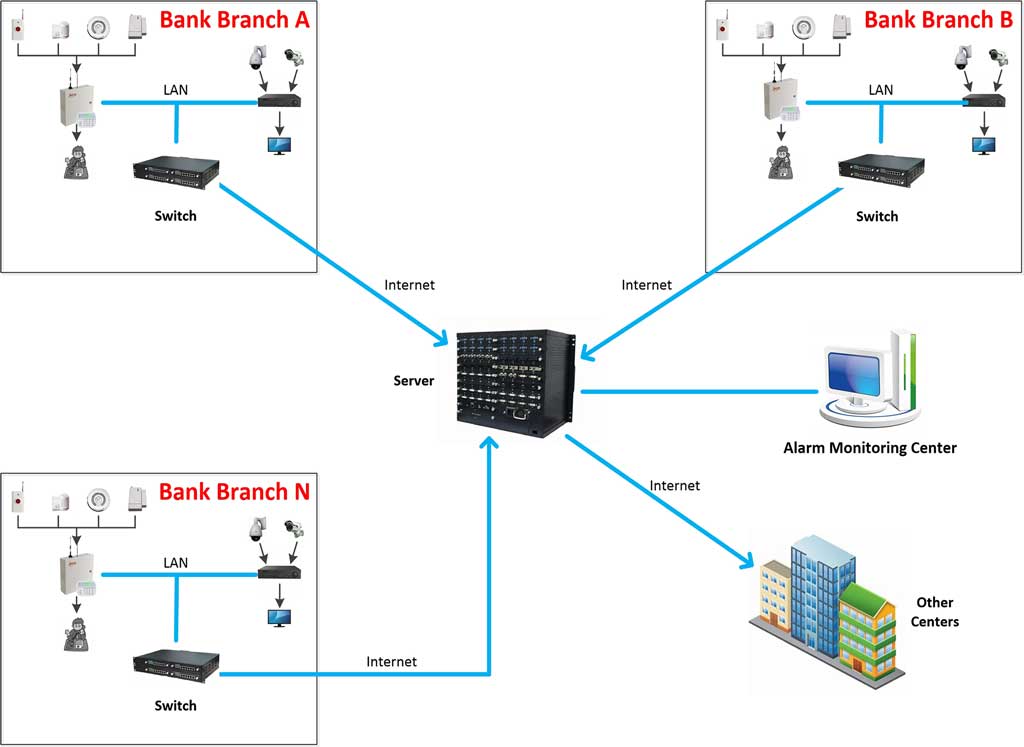
In today’s distributed environments, such as university campuses, corporate parks, or healthcare networks, multi-site alarm integration has become essential for effective intrusion detection and response. Isolated alarm systems at each location often lead to disjointed operations, increased vulnerability to breaches, and escalated maintenance expenses. This case study explores a practical implementation of integrating campus alarm systems across 10 separate buildings, achieving unified control without a complete overhaul of existing infrastructure.
Drawing from real-world integration of campus alarm systems, this deployment highlights actionable strategies for engineers, integrators, and security managers facing similar challenges in multi-location security setups. By focusing on compatibility, security hardening, and centralized oversight, the project delivered enhanced efficiency and risk mitigation.
Project Background
Client Details
- A mid-sized educational institution with research facilities.
- 10 buildings including classrooms, labs, residences, and administrative offices.
- Diverse legacy alarm hardware from four manufacturers.
- Independent monitoring setups with varying protocols and vendors.
Key Goals
- Consolidate alarm monitoring into a single platform.
- Harmonize incident response across sites.
- Facilitate secure remote access and control.
- Boost verification processes to cut false positives.
- Enhance overall cybersecurity and regulatory adherence.
Core Challenges in Multi-Site Alarm Systems
1. Diverse Hardware Ecosystem
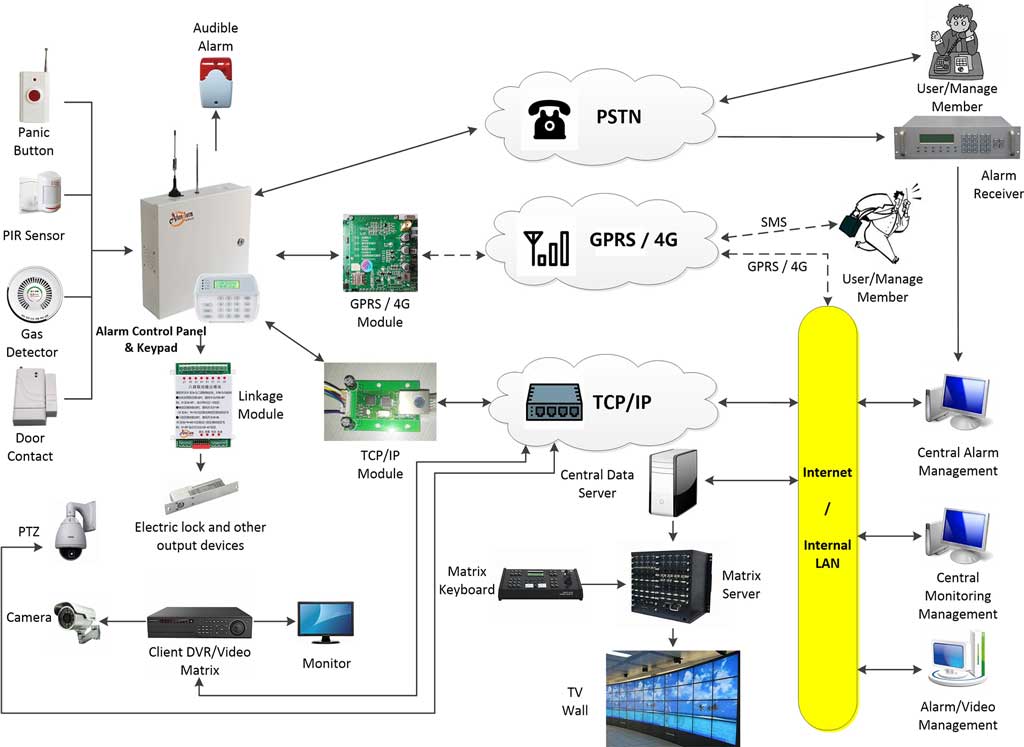
The sites featured a mix of outdated dial-up communicators, modern IP-based panels, and various sensors like PIR motion detectors, door contacts, and environmental monitors. Protocols ranged from older Contact ID to advanced IP standards, with inconsistent firmware levels.
Issue: Lack of centralized visibility into events, complicating multi-site alarm integration.
2. Disjointed Monitoring Framework
Multiple third-party monitoring services handled alerts separately, resulting in siloed logs, manual data compilation, and uneven escalation rules.
Impact: Slower threat resolution and poor compliance tracking, as noted in industry reports from the Security Industry Association (SIA).
3. Security Vulnerabilities
Exposed network ports, unpatched systems, and weak authentication posed risks, especially in IP-connected setups. Per the UL 2900 standards, such exposures amplify threats in networked alarm environments.
Strategic Approach to Integration
Adopting a phased methodology ensured scalable and secure multi-site alarm integration, minimizing disruptions.
Phase 1: Comprehensive Assessment
Step-by-Step Guide:
- Catalog all alarm panels by model, version, and connectivity type.
- Map out sensors and zones for each facility.
- Trace current monitoring routes and protocols.
- Conduct vulnerability scans using tools like Nmap for open ports.
- Categorize assets: retainable (70%), upgradable (20%), or replaceable (10%).
Results: Identified reusable components, avoiding unnecessary costs.
Phase 2: System Architecture Planning
Selected a hybrid model with on-site panels linked to a cloud-based central hub.
Essential Elements:
- Gateways for protocol translation in legacy systems.
- Secure VPN for inter-site communication.
- Backup cellular links for reliability.
- Segregated networks following NIST SP 800-53 guidelines for access control.
This design isolated alarm traffic, reducing breach risks in campus alarm systems.
Phase 3: Event Standardization
To enable seamless data flow, all signals were normalized.
Actions:
- Upgrade communicators to support SIA DC-09 IP protocol.
- Remap event codes to a common schema, e.g., code 110 to “Intrusion Alert,” 570 to “System Tamper.”
- Implement automated categorization for priority-based alerts.
Benefits: Consistent reporting across sites, aiding real-world integration of campus alarm systems.
Phase 4: Implementing Secure Remote Features
Secure remote operations were critical for off-hours management.
Configuration Steps for Integrators:
- Eliminate direct internet exposure on panels.
- Set up site-to-site VPN with AES-256 encryption.
- Apply RBAC to limit user permissions.
- Enforce MFA for all remote sessions.
- Log and audit every command.
- Simulate tests in a staging environment to verify functionality.
This setup mitigated remote exploitation risks, aligning with SIA cybersecurity recommendations.
Phase 5: Unified Verification and Monitoring
Integrated video feeds for alarm confirmation, centralized in one dashboard.
Enhancements:
- AI-assisted video analytics for faster verification.
- Automated alerts to responders.
- Integrated compliance tools for reporting.
Citing Electronic Security Association data, this reduced dispatcher errors by over 30% in similar deployments.

Quantifiable Outcomes
| Metric | Pre-Integration | Post-Integration | Improvement |
|---|---|---|---|
| Incident Response Time | 9.5 minutes | 6.8 minutes | 28% faster |
| False Alarm Incidence | 15% | 9% | 40% reduction |
| Operational Expenses | Baseline 100% | 78% | 22% savings |
| Compliance Audit Duration | 2.5 weeks | 3 days | 76% quicker |
These metrics, derived from system logs and audits, underscore the value of multi-site alarm integration.
Key Insights for Professionals
- Leverage Existing Assets: Use adapters to integrate older panels, saving up to 50% on budgets per industry benchmarks.
- Prioritize Security from the Start: Embed encryption and segmentation to comply with NIST and UL standards.
- Uniform Event Handling: Early taxonomy unification prevents data silos.
- Test Iteratively: Start with pilot sites to refine processes before full-scale rollout.
Referenced Standards and Resources
- UL 2900: Standard for Software Cybersecurity for Network-Connectable Products.
- NIST SP 800-53: Security and Privacy Controls for Information Systems.
- SIA DC-09: IP Reporting Protocol for Alarm Systems.
- Electronic Security Association Reports on Verified Alarms.
These draw from authoritative sources to ensure reliability in multi-site alarm system deployments.

Recommendations for Future Projects
For successful real-world integration of campus alarm systems:
- Ensure thorough asset inventories.
- Focus on protocol interoperability.
- Isolate networks rigorously.
- Secure remote capabilities with robust controls.
- Utilize analytics for ongoing optimization.
This approach transforms fragmented setups into cohesive, resilient security frameworks.
Conclusion
Multi-site alarm integration represents a pivotal shift toward unified security management. By addressing hardware diversity, monitoring fragmentation, and cybersecurity gaps through structured phases, this case study illustrates achievable gains in efficiency and safety. Engineers and managers can apply these insights to overcome common hurdles, fostering secure, scalable alarm ecosystems that deliver lasting operational benefits.