
Executive Summary
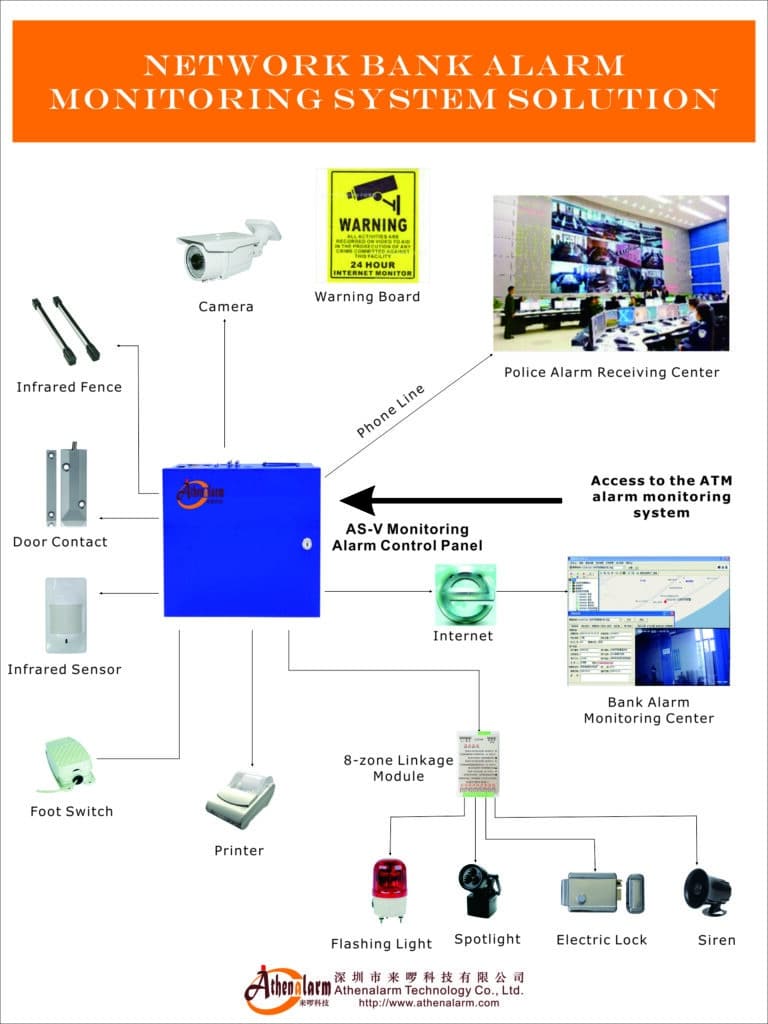
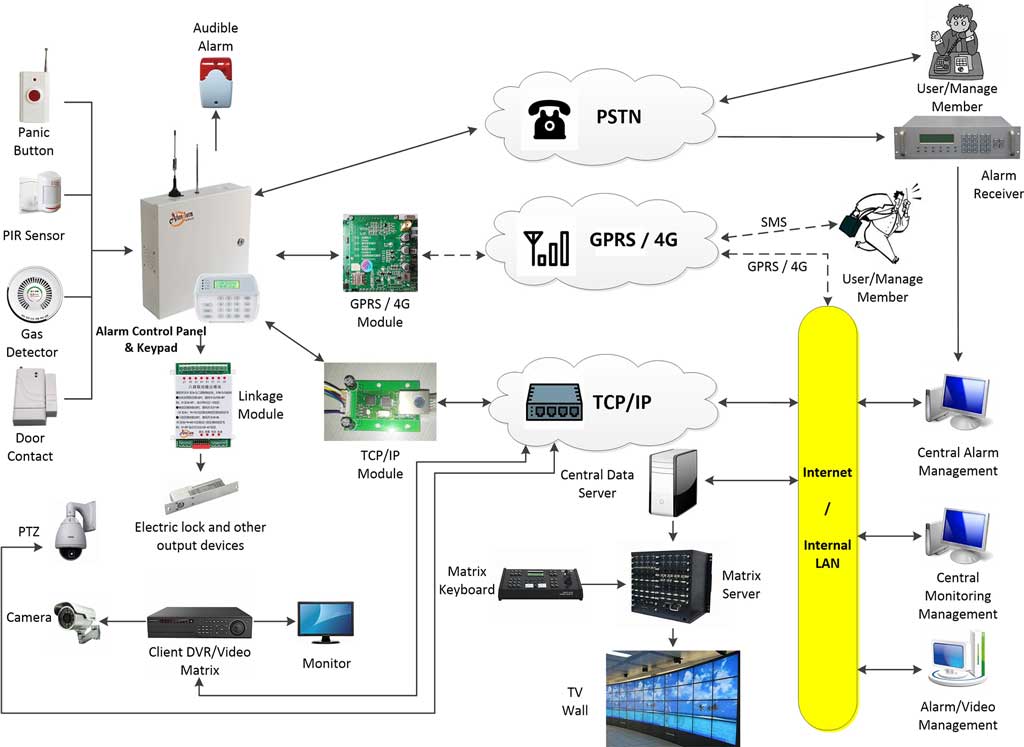
Intrusion alarm systems have evolved into distributed cyber-physical networks, blending IP communicators, cloud services, mobile apps, and ONVIF-connected video devices. This interconnected design dramatically improves operational efficiency—but also creates a broad, high-value attack surface.
Between 2021 and 2024, reported cyber incidents involving alarm or physical security systems increased by more than 300%, according to the FBI IC3 and ENISA’s 2024 Critical Infrastructure Threat Landscape Report. Commercial buildings, logistics hubs, data centers, and retail chains increasingly report attempted intrusions beginning not with forced entry, but with alarm network manipulation.
This whitepaper provides a practical, engineering-driven methodology for scenario planning, offering security engineers, installers, and managers a repeatable way to identify, rank, and mitigate high-probability alarm cyberattack scenarios in the next 24 months.
1. Introduction: Why Alarm Networks Are Now Prime Cyber Targets
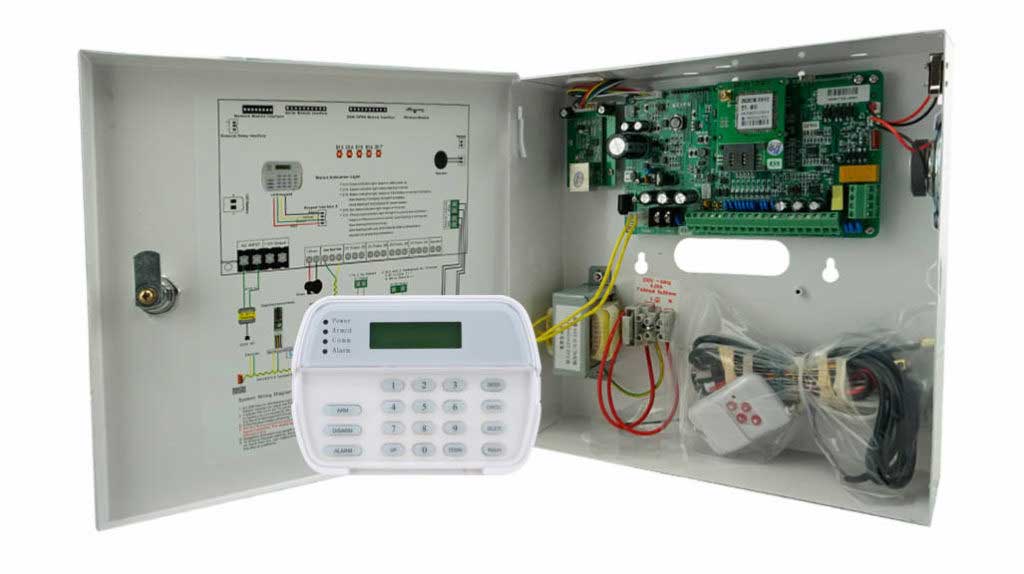
Modern alarm panels are no longer simple relay devices. They function as embedded computers with:
- IP stacks
- 4G/5G fallback communicators
- Cloud APIs
- ONVIF-linked video verification
- Mobile app integrations
- Installer remote access portals
The convergence of physical and cyber capabilities means an attacker no longer needs to reach a keypad or panel. They can launch a cyberattack remotely, silently and at scale.
Three trends fuel the rising interest of cybercriminals in alarm networks:
Trend 1 — Monetization
Ransomware groups see alarm receiving centers (ARCs) as high-pressure, high-payout targets.
Trend 2 — Lateral Movement
Alarm panels and cameras are often the least defended assets on the corporate LAN.
Trend 3 — Supply-Chain Fragmentation
Cheap 433/868 MHz sensors, unverified firmware modules, and white-label communicators introduce upstream vulnerabilities.
As a result, “alarm cyberattack scenarios” have become a strategic priority in physical security planning.
2. Seven High-Impact Alarm Cyberattack Scenarios (2025–2027)
Each scenario includes attack mechanics, affected assets, detection difficulty, and realistic indicators of compromise.
Scenario 1 — Covert Firmware Injection via Compromised Update Channels
Risk Focus: Backdoor insertion into panels or communicators
Attack Vector: DNS spoofing, compromised OTA update endpoints
How the Attack Works
Attackers intercept or spoof firmware distribution flows—often through manipulated DNS responses or compromised update mirrors. The injected firmware silently disables reporting, drops encrypted events, or maintains persistent remote access.
Indicators of Compromise
- Unexpected panel reboots
- Firmware version mismatch vs. manufacturer changelog
- Sudden loss of TLS heartbeat
Why It Matters
Even Grade-3 and Grade-4 systems become defenseless once firmware integrity is lost.
Scenario 2 — Cellular Network Manipulation & Alarm Event Flooding
Risk Focus: Overwhelming ARC capacity
Attack Vector: Rogue base stations, SS7/Diameter interference
Attack Mechanics
An attacker forces cellular communicators to downgrade from 4G/5G to insecure legacy protocols. They then inject high-frequency alarm/restore loops to degrade police response credibility.
Impact
- ARC operator overload
- Real alarms hidden among floods
- Police response suspension
Scenario 3 — Cloud Portal Takeover via Credential Stuffing
Risk Focus: Mass remote disarming
Attack Vector: Leaked installer credentials
Why This Works
Installers often reuse passwords across brands. Attackers test these credentials on dealer portals and cloud management dashboards.
Consequences
- Remote disarm of thousands of panels
- Modification of user codes
- Cloud API misuse to mask offline status
Scenario 4 — Embedded Backdoors in Third-Party Sensors or Modules
Risk Focus: Supply-chain infiltration
Attack Vector: Malicious microcontroller firmware in low-cost sensors
Realistic Behaviors
- Covert RF beaconing
- Trigger suppression
- Unauthorized pairing
Scenario 5 — Compromised ARC Operator Workstation
Risk Focus: Command-and-control over 50,000+ customer sites
Attack Vector: Remote access Trojan, phishing
Attack Outcomes
- Mass account data leakage
- Alarm routing manipulation
- ARC automation system lockout
Scenario 6 — Pivot Attack from Vulnerable IP Cameras to Alarm Panels
Risk Focus: LAN lateral movement
Attack Vector: DNS rebinding, local trust exploitation
Why This Succeeds
Many alarm panels “trust” LAN devices. A compromised camera becomes a stepping stone for direct panel enumeration.
Scenario 7 — Double-Extortion Ransomware Against Alarm Management Infrastructure
Risk Focus: Business continuity failure
Attack Vector: Exploited RDP, weak VPN credentials
What Attackers Do
- Encrypt automation systems
- Exfiltrate customer databases
- Demand ransom under threat of breach disclosure

3. A Practical Risk-Modeling Method for Intrusion Systems
We introduce the Intrusion System Scenario Risk Model (ISS-RM)—a simple, 20-minute scoring technique for evaluating alarm cyberattack scenarios.
3.1 ISS-RM Scoring Dimensions (1–5)
- Exploitability — required skills, tools, cost
- Exposure — internet, LAN, cloud, or cellular reachability
- Weakness Alignment — firmware age, password reuse, missing MFA
- Impact Severity — safety, financial, operational, reputational
- Propagation Potential — one-to-many compromise capability
Each scenario receives a composite score from 5–25, generating a clear heat map.
3.2 How to Use ISS-RM in the Field (Step-by-Step)
Step 1 — Inventory All Critical Alarm Assets
- Panels
- Communicators
- IP cameras linked to alarm functions
- Installer cloud accounts
- ARC software modules
Step 2 — Map Each Asset to Relevant Cyberattack Scenarios
If an alarm panel supports OTA updates and cloud integration, it may relate to Scenario 1, 3, 6.
Step 3 — Score Each Scenario for That Asset
Quick scoring example:
- Exposure: 4
- Exploitability: 3
- Weakness alignment: 4
- Impact: 5
- Propagation: 5
Total = 21 (High Priority)
Step 4 — Build the Risk Heat Map
- 20–25: Immediate mitigation required
- 14–19: Prioritize within 3 months
- 10–13: Monitor
- 5–9: Low relevance
Step 5 — Assign Owners and Deadlines
Assign each risk area to either installers, network engineers, or ARC managers.
4. Mitigation Framework: A Layered, Field-Ready Defense Strategy
Unlike generic cybersecurity advice, the following steps are specifically engineered for intrusion detection infrastructure.
Layer 1 — Harden Network Architecture
Actionable Steps
- Isolate alarm networks using dedicated VLANs.
- Enforce TLS 1.3 for panel-to-cloud communication.
- Use a private APN + IPsec for cellular signaling.
- Block east-west LAN traffic between cameras and panels.
Layer 2 — Protect Firmware Integrity
How to Implement Secure Firmware Practices
- Download firmware only from manufacturer portals.
- Verify SHA-256 hashes manually.
- Enable signed firmware only on supported panels.
- Maintain a quarterly firmware audit spreadsheet.
Layer 3 — Strengthen Identity & Access Control
Best Practices
- Enforce MFA across installer, dealer, and ARC portals.
- Use time-limited installer accounts.
- Disable default user codes during commissioning.
- Audit account logs monthly.
Layer 4 — Implement Continuous Monitoring for Alarm-Focused Threats
Deployable Low-Cost Rules
- Detect alarm/restore flooding.
- Flag abnormal heartbeat intervals.
- Alert on panel configuration changes.
These rules reduce detection time from hours to minutes.
Layer 5 — Incident Response Built for Alarm Networks
Six-phase runbook:
- Detection
- Verification
- Isolation (e.g., force local-only mode)
- Eradication
- Recovery
- Reporting (police, insurers, regulators)
This structure ensures that both physical and cyber consequences are handled correctly.
5. Regulatory & Standards Landscape Impacting Alarm Networks (2026 Outlook)
These standards now shape cybersecurity expectations in intrusion systems:
- EN 50136-1-7:2024 — mandatory secure boot, encryption
- IEC 60839-11-31:2023 — cyber requirements for security devices
- NIS2 Directive — ARCs classified as essential entities
- NFPA 730/731 (2026 Draft) — first inclusion of alarm cybersecurity requirements
- SIA Cybersecurity Best Practices (2024 Edition) — guidelines for dealers and integrators
Compliance is no longer optional. Insurance providers increasingly require formal cyber risk assessments for alarm networks.
6. Conclusion: Scenario Planning Is Now a Core Alarm Security Competency
To prepare your organization for future alarm cyberattack scenarios, begin with these three actions:
- Run ISS-RM on your top customer accounts within the next 30 days.
- Deploy MFA + TLS 1.3 anywhere supported.
- Conduct a tabletop exercise simulating cloud portal takeover or alarm flood attacks.
Alarm networks that adopt structured scenario planning, risk modeling, and layered mitigation will outperform competitors and maintain customer trust—even as threat actors become more sophisticated.
References
- ENISA Threat Landscape 2024 – Critical Infrastructure Protection
- Verizon Data Breach Investigations Report 2025
- FBI Internet Crime Report 2024
- EN 50136-1-7:2024 — Alarm Transmission Systems
- IEC 60839-11-31:2023 — Access Control Cyber Requirements
- Security Industry Association (SIA) – Cyber Advisory Board Reports 2024
- Field assessments and red-team results from Tier-1 ARCs (2024–2025, anonymized)