
I. Introduction
Imagine a large commercial complex where each building runs its own independent alarm system. When an intrusion or fire occurs, alerts are scattered, response teams are confused, and valuable minutes are lost. Now compare that with a centralized monitoring system—one unified control center receiving all alerts, analyzing events in real time, and dispatching the right response instantly.
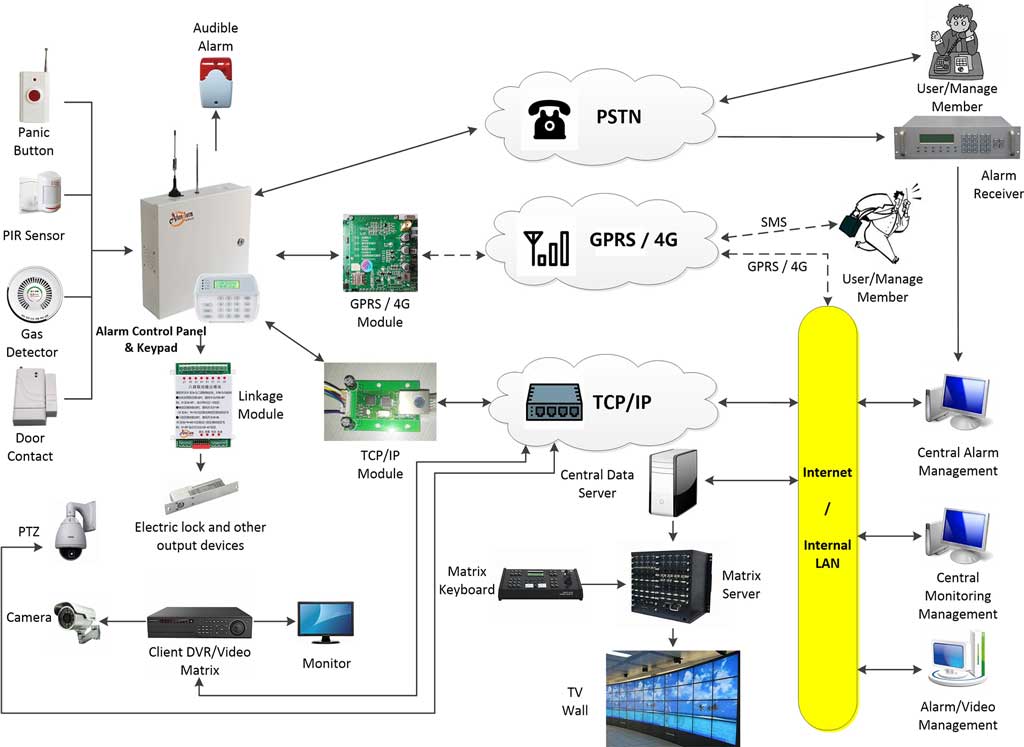
This is the power of centralized alarm monitoring—a system architecture that consolidates data from multiple sensors, cameras, and alarm panels into a single command hub. It provides real-time situational awareness, advanced analytics, and streamlined incident management.
From a technical standpoint, the Centralized Alarm Monitoring Advantages lie in enhanced response speed, superior data integration, cost efficiency, system reliability, and stronger cybersecurity. In the following sections, we break down these advantages through a security engineering lens.
II. Enhanced Real-Time Response and Incident Management
Centralized monitoring systems collect and process data from distributed devices—such as motion sensors, door contacts, or fire detectors—over IP-based or cloud-connected networks. This unified architecture eliminates the latency and data fragmentation found in decentralized setups.
Using AI-driven event prioritization, centralized platforms can automatically identify critical alarms (e.g., fire or intrusion) and filter out false alerts. Through integrated dashboards, operators receive instant, contextual information—camera feeds, access logs, and system health metrics—all in one view.
Example: In a smart city surveillance network, integrating multiple alarm nodes into a single control hub reduced emergency dispatch times by over 40% compared to independent systems. Centralized data routing also enables faster interagency coordination—from security staff to local law enforcement—ensuring timely intervention.
III. Improved Data Integration and Analytics
Modern centralized monitoring systems are designed for interoperability. They integrate seamlessly with IoT devices, RESTful APIs, and big data platforms, enabling unified dashboards and intelligent analytics.
Through machine learning–based anomaly detection, operators can identify unusual patterns—such as repeated sensor triggers or temperature fluctuations—before they escalate into incidents. Predictive maintenance tools use this data to detect sensor degradation early, dramatically reducing false alarms.
On the technical side, centralized architectures optimize bandwidth utilization through event-based data transmission rather than continuous streaming. Additionally, advanced encryption protocols such as AES-256 and TLS 1.3 ensure secure data exchange between field devices and monitoring servers—offering a clear advantage over fragmented local systems.
IV. Cost-Effectiveness and Scalability
From an operational perspective, centralization reduces redundant infrastructure. Instead of maintaining multiple on-site monitoring panels, organizations can run consolidated server clusters or virtualized cloud environments. This significantly lowers hardware, maintenance, and staffing costs.
Scalability is another key advantage. Systems built on modular, ONVIF-compliant software frameworks allow seamless integration of new sensors, zones, or even facilities without disrupting existing operations.
Technical performance metrics support this efficiency: lower mean time to repair (MTTR), higher system uptime, and reduced total cost of ownership (TCO) over time. For multi-site enterprises or national security networks, these savings can be substantial.
V. Superior Reliability and Redundancy
Centralized alarm monitoring systems are engineered for high availability. Advanced configurations employ redundant power supplies, dual communication paths, and automatic failover mechanisms to ensure continuous operation—even during hardware or network failures.
Many platforms utilize cloud redundancy and distributed data replication to maintain service continuity across geographically separated data centers. Unlike traditional decentralized setups—where a single panel failure can isolate an entire facility—centralized systems can reroute control functions instantly.
Adherence to industry standards such as UL 827 (Central Station Services) further guarantees reliability, with certified monitoring centers maintaining rigorous uptime and response requirements.
VI. Enhanced Security and Compliance
Security within centralized systems extends beyond physical monitoring. Modern architectures incorporate role-based access control (RBAC), multi-factor authentication (MFA), and end-to-end encryption, protecting both operator accounts and communication channels.
Centralized log management also simplifies compliance with international standards like GDPR, ISO 27001, and NFPA 72. Audit trails and event histories can be reviewed or exported instantly, reducing administrative overhead during inspections or incident investigations.
Furthermore, integrated vulnerability scanning and intrusion detection modules continuously monitor network traffic for suspicious activity, strengthening overall system resilience against cyber threats.
VII. Conclusion
From faster response times to smarter analytics, from lower costs to stronger reliability, the Centralized Alarm Monitoring Advantages are both technical and strategic. As organizations expand their physical and digital perimeters, centralized monitoring provides the visibility, control, and intelligence needed to stay ahead of evolving threats.
Security professionals and facility managers should evaluate whether their current infrastructure can support this level of integration and resilience. Implementing a centralized architecture not only improves safety but also aligns with the future of AI-enhanced, cloud-driven security management.
Explore, analyze, and centralize—your next-generation security system starts here.
Keywords: Centralized Alarm Monitoring Advantages, integrated security systems, centralized monitoring solutions, real-time incident management, smart alarm analytics.