
I. Introduction
Security requirements rarely stay the same. A business may begin with a small intruder alarm system, only to expand into additional offices, storage areas, or valuable inventory zones. A homeowner may later add outbuildings, smart home devices, or new entry points. In both cases, the question becomes critical: Can the existing intruder alarm control panel support additional hardware—such as input/output expanders or more wireless sensors—without requiring a system overhaul?
Modern intruder alarm control panels are increasingly built with scalability in mind. This article examines how expandable alarm architectures work, what security professionals and procurement teams should evaluate, and how expansion can be executed efficiently with minimal disruption. The long-term value of scalable alarm control panels, hybrid wired/wireless deployments, and flexible hardware compatibility will also be explored.
II. What Makes an Intruder Alarm Control Panel Scalable?
1. Core Functions of an Alarm Control Panel
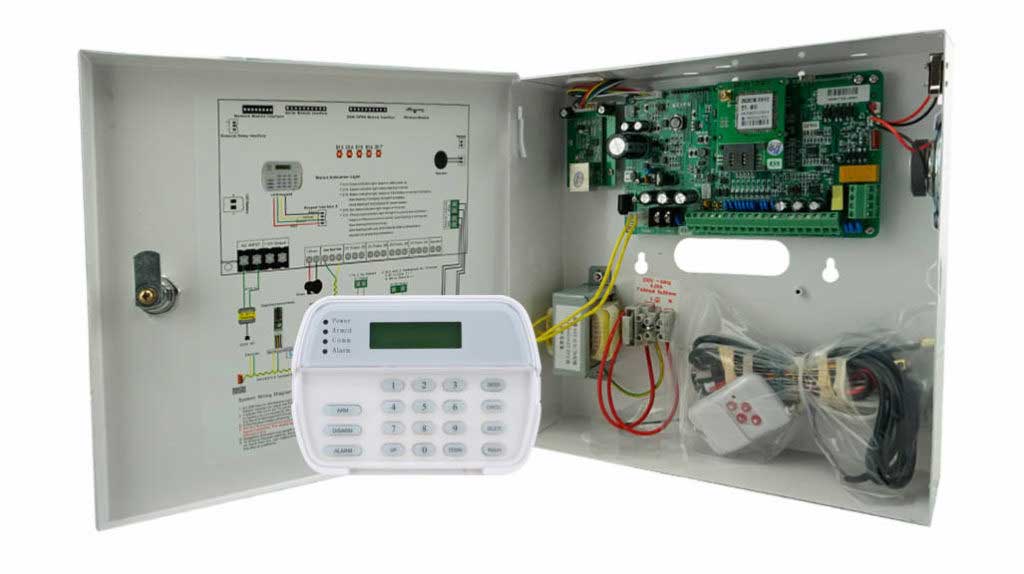
An intruder alarm control panel coordinates the entire intrusion detection system—wired and wireless sensors, zones, outputs, communication modules, and automation triggers. Scalability depends on how easily these functions can be expanded without replacing the main board.
2. Modular Design Principles
Industry standards such as EN 50131-1 emphasize reliability, system integrity, and structured expansion. Panels following modular design principles typically provide:
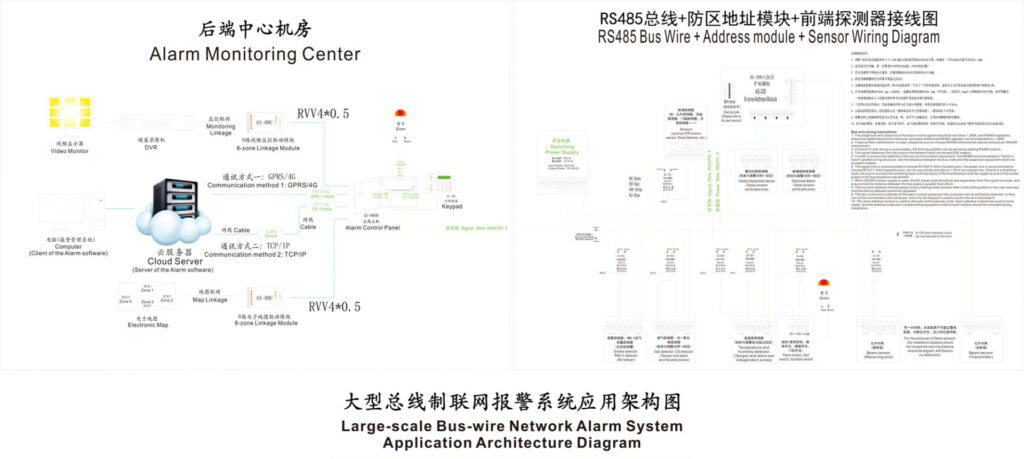
- Dedicated system buses (e.g., RS-485, CAN bus, or IP-based communications)
- Slots for expansion modules
- Configurable zone inputs and programmable outputs (PGMs)
- Reserved wireless capacity
A well-designed intruder alarm control panel will clearly specify the maximum number of zones, devices, and modules, allowing buyers to plan for growth.
3. Key Technical Factors Influencing Scalability
- Bus Architecture: RS-485 buses support long cable runs and multiple addressable modules, while IP-based panels enable high-bandwidth communication and remote management.
- Power Supply Headroom: Expansions must not overload the auxiliary power supply. Reputable manufacturers specify total current capacity for expanders and peripherals.
- Firmware Upgradability: Up-to-date firmware ensures compatibility with new expanders, wireless devices, encryption protocols, and third-party integrations.
- System Memory and Processor Capacity: Some older panels lack the processing capability to support large device counts or modern wireless encryption schemes.
4. Procurement Insight
Before purchasing, review the panel’s datasheet for:
- Maximum wired zones
- Maximum wireless zones
- Available bus addresses
- Maximum I/O expanders
- Maximum supported keypads, communicators, or automation modules
This prevents situations where future growth requires replacing the entire alarm system—an unnecessary cost.

III. Adding Input/Output Expanders: Practical Guidance
1. What I/O Expanders Do
Input/output expanders increase the number of wired zones, relay outputs, automation triggers, and system control options. They are essential when expanding perimeter protection, adding beams, integrating CCTV triggers, or controlling additional sirens or relays.
2. Compatibility and Protocol Checks
Ensure that the expander is compatible with the control panel’s:
- Bus protocol (proprietary, RS-485, CAN, IP)
- Device addressing method (DIP switches, auto-addressing)
- Firmware version requirements
- Wiring topology (daisy chain, star wiring not always allowed)
Hybrid systems using standards such as Zigbee or Z-Wave may support third-party I/O modules, but commercial-grade systems typically rely on manufacturer-specific protocols to maintain EN 50131 compliance.
3. Installation & Commissioning Best Practices
- Maintain bus cable quality, shielding, and correct termination.
- Avoid address conflicts during module enrollment.
- Verify voltage and current requirements before powering the module.
- Perform a full system integrity test after installation.
4. Real-World Benefits
Leading manufacturers—such as Honeywell, DSC, Texecom, and Vanderbilt—design modular panels where expanders can be added without downtime. This reduces installation time, minimizes business disruption, and avoids costly panel replacement during facility expansion.
IV. Integrating Additional Wireless Sensors for Enhanced Coverage
1. Wireless Expansion Options
Modern wireless intruder systems use secure RF frequencies, commonly 433MHz or 868MHz in Europe and parts of Asia, to support:
- Door/window sensors
- PIR detectors
- Shock sensors
- Smoke/heat detectors
- Environmental alarms (flood, CO, temperature)
2. Enrollment Process
To maintain secure system operation:
- New wireless sensors are enrolled using keypad menus, configuration software, or mobile apps.
- Panels supporting hybrid wired/wireless environments allow seamless mixing of device types.
- For large sites, wireless repeaters or RF range extenders can overcome distance or signal obstacles.
3. Managing Common RF Challenges
Security professionals should address:
- Signal Interference: Conduct RF site surveys to locate obstacles, metal structures, or sources of noise.
- Battery Life Considerations: Select panels supporting advanced sleep cycles and battery diagnostics.
- Security Protocols: Use sensors with AES-128 encryption or rolling-code technology to prevent spoofing.
4. Procurement Recommendation
For commercial expansions, panels supporting at least 32–64 wireless zones—or more for enterprise sites—are ideal. Hybrid models ensure long-term flexibility for both new construction and retrofit projects.
V. Evaluating Long-Term Cost and ROI of Expandable Systems
1. Comparing Upfront vs. Long-Term Costs
A scalable intruder alarm control panel may cost slightly more initially, but total life-cycle cost is significantly lower because:
- No need to replace the entire system as security needs grow
- Lower labor and downtime costs during upgrades
- Reduced training expenses—same interface, expanded capabilities
2. Maintenance and Software Support
Long-term ROI improves when the panel:
- Receives consistent firmware updates
- Supports backward compatibility with older sensors
- Offers extended warranties and certified technical support
3. Buyer’s Checklist for Procurement Teams
When assessing an expandable alarm system, review:
- Maximum zone/device capacity
- Hybrid support (wired + wireless)
- Expandability of communication modules (cellular/IP/dual-path)
- Third-party integration capability (CCTV, access control, BMS)
- Availability of diagnostic tools and remote programming
- Vendor reputation and long-term product roadmap
4. Practical Value for Bulk Purchasers
For retail chains, large residential developers, and commercial projects, scalability minimizes downtime and ensures consistent performance across all sites—even as operational risks increase.
VI. Case Studies: Successful Expansion Scenarios
1. Retail Chain Zone Expansion
A national retail chain added new storage zones to multiple locations. Using RS-485 I/O expanders on a modular control panel, they doubled their zone capacity without replacing any core hardware.
Result: Reduced labor costs and avoided system downtime during store remodeling.
2. Enterprise Office Wireless Upgrade
An office complex upgraded its intruder alarm system with encrypted 868MHz wireless sensors to secure newly leased areas. Existing IP-based hybrid panels supported additional wireless modules with simple firmware updates.
Result: Rapid deployment with minimal disruption to office operations.
3. Insights from Industry Reports
ASIS International’s 2023 findings highlight that organizations using expandable intruder systems report 20–40% lower long-term integration costs and improved compliance with risk management frameworks.
VII. Conclusion
Modern intruder alarm control panels are designed to support additional hardware—whether wired expanders or wireless sensors—with minimal complexity. Scalability ensures the system evolves alongside the client’s security requirements, avoids unnecessary hardware replacements, and delivers long-term operational efficiency.
For security professionals, product managers, and procurement teams, evaluating expansion capabilities during the initial purchasing phase is essential. Reviewing technical specifications, vendor support, and modular design options helps ensure the system remains reliable and future-proof.
For any planned upgrade or upcoming project, consult certified installers and manufacturer datasheets to assess the panel’s expansion roadmap and ensure compliance with relevant standards.