
Executive Overview: Why Understanding the Evolution of the Alarm Control Panel Matters
In the modern physical security landscape, few components are as strategically critical as the alarm panel. Whether it is referred to as an alarm control panel, burglar alarm control panel, intrusion alarm panel, or burglar alarm panel, this device remains the operational brain of every intrusion detection system.
For decades, the alarm control panel has quietly coordinated sensors, processed alarm signals, and triggered response mechanisms. Yet the role of the panel has changed dramatically. What was once a simple electronic board performing basic zone supervision has evolved into a powerful networked computing platform capable of managing complex multi-site security ecosystems.
For security decision-makers, installers, and procurement specialists, understanding this evolution is not merely academic. It directly affects:
- System reliability
- Operational security posture
- Scalability of security infrastructure
- Cybersecurity exposure
- Total cost of ownership over 10–20 years
Organizations today frequently face difficult questions:
- Should a legacy burglar alarm control panel be upgraded or replaced?
- Are IP-based alarm panels truly more secure than traditional systems?
- How do modern smart burglar alarm panels improve operational control?
- What differentiates a next-generation intrusion alarm panel from a conventional panel?
- Does the shift to intelligent systems genuinely elevate overall security levels, or does it introduce new vulnerabilities?
This article provides a deep technical exploration of the evolution of the intrusion alarm panel, breaking down the development of alarm control technology into five distinct architectural generations. More importantly, it explains how each technological shift changed security performance, system management, and operational risk, with focused analysis on changes in security, response speed, management modes, and data management trends.
For organizations planning long-term security infrastructure investments, this guide provides the technical clarity needed to make informed decisions. By examining these evolutions, readers can better assess whether traditional burglar alarm control panels should be upgraded, evaluate the safety advantages of IP-based systems, identify key gaps between new and old panels, and determine if intelligent features truly enhance security grades in practical scenarios.
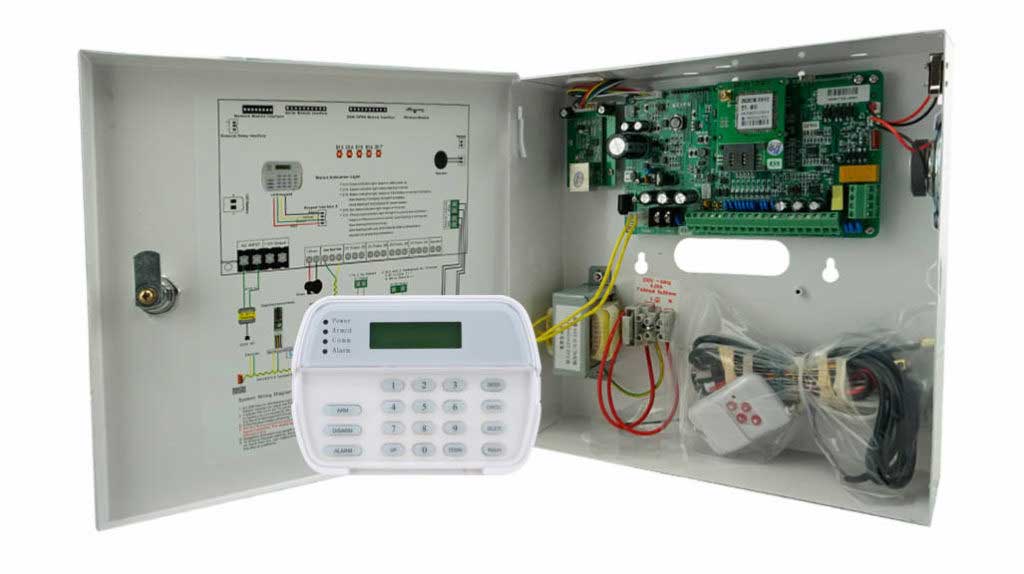
The Role of the Alarm Panel in an Intrusion Detection System
Before analyzing the evolution of alarm technology, it is essential to understand the fundamental role of the alarm control panel.
The alarm control panel serves four primary functions:
1. Sensor Supervision
The panel monitors connected devices such as:
- Motion detectors
- Door contacts
- Glass break sensors
- Shock detectors
- Panic buttons
- Vibration sensors
- Perimeter protection devices
- Environmental sensors like smoke or flood detectors for integrated systems
Each sensor communicates with the panel through wired loops, bus protocols, or wireless transmission. In practice, this supervision ensures constant heartbeat checks to detect any disconnections or faults, which is crucial for maintaining system integrity.
2. Signal Processing
When a sensor detects activity, the intrusion alarm panel analyzes the signal based on programmed logic:
- Zone configuration
- Entry/exit delays
- Arming states
- Alarm verification logic
- Cross-zone verification to reduce false positives
The panel determines whether the signal represents a legitimate alarm event. For instance, in a real-world setup, if a motion detector triggers during an entry delay period, the panel might hold off on alarming to allow for authorized disarming.
3. Alarm Response Control
Once an alarm is verified, the panel activates response mechanisms such as:
- Sirens
- Strobe lights
- Monitoring center communication
- Mobile notifications
- Video verification systems
- Automated lockdowns or integrations with access control to seal off areas
This control extends to prioritizing responses, like escalating from local alerts to emergency services if unacknowledged.
4. System Management
Modern alarm control panels provide administrative functions including:
- User management
- Event logging
- Remote configuration
- System diagnostics
- Firmware updates and integration with third-party apps
These core functions have remained constant over decades, but the technology used to deliver them has transformed significantly. Understanding these roles helps highlight how evolutions address real-world pain points, such as reducing false alarms that waste resources or improving response times in high-risk environments.
Generation One: The Pure Analog Mainboard Era
Architecture of Early Burglar Alarm Panels
The earliest burglar alarm panels were entirely analog electronic systems built around simple circuit boards.
Typical characteristics included:
- Fixed hardware circuits
- Hardwired zones
- Relay-based alarm outputs
- Minimal configuration options
- No digital communication capabilities
- Basic power supplies with limited backup options
Zones were implemented through basic electrical loops.
Common wiring types included:
- Normally closed circuits
- End-of-line resistor loops
- Simple tamper detection using additional resistors
Each zone operated independently, and the panel simply monitored changes in circuit resistance. For example, a break in the loop would trigger an open circuit alarm.
Limitations of Analog Alarm Panels
While reliable for their time, early alarm panels had significant limitations that often led to operational challenges in larger or more dynamic environments.
Limited Zone Capacity
Most early systems supported:
- 4 zones
- 6 zones
- 8 zones
Expanding beyond these limits required replacing the entire control panel, which was costly and disruptive for growing facilities.
No Event Memory
Analog systems typically lacked event logging capabilities. When an alarm occurred, the system could not store historical data for analysis, making it difficult to investigate recurring issues or patterns of unauthorized access.
No Remote Communication
Most systems relied on:
- Audible sirens
- Telephone dialers (in later models)
There was no centralized remote management capability, meaning responses depended entirely on on-site personnel or basic auto-dialers that could fail during line outages.
Limited Diagnostics
Troubleshooting required manual testing using:
- Multimeters to check voltage and resistance
- Loop resistance measurements across each zone
- Physical inspection of wiring for breaks or shorts
Despite these limitations, analog alarm panels were known for high electrical stability and low software complexity, which often translated to long service life. Many facilities today still operate analog alarm control panels installed 20–30 years ago, but they increasingly face compatibility issues with modern sensors.
Analysis of Changes in This Era
In terms of security, these panels offered basic protection but were vulnerable to simple tampering, like cutting wires. Response speed was immediate for detected events but limited by manual verification. Management was hands-on and local, with no data trends available, leading to reactive rather than proactive security strategies.
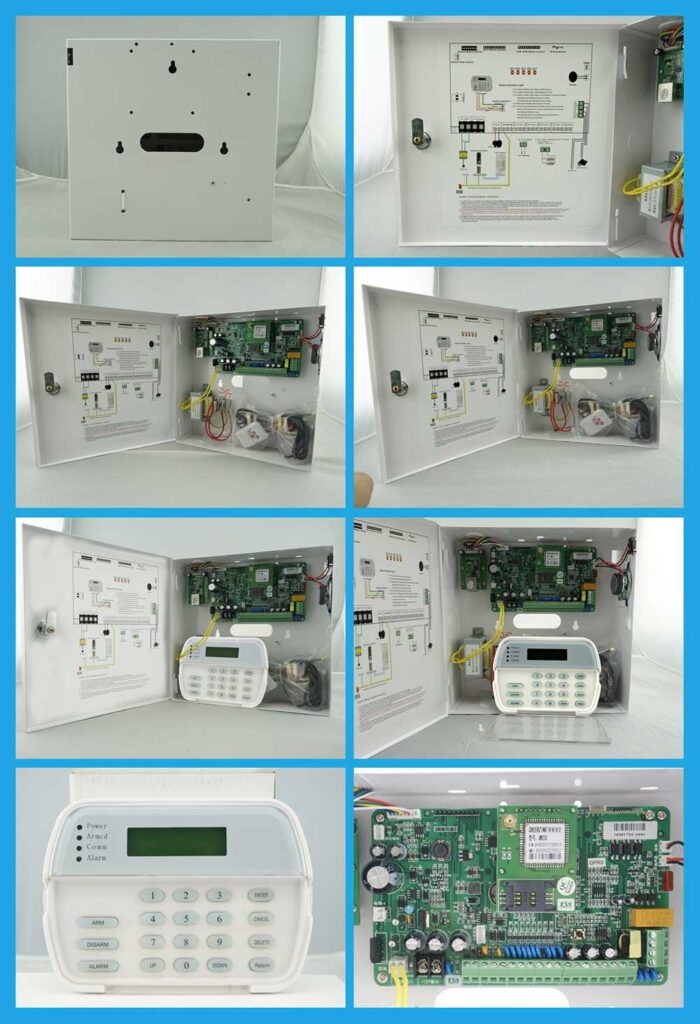
Generation Two: The Programmable Logic Era
Introduction of Microcontrollers
The next major evolution occurred with the integration of microcontrollers into the alarm control panel architecture.
Instead of fixed electronic circuits, these systems used embedded processors to manage logic functions.
This enabled several significant improvements, marking a shift from rigid hardware to flexible software-driven operations.
Software-Based Zone Configuration
Zones could now be configured through keypad programming.
Installers could define:
- Entry zones with delays for authorized access
- Instant alarm zones for immediate threats
- 24-hour zones for constant monitoring
- Fire zones integrated with smoke detectors
- Panic zones for emergency buttons
This dramatically increased system flexibility, allowing customization without hardware changes.
User Code Management
The programmable burglar alarm control panel introduced user credential management.
Typical capabilities included:
- Multiple user codes (up to 32 in some models)
- Administrator privileges for full control
- Temporary access codes for visitors or contractors
To set up, an installer would enter programming mode via a master code, then assign codes step-by-step: 1) Select user slot, 2) Input 4-6 digit code, 3) Assign privileges, 4) Test for conflicts.
Event Logging
Programmable panels could store system activity in memory.
Logs often included:
- Alarm events with timestamps
- System arming/disarming records
- User activity logs
- Fault conditions like low battery
This allowed operators to review historical security events, aiding in audits or investigations. Accessing logs typically involved entering a view mode on the keypad and scrolling through entries.
Dialer Communication
Many programmable alarm panels integrated digital communicators capable of transmitting alarm signals to monitoring stations via telephone lines.
Common protocols included:
- Contact ID for detailed event codes
- SIA for structured data transmission
- Pulse formats for older central stations
Setup steps: 1) Program the dialer with the monitoring center’s phone number, 2) Select protocol, 3) Test transmission by simulating an alarm.
Analysis of Changes in This Era
Security improved with programmable logic reducing bypass risks through customized zones, though still susceptible to code guessing. Response speed enhanced slightly via automated dialers, but delays in phone lines persisted. Management shifted to semi-centralized with basic remote monitoring, and data trends began emerging through logs, enabling simple pattern analysis for better prevention.
Generation Three: The Bus Extension Era
The Problem with Traditional Zone Wiring
As facilities grew larger, traditional hardwired zone architecture became inefficient.
Each sensor required a dedicated wiring loop back to the panel. Large buildings often required:
- Hundreds of cable runs
- Complex wiring pathways
- Significant installation labor, often exceeding 50% of project costs
To address this, manufacturers introduced bus-based alarm panel architectures, revolutionizing scalability.
How Bus-Based Alarm Panels Work
Instead of direct wiring to the panel, devices connect to a shared communication bus.
Examples include:
- RS-485 communication buses for reliable long-distance signaling
- Proprietary device networks like those from Honeywell or DSC
Peripheral modules communicate digitally with the intrusion alarm panel.
These modules may include:
- Zone expanders for adding inputs
- Relay output modules for controlling devices
- Keypads for user interfaces
- Power supply modules with battery backups
Installation steps: 1) Run a single bus cable throughout the facility, 2) Connect devices in daisy-chain or star topology, 3) Address each module uniquely via DIP switches or software, 4) Enroll devices in the panel’s programming.
Advantages of Bus-Based Burglar Alarm Panels
Massive Zone Expansion
Bus systems allow systems to scale far beyond the physical limitations of traditional panels.
Modern systems may support:
- 256 zones
- 512 zones
- 1000+ zones in enterprise setups
This scalability is key for warehouses or campuses where zones can be added without rewiring.
Reduced Cabling Complexity
Instead of running a cable for each sensor, installers can connect multiple devices along a shared bus line.
This reduces installation cost and simplifies system design, often cutting cabling needs by 70-80%.
Modular System Design
Facilities can add expansion modules as needed without replacing the entire alarm control panel.
This architecture remains common in many professional-grade intrusion detection systems today, offering a cost-effective bridge to more advanced tech.
Analysis of Changes in This Era
Security advanced with bus encryption in later models, though early buses were prone to interference. Response speed improved due to digital signaling, reducing latency in large setups. Management became more distributed and modular, with data trends supporting basic analytics like fault frequency mapping for maintenance planning.
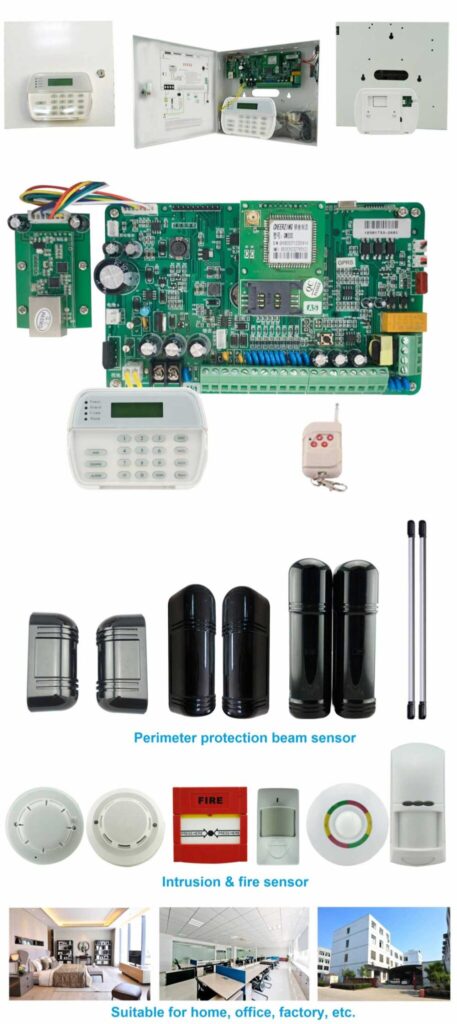
Generation Four: The IP Network Integration Era
Why Alarm Systems Entered the IP Era
As enterprise networks became universal, security systems began integrating with IP infrastructure.
This led to the development of the IP alarm panel.
Unlike traditional systems relying on telephone lines or proprietary buses, these panels communicate through Ethernet networks, enabling seamless integration with IT ecosystems.
Capabilities of IP-Based Alarm Panels
Real-Time Network Communication
Events can be transmitted instantly through IP networks to:
- Monitoring centers via secure protocols
- Security management platforms
- Mobile applications for push alerts
This eliminates phone line dependencies, ensuring reliability in VoIP environments.
Remote Configuration
Security administrators can manage the system remotely through web interfaces.
Common capabilities include:
- Zone configuration via browser-based dashboards
- User management with multi-factor authentication
- Firmware updates over-the-air
- System diagnostics with real-time metrics
Steps for remote config: 1) Secure network access with VPN, 2) Log in to panel’s IP address, 3) Navigate to settings, 4) Apply changes and verify with a test alarm.
Multi-Site Management
A modern alarm control panel can integrate into centralized management software that supervises multiple facilities simultaneously, ideal for chains or corporations.
Integration with Other Security Systems
IP architecture allows intrusion systems to integrate with:
- Video surveillance platforms for event-triggered recording
- Access control systems for unified entry logs
- Building management systems for HVAC interlocks
- Security information platforms like SIEM for threat correlation
This creates unified security environments, where an alarm can automatically pull up related camera feeds.
Analysis of Changes in This Era
Security saw major gains with encrypted IP communications, but introduced cyber risks like hacking—addressed by firewalls. Response speed became near-instantaneous with network speeds, far surpassing dialers. Management evolved to remote and centralized, with data trends enabling predictive analytics, such as identifying weak zones from aggregated events.
Generation Five: The Cloud Platform Integration Era
The latest generation of intrusion alarm panels integrates cloud computing and intelligent analytics.
These systems move beyond simple signal processing and introduce advanced operational capabilities, defining the smart burglar alarm panel.
Cloud-Based Alarm Management
Modern alarm panels may connect directly to cloud security platforms that provide:
- Remote system monitoring from anywhere
- Device health analytics using AI to predict failures
- Predictive maintenance alerts
- Multi-site alarm analytics for pattern recognition across locations
This architecture reduces the operational burden on local infrastructure, with data stored securely off-site.
Intelligent Alarm Verification
Some systems incorporate advanced verification techniques including:
- Video verification linking to cameras
- AI motion analysis to distinguish humans from animals
- Sensor correlation, e.g., combining motion and glass break for confirmation
The panel can analyze multiple signals before triggering alarms, reducing false alarms by up to 90% in tested environments. Key error point: Ensure AI training data is site-specific to avoid misclassifications.
Mobile-First Security Control
Cloud-connected systems allow authorized users to control the system through mobile applications.
Capabilities include:
- Remote arming/disarming with geofencing
- Instant alarm notifications with photos
- System health alerts for low battery
- Activity reports customizable by date/range
Setup: 1) Download app, 2) Pair with panel via QR code, 3) Set permissions, 4) Enable notifications.
Analysis of Changes in This Era
Security reaches peak with AI-driven verification and cloud encryption, though dependent on internet stability—backup cellular is recommended. Response speed is optimized with cloud processing, often under 5 seconds. Management is fully data-driven and user-centric, with trends like big data analytics forecasting threats, transforming security from reactive to preventive.
Comprehensive Analysis: Changes Across Generations
To address core questions like whether traditional panels should upgrade and if IP/smart systems are safer, here’s a detailed breakdown of evolutions in key areas.
Security Changes
- Analog Era: Basic tamper resistance but easy to disable via wire cuts; no encryption.
- Programmable Era: Added code-based access but vulnerable to brute force.
- Bus Era: Improved with device polling, reducing spoofing.
- IP Era: Encrypted communications enhance safety, but cyber threats emerge—IP panels are generally more secure if properly segmented.
- Cloud Era: AI verification and multi-layer encryption raise security grades significantly, though outages pose risks. Overall, intelligence does improve safety by minimizing false alarms and enabling proactive threat detection.
Response Speed Changes
- Analog Era: Immediate local alerts but slow remote (manual or basic dialer).
- Programmable Era: Faster with auto-dialers, but line delays common.
- Bus Era: Digital buses cut internal latency in large systems.
- IP Era: Network speeds enable sub-second transmissions.
- Cloud Era: Cloud optimization achieves end-to-end responses in milliseconds, a vast gap from traditional panels.
Management Mode Changes
- Analog Era: Fully manual and local.
- Programmable Era: Keypad-based, semi-programmable.
- Bus Era: Modular and expandable on-site.
- IP Era: Remote web access for efficiency.
- Cloud Era: Mobile/cloud-centric, with automation reducing human intervention.
Data Management Trends
- Early Eras: Minimal to basic logging, no trends.
- Later Eras: Evolving to big data analytics, enabling predictive security. This trend supports data-driven decisions, like optimizing sensor placement based on historical breaches.
| Generation | Security Level | Response Speed | Management Style | Data Capabilities |
|---|---|---|---|---|
| Analog | Basic (wire-based) | Local immediate, remote slow | Manual/local | None |
| Programmable | Moderate (codes/logic) | Improved dialers | Keypad/programmable | Basic logs |
| Bus | Enhanced (polling) | Low latency in scale | Modular/on-site | Event tracking |
| IP | High (encryption) | Near-instant | Remote/networked | Analytics integration |
| Cloud | Advanced (AI/cloud) | Millisecond | Mobile/automated | Predictive big data |
This table illustrates the progressive improvements, helping users see the clear gaps between generations.
Security Improvements Across Alarm Panel Generations
Understanding the security implications of each architectural stage is essential, especially when weighing if IP panels are safer or if intelligence boosts grades.
Signal Reliability
Older analog systems rely solely on electrical loops, prone to environmental interference like moisture.
Modern intrusion alarm panels use encrypted digital communication between devices, significantly reducing signal tampering risks through protocols like AES-256.
Tamper Detection
Modern alarm panels support advanced anti-tamper features including:
- Bus communication monitoring for disruptions
- Device authentication via unique IDs
- Communication integrity checks with checksums
Error-prone point: Always test tamper features during installation by simulating cuts—failure to do so can leave blind spots.
Cybersecurity
IP-based alarm panels introduce cybersecurity considerations that did not exist in legacy systems.
Professional systems now implement:
- TLS encryption for data in transit
- Secure firmware updates with digital signatures
- Role-based access control to limit user privileges
For IP safety: While more secure against physical tampering, they require IT best practices; without them, they’re vulnerable to hacks. Cloud adds layers like zero-trust models, making next-gen panels safer overall.
How to Evaluate Whether a Legacy Burglar Alarm Control Panel Should Be Upgraded
Many facilities still operate legacy alarm systems. Deciding whether to upgrade requires a structured evaluation, addressing if traditional panels suffice or if gaps justify change.
Step 1: Assess Hardware Age
If the alarm control panel is more than 15 years old, spare parts and firmware support may be limited. Check manufacturer discontinuation notices online.
Step 2: Evaluate Communication Infrastructure
Systems relying solely on analog phone lines may face reliability challenges as telecom networks phase out legacy infrastructure. Test line integrity monthly.
Step 3: Review System Scalability
If expansion requires replacing the entire burglar alarm panel, the system architecture may no longer meet operational needs. Calculate future zone needs based on facility growth.
Step 4: Analyze Maintenance Costs
Frequent service calls often indicate aging hardware.
Compare ongoing maintenance costs with the cost of system modernization: Tally annual repairs vs. upgrade ROI over 5 years.
Step 5: Consider Cybersecurity Requirements
Legacy panels lack modern security protections required for networked environments.
Organizations with strict IT policies may need newer platforms. Audit for compliance with standards like ISO 27001.
Additional Step 6: Assess False Alarm Rates
High false alarms (over 10% of events) signal outdated processing; modern intelligence can cut this drastically.

How to Upgrade from a Legacy Alarm Panel to a Modern Intrusion Alarm System
Upgrading an alarm system requires careful planning to minimize downtime, especially in 24/7 operations.
Step 1: Conduct a Complete System Audit
Document:
- Existing sensors and their conditions
- Wiring infrastructure diagrams
- Power supplies and backups
- Communication paths and redundancies
Use tools like cable tracers for accuracy.
Step 2: Evaluate Sensor Compatibility
Many legacy sensors can remain in place if the new alarm control panel supports conventional zones. Test each sensor’s output voltage and resistance.
Step 3: Select a Scalable Alarm Panel Architecture
Choose a platform that supports:
- Bus expansion for growth
- IP communication for integration
- Future device integration like IoT sensors
Research models from brands like Bosch or Paradox for compatibility.
Step 4: Implement Secure Network Architecture
For IP alarm panels, ensure proper network segmentation and firewall protection.
Steps: 1) Isolate security VLAN, 2) Configure firewalls to allow only necessary ports (e.g., 443 for HTTPS), 3) Enable intrusion detection on the network.
Step 5: Deploy Gradual System Migration
Large facilities may upgrade zones in phases to minimize operational disruption.
Plan: 1) Start with non-critical areas, 2) Test each phase for 48 hours, 3) Roll back if issues arise.
Additional Step 6: Train Staff
Conduct sessions on new interfaces, focusing on common errors like incorrect app notifications setup.
The Future of the Intrusion Alarm Panel
The evolution of the burglar alarm control panel is far from complete.
Several trends are shaping the next generation of systems, building on current intelligent networked control.
Edge Intelligence
Alarm panels will increasingly perform local analytics, reducing reliance on centralized processing and improving speed in offline scenarios.
Sensor Fusion
Future panels will correlate data from multiple sensor types to improve threat detection accuracy, such as combining thermal imaging with motion for zero false positives.
Cybersecurity Integration
Intrusion alarm systems will integrate with enterprise cybersecurity platforms to provide unified threat monitoring, detecting anomalies like unusual login patterns.
Autonomous Security Systems
AI-assisted alarm panels may automatically adjust security configurations based on detected risk patterns, e.g., heightening alerts during high-threat periods.
Emerging: Blockchain for tamper-proof logs and 5G for ultra-low latency, further bridging gaps in response and management.
Conclusion: Why the Alarm Control Panel Remains the Heart of Modern Intrusion Security
From simple analog circuits to intelligent cloud-connected platforms, the alarm control panel has undergone a remarkable technological transformation.
For security professionals responsible for protecting facilities, understanding this evolution is essential for making informed system decisions.
A modern intrusion alarm panel provides more than alarm processing. It enables:
- Integrated security ecosystems
- Real-time situational awareness
- Advanced operational analytics
- Scalable infrastructure for future security challenges
Organizations that continue relying on outdated burglar alarm panels risk operational inefficiencies, security vulnerabilities, and rising maintenance costs. Upgrading to IP or cloud-based systems not only addresses these but often proves more secure and efficient, with intelligence genuinely raising safety levels through data-driven insights.
Investing in modern alarm control architecture is not simply a technology upgrade. It is a strategic step toward building resilient security infrastructure capable of protecting assets, personnel, and operations in an increasingly complex threat environment.
For procurement leaders and system integrators, selecting the right alarm control panel today will shape the effectiveness of security operations for the next decade or more. Consider consulting certified experts for tailored assessments to ensure the chosen path aligns with specific needs.