
Introduction: Why Bank Alarm Systems Must Go Beyond Ordinary Security
Banks represent one of the most heavily regulated and high-risk environments in the entire physical security industry. Unlike retail stores, offices, or warehouses, financial institutions face a unique combination of threats, including organized theft, armed robbery, internal fraud, and targeted attacks on cash storage infrastructure.
Because of these risks, a security alarm system for banks is not simply another intrusion detection solution. It is a mission-critical component of a regulated security architecture that must meet strict technical standards, insurance requirements, and financial compliance frameworks.
Modern banks must simultaneously satisfy multiple layers of requirements:
- Financial regulatory security standards
- Insurance risk compliance
- High-grade intrusion detection certification
- Operational continuity standards
- Police or monitoring center alarm integration
Selecting the wrong bank alarm system can create serious consequences:
- Regulatory non-compliance
- Insurance claim rejection after incidents
- Delayed law-enforcement response
- Increased robbery risk
- Severe reputational damage
For procurement managers, security directors, and banking infrastructure planners, choosing the correct system is therefore a strategic decision rather than a simple equipment purchase.
This guide provides a deep, practical framework explaining how banks should evaluate, select, and deploy a compliant alarm system that meets modern banking security standards.
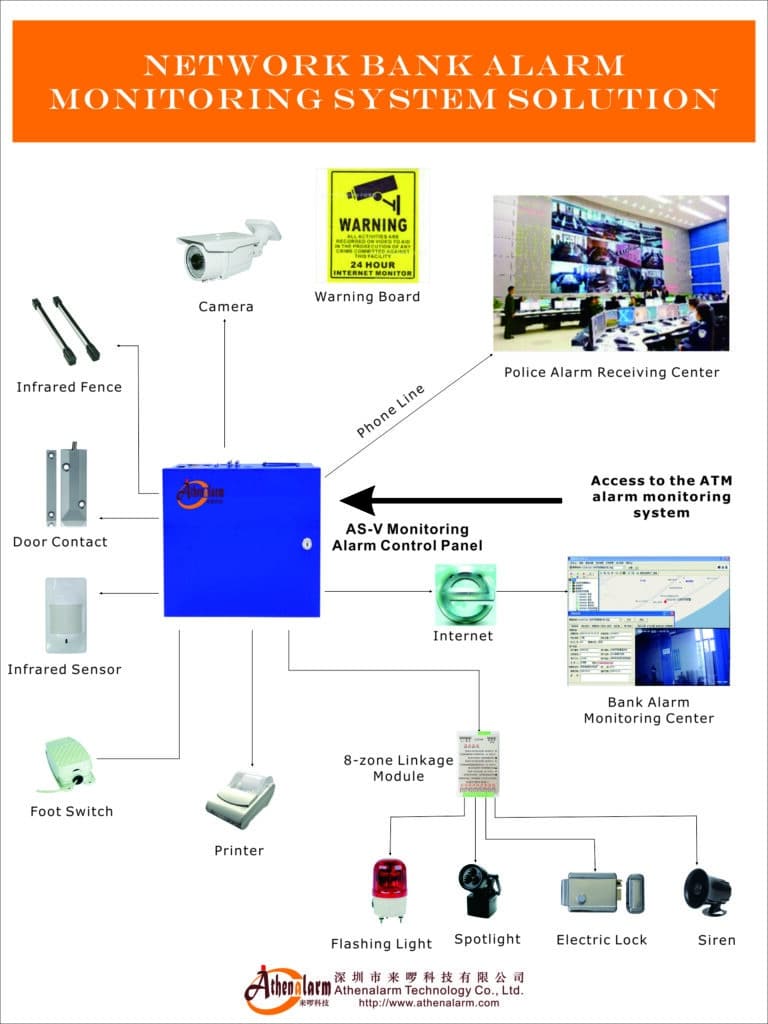
The Unique Security Requirements of Banking Environments
Banks operate under risk conditions far more demanding than ordinary commercial buildings.
Understanding these risks is the first step in selecting a suitable security alarm system for banks.
1. Cash Concentration Risk
Banks store large amounts of physical cash in:
- Vaults
- Teller drawers
- Cash recyclers
- ATMs
- Cash processing rooms
This concentration makes banks a primary target for organized criminals.
Alarm systems must therefore support:
- Vault protection
- Safe monitoring
- ATM tamper detection
- Silent duress alarms
To address this effectively, banks should incorporate layered detection strategies. For instance, in high-risk areas like cash processing rooms, combining motion sensors with weight-sensitive floor mats can detect unauthorized access even if intruders avoid visible pathways. This multi-sensor approach helps in early threat identification, reducing potential losses.
2. High-Value Asset Protection
Beyond cash, banks also protect:
- Precious metals
- Important documents
- Securities
- Customer safe deposit boxes
These assets require multi-layer intrusion detection, not basic motion sensors. For safe deposit boxes, systems should include individual compartment sensors that trigger alerts for tampering, ensuring customer privacy and asset integrity. Additionally, environmental sensors for humidity and temperature can prevent damage from non-criminal threats like flooding or fire, which indirectly supports overall security compliance.
3. Robbery and Hostage Threats
Bank robberies remain a major threat worldwide.
A proper bank alarm system must support:
- Silent panic alarms
- Under-counter duress buttons
- Staff-triggered alarms
- Immediate police notification
These systems must function discreetly and instantly. In practice, integrating voice-activated duress codes via intercom systems can provide an extra layer of safety for staff in hostage situations, allowing them to signal for help without physical movement that might alert perpetrators.
4. Insider Threats
Many financial security incidents involve employees or contractors.
Alarm systems must therefore support:
- Access control integration
- Audit logging
- Zone-level authorization
- Anti-tampering protection
To mitigate these risks, systems should log all access attempts with timestamps and user IDs, enabling quick forensic analysis after an incident. Regular review of these logs, perhaps quarterly, can help identify patterns of suspicious behavior, such as repeated after-hours access to restricted zones.
5. Regulatory Compliance
Banks must follow strict regulatory frameworks that dictate how alarm systems are designed.
Typical regulatory requirements include:
- Certified intrusion detection grades
- Tamper-resistant devices
- Redundant communication paths
- Monitoring center integration
Failure to meet these requirements can lead to fines or loss of insurance coverage. In the United States, for example, compliance with FDIC guidelines and the Bank Protection Act mandates minimum security measures, including alarm systems that integrate with local law enforcement. Internationally, standards like EN 50131 in Europe specify performance criteria for intrusion systems, emphasizing the need for certified equipment to avoid legal penalties.

Why Standard Commercial Alarm Systems Are Not Suitable for Banks
One of the most common mistakes in bank security planning is using general commercial alarm systems designed for offices or retail stores.
While these systems may appear similar, they lack the security grade and redundancy required for banking environments.
1. Lower Security Grades
Standard commercial systems typically fall under Grade 1 or Grade 2 intrusion standards.
These grades are designed for:
- Homes
- Small retail stores
- Low-risk offices
Banks require significantly higher protection levels. Upgrading to higher grades ensures resistance against sophisticated attacks, such as those using tools to bypass basic sensors.
2. Weak Tamper Protection
Basic systems may not detect:
- Sensor masking
- Wire cutting
- Device removal
- Communication jamming
Banks must deploy systems capable of tamper detection and sabotage resistance. For example, end-of-line resistors in wiring can alert to cuts, while encrypted wireless protocols prevent jamming attempts.
3. Limited Alarm Verification
False alarms are costly and dangerous.
Commercial systems often lack:
- Dual-technology verification
- Alarm confirmation procedures
- Video verification integration
Banks must ensure alarms represent real threats. Implementing cross-zone verification, where two separate sensors must trigger before an alarm escalates, can reduce false positives by up to 90%, based on industry benchmarks.
4. Inadequate Communication Redundancy
Standard alarm panels may rely on:
- Single telephone line
- Single IP connection
Bank systems require multiple redundant communication channels to guarantee alarm transmission. This includes failover mechanisms that automatically switch to cellular if IP fails, ensuring no downtime during critical moments.
Security Grades Required for Bank Alarm Systems
One of the most critical concepts when selecting a bank alarm system is the intrusion system security grade.
Understanding Intrusion System Grades
Intrusion systems are commonly classified into grades based on their ability to resist attacks.
Typical grading structure includes:
| Grade | Risk Level | Typical Application |
|---|---|---|
| Grade 1 | Low risk | Homes |
| Grade 2 | Moderate risk | Small businesses |
| Grade 3 | High risk | Banks, jewelry stores |
| Grade 4 | Very high risk | Military facilities, central banks |
For most banking environments:
Grade 3 is the minimum requirement.
High-risk locations such as:
- Central vault facilities
- Cash distribution centers
may require Grade 4 systems. These grades are often certified by bodies like Underwriters Laboratories (UL) in the U.S. or the European Certification Board (ECB) in Europe, providing assurance of tested performance.
Characteristics of Grade 3 / Grade 4 Systems
These systems typically include:
- Advanced tamper detection
- Sensor masking protection
- Encrypted communication
- Multi-path alarm transmission
- Anti-substitution device authentication
- High-security enclosure design
In Grade 4 systems, features like biometric authentication for arming/disarming add an extra layer against insider threats.
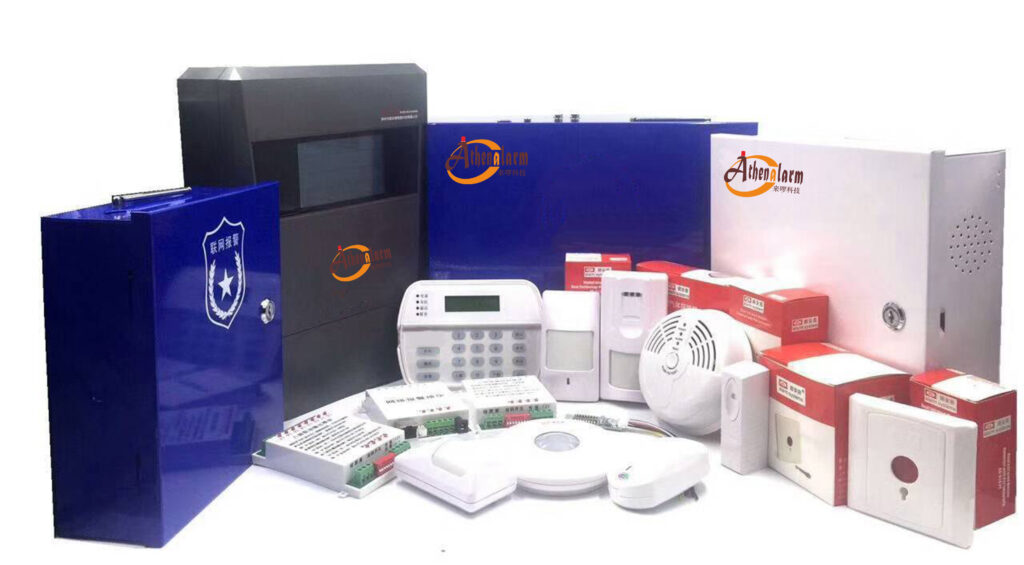
Key Components of a Professional Security Alarm System for Banks
A reliable security alarm system for banks consists of multiple integrated components.
1. Intrusion Detection Sensors
These sensors detect unauthorized access.
Typical devices include:
- PIR motion detectors
- Dual-technology sensors
- Glass break detectors
- Magnetic door contacts
- Shock and vibration sensors
Banks often deploy dual-technology sensors to reduce false alarms. When installing, ensure sensors are placed at optimal heights—typically 7-8 feet for PIR—to avoid pet or environmental triggers, a common error in setup.
2. Vault Protection Systems
Vault protection requires specialized sensors.
Common solutions include:
- Seismic detectors
- Safe vibration sensors
- Thermal drilling detection
- Structural attack sensors
These sensors detect:
- Drilling
- Cutting
- Explosions
- Mechanical attacks
For operation, calibrate seismic detectors to the vault’s specific construction materials, as concrete vs. steel can affect sensitivity thresholds.
3. Panic and Duress Alarm Devices
Silent alarm activation devices are critical.
Examples include:
- Under-counter panic buttons
- Foot pedals
- Wireless panic transmitters
- Staff duress alarms
These allow employees to trigger alerts without alerting criminals. In training, emphasize testing these devices monthly to ensure battery life and signal strength, preventing failures during real emergencies.
4. Alarm Control Panel
The alarm panel acts as the system brain.
Key requirements include:
- Multi-zone management
- Event logging
- Tamper monitoring
- Secure firmware
- Backup power support
Banks typically deploy professional wired alarm panels for reliability. Update firmware annually to patch vulnerabilities, a step often overlooked that can expose systems to cyber threats.
5. Communication Modules
Alarm signals must reach monitoring centers reliably.
Typical communication paths include:
- IP network
- Cellular network
- Radio communication
- PSTN backup
Modern bank systems often require dual or triple communication paths. To set up, configure automatic failover testing weekly to confirm seamless switches.

The Role of Remote Monitoring Centers
A bank alarm system must always be connected to a professional monitoring center.
These centers perform several critical functions.
Alarm Verification
Operators verify alarms using:
- Sensor data
- Video confirmation
- Alarm sequence analysis
This reduces false dispatches. Centers certified by organizations like the Central Station Alarm Association (CSAA) ensure 24/7 staffing and rapid response times under 60 seconds.
Emergency Response Coordination
Monitoring centers immediately notify:
- Police
- Bank security teams
- Regional operations centers
Coordination includes providing real-time updates to responders, such as suspect descriptions from integrated video feeds.
Continuous System Monitoring
Monitoring services also detect:
- Device failures
- Communication interruptions
- Power loss
This proactive approach can prevent up to 70% of system downtimes through early alerts.
Dual Authentication Alarm Design for Banks
Dual authentication alarms are increasingly required by banking security standards.
These systems require two independent triggers before escalating the alarm.
Examples of Dual Authentication
Examples include:
- Motion sensor + door contact
- Seismic detector + vibration sensor
- Access event + motion detection
This approach reduces false alarms while maintaining high security. In implementation, program the control panel to require a 10-15 second confirmation window between triggers to account for legitimate movements.

Anti-Robbery Alarm Systems for Banking Environments
Robbery alarms differ from intrusion alarms.
They must activate instantly and silently.
Types of Robbery Alarm Devices
Common devices include:
- Under-counter buttons
- Cash drawer panic switches
- Foot-activated alarms
- Wireless wearable alarms
Wearable alarms, like pendant devices, are ideal for mobile staff in larger branches.
Robbery Alarm Workflow
Typical process:
- Employee activates panic alarm discreetly, such as by pressing a button twice to confirm.
- Alarm panel sends signal via encrypted channels to avoid interception.
- Monitoring center receives event and verifies through audio or video if integrated.
- Police notified immediately with location details and incident type.
- Bank security team alerted simultaneously for internal lockdown procedures.
The entire process must occur within seconds. A key error to avoid is single-press activation, which can lead to accidental triggers; always use confirmation sequences.
Designing a Regulatory-Compliant Bank Alarm System
Designing a compliant security alarm system for banks requires careful planning.
Below is a step-by-step framework.
Step 1: Conduct a Bank Security Risk Assessment
Security professionals should evaluate:
- Cash storage locations
- Entry points
- Public access areas
- ATM zones
- Cash handling rooms
Each area receives a risk rating. To perform this:
- Assemble a team including security experts, branch managers, and IT staff.
- Map the facility layout, identifying vulnerabilities like blind spots or weak entry points.
- Use tools like risk assessment matrices to score threats on likelihood and impact.
- Consult historical incident data from industry reports, such as those from the FBI’s Bank Crime Statistics.
- Document findings in a report, prioritizing high-risk areas for enhanced protection.
Step 2: Define Security Zones
Banks typically divide alarm systems into zones such as:
- Public lobby
- Teller area
- Cash vault
- Safe deposit area
- ATM lobby
- Server room
Each zone receives different sensor types. Assign access levels per zone, ensuring only authorized personnel can disarm specific areas.
Step 3: Select Certified Alarm Hardware
All components must meet required certifications.
Important criteria include:
- Intrusion grade rating
- Tamper protection
- Environmental reliability
- Anti-masking sensors
Research suppliers through directories like those from the Security Industry Association (SIA), verifying UL or EN certifications.
Step 4: Implement Redundant Communication
Banks should always deploy:
- Primary IP communication
- Cellular backup
- Optional radio network
This ensures alarms are transmitted even during network failures. Test redundancy by simulating failures monthly.
Step 5: Integrate with Monitoring Centers
The alarm system must connect to:
- Central monitoring station
- Bank security operations center
Integration must include encrypted communication protocols. Use standards like AES-256 encryption to protect data in transit.
Step 6: Configure Alarm Verification Logic
Alarm logic should minimize false alarms.
Common methods include:
- Dual sensor confirmation
- Video verification
- Alarm event correlation
Program logic rules in the panel software, testing with simulated scenarios to fine-tune sensitivity.
Step 7: Train Bank Employees
Technology alone cannot guarantee security.
Staff training should include:
- Panic alarm usage
- Security procedures
- Emergency response protocols
Conduct hands-on drills quarterly, covering scenarios like armed robberies, and provide refresher courses annually.
Step 8: Perform Regular Security Audits
Banks must perform periodic audits including:
- Alarm testing
- Sensor inspections
- Communication verification
- Backup battery checks
Schedule audits biannually, involving third-party experts for unbiased reviews, and maintain detailed records for regulatory inspections.
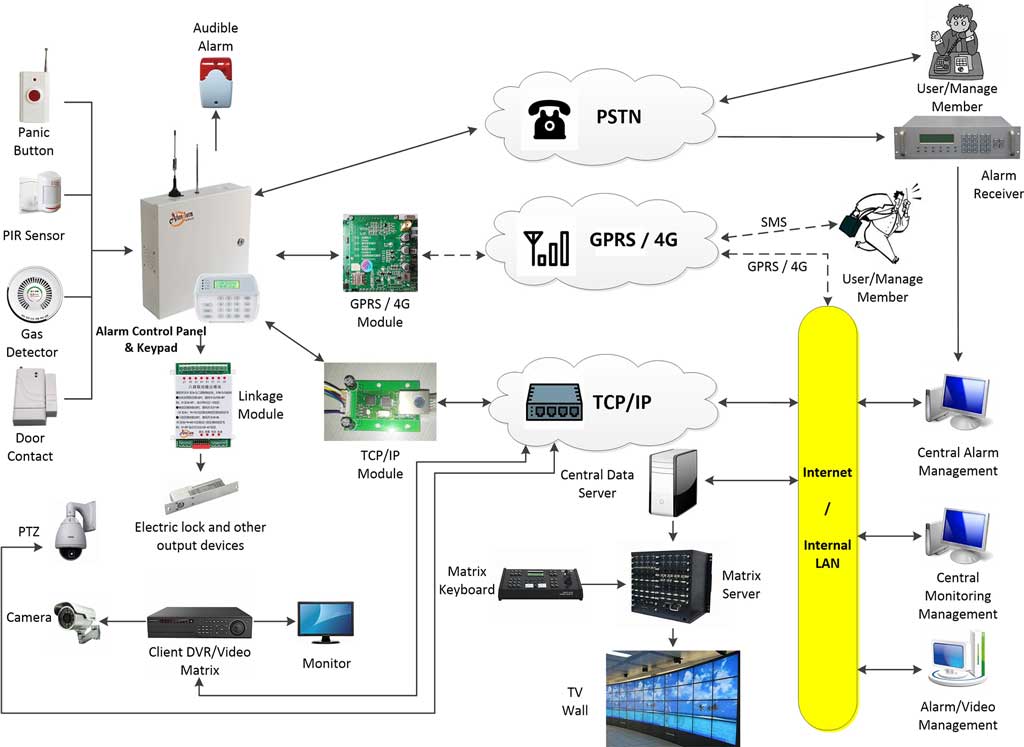
Integration with Other Bank Security Systems
A modern bank alarm system rarely operates alone.
It typically integrates with other security technologies.
Video Surveillance Systems
Video verification greatly improves alarm response.
Integration allows:
- Automatic camera activation
- Event recording
- Remote viewing
Choose IP-based cameras compatible with ONVIF standards for seamless integration.
Access Control Systems
Access control integration allows:
- Alarm disarming during authorized entry
- User identity tracking
- Event correlation
Use systems with RFID or biometric readers, logging all entries for compliance audits.
ATM Security Systems
ATMs require dedicated monitoring:
- Door tamper detection
- Cash compartment sensors
- ATM vibration detection
Integrate with central alarms to trigger full-site lockdowns if an ATM is attacked.
Common Mistakes Banks Make When Choosing Alarm Systems
Avoiding these mistakes can dramatically improve security.
Choosing Consumer-Grade Systems
Consumer alarm products lack required certification and reliability. Always opt for commercial-grade or higher, verified by independent testing.
Ignoring Redundancy
Single communication channels create serious risk. A frequent oversight is not budgeting for multiple paths, leading to failures during outages.
Poor Sensor Placement
Improper installation reduces detection capability. Common errors include placing sensors near HVAC vents, causing false alarms from air currents; consult installation guides for optimal positioning.
Lack of Employee Training
Even the best system fails without trained users. Skipping ongoing training can result in misuse, such as forgetting duress codes under stress.
Overlooking Cybersecurity
Modern systems are vulnerable to hacking; ensure firewalls and regular updates to prevent breaches.
Future Trends in Bank Alarm System Technology
Bank security technology continues evolving.
Emerging trends include:
- AI-based alarm verification
- Video analytics integration
- Cloud-connected monitoring platforms
- Advanced tamper detection
- Cyber-secure alarm communication
Additionally, IoT-enabled sensors for real-time analytics and blockchain for tamper-proof logging are gaining traction, promising enhanced predictive security.
Final Thoughts: Selecting the Right Bank Alarm System Is a Strategic Security Decision
Choosing the correct bank alarm system is not simply a matter of purchasing hardware.
It requires a comprehensive approach that balances:
- Security engineering
- Regulatory compliance
- Risk management
- Operational efficiency
A properly designed security alarm system for banks must include:
- Grade 3 or Grade 4 intrusion detection
- Robbery alarm devices
- Tamper-resistant sensors
- Redundant communication
- Professional monitoring center integration
When these elements work together, banks can achieve a reliable, compliant, and highly resilient security infrastructure capable of protecting assets, employees, and customers.
For banks, financial institutions, and security integrators, investing in a professional, standards-compliant alarm system is not optional—it is a fundamental requirement for operating safely in today’s complex threat environment. By following this guide, you can make informed decisions that safeguard your operations against evolving risks.