

In today’s interconnected world, network alarm systems have revolutionized burglar alarm protection for enterprises, banks, chain stores, commercial properties, and large facilities. They deliver lightning-fast alarm transmission, seamless CCTV integration, and centralized monitoring that traditional PSTN or GSM systems simply cannot match. Yet this very connectivity—the TCP/IP and 4G pathways that make your intrusion detection so responsive—has turned your burglar alarm network into a high-value target for cybercriminals.
Imagine this: A hacker sitting halfway across the globe silently disables your entire chain of retail stores’ alarms at 2 a.m., bypasses the video pop-up linkage, and walks away with hundreds of thousands in merchandise while your central station never receives a single event. This is not science fiction. It is happening right now to organizations that treat their network alarm system as “just another IoT device.”
As a senior security engineer with over 20 years designing, deploying, and stress-testing burglar alarm networks for high-risk clients, I have seen the shift firsthand. The same features that make a network alarm system powerful—real-time data transmission of alarm events, user credentials, device status, and video feeds—also expose it if security is an afterthought. This comprehensive guide arms enterprise security managers, IT-physical security convergence teams, and bulk procurement decision-makers with the exact knowledge needed to close every gap.
You will learn the four primary attack vectors hackers use against network alarm systems, real-world bypass scenarios tailored to burglar alarm environments, and—most importantly—detailed, actionable implementation steps for TLS encryption, VPN tunneling, device authentication, firmware discipline, and network segmentation. Follow these strategies and your burglar alarm network becomes one of the hardest targets on the planet instead of the easiest.
Why Network Alarm Systems Are Now the #1 Target in Physical Security
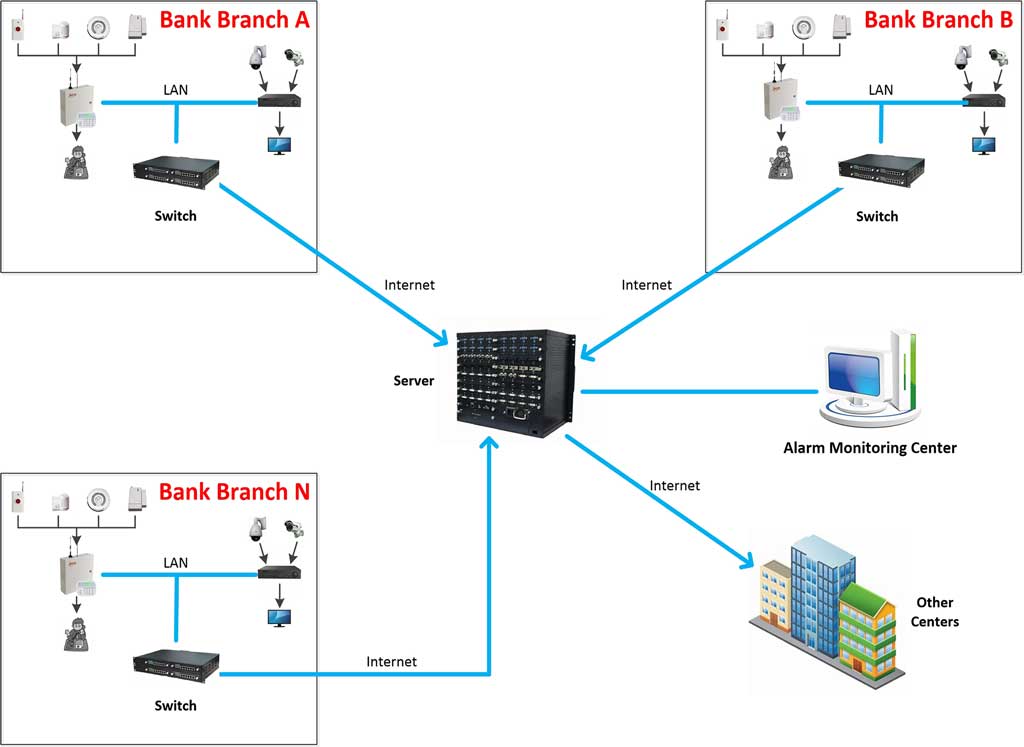
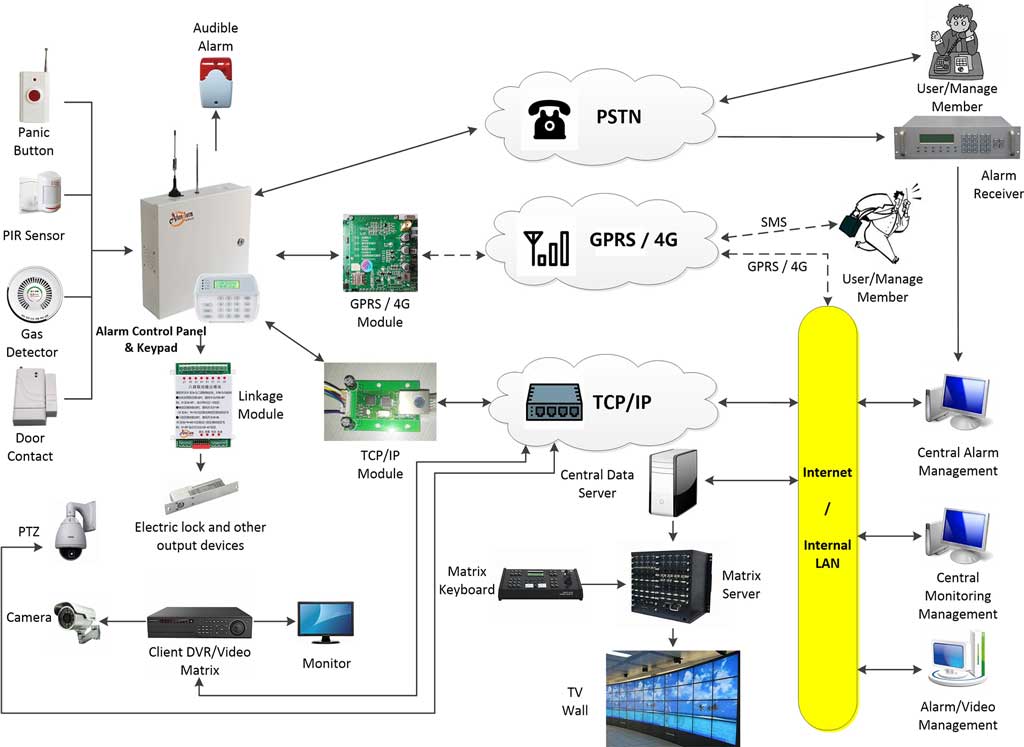
Modern burglar alarm networks (often called IP or network alarm systems) replace outdated dial-up lines with broadband TCP/IP and 4G cellular modules. Alarm control panels like those in the AS-9000 series or equivalent send event data, arm/disarm status, and live video triggers directly to cloud-based central station software. The moment a PIR detects intrusion, the system pops video, logs the event, and forwards it to your monitoring team or police liaison—all in under two seconds.
These systems integrate previously separate alarm and CCTV networks into a single cloud platform, supporting automatic real-time video pop-up and recording the instant an alarm triggers. They work seamlessly with leading CCTV brands such as HIKVISION, DAHUA, or XM, giving you instant visual verification that older systems could never deliver.
The benefits are undeniable for bulk buyers:
- Centralized management across dozens or hundreds of sites
- Automatic CCTV linkage for immediate verification
- Remote diagnostics that cut truck rolls by 70%
- Scalability for chain stores, banks, hotels, factories, and communities
But every packet carrying alarm events, user credentials, or panel credentials is now traversing public networks. Network alarm systems transmit large amounts of sensitive data—detailed alarm events with timestamps and zone statuses, user credentials for arming or disarming, device configuration details, live video streams, and even maintenance logs. Hackers no longer need physical access. They need only one weak link—default credentials on a single panel, unpatched firmware on a router, or unencrypted communication—to own your entire burglar alarm network.
Industry data shows IoT and connected security devices are compromised in under five minutes when default passwords remain unchanged. Burglar alarm panels are no exception; many still ship with factory credentials documented in public manuals. Once inside, attackers can disarm zones, spoof sensor data, or flood the central station with false events to mask a real burglary.
The Four Deadly Attack Vectors Hackers Use Against Network Alarm Systems
1. Default Passwords – The Fastest Path to Total Compromise
This remains the single most exploited weakness in network alarm systems. Manufacturers ship panels, receivers, and management software with “admin/admin” or easily guessable credentials. Many installers never change them after deployment.
How the bypass works in a burglar alarm context:
- Attacker scans public IP ranges or uses Shodan to locate exposed alarm receivers or cloud portals.
- Tries factory defaults or common variations.
- Logs into the panel or central software.
- Disarms selected zones, suppresses video pop-ups, or injects false “all clear” signals.
Real-world impact: A chain of convenience stores lost $450,000 in one weekend when a single compromised panel allowed coordinated after-hours entry at multiple locations. The central station saw only “system test” messages.
Immediate action you can take today (detailed steps):
- Inventory every device: panel, receiver, router, switch, cloud portal, and especially the 4G modules.
- Access each device via its local web interface or configuration tool (usually on port 80 or 443).
- Change the administrative password to a minimum 16-character passphrase using uppercase, lowercase, numbers, and symbols. Never reuse across devices.
- Enable account lockout after 5 failed attempts.
- Document the new credentials in an encrypted password manager accessible only to authorized personnel.
- For bulk deployments, create a standardized “post-install security checklist” that installers must sign off before handover.
Repeat this quarterly. One changed password has stopped more intrusions than any firewall.
2. Firmware Vulnerabilities – The Silent Backdoor That Never Closes
Outdated firmware on alarm panels, 4G modules, and network equipment contains publicly disclosed exploits. Hackers maintain databases of known vulnerabilities exactly like those affecting IP cameras and access control panels.
Bypass scenario:
- Attacker identifies your panel model via banner grabbing or traffic analysis.
- Downloads the exploit for the unpatched version (often available on GitHub within days of disclosure).
- Gains root access, installs persistent malware, and uses the panel as a pivot to your internal network or to exfiltrate video feeds.
In one documented case involving commercial burglar alarm networks, attackers used a known buffer overflow in an older TCP/IP module to remotely upload a custom script that disabled motion detection while keeping the panel “online” and reporting normal status.
Proven firmware update strategy (step-by-step for enterprise scale):
- Subscribe to every manufacturer’s security advisory list (your panel vendor, 4G module maker, CCTV brands, and router OEM).
- Create a test lab with identical hardware to your production environment.
- Download updates only from official HTTPS sources; verify SHA-256 hashes before installation.
- Schedule updates during low-traffic windows (e.g., 3 a.m. Sunday).
- Apply to the test lab first, simulate alarm events (including video pop-up linkage), and verify everything still functions correctly.
- Roll out in phases: 10% of sites → 30% → 100%, monitoring central station logs for anomalies.
- Maintain an update log with version numbers, dates, and verification signatures.
Never skip this. A single unpatched panel can compromise your entire fleet.
3. Device Hijacking – Turning Your Burglar Alarm into an Attacker’s Puppet
Mirai-style botnets and modern variants specifically target connected security devices. Once hijacked, your network alarm system becomes part of a larger attack infrastructure or is used to launch internal assaults.
How it happens:
- Weak or reused credentials + open ports 80/443/23.
- Malware infects the panel or the router it connects through.
- The device continues sending normal heartbeat signals to your central station while the attacker issues commands to suppress real alarms.
Defense in depth:
- Disable all unnecessary services and ports on panels and modules (close Telnet, SSH if unused, and limit web access to internal IPs only).
- Implement certificate-based authentication instead of password-only login.
- Deploy endpoint detection agents where supported (many modern alarm panels now allow lightweight agents).
- Monitor for anomalous outbound traffic patterns—sudden spikes in data volume from a panel are a red flag.
4. Packet Interception and Man-in-the-Middle Attacks – Stealing Your Alarm Data in Transit
TCP/IP and even some 4G transmissions without proper encryption are vulnerable to interception on shared networks, public Wi-Fi backhauls, or compromised ISP routers.
Bypass technique:
- Attacker positions on the same network segment or uses ARP poisoning.
- Captures alarm events, user credentials, or video streams.
- Modifies packets in real time—changing an intrusion event to “system OK.”
Sensitive data—alarm timestamps, zone statuses, user codes, and live video—travels unencrypted in many legacy setups. One intercepted session is enough to map your entire defense layout and plan a physical breach with perfect timing.

Comprehensive Defense Strategies – Building a Bulletproof Burglar Alarm Network
Strategy 1: Enforce TLS Encryption Everywhere
Every communication between panel and central station must use TLS 1.3 minimum.
Implementation steps:
- Configure your alarm receiver software (cloud or on-prem) to reject anything below TLS 1.3.
- Generate or purchase valid certificates from a trusted CA (Let’s Encrypt works for internal testing; paid certificates for production).
- Install certificates on every panel and receiver.
- Force HTTPS for all web management interfaces.
- Test end-to-end: Trigger a real alarm and verify the event log shows encrypted transmission only.
This single change renders packet sniffing useless.
Strategy 2: Route All Alarm Traffic Through a Dedicated VPN Tunnel
VPN alarm communication is non-negotiable for any serious deployment.
Step-by-step VPN deployment for network alarm systems:
- Choose a business-grade VPN solution (IPsec or WireGuard preferred for low latency).
- Deploy a central VPN concentrator at your monitoring center or in the cloud (AWS, Azure, or your own colo).
- Configure each site’s router or 4G gateway to establish a permanent site-to-site tunnel back to the concentrator.
- Route only alarm traffic (specific ports and destinations) through the tunnel; keep general internet traffic separate.
- Use certificate-based authentication for the VPN—no pre-shared keys.
- Enable kill-switch behavior: If the tunnel drops, the panel falls back to cellular but flags a “communication failure” alarm immediately.
- Monitor tunnel uptime via your central software dashboard.
Latency impact is negligible (under 50 ms with proper configuration), yet the security gain is massive.
Strategy 3: Implement Strict Device Authentication and Network Segmentation
Never allow a panel to authenticate solely by IP address or weak password.
Authentication hardening:
- Use mutual TLS (mTLS) where both panel and receiver prove identity via certificates.
- Add multi-factor where the management software supports it.
- Rotate certificates annually.
Network segmentation (the single most effective control):
- Create a dedicated VLAN (e.g., VLAN 99 – “Alarm Zone Only”) on all managed switches.
- Place every alarm panel, 4G module, and receiver port into this VLAN.
- Apply ACLs: Allow traffic only to the central station IP and specific ports (typically 443 for encrypted alarms); deny everything else.
- Use separate physical interfaces or DMZ segments for CCTV if video is high-bandwidth.
- For multi-site enterprises, micro-segment per building or floor.
This contains any breach to a single device instead of your entire burglar alarm network.
Strategy 4: Firmware and Patch Management Discipline
Turn updates into a repeatable process, not a one-off event.
- Assign ownership to one security team member.
- Automate where possible (many vendors now offer signed update packages).
- Test every update in a staging environment that mirrors your production panels and CCTV integration.
- Maintain rollback capability.
Enterprise Implementation Roadmap – From Assessment to Ongoing Protection
Phase 1 (Week 1-2): Full inventory and quick wins
- Change all default passwords
- Enable TLS on management interfaces
- Scan for open ports with external tools
Phase 2 (Month 1): Core architecture changes
- Deploy VPN tunnels
- Implement VLAN segmentation
- Roll out certificate authentication
Phase 3 (Month 2-3): Advanced controls and testing
- Firmware update program live
- SIEM integration for centralized logging
- Red-team penetration test focused on burglar alarm pathways
Phase 4 (Ongoing): Continuous vigilance
- Monthly log reviews
- Quarterly penetration tests
- Annual full tabletop exercise simulating a network alarm compromise
The Business Case for Bulk Buyers and Decision Makers
A single successful bypass can cost millions in stolen inventory, insurance claims, legal liability, and reputational damage. Clients who see you proactively securing their network alarm systems choose you over competitors who still rely on “it’s behind the firewall” thinking.
Organizations that implement these measures report:
- 95% reduction in successful remote attacks
- Faster insurance approvals and lower premiums
- Higher client retention because their burglar alarm network demonstrably exceeds industry standards
Future-Proofing Your Burglar Alarm Network
Zero-trust principles are coming to physical security. Expect alarm panels to require continuous verification of every command. AI-driven anomaly detection will flag unusual disarm patterns or unexpected video requests. The vendors who embed these capabilities now will dominate the next decade.
Your move today determines whether your network alarm system remains a trusted guardian or becomes tomorrow’s headline breach.
Ready to transform your burglar alarm network into an unbreakable fortress? The strategies above are proven across hundreds of deployments. At Athenalarm, our network alarm systems are engineered from the ground up with these exact security controls in mind—TLS by default, VPN-ready architecture, certificate support, and full segmentation guidance.
Contact our technical team today for a no-obligation security assessment of your current network alarm system. We will identify every exposure and provide a customized hardening roadmap tailored to your scale and risk profile.
Your sites deserve protection that hackers cannot bypass. Let’s build it together—starting now.