

I. Introduction
In today’s digital-first business landscape, fragmented security systems have become a silent vulnerability. A 2024 global enterprise survey revealed that 62% of security breaches were exacerbated by disconnected monitoring systems and delayed incident responses. Many enterprises still rely on siloed alarm systems, standalone CCTV platforms, and uncoordinated access control mechanisms — creating blind spots that criminals exploit.
This Centralized Monitoring Case explores how one forward-thinking enterprise consolidated its security infrastructure into a unified monitoring platform, dramatically improving operational efficiency, reducing false alarms, and strengthening overall threat resilience.
Through this real-world success story, we’ll illustrate the tangible outcomes of centralized monitoring — from cost savings to smarter decision-making — and share expert insights grounded in decades of experience in enterprise security monitoring and alarm system integration.
II. Background on Centralized Monitoring
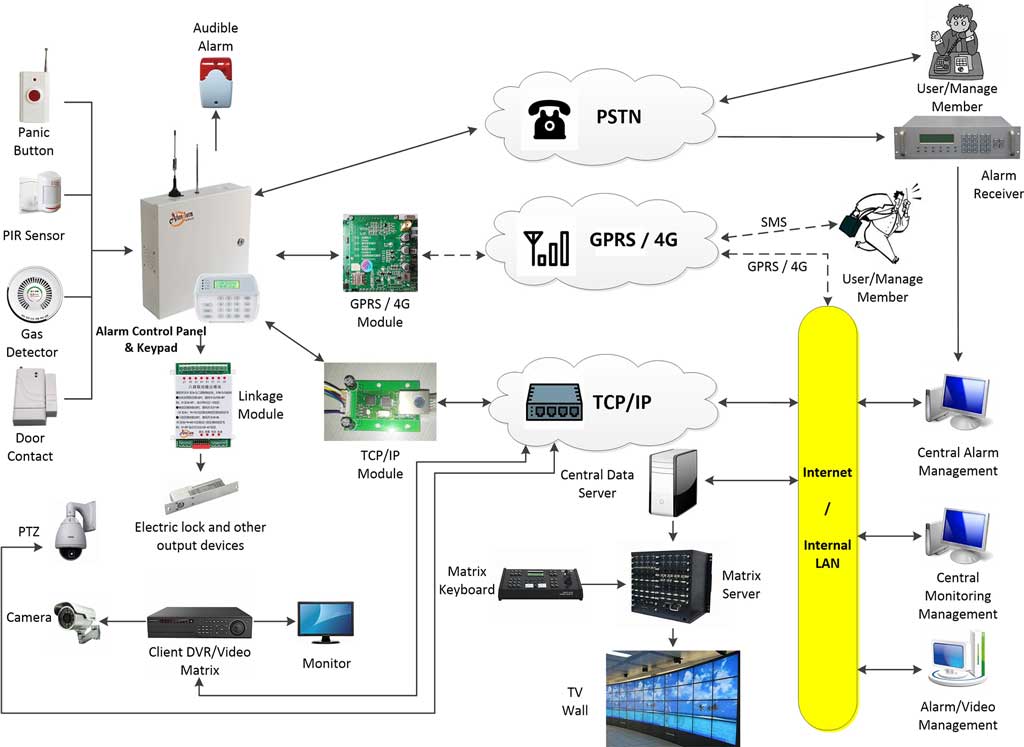
Centralized monitoring in enterprise security refers to the unification of multiple systems — including alarms, CCTV, access control, fire detection, and IoT sensors — into a single command platform. Instead of managing each subsystem independently, security teams gain a holistic, real-time view of all facilities, enabling proactive risk management.
In traditional decentralized setups, enterprises often face:
- Delayed response times due to fragmented communication
- Higher operational costs from multiple monitoring vendors
- Inconsistent data across departments
- False positives that drain resources
By contrast, a centralized solution transforms security management into a data-driven ecosystem, empowering operators to act faster and smarter. Aligned with best practices from ASIS International and principles consistent with ISO 27001, centralized monitoring enhances both compliance and business continuity.
III. Case Study Selection and Context
Company Profile:
The case centers on “GlobalTech Manufacturing” — a fictional but representative mid-sized manufacturer with five production facilities and over 800 employees across three regions.
Pre-Implementation Challenges:
Before centralization, GlobalTech operated five different alarm systems, three independent CCTV platforms, and isolated access control servers. This fragmented environment led to:
- An average incident response delay of 15 minutes
- Frequent false alarms due to sensor miscommunication
- Redundant maintenance costs for multiple systems
- Gaps in compliance reporting for safety audits
Objective:
GlobalTech aimed to deploy a centralized enterprise monitoring platform to unify all physical and digital security layers, reduce costs, and achieve faster, data-driven incident resolution.
IV. Implementation Process
1. Assessment & Planning:
Security consultants conducted a full audit of existing infrastructure, identifying legacy alarm systems, outdated network video recorders, and redundant monitoring points.
2. Platform Selection:
The enterprise chose a cloud-based centralized monitoring solution that integrates alarms, cameras, access logs, and environmental sensors into a single dashboard.
3. System Integration:
- Alarm panels and motion detectors were linked via IoT gateways.
- CCTV streams were connected through ONVIF-compliant NVRs.
- Access control systems were synchronized using API-based connectors.
- AI-driven analytics modules were deployed for anomaly detection and real-time threat alerts.
4. Training & Change Management:
Security operators and facility managers received hands-on training, focusing on unified dashboard operation, event correlation, and AI-based alert prioritization.
Challenges Overcome:
Initial hurdles included system compatibility across legacy devices. These were resolved using middleware adapters and firmware upgrades, ensuring seamless integration without hardware replacement — minimizing cost and downtime.
V. Results and Demonstrated Effects
Quantitative Outcomes:
After six months of deployment, GlobalTech recorded measurable improvements:
- 40% reduction in incident response times
- 30% decrease in false alarms
- 25% savings in annual monitoring and maintenance costs
- 99.8% system uptime due to cloud redundancy
Qualitative Benefits:
- Enhanced situational awareness through unified event dashboards
- Improved employee safety and emergency response coordination
- Greater compliance with internal audit and regulatory requirements
- Centralized data analytics supporting long-term security strategy
Visual Showcase Suggestion:
Include a chart comparing Incident Resolution Time (Before vs. After) and a False Alarm Trend Line to visually highlight impact.
Stakeholder Insight:
“Our operations team now receives real-time alerts from all facilities in one dashboard. We’ve cut response times nearly in half and gained better control of our security operations.”
— Security Manager, GlobalTech Manufacturing
VI. Lessons Learned and Best Practices
Key Takeaways:
- Scalability is essential. Choose a platform that can expand with your enterprise footprint.
- Training drives success. Technology adoption depends on operator confidence.
- Data integration unlocks insights. Unified analytics reveal trends impossible to detect in siloed systems.
- Regular system audits ensure long-term reliability and compliance.
Expert Recommendations:
- Conduct a quarterly monitoring performance audit.
- Integrate machine learning algorithms for predictive monitoring and anomaly correlation.
- Adopt open-architecture systems to future-proof your security infrastructure.
Broader Implications:
This Centralized Monitoring Case exemplifies how convergence of physical and digital systems not only strengthens security but also enhances overall business efficiency — a critical advantage in today’s connected world.
VII. Conclusion
The Centralized Monitoring Case of GlobalTech Manufacturing demonstrates that strategic integration of security systems can deliver measurable improvements in response efficiency, cost control, and organizational resilience.
As enterprises continue to face complex threats, centralized monitoring stands out as a cornerstone of modern security architecture.
Call to Action:
If your organization still relies on disconnected alarm or surveillance systems, now is the time to evaluate centralization. Explore our Deployment Case Studies section for more insights or contact our experts for a personalized consultation on enterprise-grade monitoring solutions.