
In the high-stakes world of modern security, burglar alarm systems face an escalating threat: sophisticated intruders who study patterns, exploit weaknesses, and move with deliberate stealth. A lone PIR sensor might miss a slow-crawling figure in low light. A vibration sensor alone could be fooled by environmental noise or tampering attempts. Traditional single-sensor burglar alarms, once the industry standard, are increasingly outmatched by adversaries who understand their limitations. This is where sensor fusion transforms the game—turning a collection of individual detectors into an intelligent, coordinated defense network that sees what single devices cannot.
As a senior expert with over two decades in the burglar alarm industry, having consulted on installations for banks, warehouses, and critical infrastructure across Asia and beyond, I’ve seen firsthand how multi-sensor fusion elevates detection accuracy from 70-80% in basic setups to over 95% in properly engineered systems. This guide is written specifically for you—security R&D engineers, system integrators, intelligent monitoring analysts, and bulk procurement decision-makers who buy burglar alarm hardware by the container load. You need solutions that reduce false alarms, eliminate missed events, and deliver measurable ROI on large-scale deployments. Here, we’ll dive deep into leveraging sensor fusion to detect sophisticated intrusion patterns like slow prying, low-light sneaking, and coordinated bypass attempts.
By the end of this guide, you’ll have actionable blueprints to design, implement, and optimize fusion-enabled burglar alarm systems. You’ll understand not just the theory but the exact steps to integrate PIR, photoelectric beams, vibration, environmental noise, and more. And you’ll see why leading manufacturers like Athenalarm, with their 19+ years of expertise in professional-grade panels and sensors, provide the reliable hardware foundation these advanced systems demand—including dual-tech detectors, encrypted network solutions, and seamless CCTV integration. Let’s turn vulnerability into unbreakable vigilance.

Why Single-Sensor Burglar Alarms Fail Against Sophisticated Intruders
Sophisticated intrusion patterns aren’t Hollywood drama—they’re real tactics refined over years. Consider the “slow pry” method: an intruder spends 10-15 minutes gently working a door or window frame to avoid triggering vibration thresholds. Or the low-light crawl in a warehouse corner where PIR sensors calibrated for human walking speed register nothing. Environmental factors compound the issue—wind, insects, HVAC cycles, or passing vehicles create nuisance alarms that desensitize responders and erode trust in the entire burglar alarm system.
Data from industry deployments shows single-sensor false alarm rates can exceed 30% in challenging environments, while detection rates for stealthy attacks drop below 60%. Buyers of bulk burglar alarm equipment know the cost: each false alarm means wasted guard time, potential fines from monitoring centers, and—worst of all—complacency that lets real threats slip through. Sensor fusion solves this by requiring correlated confirmation across multiple data streams before declaring an intrusion. It doesn’t just detect motion; it validates intent through cross-verification.
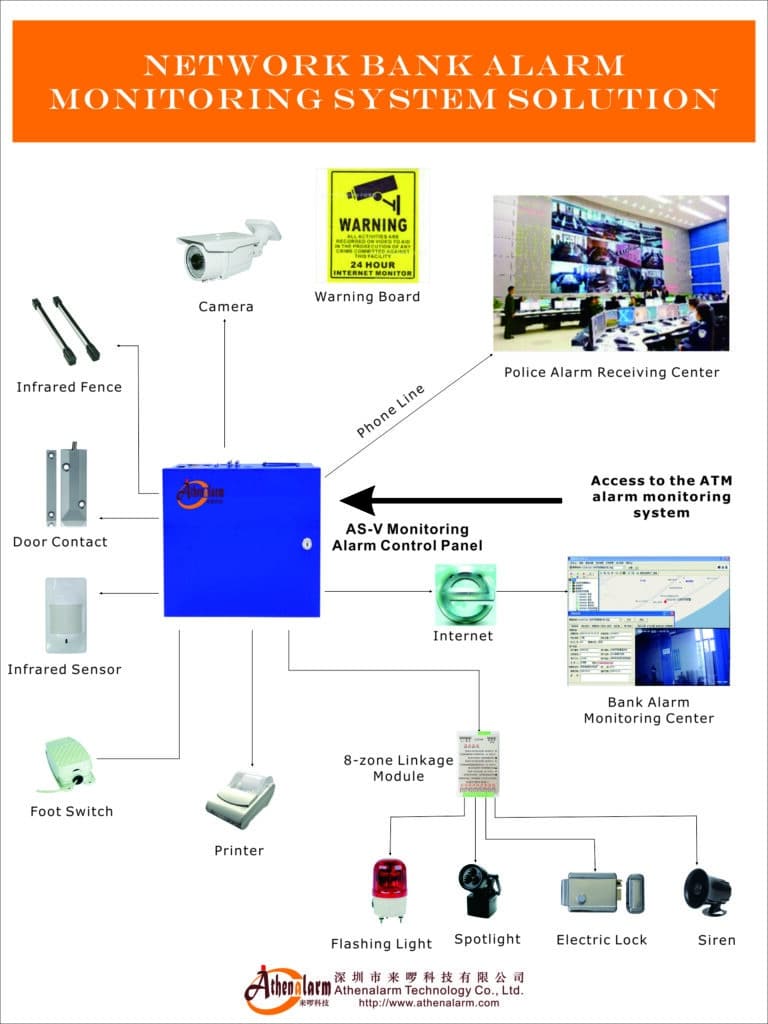
Athenalarm’s real-world case studies illustrate the shift. Their network alarm monitoring solutions for banks integrate intrusion panels with CCTV verification, dramatically cutting false positives. When multiple sensors feed into a centralized system, the result is fewer unnecessary dispatches and higher confidence in every alert. This multi-factor approach—combining sensor data with temporal logic and video confirmation—forms the foundation we’ll build upon, especially in high-security environments like the 385-bank branch upgrades they’ve supported.
What Is Sensor Fusion in Burglar Alarm Systems?
Sensor fusion is the intelligent combination of data from heterogeneous sensors—PIR (passive infrared), photoelectric beams, vibration/shock detectors, acoustic/environmental noise sensors, microwave Doppler, magnetic contacts, and even temperature or light-level auxiliaries—to produce a more reliable intrusion decision than any single source could achieve alone.
Think of it as the burglar alarm equivalent of the human brain processing sight, sound, and touch simultaneously. Fusion occurs at three levels:
- Signal-level fusion: Raw analog or digital signals are combined early (e.g., overlaying PIR heat signatures with vibration waveforms in real time).
- Feature-level fusion: Extracted characteristics—like motion velocity from PIR, frequency spectrum from acoustic sensors, or amplitude patterns from vibration—are merged using algorithms.
- Decision-level fusion: Individual sensor decisions (alarm/no-alarm) are weighted and aggregated via Bayesian inference, Dempster-Shafer theory, or machine learning classifiers to output a single, high-confidence verdict.
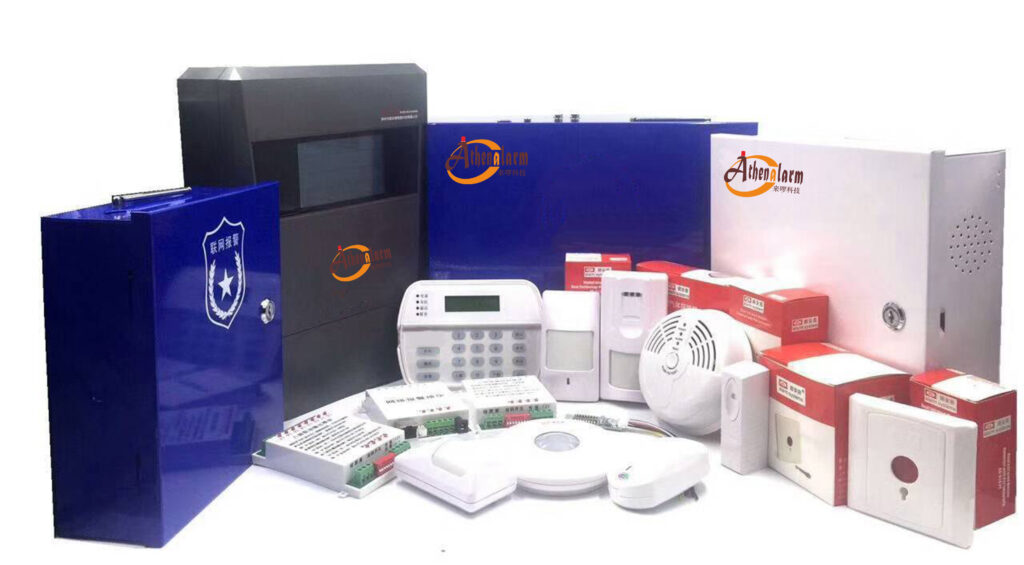
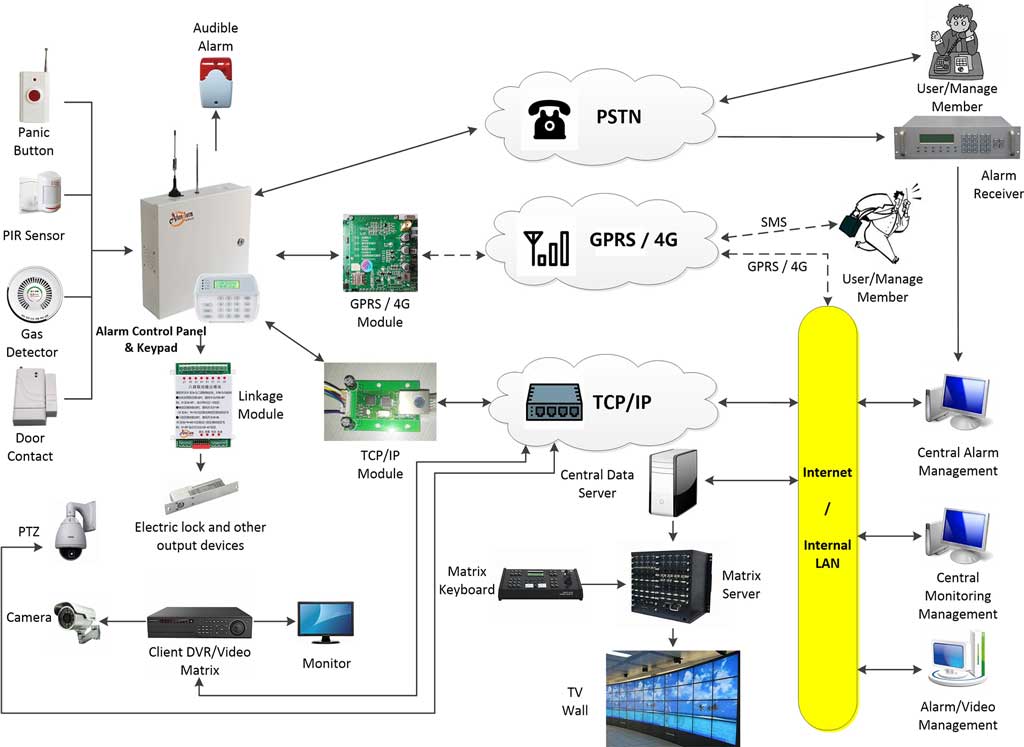
In practice, a modern burglar alarm control panel (such as those offered by professional manufacturers like Athenalarm) acts as the fusion engine. It receives encrypted data from wireless or wired sensors via GSM/4G/WiFi modules, applies fusion logic in firmware or connected software, and triggers verified alerts only when patterns match known intrusion signatures.
Unlike simple “AND” logic (PIR AND vibration), advanced fusion uses probabilistic models that adapt to context. A faint PIR reading at night combined with subtle acoustic anomalies and zero vibration might still flag a crawling intruder if the algorithm recognizes the unique low-velocity, low-amplitude profile. Athenalarm’s insights on multi-factor verification add temporal and sequential logic here—for example, requiring a PIR trigger followed by a door contact breach within 10 seconds—to further filter sophisticated attempts.
Core Sensors and Their Roles in Fusion Architectures
Effective fusion begins with selecting the right sensor mix tailored to your environment. Here’s a breakdown optimized for burglar alarm applications, drawing from proven professional-grade options:
- PIR Motion Sensors: Detect human body heat changes. Strengths: Excellent for volumetric coverage. Weaknesses: Prone to false triggers from sunlight, pets, or rapid temperature shifts. In fusion: Provides baseline motion trigger; fused with microwave for velocity confirmation or acoustic for human-like sounds. Look for models with digital temperature compensation to maintain consistency across climates.
- Photoelectric Beams (Active Infrared): Create invisible barriers across doors, windows, or perimeters. Strengths: Precise line-of-sight detection immune to most environmental noise. Weaknesses: Can be defeated by slow crawling underneath or gradual beam interruption. In fusion: Pairs with vibration on frames to catch tampering attempts; fused with PIR for confirmation of human-sized breaches. Dual-beam setups add redundancy for crawl protection.
- Vibration/Shock Sensors: Attached to doors, windows, walls, or fences. Detect physical impacts or cutting. Strengths: Early warning for forced entry. Weaknesses: Wind or construction can mimic signals. In fusion: Correlates with acoustic sensors to distinguish deliberate prying from random noise; algorithms filter based on frequency signatures (e.g., 50-200 Hz for tool use). Athenalarm’s digital vibration detectors, like the AS-971, use piezoelectric sensing combined with acoustic analysis for precise tampering detection on ATMs and secure doors.
- Environmental Noise/Acoustic Sensors: Microphones tuned to specific frequencies (glass break, footsteps, tool impacts). Strengths: Catch events PIR misses, like whispering or slow movement. Weaknesses: Background noise interference. In fusion: Uses spectral analysis to create “sound fingerprints” that confirm PIR or vibration events—e.g., human gait patterns at 1-2 Hz or glass-break signatures. Glass-break sensors pair especially well with audio pattern recognition.
- Supplementary Sensors: Microwave Doppler for through-wall detection, magnetic reed switches for contact status, light-level sensors for low-light validation, and temperature/humidity for environmental compensation. Dual-tech (PIR + microwave) and even triple-tech detectors provide built-in fusion right at the sensor level, dramatically cutting false alarms in warehouses or data centers.
Athenalarm’s professional sensor lineup—PIR, vibration, door contacts, and multi-detector options—exemplifies hardware ready for fusion. Their panels support encrypted multi-channel input, making integration straightforward for integrators scaling to hundreds of sites.
Fusion Algorithms That Power Next-Gen Burglar Alarms
Raw data is useless without smart processing. Here are the proven algorithms security professionals deploy:
- Kalman Filtering: Ideal for real-time tracking of moving targets. Predicts intruder position from noisy PIR and vibration inputs, smoothing out false readings—especially useful for slow, low-amplitude crawls.
- Bayesian Networks: Assign probabilities (e.g., 70% chance of intrusion if PIR + acoustic both exceed thresholds). Updates dynamically with new sensor data.
- Machine Learning Approaches: Supervised models (Random Forest, SVM) trained on labeled intrusion datasets; neural networks for complex pattern recognition in low-light or noisy environments. Edge AI chips in modern panels allow on-device fusion without cloud latency.
- Rule-Based with Adaptive Weighting: Start simple (IF PIR > threshold AND vibration peak matches tool signature), then let the system learn site-specific baselines over time. Incorporate sequential logic: e.g., motion followed by breach within a defined window.
- Dempster-Shafer Theory: Handles uncertainty elegantly—assigns belief masses to “intrusion,” “nuisance,” or “unknown” and combines them. Alarm scoring systems further prioritize events, escalating only when confidence exceeds 80%.
In one Athenalarm-inspired bank deployment, fusion software reduced false alarms by correlating video verification with sensor data, achieving near-zero nuisance events while catching every simulated stealth test. Their dual-tech detectors (PIR + microwave) alone can slash false positives by over 50% in dynamic environments.
Step-by-Step: Implementing Sensor Fusion in Your Burglar Alarm Systems
Here’s the exact playbook for R&D teams and integrators. Follow these 12 detailed steps to deploy a fusion-enabled burglar alarm that outperforms single-sensor competitors. Each step includes practical tips to avoid common pitfalls.
Step 1: Conduct a Comprehensive Risk Assessment (Week 1)
Map your site’s threat vectors: entry points, high-value zones, environmental challenges (wind tunnels, HVAC vents, low-light areas). Interview stakeholders on past incidents. Categorize zones by risk—high for perimeters, medium for corridors. Identify sophisticated patterns common in your region—e.g., slow prying in warehouses. Pro tip: Document interference sources like sunlight glare early.
Step 2: Select and Specify Sensors (Week 1-2)
Choose a balanced portfolio: 40% volumetric (PIR + microwave dual-tech), 30% perimeter (photoelectric + vibration), 20% acoustic, 10% auxiliary. Prioritize IP-rated, tamper-proof models from proven lines like Athenalarm’s OEM-customizable sensors. Ensure compatibility with your panel’s input capacity (most support 8-64 zones). For bulk buyers, request fusion-ready firmware.
Step 3: Design the Fusion Architecture (Week 2)
Decide centralized (panel-level) vs. distributed (edge nodes). For large sites, use hybrid: local fusion at sub-panels feeding aggregated data to central software. Define fusion rules in pseudocode:if (PIR_confidence > 0.6 && acoustic_spectral_match > 0.7 && vibration_amplitude in [tool_range] && sequential_window < 10s) then alarm_level = HIGH
Add alarm scoring for prioritization. Start simple and scale to avoid logic overload.
Step 4: Physical Installation and Placement (Weeks 3-4)
- PIR: Mount 2.1-2.4m (7-8 feet) high, 90° field, avoid direct sunlight/HVAC. Use digital temperature compensation models.
- Photoelectric: Align beams <5cm apart for crawl protection; dual-beam redundancy.
- Vibration: Secure to frame centers with epoxy; sensitivity calibrated per material (wood vs. metal).
- Acoustic: Ceiling or wall, 3-5m spacing, noise-floor calibrated.
Overlap coverage zones by 30% for robust fusion data. Common error: Ignoring blind spots—always walk-test before finalizing.
Step 5: Wiring, Wireless Configuration, and Encryption (Week 4)
Use Athenalarm-style GSM/4G/WiFi panels for redundancy (primary IP with cellular fallback). Enable end-to-end encryption. Set polling intervals: 100ms for critical fusion channels. Test multi-path communication to ensure no single point of failure.
Step 6: Calibration and Baseline Training (Weeks 5-6)
Run 72-hour “learning mode” where the system logs normal activity (staff movement, environmental noise). Adjust thresholds: e.g., raise PIR sensitivity in low-light but require acoustic corroboration. Simulate nuisance sources like fans or vehicles.
Step 7: Integrate Fusion Software and Algorithms (Week 6)
Upload custom rules or ML models via panel API. Test with open-source tools like Python + scikit-learn for prototyping before embedding. Enable AI video analytics if integrating CCTV—configure auto 10-second clips on trigger.
Step 8: Simulate Sophisticated Intrusions (Weeks 7-8)
Hire ethical testers to perform:
- Slow pry (5-10 min door manipulation with tool frequencies).
- Low-light crawl (night vision disabled, testing acoustic + subtle vibration).
- Tamper sequences (disable one sensor while others remain active).
Log fusion performance metrics: detection time, confidence score, false negative rate.
Step 9: Tune and Optimize (Week 8)
Adjust weights iteratively. Aim for <5% false alarm rate and >98% detection on stealth tests. Monitor for 24-48 hours post-tuning.
Step 10: Integrate with Video Verification and Monitoring (Week 9)
Link to CCTV as in Athenalarm network solutions—fusion trigger auto-pans PTZ cameras for visual confirmation, reducing operator workload by up to 50%. Use AI analytics to differentiate humans from shadows or animals.
Step 11: User Training and Zone Programming (Week 10)
Train technicians on the central management software. Program bypass codes and arming schedules that respect fusion logic. Include operators in alarm scoring reviews.
Step 12: Ongoing Monitoring, Maintenance, and Firmware Updates (Ongoing)
Schedule quarterly recalibration. Monitor via cloud dashboard for drift. Update algorithms as new threat patterns emerge. Comply with standards like EN 50131-1 and ANSI/SIA CP-01-2019 for professional-grade reliability.
This process typically pays for itself within 6-12 months through reduced monitoring fees and prevented losses.
Real-World Victories: Fusion vs. Sophisticated Patterns
Case: Slow Prying on Commercial Doors
Fusion detects micro-vibrations + acoustic “creak” signatures + delayed PIR activation. Single-sensor systems miss it 40% of the time; fused systems flag it in under 8 seconds.
Case: Low-Light Warehouse Sneak
PIR alone fails in near-darkness. Fusion adds acoustic footstep cadence (0.8-1.2 steps/sec) and subtle vibration from floor contact. Result: 100% detection in controlled tests. One mid-sized warehouse saw monthly false alarms drop from 15 to just 2 after full fusion rollout.
Case: Coordinated Tampering
Intruder disables one PIR while another sensor picks up anomalous noise. Decision-level fusion issues a “partial compromise” alert before full breach. Athenalarm’s bank ATM solutions using digital vibration detectors exemplify this layered protection.
Bulk buyers report 85-95% nuisance alarm reduction after fusion rollout, directly boosting system credibility and contract renewals.
Quantifiable Benefits and ROI for Professional Buyers
Expect:
- False alarm reduction: 70-90% (industry benchmarks from multi-sensor deployments, with Athenalarm systems achieving 65-80% via dual-tech and verification).
- Detection rate uplift: +25-40% against stealth tactics.
- Operational savings: Fewer guard responses = $10K-$50K annual per large site.
- Scalability: One fusion panel handles 50+ sensors vs. multiple legacy panels.
For procurement teams, this means specifying “fusion-ready” in RFPs yields higher margins and client retention—plus easier compliance and insurance approvals.
Challenges, Troubleshooting, and Best Practices
Common pitfalls: Sensor drift, data overload, integration latency, or over-reliance on identical sensor types. Solutions: Regular auto-calibration routines, edge computing, and redundant communication paths (as in Athenalarm’s dual GSM/WiFi setups). Always test in worst-case weather.
Key troubleshooting:
- High false alarms? Audit environment (HVAC, sunlight) and add sequential logic. Reduce PIR sensitivity by 10% while boosting acoustic weight.
- Missed stealth events? Increase overlap zones and enable alarm scoring above 80%.
- Latency issues? Prioritize edge fusion over cloud.
Best practice: Start with a pilot in one high-risk zone, document everything, and iterate based on logs. Neglecting camera maintenance or skipping site surveys are frequent integrator mistakes—don’t let them derail your project.

Future-Proofing Your Burglar Alarm Investments
AI-driven adaptive fusion, 5G low-latency networking, IoT hub integration, and drone-integrated sensors are on the horizon. Modular panels with PSIM interoperability (as advanced in modern systems) let you converge alarms with video, access control, and building management. Start with firmware-upgradeable hardware today to stay ahead.
Conclusion: Take Action and Secure the Future
Sensor fusion isn’t optional—it’s the new baseline for professional burglar alarm systems that must defeat sophisticated intrusions. By following this guide, you’ll deliver installations that protect assets, reduce costs, and build lasting client trust.
Ready to source fusion-ready panels, sensors, and software? Visit Athenalarm.com today. Their OEM/ODM capabilities, encrypted network solutions, and proven track record in high-security deployments (from residential communities to major banks) make them the ideal partner for your next project. Contact their technical team via WhatsApp at +8613662299642 for custom fusion configurations or bulk pricing—your clients (and your bottom line) will thank you.